Matthew Tostevin

9.5K posts

Matthew Tostevin banner
Matthew Tostevin

Matthew Tostevin

@TostevinM

Journalist who has reported from Asia, Africa, the Middle East and Europe.

UK Katılım Ocak 2017
2.3K Takip Edilen255.9K Takipçiler
Matthew Tostevin retweetledi
Arsenal
Arsenal@Arsenal·
Don't go anywhere yet, Gooners... Full post-match reaction AND the trophy lift will be on Live From N5 📺 twitter.com/i/broadcasts/1…
English
219
2K
8.7K
431.9K
ian bremmer
ian bremmer@ianbremmer·
trump’s approach to taiwan mirrors his approach to ukraine. he’d rather squeeze the weaker party in the conflict to achieve his preferred outcome than maintain ties with a trusted partner and us allies more broadly.
English
97
306
1.6K
70.9K
Matthew Tostevin
Matthew Tostevin@TostevinM·
Thailand takes top place in public views of freedom of speech in the latest Democracy Perception Index. Could seem somewhat surprising, but perhaps if you don't consider that one thing...
Matthew Tostevin tweet media
English
1
7
10
2.1K
Lawrence Zhang 張樂翔
Lawrence Zhang 張樂翔@HistorianZhang·
I bought these when I was in high school. They're still top tier history visualizations
Lawrence Zhang 張樂翔 tweet mediaLawrence Zhang 張樂翔 tweet mediaLawrence Zhang 張樂翔 tweet mediaLawrence Zhang 張樂翔 tweet media
English
23
184
1.9K
88.8K
Matthew Tostevin
Matthew Tostevin@TostevinM·
@ReemAmirIbrahim This may prolong the life of a system that doesn’t work, but isn’t the problem that the system doesn’t work?
English
0
0
0
484
Matthew Tostevin
Matthew Tostevin@TostevinM·
@iAmJoshHunt Let’s not forget our governments have borrowed another 100,000 pounds on behalf of every household too.
Matthew Tostevin tweet media
English
0
1
3
1.3K
Josh Hunt
Josh Hunt@iAmJoshHunt·
Let me walk you through the financial reality of the average person in Britain. Because the numbers tell a story that most people feel but have never seen laid out. Start with net worth. Everything you own minus everything you owe. The median household net worth in the UK is £293,700. That sounds reasonable. Until you break it down. According to the ONS, around 40% of that is property wealth. Money locked inside a house you live in that you can only access by selling it or borrowing against it. 35% is private pension wealth. Money you cannot touch until age 55 under current rules, rising to 57 from 2028. 10% is physical possessions. Your car, your furniture. And 14%, roughly £41,000, is net financial wealth. Savings, investments, and ISAs, minus any financial liabilities like credit cards and loans. So the typical British household has a net worth of nearly £300,000 on paper. But only around £41,000 of that is financial wealth, and even that is not the same as cash in the bank. It includes investments that may take time to sell and ISAs that may be locked in fixed terms. Most of Britain's "wealth" is theoretical. It exists on a spreadsheet. It doesn't exist in anyone's bank account. And that's the median. Half of households have less than that. Now look at what people actually have saved. The FCA's Financial Lives survey found that one in ten UK adults has no cash savings at all. A further 21% have less than £1,000 to draw on in an emergency. One in four UK adults has been classified as having low financial resilience. Commercial surveys paint an even starker picture. A nationally representative 2026 Finder survey found that 16% of adults, around 8.9 million people, reported having no savings. Two in five said they had £1,000 or less. A quarter had £200 or less, which is less than the average person spends in a single week. Average savings for under-55s were just £9,888, dragged up by a small number of higher savers. The Money and Pensions Service reports that 11.1 million working adults on modest to low incomes do not regularly save at all. Now break it down by age. Because this is where the generational divide becomes undeniable. If you're aged 16 to 24, the median household net worth is £15,200. If you're 25 to 34, it rises to £109,800. But most of that is property equity if you've managed to buy, or pension wealth you can't access for decades. If you're 35 to 44, it's £209,600. Getting better, but again mostly locked in housing and pensions. If you're 55 to 64, median household wealth is £496,500. If you're 65 to 74, it peaks at £502,500. That peak is 33 times higher than the youngest group. Thirty-three times. The Institute for Fiscal Studies has found that there has been no substantial generation-on-generation wealth increase for anyone born from the 1960s onwards. The escalator that carried the post-war generations upward has stopped. Millennials are less likely to own a home by their early 30s than Gen X were at the same age. And Gen Z is entering adulthood into the most expensive housing market, the highest tax burden, and the weakest wage growth in modern history. Now look at the divide that sits underneath all of this. Property. The ONS reports that households who own their home outright have wealth more than 15 times higher than those who rent privately or from a social landlord. If you got on the housing ladder, your wealth accumulated almost automatically through rising property prices. If you didn't, you have almost nothing. Homeownership is the single biggest determinant of whether someone in Britain builds wealth or doesn't. And homeownership among young adults has collapsed. Then there's the regional picture. Median household wealth in the South East is £489,800. In the North East it's £179,900. The South East is 2.7 times wealthier. Same country. Same tax system. Same government. Fundamentally different economic realities. And at the extremes, the picture gets sharper. The wealthiest 10% of households hold assets of £1.2 million or more. The bottom 10% have £16,500 or less. Around 8% of households have negative net worth. They owe more than they own. And the top 1% hold at least £3.1 million. Now put all of this together. The typical British household has £293,700 in net worth, of which only about £41,000 is net financial wealth and even less is actual cash. The FCA says one in ten adults have no cash savings at all and a quarter have low financial resilience. The generational wealth escalator has broken. Renters have a fraction of the wealth of homeowners. The North East has a third of the wealth of the South East. And real wages have barely grown in fifteen years. The Resolution Foundation has described this period as one of severe economic stagnation. But the most striking thing about these numbers is not what they say about people who aren't working. It's what they say about people who are. The median full-time salary in the UK is about £37,400 a year. For someone paying income tax, National Insurance, a workplace pension contribution, and student loan repayments, take-home pay can be around £2,300 a month. ONS data shows average household spending is roughly £2,700 a month. Those aren't directly comparable figures, one is an individual earner, one is a household. But they help explain why, for the growing number of households relying on a single income, or where both earners are on modest salaries, there is almost no margin left. And where there is no margin, there is no saving. And without savings, there's no investment. Without investment, there's no compounding. Without compounding, there's no wealth. The cycle never starts. This is not a picture of a wealthy country. It is a picture of a country where wealth is concentrated in property and pensions, locked away from the people who need it most, distributed unevenly by age, region, and tenure, and increasingly inaccessible to anyone born after 1970. And the next time someone tells you Britain is the sixth richest country in the world, ask them where the money is. Because for millions of people it's nowhere. For a quarter of the population it wouldn't cover a month's emergency. And for the working people in the middle, it's mostly locked inside a house they can't sell and a pension they can't touch. The "fifth richest country in the world". Where a quarter of the population couldn't survive a month without income. Where real wages haven't grown in fifteen years. And where the average working person's actual accessible wealth would barely cover three months' rent. That's not wealth. That's the appearance of wealth. And the gap between the two is the story of modern Britain.
English
33
121
557
148.1K
Matthew Tostevin
Matthew Tostevin@TostevinM·
@EuroBriefing We should also question whether yields reflect the reality of the risks the creditors are taking on through lending to countries pursuing military expansion while also funding growing social commitments and with little prospect of meaningful economic growth.
English
0
2
11
5.9K
Wolfgang Munchau
Wolfgang Munchau@EuroBriefing·
The craziest thing the West is doing right now is funding its military expansion through debt. This is done in the name of security, but it creates massive security risks in itself, for example if a government under attack would face sudden fiscal constraints because it has no fiscal space available. Putin, by contrast, funds his military adventures mostly from revenues. Russia’s debt-to-GDP ratio is under 20%. If it ever came to a war, Putin’s biggest ally would be the bond market vigilantes. eurointelligence.com
English
53
125
592
93.8K
Wanjiru Njoya
Wanjiru Njoya@WanjiruNjoya·
Africans were selling fellow Africans as slaves to Arab slave traders for CENTURIES before the first Europeans ever showed up. And when Britain banned the slave trade they got angry that their trade was being thwarted and refused to stop slave trading.
Chinda@Chindaah

@WanjiruNjoya Africans might be the biggest problem of Africa. Without Africans slave trade could have never been possible.

English
1.1K
4.4K
23.1K
64.8M
Matthew Tostevin
Matthew Tostevin@TostevinM·
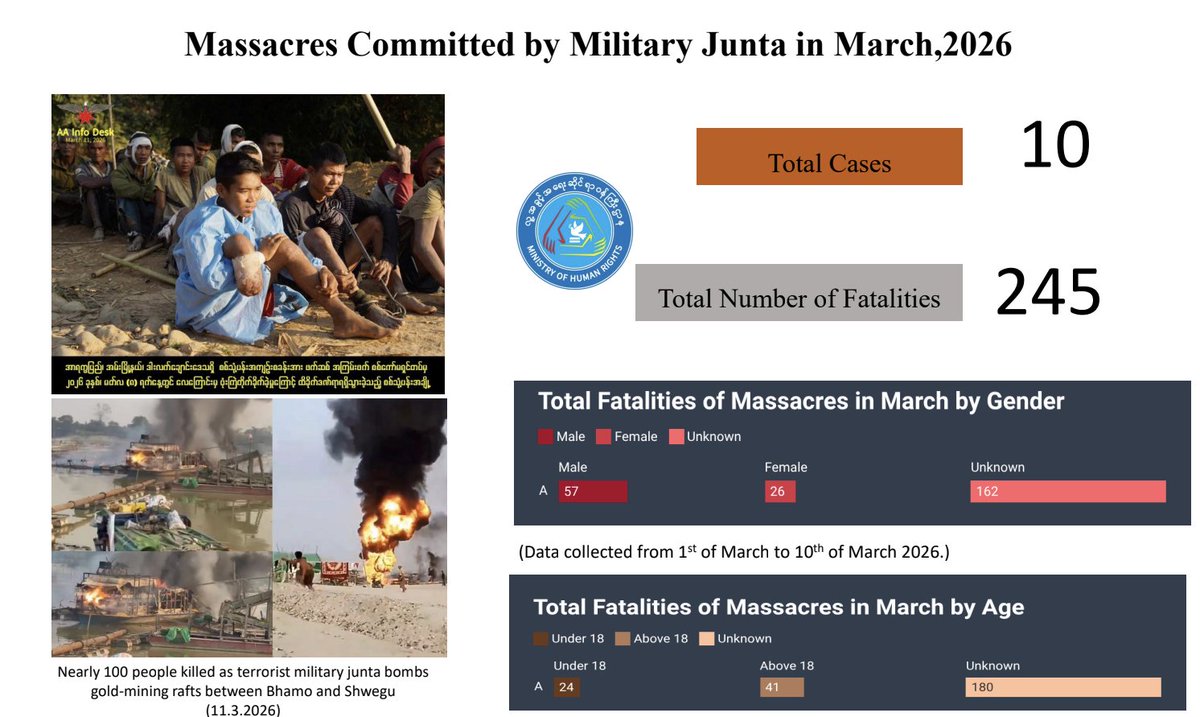
Wishing all in Myanmar a genuine renewal this Thingyan and real peace despite the seemingly unending suffering in this brave land. #WhatsHappeningInMyanmar
Matthew Tostevin tweet media
English
4
13
52
1.4K
David Blagden
David Blagden@blagden_david·
UK forces can learn from everyone, Israel included. And yes, the Defence Budget could go further. But the implication that garrisoning a small continental state with conscripts, (mostly) 4th Gen aircraft to strike weaker neighbours, and a less-demanding* nuclear force… 1/4
John Redwood@johnredwood

Israel has more military in uniform, an Iron Dome protection, more than six times as many tanks and twice as many combat aircraft than the UK for a smaller budget. Why can’t the UK government get more for our defence money?

English
10
14
174
85.2K
Matthew Tostevin
Matthew Tostevin@TostevinM·
@iAmJoshHunt @NWJK Small point: Those countries can't afford it either (except maybe Norway which pumps three times more oil than Britain and has one twelfth the population)
English
0
0
3
324
Josh Hunt
Josh Hunt@iAmJoshHunt·
Funnily enough, it's a question I'm writing an article about at the moment, because it's an argument that keeps getting raised. It's a very good question. The short answer is painful. A £20k state pension for all 12.8 million recipients would cost roughly £250 billion a year. Quarter of a trillion quid. More than the entire NHS budget. Where does that money come from when productivity has been flat for eighteen years? Those countries can afford it because they built productive economies and saved for the future. We didn't. We spent. COVID response: £370 billion. Energy crisis subsidies: £78 billion. Bank bailouts: £137 billion committed at peak. Wars in Iraq and Afghanistan: at least £50 billion, all borrowed. Help to Buy equity loans: £29 billion, mostly going to people who didn't need it. Right to Buy discounts: an estimated £200 billion since the 1980s. PFI contracts: hundreds of billions in future commitments for buildings already falling apart. QE losses: over £100 billion. Well over a trillion quid in crisis management, bailouts, subsidies, and propping up a housing market that was already overvalued. Not a penny saved for the future. And it's not just how much we spend. It's how badly we spend it. HS2 is now the most expensive railway ever built. £66 billion and counting for 140 miles of track that doesn't reach central London and no longer goes north of Birmingham. Spain built over 2,500 miles of high speed rail for around $70 billion. The entire second-largest high speed network in the world for roughly what we're paying for 140 miles. We're paying £396 million per mile. France built Paris to Strasbourg for £31 million per mile. We pay 8.5 times the European average to build railways. Fewer than 1 in 5 major government projects are now judged likely to succeed, down from nearly half a decade ago. A Telegraph investigation found £14 billion wasted in a single two-year period on projects that were changed, delayed, or failed entirely. Now compare this to Norway. They discovered North Sea oil at roughly the same time we did. Same resource. Same opportunity. Different choices. They created a sovereign wealth fund. It's now worth $2 trillion. That's $340,000 per Norwegian citizen. It made $247 billion in profit last year alone. Their pensioner poverty rate is 4.3%. Ours is 14.5%. We had the same oil. We spent ours on wars, bank bailouts, housing subsidies, and infrastructure projects that cost ten times what they should. Norway invested theirs for future generations. Many of the countries paying higher pensions run trade surpluses. We run a deficit. They have sovereign wealth funds. We have sovereign debt. They invested in productive capacity. We invested in house prices. It's not that £20k pensions are impossible. It's that they require decisions made decades ago that we didn't make. And a level of competence in public spending that we've never demonstrated. We had the resources. We had the opportunity. We chose differently. And now the bill is coming due.
English
12
8
57
14.4K
Josh Hunt
Josh Hunt@iAmJoshHunt·
One of the hardest conversations to have in this country is about pensions and welfare spending. It’s because the moment you raise them, people assume you’re attacking pensioners or the vulnerable. So let me be clear before I go any further. This isn’t an argument against supporting people who need it. It’s a question about whether the system that provides that support can survive in its current form. Because if it can’t, the people who depend on it the most are the ones who get hurt first. That’s why this conversation matters. Now the numbers… The government raises roughly £1.2 trillion a year in total receipts. Here’s where it comes from. £329 billion from income tax. £200 billion from National Insurance. £214 billion from VAT. £105 billion from corporation tax. £50 billion from council tax. Plus fuel duty, stamp duty, alcohol and tobacco duties, inheritance tax, capital gains tax, and everything else. The welfare bill is £333 billion. Every penny raised from income tax, the single largest source of government revenue, doesn’t cover it. The welfare bill is larger than income tax receipts. Combine income tax and National Insurance and you get roughly £529 billion. Welfare takes £333 billion of that. Debt interest takes another £114 billion. That’s £447 billion gone before a single pound goes to the NHS, schools, police, defence, roads, or anything else. Those two items alone consume 85% of everything raised through income tax and NI combined. Everything else the government does has to be funded from VAT, corporation tax, council tax, and every other levy. And here’s the thing people don’t always connect. You pay those too. VAT is 20% on almost everything you buy. Employer National Insurance, just raised to 15%, gets passed on through higher prices and lower wages. Corporation tax gets passed on through the cost of goods and services. Council tax comes straight out of your household budget. Fuel duty, insurance premium tax, alcohol duty, tobacco duty. It all comes back to you. The tax burden is at its highest level since the 1940s. Income tax thresholds have been frozen since 2021, dragging millions more people into higher tax brackets without anyone voting for a tax rise. There are now 39 million income tax payers, up from 33 million just four years ago. Six million more people paying income tax. And it’s still not enough. Welfare spending rose by £18 billion this year alone. The two biggest drivers are the triple lock on pensions, which has added £21 billion since 2019, and disability and incapacity benefits, which have added £24 billion in the same period. Both rising faster than the economy that funds them. The two-child benefit cap was just lifted at a cost of £3 billion a year. Whether you think that’s the right call or not, it’s another £3 billion added to a bill that already exceeds total income tax receipts. And that’s the pattern. Every individual spending commitment has a justification. The total is unsustainable. And anyone who tries to talk about the total gets dragged into an argument about the individual line items. None of this is an argument for pulling support from people who need it. It’s an argument for being honest about whether the current system can continue to provide it. Because right now, it can’t. Everyone who’s looked at the numbers honestly knows it can’t. The OBR knows it. The IFS knows it. The Treasury knows it. The cruellest thing we can do is pretend it’s all fine and let people plan their lives around promises that won’t be kept. The woman relying on her state pension at 67. The carer who needs the system to be there. The disabled person who depends on support that’s already under political pressure. They deserve honesty more than anyone. But we can’t get to honesty because the conversation gets shut down before it starts. And the people who benefit most from that silence aren’t the vulnerable. It’s the politicians who’d rather nobody looked at the numbers too closely.
English
126
48
280
29.4K
Matthew Tostevin
Matthew Tostevin@TostevinM·
@iAmJoshHunt In a democracy aren’t we all to blame for the political class? And for willfully insisting the fantasyland is sustainable if only whatever we’ve decided we personally don’t like is addressed.
English
0
0
0
417
Josh Hunt
Josh Hunt@iAmJoshHunt·
By 2042 there will be roughly 2 workers for every pensioner in this country. Those 2 workers also have to fund the NHS, schools, police, defence, infrastructure, and their own lives. There is no tax rate, no policy, no political party that makes those numbers work without something giving. The argument isn’t about left vs right anymore. It’s about maths. I’m not attacking pensioners here. They should feel as aggrieved as anyone at how badly this country has been failed by the political class.
English
200
75
640
61K
Matthew Tostevin
Matthew Tostevin@TostevinM·
@Telegraph Perhaps because India sees itself having a future and not only a past?
English
1
0
8
1.3K
Matthew Tostevin
Matthew Tostevin@TostevinM·
@andreas_krieg Indeed. So we are really only talking of ending the current round of fighting involving the U.S. (not that this would necessarily be a bad thing). The war will go on.
English
1
0
1
128
Dr Andreas Krieg
Dr Andreas Krieg@andreas_krieg·
@TostevinM With the current Israeli and Iranian regime in place there wont be peace between both countries
English
1
0
6
723
Dr Andreas Krieg
Dr Andreas Krieg@andreas_krieg·
Corner stones of Zarif's proposal for a US - Iran deal (neither IRGC nor Trump are likely going to endorse in full) ✅Possible⛔️Unlikely🟨Negotiable Security & nuclear - Iran caps enrichment (below ~3.67%) and accepts monitoring ✅ - Commits to no nuclear weapons ✅ - Rejects unrealistic U.S. demand of zero enrichment 🟨 Sanctions & economy - Full lifting of U.S. and UN sanctions ✅ - Reintegration into global markets and energy exports✅ - Access to frozen funds ✅ Military & political - Mutual non-aggression pact with the U.S. 🟨 - End to hostile designations and restoration of diplomatic channels 🟨 Regional order - Freedom of navigation in the Strait of Hormuz ✅ - Creation of a regional security framework (incl. Gulf states + major powers) ⛔️ Economic cooperation - Potential U.S.–Iran economic and technological engagement ⛔️ - U.S. contribution to reconstruction costs ⛔️ foreignaffairs.com/middle-east/ho…
English
28
48
138
39.5K
Matthew Tostevin
Matthew Tostevin@TostevinM·
For all those pointing how much they paid in British tax over the decades, remember successive governments not only spent all your money rather than saving it, but took out some nice big loans for you too.
Matthew Tostevin tweet media
English
1
1
1
549
Matthew Tostevin
Matthew Tostevin@TostevinM·
So what if there’s a promise if there’s no chance of keeping it? It’s not a question of rights or law or morality as some seem to believe. It’s simple maths and the sums don’t add up. You can’t eat promises (or more to the point our future generations can’t). One possible way out is a Zimbabwe-style devaluation. We might get a pension in principle, but in practice it will be worthless.
English
0
0
0
139
Alan
Alan@A1an_M·
To all those saying it's not true that if you pay National Insurance to the government you are promised a State Pension in return, here it is in black and white on the government website. Today. Now. The promise is still being made. gov.uk/new-state-pens…
Alan tweet media
English
42
114
338
9.2K