Scottish Reformation Tours

809 posts

Scottish Reformation Tours banner
Scottish Reformation Tours

Scottish Reformation Tours

@ToursScottish

Christ Centred-Christian Led-Custom Tours. We provide church history tours of Scotland focusing on Scotland's Reformation and Covenanter History.

Scotland, United Kingdom Katılım Nisan 2019
336 Takip Edilen1.5K Takipçiler
Scottish Reformation Tours
Scottish Reformation Tours@ToursScottish·
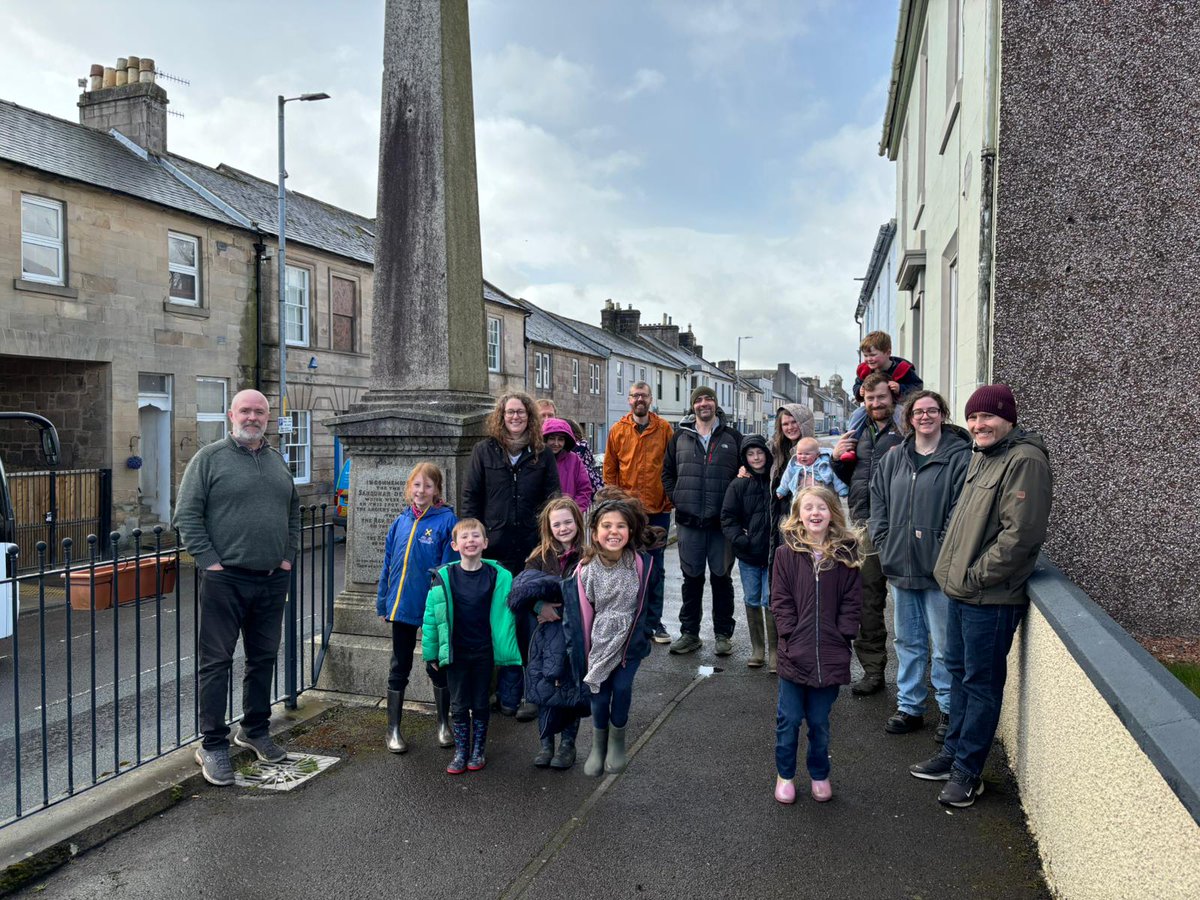
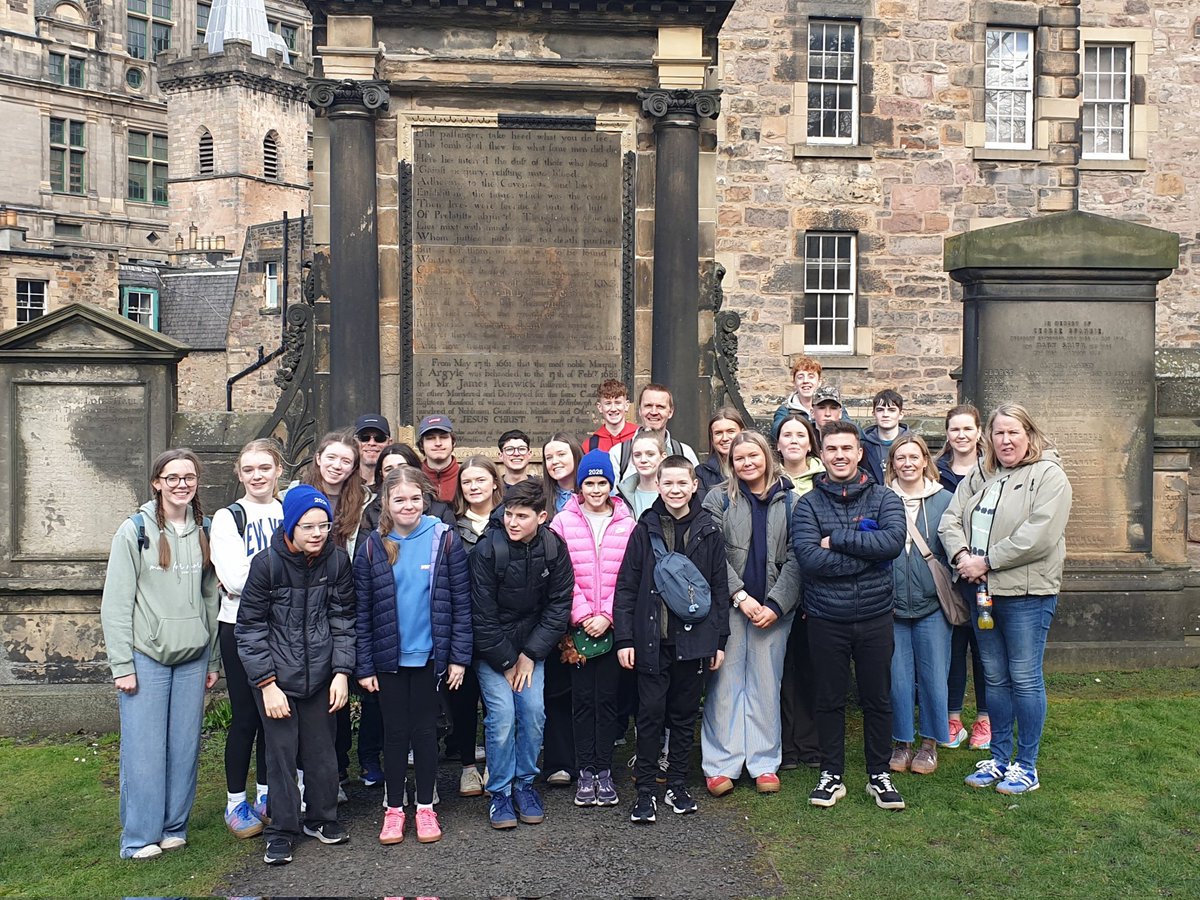
We had more amazing young people out touring with us today, this time from Ballymoney Baptist youth group, Northern Ireland. We covered 160 years of reformation history, visiting several locations. We love sharing this important history with the next generation and its great to see them take a keen interest in it. Why not arrange one for your church youth group or youth organisation? Scottish Reformation Tours. Christ Centred, Christian Led, Custom Tours. reformationtours.org #scotland #reformation #johnknox #covenanters #scottish
Scottish Reformation Tours tweet media
English
0
1
15
266
Scottish Reformation Tours
Scottish Reformation Tours@ToursScottish·
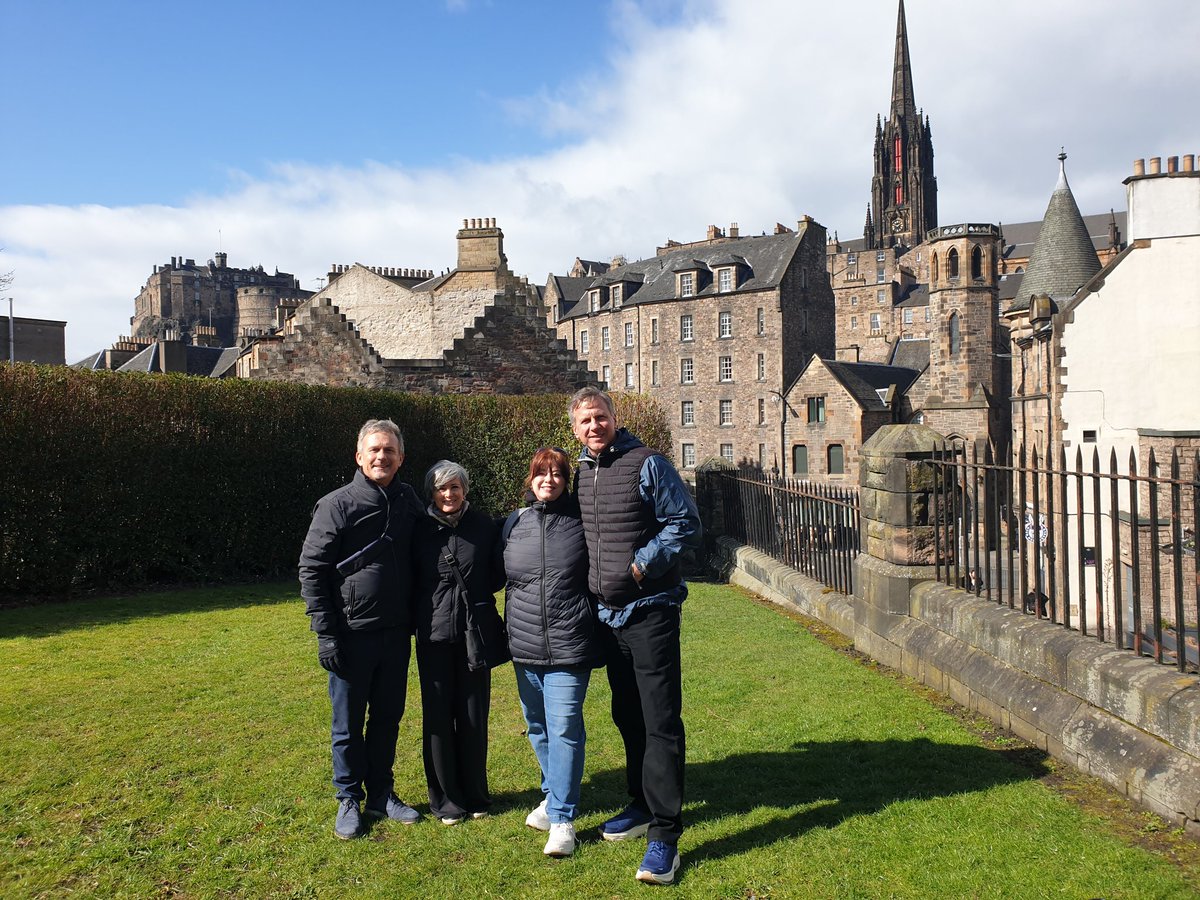
We were out and about in Edinburgh today with two lovely couples from Texas and Tennessee. Some previous satisfied clients kindly recommended our services to them, something that happens a lot! We visited many reformation locations around the city in the morning, before touring the castle after lunch. Slots are booking up fast for our tours, so please get in touch with us as soon as you can if you plan on using us. Scottish Reformation tours Christ Centred ,Christian Led, Custom Tours. reformationtours.org
Scottish Reformation Tours tweet media
English
0
4
14
619
Scottish Reformation Tours
Scottish Reformation Tours@ToursScottish·
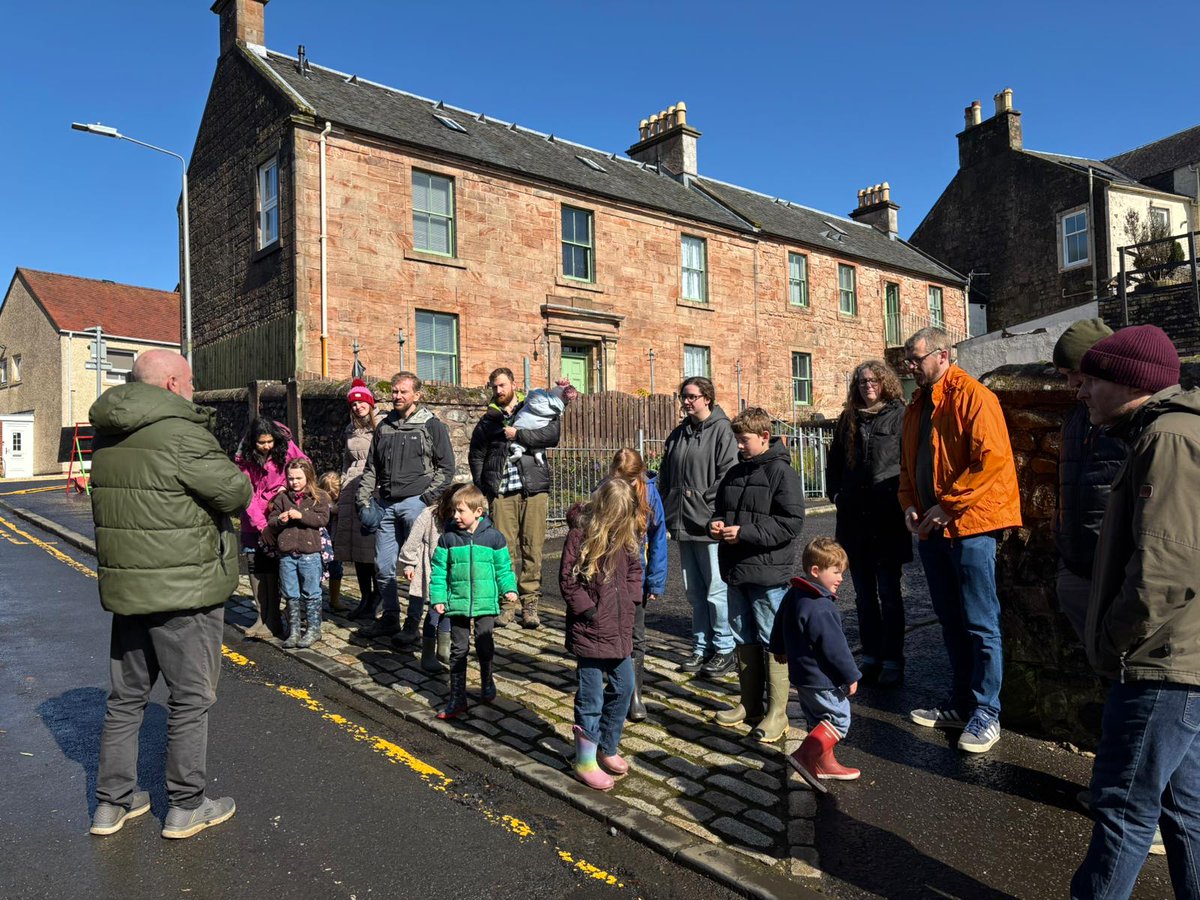
Another great Reformation tour of Lanarkshire and Ayrshire today with our church group. Today we visited lots of sites connected to the Covenanters. Battlefields, open air worship sites, martyr locations...etc. Everyone really enjoyed their tour and it was great to see the young children learn more and take a keen interest in this important history. Why not book a tour for your church or organisation? Scottish Reformation Tours. Christ Centred, Christian Led, Custom Tours. reformationtours.org
Scottish Reformation Tours tweet mediaScottish Reformation Tours tweet mediaScottish Reformation Tours tweet media
English
0
0
4
112
Scottish Reformation Tours
Scottish Reformation Tours@ToursScottish·
In March 1639 the Covenanters were busy securing castles for defence against the king. They blew open the gate of Edinburgh castle and stormed inside, but with Dumbarton Castle they had to adopt a different approach. Perched on a volcanic rock overlooking the Firth of Clyde, Dumabarton Castle is a formidable fortress and one that the Covenanters knew they needed to capture to prevent the king landing reinforcements from Ireland. But they were not going to take it by siege or bombardment, but by daring and design. They knew how defended it was and they were determined to take it without wasting lives in a bloody assault. So, on the last Sunday of March 1639, the castle’s captain, Sir John Stewart, 1st Earl of Traquair, a devout and loyal servant of the king, went out to hear worship at a nearby church, suspecting no danger. But the Covenanters had laid their plan. They captured him swiftly, stripped him of his clothes, and dressed another man of similar build in them. Then, under threat of death, Stewart was forced to give the watchword that would gain them entry to the castle. That night they approached the castle in silence, the disguised man at their head clothed in the captain’s garments. The sentries upon the walls saw forms returning through the dark and thought nothing of it, recognising the clothes and familiar shape of their own captain. The disguised man cried out the watchword into the dark, and from within there came no challenge. The gates, trusting in what they thought they knew, were opened. In an instant the Covenanters were through, pouring into the fortress before the garrison could grasp the trick. They had come in greater strength than the defenders could resist, and Dumbarton was theirs. Captured by cunning not cannon. Now that wasn't the end of the story, the castle would be lost again before another capture by the Covenanters. Years later during the persecution of the Covenanters under Charles II, Dumbarton would be used as a prison for them.
English
2
5
12
696
Scottish Reformation Tours
Scottish Reformation Tours@ToursScottish·
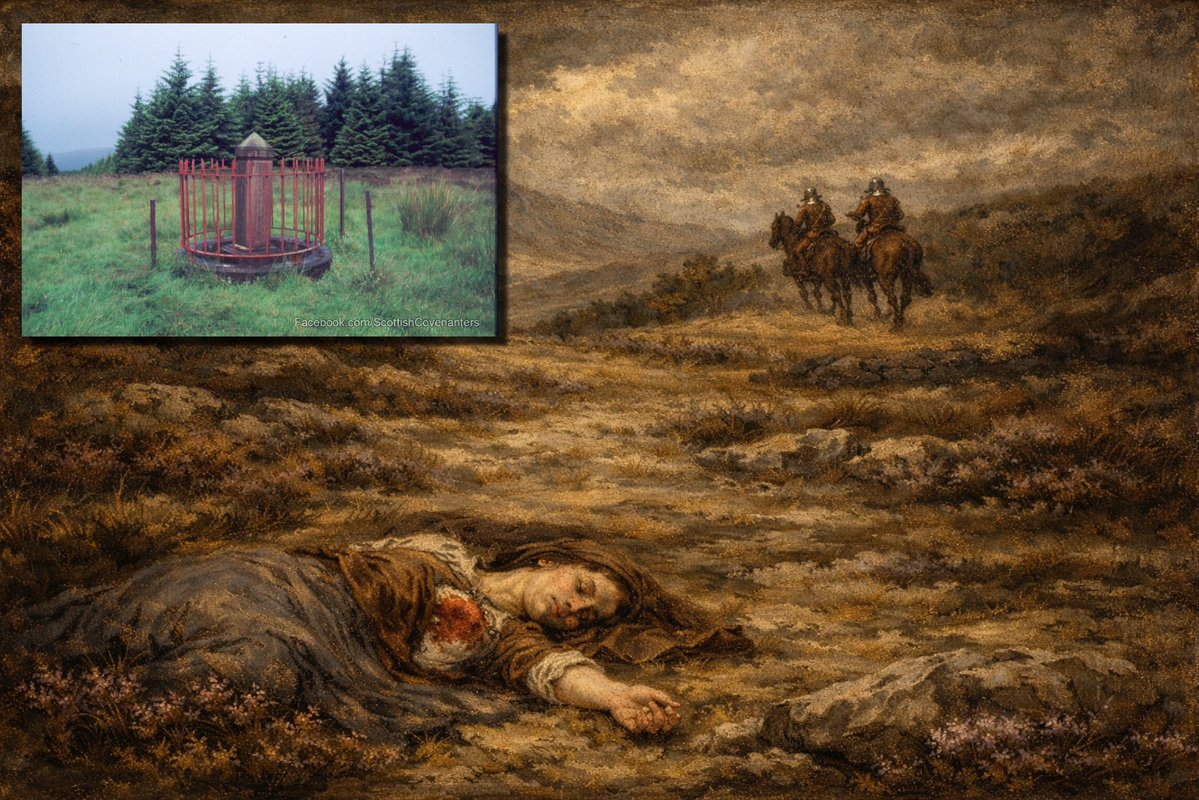
Margaret Gracie was a compassionate and courageous young woman who devoted herself wholeheartedly to supporting her fellow Covenanters. Despite the constant danger, she repeatedly carried food and other necessities to those forced to hide on the moors and among the thickets. Each journey put her life at risk, and on many occasions she narrowly escaped capture by government troops. Margaret lived at Marmollach in the parish of Tynron, in Nithsdale. A young man from her area wished to marry her, but Margaret did not return his feelings. When she refused his proposal, his wounded pride turned to bitterness. Seeking revenge, he reported to the authorities that Margaret’s family sympathised with the Covenanters and that Margaret herself was supplying them with food and provisions. He later came to regret what he had done and begged for her forgiveness, which she graciously gave. Yet by then the harm had already been done, and soon her family found themselves under the scrutiny of the troops. Even so, Margaret refused to abandon her work. She continued to bring aid to those who suffered for their faith. On one occasion, she was captured at a conventicle along with several others. While they were being taken to Drumlanrig, however, a group of armed Covenanters intervened and rescued them, securing Margaret’s freedom. After this, the harassment of her family grew even more severe. When soldiers approached their home, they were often forced to flee into the cold darkness of night. Still, Margaret remained steadfast in her service to the persecuted. Her final moments came while attending a conventicle at a place known as the Whig’s Hole on nearby Altry Hill. The gathering was suddenly attacked by government troops, and the worshippers scattered in panic as they were pursued. Shots were fired, and Margaret was struck and killed. Another man, George Allan, also lost his life. Later, their fellow Covenanters buried both of them. Although it was long known throughout the district that these two martyrs lay buried there, their graves were left unattended until 1857, when local shepherds took the initiative to honour their memory. A small committee was formed, and it was arranged for the Rev. Peter Carmichael, then of Scaurbridge, Penpont, to preach at the site. He delivered a powerful sermon on the words, “Of whom the world was not worthy,” and around 1,500 people gathered to hear him. A generous collection was taken, enabling the committee to erect a modest monument on the place where Margaret Gracie and George Allan had fallen. The memorial, bearing an inscription, consisted of a square column about five feet high, set into a large stone base and enclosed by a neat iron railing. The wording on it reads: IN MEMORY OF GEORGE ALLAN AND MARGARET GRACIE WHO FOLLOWED CHRIST TO MARTYRDOM OF WHOM THE WORLD WAS NOT WORTHY Heb. XI.38 Erected by the proceeds of a Sermon preached here by the Rev. Peter Carmichael Scarbridge, Penpont on 2nd Sabbath of July 1857. Ye ministering spirits who are hovering over Guarding the dust neath its mossy cover We raise not this stone to relieve your cares Or discharge you from keeping your vigils here. When all that are in the graves Shall hear his voice and shall come forth It is expected that this spot Shall yield up their dust. Watch, till the trumpet peal aloud Watch, till the Judge appear with the cloud; Then guide your charge to the gathering throng When the judgement is set to avenge their wrong.
Scottish Reformation Tours tweet media
English
0
0
6
105
Scottish Reformation Tours
Scottish Reformation Tours@ToursScottish·
Did you know that on this day in 1639, the Covenanters pulled off what is often described as the most efficient capture in Edinburgh Castle’s history? Perched high above the city on its volcanic rock, Edinburgh Castle has a reputation as one of the hardest fortresses in Britain to take. Historic Environment Scotland describes it as the most besieged castle in Europe, with records of 23 concerted attempts to capture it across the centuries. Many of those struggles are famous: the brutal sieges of the Wars of Independence, the long and destructive Lang Siege of 1571–73, and Bonnie Prince Charlie’s failure to take the fortress during the Jacobite Rising of 1745. Yet one of the most dramatic episodes in the castle’s history is also one of the least talked about: its astonishingly swift capture by the Covenanters in March 1639. After the signing of the National Covenant in 1638, and knowing conflict was coming, the Covenanters moved quickly in March 1639 to secure key ports, arsenals and strongholds across the country before royal forces could react. Edinburgh Castle was the biggest prize of them all. Covenanter commander Alexander Leslie approached the castle under the cover of a parley with the governor. While that conversation held attention at the gate, Leslie’s men fixed a petard — an explosive charge — to the entrance. Moments later, the blast tore the front gate apart. Covenanter troops surged through the breach, stormed into the fortress, and secured control of the castle in around 30 minutes, with very little bloodshed. The capture stands out not just because it was fast, but because it was brilliantly executed: surprise, deception and timing achieved what prolonged bombardment often could not. It was the most efficient capture ever carried out at Edinburgh Castle. #Scotland #Edinburgh #Edinburghcastle #Reformation #Covenanters
English
0
1
7
302
Scottish Reformation Tours
Scottish Reformation Tours@ToursScottish·
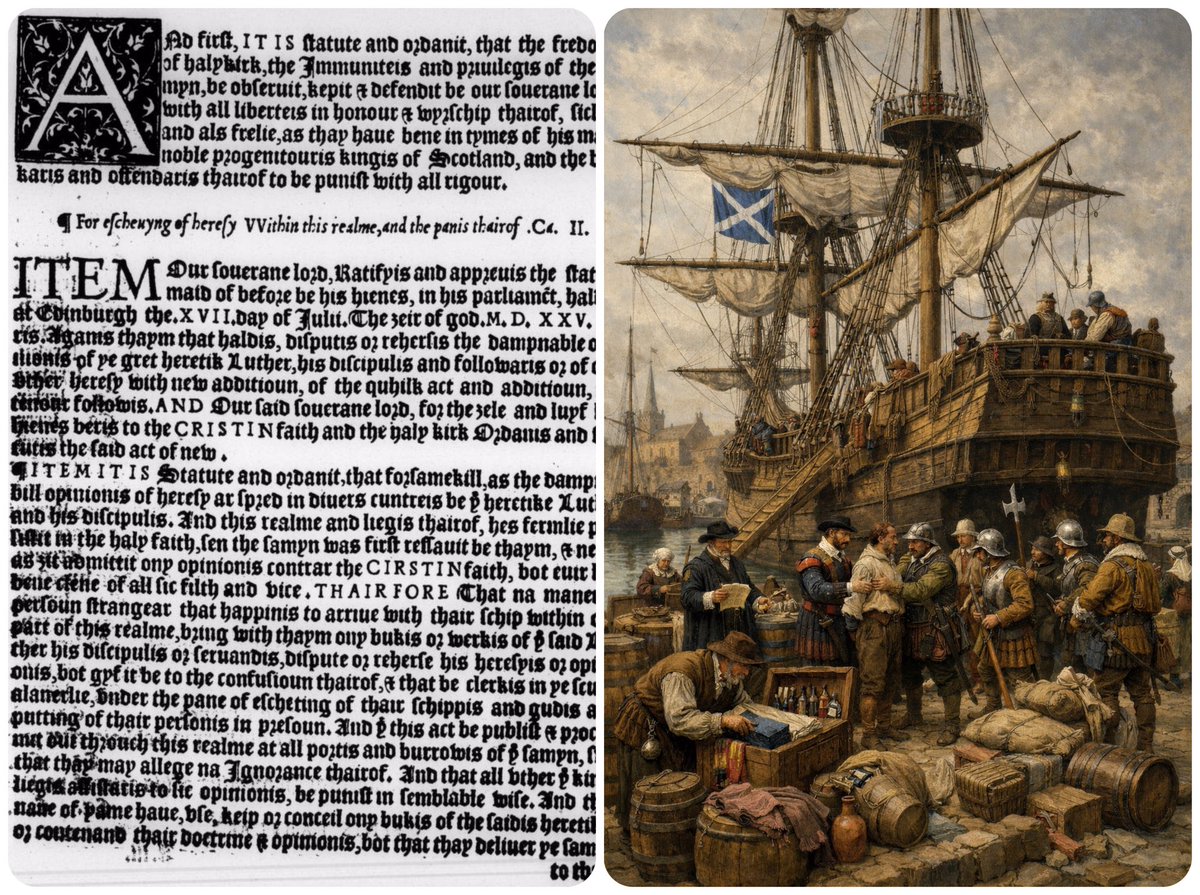
The writings of Martin Luther were seen as a serious threat to pre-reformation Scotland, so much so that this act was passed in 1525 warning that anyone caught bringing them in to Scotland would have their ship seized and themselves put in prison. Here is the wording on the act. “our sovereign lord ratifies and approves the statute made of before by his highness in his parliament held at Edinburgh, 17 July 1525, against those who hold, dispute or rehearse the damnable opinions of the great heretic [Martin] Luther, his disciples and followers, or of any other heresy, with a new addition, of which act and addition thereto the tenor follows; and our said sovereign lord, for the zeal of love his highness bears to the Christian faith and the Holy Kirk, ordains and statutes the said acts anew: Item, it is statute and ordained that, forasmuch as the damnable opinions of heresy are spread in diverse countries by the heretic [Martin] Luther and his disciples, and this realm and lieges thereof have firmly persisted in the holy faith since the same was first received by them and never, as yet, admitted any opinions contrary to the Christian faith, but have ever been clean of all such filth and vice, therefore, that no manner of stranger who happens to arrive with their ship within any part of this realm bring with them any books or works of the said Luther, his disciples or servants, dispute or rehearse his heresies or opinions, unless it be to disprove them, and that by the clerks in the schools only, under the pain of escheating of their ships and goods and putting of their persons in prison; and that this act be published and proclaimed throughout this realm at all ports and burghs of the same so that they may allege no ignorance thereof; and that all other the king's lieges, assistants to such opinions, be punished in similar ways, and that none of them have, use, keep or conceal any books of the said heretic or containing their doctrine and opinions, but that they deliver the same to their ordinaries within 40 days under the pains foresaid, and the effect of the said act to strike upon them, and letters to be directed to make publication hereof in form as is appropriate.”
Scottish Reformation Tours tweet media
English
0
5
9
439
Scottish Reformation Tours
Scottish Reformation Tours@ToursScottish·
Born on this day, 17th March 1676, Thomas Boston. Thomas Boston (1676–1732) is best known as the minister of Ettrick, author of Human Nature in Its Fourfold State, and one of the key figures in the “Marrow Controversy”. But did you know as a child he was imprisoned? During the persecution of the Covenanters, Thomas’s family suffered for their non-conformity to Episcopacy and bishops. His father John spent time in prison for this and at one point young Thomas was also put in prison with him. But Thomas was not deterred, in fact later on he often rejoiced that he had “been honoured to have fellowship with his father in his suffering”. Despite prison, once they were released Thomas continued to attend the Covenanters field services with his father. In the summer of 1687, 12 year old Thomas went with his father to hear Rev Henry Erskine preach at Whitsome. There, under gospel-centred preaching, his heart was awakened and drawn to Christ. Two sermons especially marked the turning point in his conversion. The first was from Matthew 3:7: “O generation of vipers, who hath warned you to flee from the wrath to come?”. The second was from John 1:29: “Behold the Lamb of God.” Through these messages, Boston came under deep conviction and began earnestly seeking a saving interest in Jesus Christ. From that time, he said the Lord’s Day became “especially precious” to him. After studying at Edinburgh University and several unsettled early jobs, he was ordained at Simprin in 1699 and moved to Ettrick in 1707, where he spent the rest of his ministry. Boston was known as an exceptionally diligent pastor. He preached frequently, visited every household in his parish twice a year, and remained faithful to his duties despite poor health, personal grief, and family hardship. He and his wife, Katharine Brown, had ten children, but six died young, losses that marked him deeply. His larger importance came from theology and church controversy. He opposed the abjuration oaths because they seemed to endorse episcopacy, challenged the heresies of John Simson, professor of divinity in the University of Glasgow and became a central figure in the Marrow controversy, where he defended ideas associated with Edward Fisher’s “The Marrow of Modern Divinity”. Although the Church of Scotland condemned the Marrow, Boston’s role in the controversy helped make him widely known. His best-known book, Human Nature in its Fourfold State, became one of the most widely reprinted Scottish books of the eighteenth century and strongly influenced evangelism in Britain and America. He died in 1732, still carrying out pastoral work to the end, even preaching his final sermons from his deathbed to parishioners gathered outside his window. He is buried in Ettrick Kirkyard.
Scottish Reformation Tours tweet media
English
0
3
6
403
Scottish Reformation Tours
Scottish Reformation Tours@ToursScottish·
At the crest of the hill between Kirkfieldbank and Lanark stands a place still known as Steel’s Cross. Its name preserves the memory of John Steel of Waterhead farm near Lesmahagow, a Covenanter whose story is one of endurance, violence, and remarkable escape. In 1684, Steel’s wife, Marion, gave birth to a child. Learning that persecuted Covenanter ministers were hiding in the Lanark area, Steel set out to find one who could baptise the baby. With him went Archibald Stewart of Underbank, near Crossford. As they neared the top of the hill from Kirkfieldbank to Lanark, they were recognised by people who knew them to be Covenanters. Stewart was quickly overpowered, knocked to the ground, and taken captive. Steel, however, was a strong and athletic man, and he might well have escaped had fate not turned against him. The miller from nearby Mouse Mill, having seen Steel pass and followed him, struck him down with his rynd—the iron bar used to support an upper millstone. The blow was so severe that Steel appeared to be dead. Believing him finished, the attackers abandoned his body and continued on to Lanark with Stewart as their prisoner, already celebrating the 1,000 merks promised for Steel’s capture. But Steel was not dead. The bitter cold stemmed his bleeding, and somehow he found the strength to drag himself down the steep bank toward the River Clyde. Crossing the river on the ice, he hid among the broom on the Corehouse side, at a spot known as Boathill. When the men later returned from Lanark to collect the body they expected to find, it had vanished. Furious, the soldiers turned on the miller and beat him brutally for letting their prize slip away. Still concealed in the brushwood, Steel faced another strange moment in his ordeal. A white pony appeared and stood gazing at him. Fearing the animal might draw attention to his hiding place, he tried to drive it off. Yet as evening fell, the pony remained nearby, quietly grazing. At last, Steel climbed onto its back and rode home to Waterhead. From there, he made his way to his hiding place on Mennock Hill. No owner for the pony was ever discovered, despite every effort to find one. It stayed at Waterhead for the rest of its life, dying there of old age. Steel himself survived, though not unscarred. He carried on his head the marks of the miller’s attack for the rest of his days. His companion, Archibald Stewart, was taken to Glasgow, where he was tried, convicted for being a Covenanter, and hanged. Learn more about the Covenanters on one of our tours. Scottish Reformation Tours. Christ Centred, Christian Led, Custom Tours. reformationtours.org
Scottish Reformation Tours tweet media
English
1
18
43
1.9K
Scottish Reformation Tours
Scottish Reformation Tours@ToursScottish·
We were out again today in Edinburgh with two couples from Wisconsin and Washington State, USA. We covered so much history with many Reformation and Covenanter locations visited, it really was an in depth tour. Book your own private tour and get to see and hear more about Scotland's Reformation yourself. Scottish Reformation Tours. Christ Centred, Christian Led, Custom Tours. reformationtours.org
Scottish Reformation Tours tweet media
English
0
1
4
169
Scottish Reformation Tours
Scottish Reformation Tours@ToursScottish·
As well as the important figures in Scotland’s Reformation and Covenanter history, we also think it’s important to remember and keep alive the stories of those perhaps not so well known. Like a theology student by the name of John Dick who was martyred in Edinburgh on this day, 5th March 1684. In the early hours of 16 September 1683, twenty-five prisoners broke out of the Canongate Tolbooth. The escape was possible because the Jailer didn’t stay overnight. Each evening he locked the Tolbooth and went home, leaving the prisoners to their own devices. Somewhere along the way, a saw was smuggled inside, and night after night the men worked patiently at the iron bars, cutting bit by bit in the dark. At last, on that September night, they sawed clean through and slipped out. For a moment, though, the whole plot almost collapsed. One of the severed bars dropped onto the street below with a sharp clang, echoing through the stillness. It was the kind of sound that should have brought a watchman running—but somehow, no one came. Most of the escapees were not Covenanters; some were imprisoned simply for debt. But a few of those who fled were Covenanters, including John Dick, a theology student who had fought at Bothwell Bridge. John had been captured the previous month and sentenced to death, with the execution set for 28 September. His escape came just in time to save him from the scaffold—at least for a while. His freedom, however, lasted only about six months. Of all the men who broke out that night, he was the only one ever recaptured. He was brought to a new trial on 4 March 1684 and charged that he confessed and believed that: 1) He had been at Bothwell in arms, and owned it as lawful. 2) That episcopacy was unlawful, and the laws establishing the same. 3) That since the restoration, there hath been no free parliament. 4) That episcopacy and erastianism since established, are contrary to the word of God. 5) That the supremacy, as established, is most horrid blasphemy. 6) That persons assaulted at conventicles may defend themselves. 7) That field conventicles are lawful, and turning out presbyterian ministers, unlawful. 8) That the covenants are binding, and the test is an un lawful oath. Being found guilty of high treason, he is condemned once again, this time to be hanged the following day at the Grassmarket. On the 5th March, as he stood on the gallows he said: “I am come here this day, and would not change my lot with the greatest in the world. I lay down my life willingly and cheerfully for Christ and His cause, and I heartily forgive all mine enemies. I forgive all them who gave me my sentence, and them who were the chief cause of my taking; and I forgive him who is behind me (the executioner.) I advise you who are the Lord's people, to be sincere in the way of godliness; and you who know little or nothing of the power thereof, to come to him, and trust God, he will not disappoint you. I say trust in the Lord, and he will support or strengthen whatever trouble or affliction you may meet with. I remember, when Abraham was about to sacrifice his son, Isaac said, 'Here is the wood and the fire, but where is the sacrifice?' now blessed be the Lord, (placing his hand on his chest) here is the sacrifice, (pointing to the gibbet) Here is the altar (and pointing to the ladder), here is the wood.” Then, with the rope already tight at his neck, he raised his voice one final time: “Now, I can hardly get speaking for the rope about my neck, farewell all friends and followers of Christ, and again, I say, farewell and adieu all earthly enjoyments..” He gave the hangman the agreed sign, prayed briefly to himself, drew a napkin over his face, and said: “Farewell all friends in Christ, and into thy hands, O Lord, do I commit my soul.” And with that, the hangman carried out his duty. #Scotland #Covenanters #Reformation #Presbyterian
English
0
1
11
517
Scottish Reformation Tours
Scottish Reformation Tours@ToursScottish·
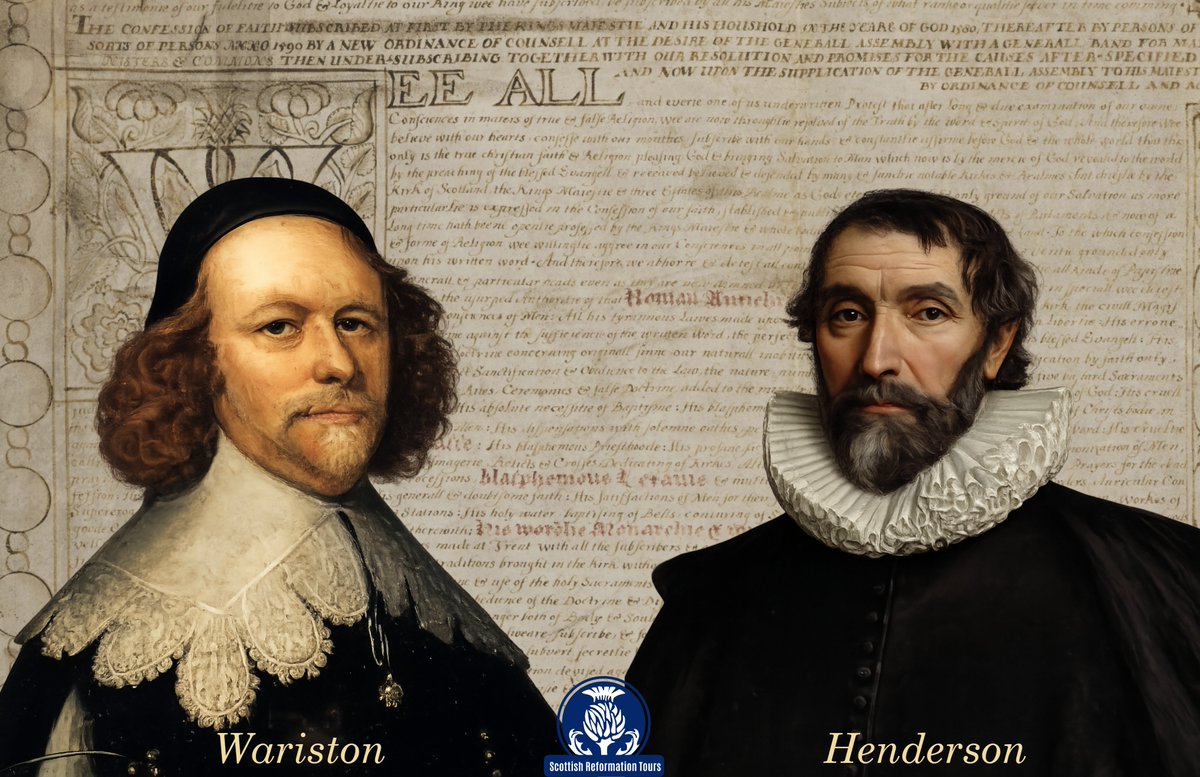
Today is the 388th anniversary of the signing of the National Covenant in Greyfriars, Edinburgh. Within days, it had been signed by the people of Edinburgh, and copies were distributed across Scotland for others to add their names. Within weeks, it had gained widespread support throughout the Lowlands, including from nearly all nobles. While progress was slower in the north, many eventually signed as well. Signing the covenant was not an act of rebellion but rather an appeal to the law of the land against royal tyranny. It declared that Jesus Christ was the sole head of the church and that the church should be free from control by the king or government. Archibald Johnston of Wariston recorded the event in his diary. “Wednesday, 28 February 1638, that glorious marriage day of the kingdom with God…The noblemen having appointed the body of the gentry to meet at two in the Greyfriars Kirk to hear copies of it read and to answer objections, I proposed and resolved to have the principal ready in parchment…[that]…it might be presently subscribed…after a divine prayer most fit for the time and present purpose made by Mr Alexander Henderson, the Covenant was subscribed first by the noblemen and barons all that night till 8 at night.” Learn more about the covenanters on a Scottish Reformation Tour reformationtours.org #Reformation #Covenanters #presbyterian #scotland #scottishhistory
English
2
12
30
1.2K
Scottish Reformation Tours
Scottish Reformation Tours@ToursScottish·
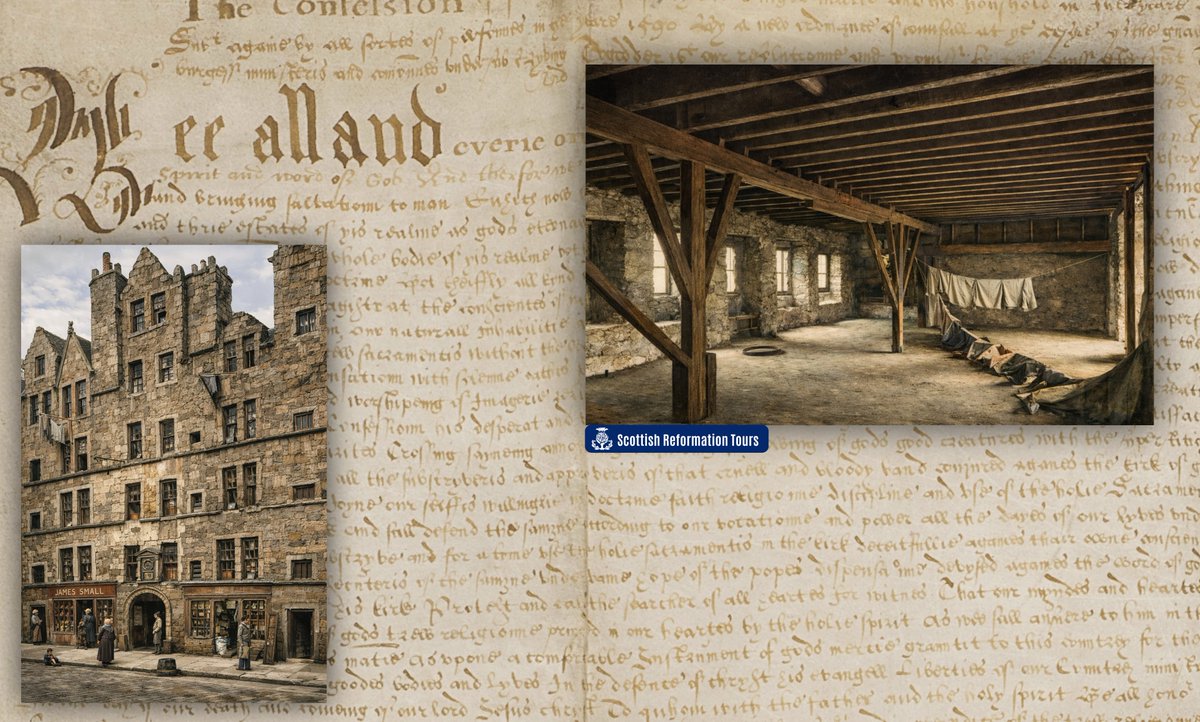
On This Day...More build up to the anniversary of the signing of the National Covenant. This upstairs room on the second floor of the Tailors’ Hall in Edinburgh’s Cowgate—now the Three Sisters pub—was the setting for a pivotal moment in Scottish Covenanter history. On 27 February 1638, the day before the National Covenant was signed publicly, the Covenant was read here for the first time to Scotland’s ministers. That morning, its co-authors—Archibald Johnston of Wariston and Alexander Henderson—had completed the draft. It was first presented at a meeting of nobles in John Galloway’s house in Niddry’s Wynd. Later, the text was read again at a private gathering with the Commissioners of Presbyteries in the Tailors’ Hall—specifically in “the summer-house in the yaird.” Objections were raised, questions answered, and the document revised. From there, the Covenant was carried up to the second-floor room, where 200 to 300 Covenanter ministers had assembled. A vigorous discussion followed. Concerns and queries were aired, and each objection was addressed. When the debate finally settled, the ministers voted unanimously to approve the amended text. After the vote, John Adamson, Principal of the College of Edinburgh and moderator of the meeting, offered thanks to “The Lords and these that were with him for taking the pains to come and communicate things with them,” calling them “singular instruments, both now and before, in so honest a cause.” The Earl of Rothes responded with characteristic humility. They deserved no praise, he said, because maintaining such unity—despite “the crafty machinations of these who laboured a division”—was the work of God. He asked for prayers that the “respect of religion...might always remain with the Supplicants" and that God would prosper the work of those seeking “the glory of God, the peace of the Kirk, and honour of the King.” Prayers were offered, and the meeting drew to a close. Johnston of Wariston later wrote simply—and vividly—“My heart did leap within for joy.” The following day, 28 February 1638, the National Covenant was carried to Greyfriars and signed. #SCOTLAND #Covenanters #Churchhistory #Presbyterian #Reformation
Scottish Reformation Tours tweet media
English
0
3
7
303
Scottish Reformation Tours
Scottish Reformation Tours@ToursScottish·
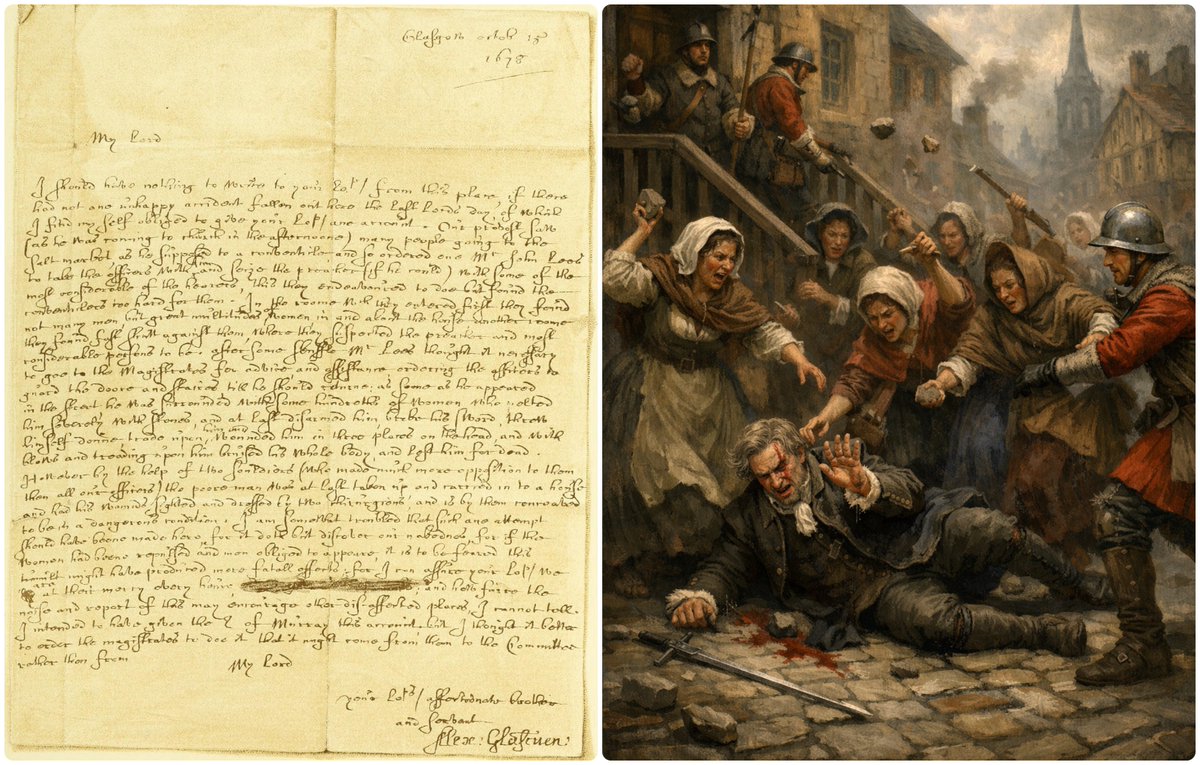
Glasgow women can be a tough lot, as we see from this letter from Archbishop Burnet of Glasgow to the bishop of Galloway and dated Glasgow, October, 15th, 1678. It reports a large disturbance that took place in Glasgow’s Saltmarket, after authorities attempted to break up a covenanter conventicle. According to the account, the town provost, while on his way to church in the afternoon, noticed large numbers of people heading toward the Saltmarket. Suspecting they were going to a conventicle, he instructed Mr. John Lees to take officers with him and attempt to seize the preacher, if possible, along with some of the principal hearers. The officers carried out the order but were unable to overpower those attending the meeting. In the first room they entered, they found relatively few men but large numbers of women in and around the house. A second room was shut fast against them, and they suspected that the preacher and other key persons were inside. After a scuffle, Mr. Lees decided he needed additional advice and support from the magistrates. He left the house, directing the officers to guard the door and stairs until he returned. As soon as he entered the street, he was surrounded by what the letter describes as several hundred Glasgow women. They attacked him with stones, disarmed him, broke his sword, knocked him to the ground, and trampled him. He suffered three head wounds and extensive bruising across his body, and was left for dead. The letter states that two soldiers intervened and with their help, Mr. Lees was eventually carried into a house, where two surgeons examined and dressed his wounds. They judged him to be in dangerous condition. According to a separate report, those Glasgow women defending the conventicle were such a formidable force, that they had to bring in an additional 460 soldiers to finally suppress them.
Scottish Reformation Tours tweet media
English
0
18
57
3.2K
Scottish Reformation Tours
Scottish Reformation Tours@ToursScottish·
Yesterday marked another landmark anniversary in Scotland’s church history. It was the day the National Covenant was begun. By the late 1630s, tensions were boiling over. Scottish Presbyterians believed their faith was under attack, provoked by fierce disputes around the bishops, the Book of Canons, and the Book of Common Prayer. If these changes took root, they feared Scotland’s church would be steered away from Presbyterian worship and governance—and back toward the kind of Roman Catholic influence they had long resisted. So, on the 22nd February 1638, two men were entrusted with a bold mission—to draft a document strong enough to unite the nation in defence of its religion. One was Alexander Henderson, a minister with a sharp mind and an instinct for what would move ordinary people. The other was Archibald Johnston of Wariston, a lawyer whose pen could give religious conviction the force and precision of law. Their solution was both strategic and symbolic. They decided to revive an earlier pledge known as the “King’s Confession” of 1580—a statement originally signed by King James VI in response to anxieties about Catholic influence during his youth, and then signed across Scotland the following year. By renewing it they were saying “We are not inventing something new. We are repeating what Scotland already swore before.” That matters because the whole Covenant is trying to sound like renewal, not rebellion. But they didn’t stop there. The renewed confession would include that full original text—then be strengthened with two new sections: a legal defence, written by Wariston and a practical application, written by Henderson. Together, these three parts became what history would remember as the National Covenant—So a simple way to understand the Covenant is that it has three parts: First: the 1580/81 Confession repeated word for word. Second: a long section that lists old laws and Parliament acts in favour of the reformed faith. Third: the new 1638 promises, where people commit to resist the recent changes and stand together. So it’s: old confession, legal argument, new pledge.. It would soon be signed with extraordinary drama and public resolve at Greyfriars just six days later. And even on the day Henderson and Wariston began their work, the momentum was already building. An advertisement was published and sent throughout the country, calling on “all who loved the cause of God” to come to Edinburgh—not as spectators, but as participants in what they saw as a national reformation.
Scottish Reformation Tours tweet media
English
1
8
30
1.3K
Scottish Reformation Tours
Scottish Reformation Tours@ToursScottish·
We are only days away from the anniversary of the signing of the National Covenant (28 February 1638), so over the next few posts we’ll trace the dramatic build-up to that moment. Today takes us to 20 February 1638—and to a tense, but often overlooked, confrontation in Stirling between those who opposed the king’s church reforms (the future Covenanters) and the royal authorities sent to enforce them. A Nation on Edge The introduction of the Prayer Book and Book of Canons into the Scottish Church in 1637 had triggered widespread resistance. Many Scots believed these measures were a step back toward Rome. What had begun as protest was fast becoming organised opposition. By February 1638, matters were coming to a head. King Charles I dispatched the Earl of Roxburgh, Lord Privy Seal—then at the English court—back to Scotland with firm instructions for the Privy Council to restore order. The Council convened in Stirling, a royal burgh of strategic importance, dominated by its castle and heavy with symbolism. On 20 February, at the Market Cross of Stirling, Roxburgh—joined by the Earl of Traquair, Lord Treasurer, newly returned from the king—publicly read the royal proclamation. It was uncompromising. The king approved the Prayer Book and Canons and strictly forbade any meetings or subscriptions against them. He declared that, “out of our Princely care of maintenance of the true religion already professed, and for beating down of all superstition, having ordained a Book of Common-Prayer to be compiled for the general use and edification of our Subjects, within our Ancient kingdom of Scotland” He insisted he had taken “Great care and pains” in doing so. The proclamation condemned those “Nobility, Gentry, Burroughs, Ministers, and others” who had been meeting “without either Our Consent or Authority.” Any future gatherings would be treated as treason. It ended with a blunt order. All noblemen, barons, ministers, and burgh representatives not resident in Stirling—and not members of the Privy Council or Session—were commanded to leave immediately and not return: “…under the said pain of Treason.” This was not negotiation. It was a warning. But the king’s voice would not go unanswered. No sooner had the proclamation been read and affixed to the Market Cross than the Earl of Hume and Lord Lindsay stepped forward. Speaking in the name of the nobility, ministry, gentry, burgesses and commons, they publicly read their protestation and attached it beside the king’s. They rejected the Prayer Book and Book of Canons. They refused to recognise the Archbishops and Bishops as their judges. And they listed further grievances against the direction in which the Scottish Church was being driven. Two documents—one royal, one defiant—now hung side by side in Stirling. Meanwhile, events were unfolding beyond the Cross. As the proclamation was read, armed and angry Presbyterians had been gathering in the town. By now their numbers had swelled to around 2,000. They assembled in the Church of the Holy Rude, near Stirling Castle—close to where the Privy Council itself was meeting. Their presence caused real alarm. From the Council chamber, this looked perilously close to open rebellion. In panic, orders were issued demanding that the people disperse. They refused. The situation teetered on the edge. It was only when the Council called for three prominent noblemen—Rothes, Montrose, and Wemyss—and agreed to accept the Supplicants’ declinature (their formal rejection of episcopal authority) that tensions began to ease. The influence of these future Covenanter leaders proved decisive. The large armed group left Stirling, and for the moment bloodshed was avoided. A Prelude to Covenant This confrontation in Stirling did not end the crisis. It sharpened it. The king had spoken with threats of treason. The opposition had answered with formal protest. Armed men had gathered within sight of the castle. And influential nobles had emerged as leaders of a movement that was no longer scattered resistance but organised defiance. Eight days later, in Edinburgh, the National Covenant would be signed. Stirling on 20 February 1638 was one of the final warnings that Scotland and its king were moving toward a far deeper conflict than either side yet fully grasped.
English
0
8
25
1.2K
Scottish Reformation Tours
Scottish Reformation Tours@ToursScottish·
On 17th February 1688, in the Grassmarket of Edinburgh, a young minister—only twenty-six years old—walked calmly toward the gallows. He was the last of Scotland’s Covenanter ministers to be martyred. His name was James Renwick. Those who stood near him that morning heard something astonishing. Instead of trembling, instead of pleading, Renwick declared: “I am shortly to appear before the King of kings, and Lord of lords, who will shortly pour contempt on all the kings of the earth who have not ruled for him.” To the rulers who condemned him, this was defiance. To the faithful watching, it was hope. Before ascending the ladder, he sang Psalm 103 and read Revelation 19. Then he prayed, committing his soul to the Lord through the Redeemer and asking that Christ would vindicate His own cause “in his own time.” And then came words that stunned even his enemies: “This is the most joyful day I ever saw… I bless the Lord for the honour of the crown of martyrdom—an honour the angels are not capable of.” To Renwick, death was not defeat. The scaffold was not shame. It was honour. He regretted only that he was being disturbed in worship. “But by and by,” he said, “I shall be above those clouds, and enjoy, and worship, and glorify thee without interruption for ever.” When allowed to speak to the crowd, he did not soften his testimony. “I am come here this day,” he said, “to lay down my life for adhering to the truths of Christ, for which I am neither afraid nor ashamed to suffer.” He declared that he died for three things: 1) For disowning the usurpation and tyranny of James, Duke of York. 2} For preaching that it was unlawful to pay cess 3) For teaching that it was lawful for people to carry arms, for defending themselves in their meetings for receiving persecuted gospel ordinances. Then came words of remarkable conviction: “I think a testimony for these is worth many lives; and if I had ten thousand, I think all little enough to lay down for the same.” He continued by affirming the Word of God as the only rule of faith and life. He owned the Confession, Catechisms, Covenants, all the faithful contendings that have been for the covenanted reformation. He continued by saying he left his testimony approving preaching in the fields, and the defending the same by arms and attaching it to the others that have been “sealed by blood, in scaffolds, fields, and seas.” He left his testimony against popery, prelacy, Erastianism, and every encroachment upon Christ’s royal rights. And even on the edge of eternity, Renwick thought of others. To believers he urged: “Ye that are the people of God, do not weary in maintaining the testimony of the day… make sure an interest in Christ, for there is a storm coming, which will try your foundations.” To the unconverted he spoke with solemn urgency: “Break off your sins by repentance, else I will be a sad witness against you in the day of the Lord.” When ordered to finish, he replied simply, “I have near done.” At the top of the ladder he prayed again: “Lord, I die in the faith that thou wilt not leave Scotland, but that thou wilt make the blood of thy witnesses to be the seed of thy church, and return again and be glorious in this land.” He believed Scotland would yet see better days. As the napkin was tied around his head, he whispered to a friend: “Farewell, be diligent in duty, make your peace with God, through Christ. There is a great trial coming as to the remnant I leave. I have committed them to God. Tell them from me, not to weary, nor be discouraged in maintaining the testimony. Let them not quit or forego one of those despised truths. Keep your ground, and the Lord will provide you teachers and ministers, and when he comes, he will make all those despised truths glorious upon the earth.” And then came his final words: “Lord, into thy hands I commit my spirit, for thou hast redeemed me, O God of truth.” James Renwick was the last Covenanter minister executed in Scotland. Within months, the political storm he foresaw would break. The Revolution of 1688 would sweep away the very powers that condemned him. But Renwick did not live to see that change. His confidence was not in political deliverance but in Christ. He believed that “the blood of thy witnesses” would indeed be the seed of the church. (Image of the Renwick Monument at Moniaive.)
Scottish Reformation Tours tweet media
English
0
12
39
1.5K
Scottish Reformation Tours
Scottish Reformation Tours@ToursScottish·
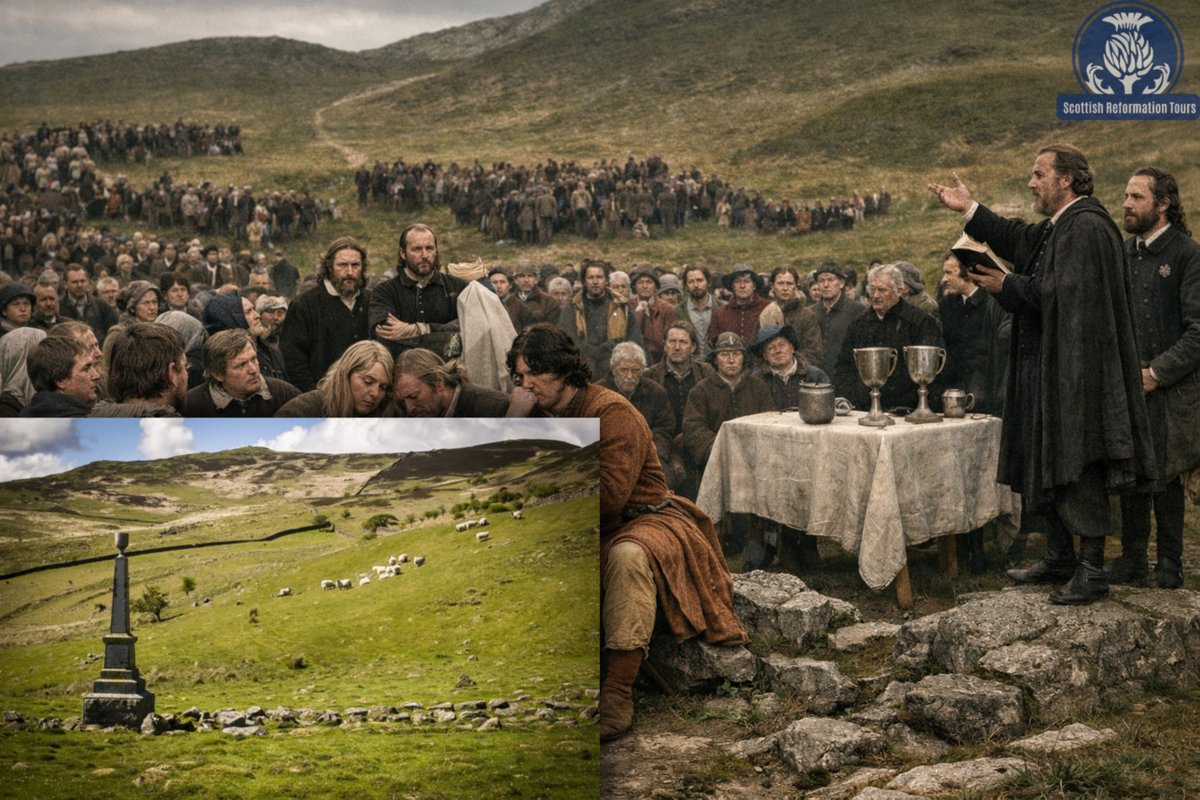
Skeoch Hill. Nestled in a natural amphitheatre among the hills near Dumfries lies another Covenanter obelisk, crowned with a carved Communion cup. The climb up the hillside and down into the hollow is well worth the effort. Within this sheltered dip in the landscape stands the memorial. On its north-east side are still visible the lines of stones that once served as seats for worshippers, along with the bases that supported the makeshift tables prepared in the open air for the celebration of the Lord’s Supper. Look to the surrounding heights and you can imagine sentries keeping watch for approaching troops. It was in this striking and expansive setting that one of the largest field conventicles ever held took place. In 1678, thousands gathered here from across the neighbouring shires. The memorial mentions three thousand, yet contemporary accounts suggest the number was far greater—perhaps as many as fourteen thousand. John Blackadder vividly described the stream of people travelling from Lanarkshire to attend. Four ministers led the services: John Welsh of Irongray, John Blackadder of Troqueer, John Dickson of Rutherglen, and Samuel Arnot of Tongland. Local garrisons are said to have observed the vast assembly from a distance but did not attempt to intervene, the crowd being too numerous to challenge. At the people’s urging, John Welsh—ejected from his parish—organised the Communion, and John Blackadder was invited to assist. These men, along with many others, had been expelled from their churches and forbidden by law to preach. To conduct worship in the fields was to risk imprisonment or death. Even during the harsh persecutions of 1685, conventicles and outdoor Communions continued in remote places throughout the land. In the face of overwhelming opposition, these men and women held firmly to their convictions. Their steadfastness remains a striking testimony to their faith and resolve. The Monument reads: [East side] TO MARK THE SPOT WHERE A LARGE NUMBER OF COVENANTERS MET IN THE SUMMER OF 1678 TO WORSHIP GOD AND WERE ABOUT THREE THOUSAND COMMUNICANTS ON THAT OCCASION CELEBRATED THE SACRAMENT OF THE LORDS SUPPER [North side] THE FOLLOWING EJECTED MINISTERS OFFICIATED JOHN WELSH OF IRONGRAY JOHN BLACKADDER OF TROQUEER JOHN DICKSON OF RUTHERGLEN AND SAMUEL ARNOT OF TONGLAND THE ADJACENT STONES BEING USED AS THE COMMUNION TABLE [West side] THESE STONES ARE SIGNIFICANT MEMORIALS OF THOSE TROUBLOUS TIMES IN WHICH OUR FATHERS AT THE PERIL OF THEIR LIVES CONTENDED FOR GREAT PRINCIPLES OF CIVIL AND RELIGIOUS FREEDOM [South side] ERECTED BY VOLUNTARY SUBSCRIPTION IN 1870
Scottish Reformation Tours tweet media
English
0
4
34
1.5K