

TradingWithTEP
88 posts
TradingWithTEP
@TradingWithTEP
A Math-based community for Real Traders. Our focus: Volatility and Probability. Our Specialty: Math Our Goal: To Dismantle the Scam that is "Technical Analysis"
Behind the Charts Katılım Kasım 2024
103 Takip Edilen24 Takipçiler
TradingWithTEP retweetledi

@Zscorr0 @tradingview That's the issue, they don't think.
English

@adamcreates_ @donfullermo can you please give me some details about this?
I have an entire Institutional quant/stat analytical suite i have in Beta form...
would like more information on this if you could.
English

English
@Zscorr0 Also, wouldn't this be past tense? "Worked" its already drawn. "Work" is done. 🤣
English
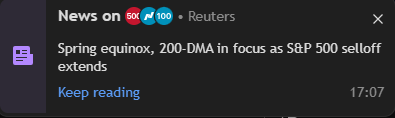
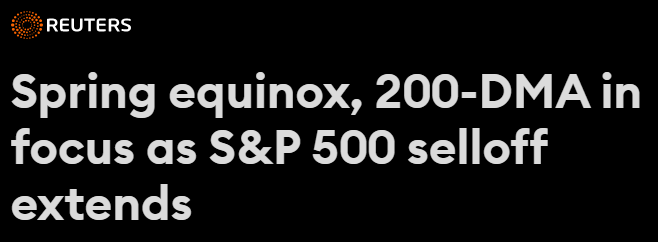
Calls this “working”.
Give him more crayons.
He’s super busy.
Cassandra Unchained@michaeljburry
I am working on something $PLTR.
English
TradingWithTEP retweetledi


The Illusion of TA vs. The Harsh Reality of Quantitative Trading
Let’s explore a critical aspect of trading: the disparity between the illusions created by Technical Analysis (TA) and the often harsh reality of quantitative trading. It’s time to break down most common illusions and examine why these two approaches yield such different outcomes.
The Allure of TA
TA tools like RSI, MACD, moving averages, chart patterns and suport/resistance trendlines are popular for their simplicity. Traders can easily spot patterns, which creates the illusion that success is just about recognising and acting on these signals. This approach makes trading feel intuitive and straightforward, leading to a sense of control over market movements.
False Sense of Control
The allure of TA can breed overconfidence. The belief that one can "time" entries and exits based on historical patterns can be misleading. This false sense of control often leads traders to believe that mastering TA is the key to consistent profits.
Ignoring Market Complexity
However, what TA often overlooks is the inherent complexity of financial markets. Price movements are influenced by a great sum of factors, including economic data, geopolitical events, and market sentiment. By focusing solely on price patterns, TA reduces this complexity and creates an incomplete picture of market dynamics.
Market Inefficiencies
Moreover, TA fails to identify true market inefficiencies/price discrepancies that could be exploited for profit. These inefficiencies often arise from irrational behaviour among market participants. Unfortunately, TA indicators lack rigorous statistical validation, they’re more akin to educated guesses than thorough analyses.
Chasing Illusions
Traders using TA often fall into the pattern-chasing trap. What one trader interprets as a bullish signal, another may see as bearish. This subjectivity can lead to inconsistent decision-making and, ultimately, poor trading outcomes. Traders may also succumb to confirmation bias, only recognising patterns that reinforce their beliefs while ignoring contrary evidence.
Quantitative Indicators: Rigorous but Rare
In contrast, quantitative indicators aim to incorporate statistical rigour into trading. These methods also analyse historical data and employ sophisticated models and statistical tests to identify true market edges. Truly rigorous quantitative tools are very rare in the trading space and that goes double for the retail space.
Understanding True Inefficiencies
True market inefficiencies, like persistent mispricings due to behavioural biases or market constraints, can occasionally be quantified and exploited through quantitative tools. Yet, these inefficiencies are typically rare and fleeting, often eroding quickly as more participants leverage similar strategies.
Exposing Limitations
Quantitative trading reveals the complexity and randomness of financial markets. Unlike the perceived certainty of TA, the reality of quantitative models often uncovers the limitations of previously identified edges. Many backtests of strategies lack statistical rigour and validity. For instance, a strategy that appears profitable in backtesting might only succeed because it fits historical data too closely. This is known as overfitting.
Example: Imagine a trading strategy that has you buying based solely on a moving average crossover in a trending market. The backtest shows impressive profits over the past decade, but it was designed to account for that specific market condition. When market conditions shift or enter a sideways range, the strategy may perform poorly, exposing its limited applicability. Without proper statistical validation methods such as cross-validation or out-of-sample testing, traders may be misled into believing the strategy is robust when it's only a product of the specific dataset used.
Usually, when TA tools are combined with a quantitative approach, the illusion quickly falls apart. Quantitative tools are often not the most attractive to traders, as they paint the market picture in the most realistic way. And the reality of the markets is often disappointing for those who see it as an escape or an easy way to financial freedom!
The key point you should take away from this thread is not necessarily that TA indicators don't tell you anything useful about the market. Some might...sometimes... rarely...almost never😁. The key point is that they do not offer or help you identify a market edge in the form of an inefficiency/mispricing.

English
@Zscorr0 Only next level market applications come from this man.
Nobody does it better. Bet the farm 🚜
English
@Zscorr0 @gainzy222 were you molested by your art teacher and the pain still lingers? is that why you still draw?
English
Textbook CT retard.
Says words he has no fucking clue what they mean.
gainzy@gainzy222
I mentioned pair trading was easier earlier, here’s one I took Long pythusdt, short linkusdt Betting pyth outperforms link regardless of market direction Pyth is just a better oracle imo, they update data more frequently so perps use them more often Market hasn’t priced it in
English
@Zscorr0 How to self report 20+yrs of education was worthless... SMH.
Should join TEP get oil checked.
English
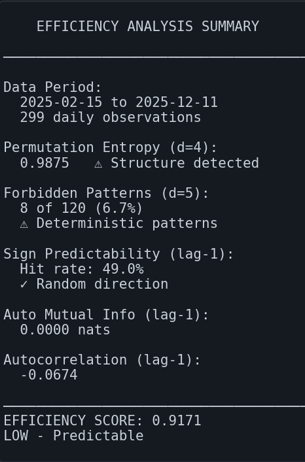
20 years plus and the political science major doesn’t know how efficiency is measured.
No one in his replies knows either.
English
If **everyone** is buying who is selling it to them.
I don’t know why this fucking idiot talks.
Ledger 🇺🇸@ledgerstatus
If nobody sells, everybody makes money
English
.@MartinShkreli who didn't know what stdev of log returns was, literally still can't do percentage.
Says $30k to $260k is 603%.
English
If you can't tell @MartinShkreli is an idiot, it's only because you're equally as dumb.
English
@Zscorr0 @gainzy222 @gainzy222 look up which numerals those might be 💀🤡 how do Retards get so much recognition and wealth man i swear.
English
