GaZ
62 posts

GaZ
@TradrLund
Keep yourself mentally and physically fit; Remain generous with yourself and others; Stay deeply in study about your craft. Whatever is yours will then arrive .
Katılım Nisan 2019
668 Takip Edilen44 Takipçiler
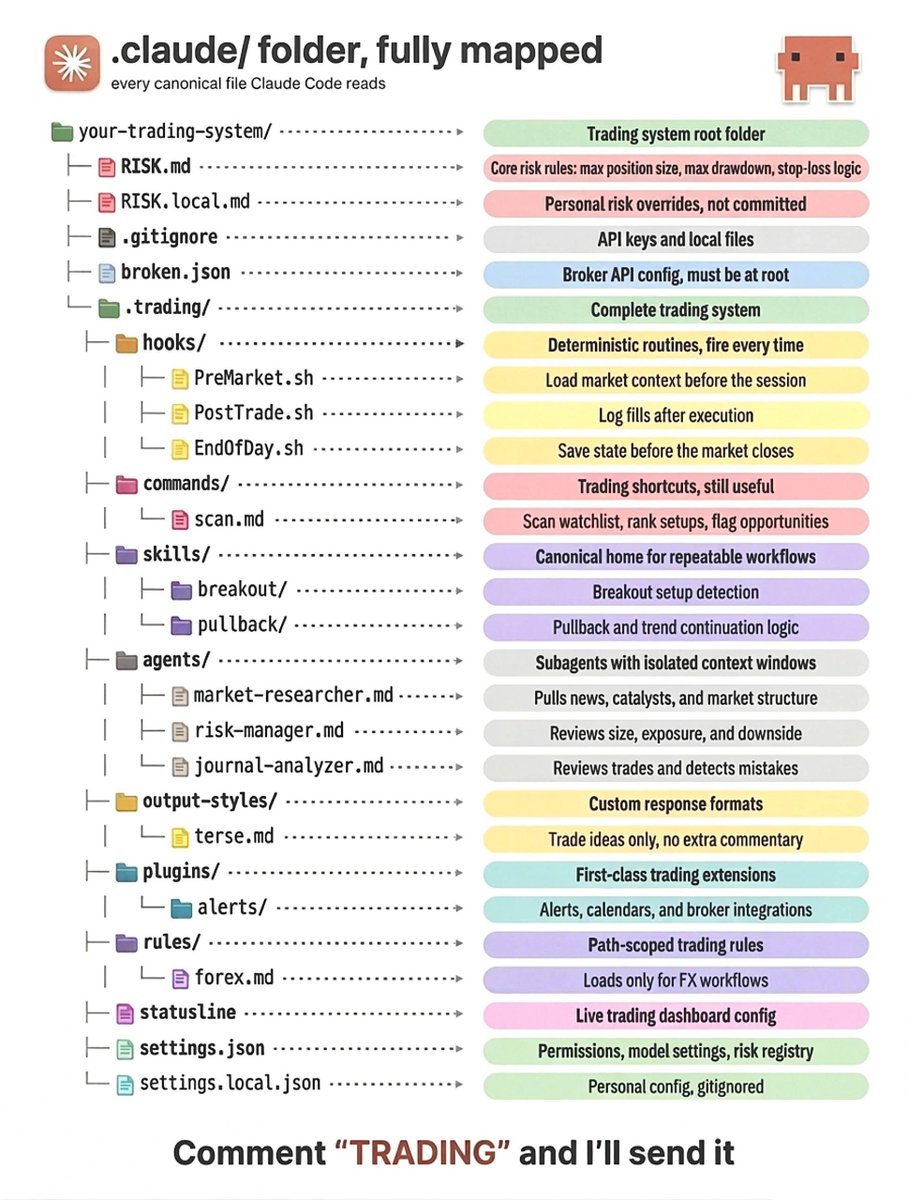
New PDF just dropped
1. Trading with Claude
2. Trading Prompts
It’s free
Who wants it?

English
Claude Trading Folder
I’ve compressed the best trading prompts into one PDF
Get it for FREE:
• Like + Repost + Comment “TRADING”
• Follow me so I can DM you
English

“Bro I’ve been trading for 6 months and I’m still unprofitable what do I do?”
You can start by building some patience
It took me 4+ YEARS to become a profitable trader
That whole time my daily routine would be:
•Check for trade setups before work
•Go to work (I was a bricklayer and worked in Tesco)
•Check for trade setups at lunch and after work
•Go to the gym
•Backtest my strategy or watch trading YouTube videos
This was my daily life for 4 years
Really boring, but I kept consistent and now I’m a 7 figure funded trader doing what I want, when I want
It’s going to take longer than you expect - but it’s worth it in the end
English

I produced a video that teaches you 3 rule-based trading strategies that work (backed by 25 years of data).
You’ll get the exact trading rules, full backtest results, and printable cheat sheets.
Interested?
Reply “yes” and I’ll send you this 54-minute training.
(You must follow me so I can DM you.)
English
@samuraipips358 Would it be possible to repost it here Yumi ? Thanks alot
English
A year ago I posted that a 90% win rate is virtually impossible — over a large sample, with a sound risk-reward ratio.
I explained the math.
I explained the logic.
I was specific about the conditions.
Someone argued.
His account no longer exists.
This is not a coincidence.
It is a structure.
A win rate that high, sustained over a large sample without sacrificing risk-reward, is mathematically unsustainable.
Anyone who believes otherwise is building on a foundation that the math will eventually collapse.
It is not a matter of skill.
It is not a matter of luck running out.
It is a matter of numbers that do not allow it.
Profit is not built on win rate alone.
Understand the real rules of this game, and prepare yourself to operate inside uncertainty — not to escape it.
English
@PeterLBrandt Difficult one ! Left shoulder is not valid as a shoulder is my view
English

Last chart question for the day. Is this a head and shoulders? Top noted in the box area? Yes or no. If no, explain your reason.

English
@PeterLBrandt Number 2 & 3 , but 3 has higher probabaility due to pattern direction angled Neckline
English
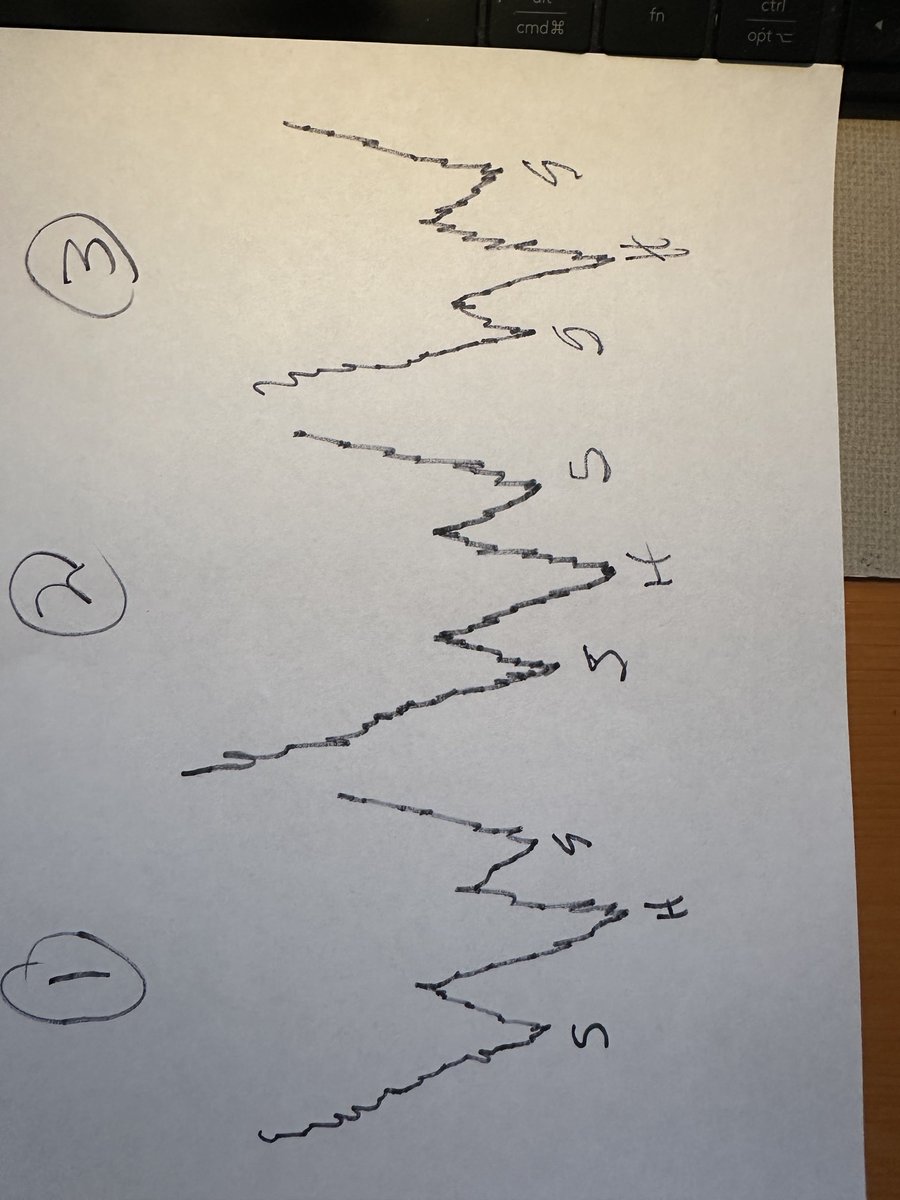
Let’s see who the real chart traders are. Here we have three head and shoulders patterns. Which one is more bullish? And how do you know?
English
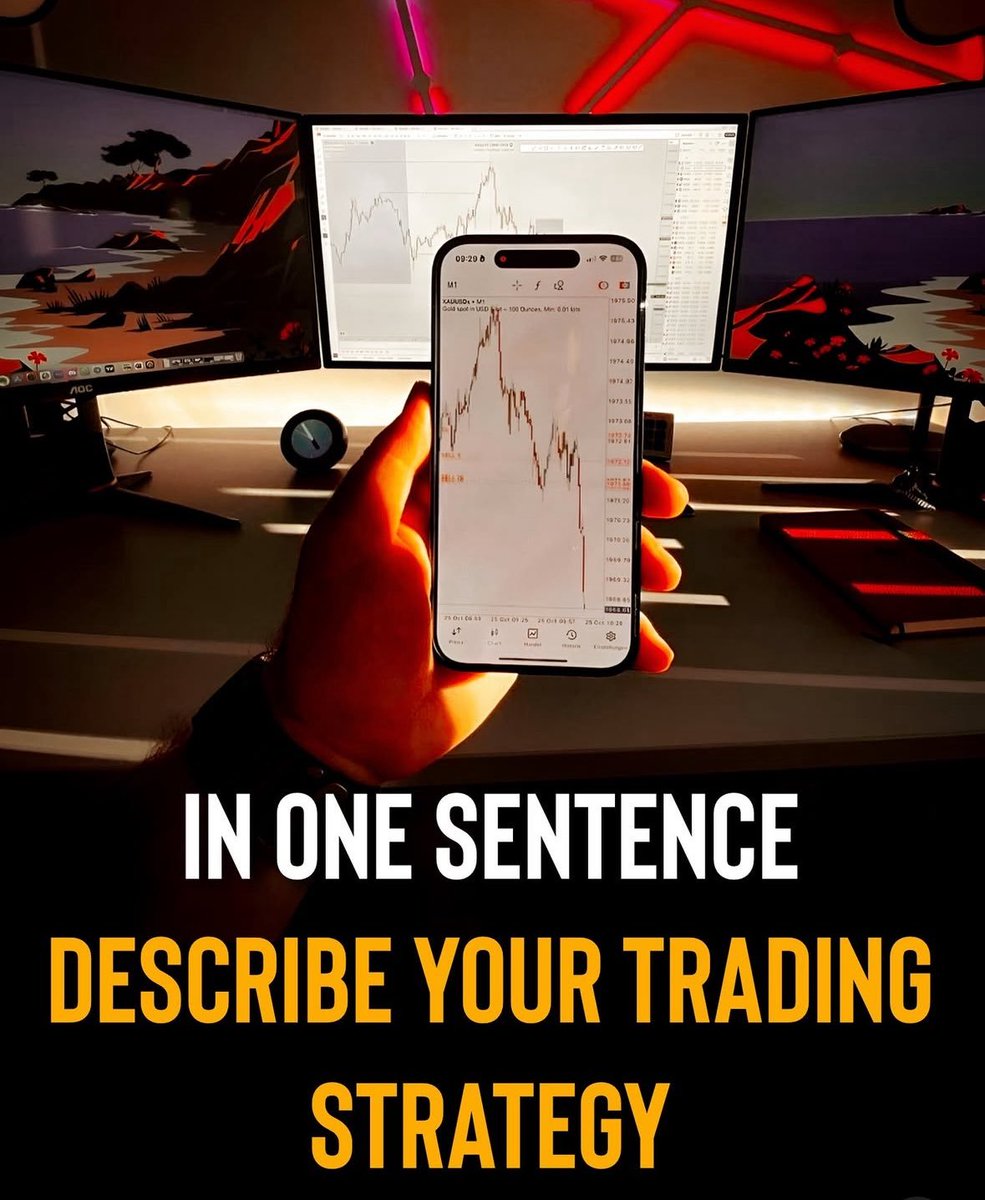
In one sentence,
Describe your trading strategy!
If you can't,
You don’t really have one...
English
Traders!
What do you answer:
When Someone asks you,
❝What do you do for a living?❞
English
@pip_raider @katsinawafx Interesting.what are the 6 conditions you look for to validate a zone? Thx☺️
English

@katsinawafx Sort of. S/R looks at extreme highs and lows. S/D looks for extremes to hold. Technical SD also has about 6 different conditions to validate the quality of the zone
English

Trading isn't just an introvert's game...
It's a MASTER CLASS in solitude.
While others chase networking events and office hierarchies, you're developing the most CRUCIAL skill of all:
The ability to sit ALONE with your thoughts and let the market reveal its truth.
No politics. No meetings. No noise.
Just YOU, your discipline, and the raw feedback of price action.
The silence isn't empty - it's WHERE the real work happens.
Most people FEAR being alone with their decisions.
Successful traders? We've learned to THRIVE in it.
The market doesn't care about your charm or connections.
It only responds to your PREPARATION and psychological mastery.
That solitude you feel? It's not loneliness.
It's the FREEDOM to think clearly while others get lost in the crowd.
English
@samuraipips358 Well said ! Amazing what can be done with pure focus on execution
English
I try not to use my brain for remembering.
Everything I need to do, and exactly when to do it, lives in a reminder app.
When the reminder shows up, I just do it.
I don’t renegotiate decisions I already made.
This frees my mental resources for thinking, not for holding tasks in my head.
One of the biggest energy leaks is repeatedly debating “what I should do” after you already decided it.
I’d rather decide once, then execute on schedule.
For tasks that truly require thinking, I block time for them the same way.
When I reach a conclusion, I translate it into concrete actions immediately.
Those actions become new reminders, and the loop closes.
From the outside, it can look robotic.
But the goal is focus, not numbness.
I’m building an environment where emotions don’t get a vote on whether I do what I already decided.
The people I genuinely respect don’t just talk about ideas.
They show up next time with the idea executed.
Most people talk, then forget, and nothing compounds.
The best people tie thinking to action with very little waste.
Write.
Make time.
Execute.
I think about trading the same way.
English


@fannitrades You are doing well and your process has dedication.Its all that matters going forward.Process .process.process.
English

MONTHLY REVIEW - NOVEMBER 2025
A month of hitting a wall.
🔴 Net P&L: -$815.56
🔹 Win rate: 25%
🔹 Profit factor: 0.54
🔹 Day win: 45%
🔹 Avg win / loss: $151 / -$92.8
🔹 Zella Score: 41.45
🔹 13 trading days, 32 trades
Choppy, inconsistent, emotionally draining. Mirrors the internal state exactly.
In short: from high expectations -> back to zero and deeper into the red. Probably the hardest month of my journey so far.
CONTEXT
After September's first green month and October's lessons, I entered November thinking I would "bounce back".
Instead, my losing streak from end of October followed me into early November. Emotionally, I felt boxed in by pressure I created, by expectations of "finally arriving", and by outside opinions that I didn't know were affecting me.
By mid-month, it all caught up to me. I hit a real emotional wall. Fatigue, confusion, impatience, and the feeling that I had lost access to everything I know.
I cried. I doubted myself. I questioned whether I would ever get it... and yet, I couldn't imagine walking away either.
That's when I realised: my boundaries were stretched past capacity.
WHAT HAPPENED
After the first week of November, I reduced size, adjusted my approach, and early results were promising. I felt calmer, more structured, more intentional.
Then, another losing streak the moment I tried to increase risk.
So I lowered risk again.
Losing continued, even with tiny size.
So, I decided to stop forcing outcomes and collect more data. Not chase progress, but document it.
I still feel overwhelmed. Not by the market, but by information, expectations, and noise. I feel like I can't absorb or apply anything new.
I don't need new information. I need reconnection with my foundations.
WHAT I'M STRUGGLING WITH
💔 Feeling detached from my own process.
💔 Confidence at an all-time low.
💔 Wrestling with the fear that I won't make it.
💔 Feeling misunderstood - many think my strategy/approach "isn't working".
💔 Knowing I'm the one sabotaging myself at key moments.
💔 The emotional weight of slow progress.
💔 The discomfort of a strategy that delivers many small losses + outlier wins (harder psychologically than I expected).
People assume that if a strategy is good, the results should be linear or obvious. They worry about me, or think it shouldn't be this difficult.
But I want to make it clear: I'm in the practice phase. My results reflect me, not the strategy. If I switched now, I would be worse off. I SEE this model work and aligns with me well. I just need time, reps, discipline, and self-trust.
WHAT'S ACTUALLY IMPROVING
❤️ I became more willing to slow down. I accept I can't rush this.
❤️ I'm recalibrating rather than continue spiraling. The worst happened, and I'm still here. With the opportunity to try again.
❤️ I stop viewing rest or study days as "failure". Not fair to label it. It's not over, until I win.
❤️ I'm focused on process, structure, backtesting.
❤️ I'm observing price with curiosity again.
❤️ I'm giving myself permission to grow on my timeline.
LESSONS LEARNED
⭐️ I was forced to stop rushing. Growth won't come faster because I want it to.
⭐️ Collect data. My brain is tired. Clarity comes from numbers, not emotion.
⭐️ Reconnect with what I know. The tools are there. I just lost access under stress.
⭐️ Detach from P&L. November forced me back to process over outcome.
⭐️ Honour my timeline. I'm the definition that progress isn't linear. Mastery doesn't follow a calendar.
⭐️ My phase is mine. I own it. No shame. I'm grateful to live and experience.
THE HARDER THE MONSTER, THE MORE EPIC THE STORY.
CLOSING NOTE
I'm not going to pretend things are fine. They are not. This was a painful month. And I don't see the light at the end of the tunnel.
But I'm still here. And I'm choosing to rebuild rather than run.
I know I'm close. Even if I feel far right now.
Hope and fatigue can coexist.
Growth and confusion can coexist.
And so can doubt and determination.
I'm committed to doing this my way. With less resistance, more patience, and a return to what made me love trading in the first place.
NEXT STEPS
✅ Review all my tools.
✅ Deep backtesting.
✅ Define my setups clearly.
✅ Rebuild trust in my system.
✅ Trade small, intentional, structured. Permission granted to slow down, reset, experiment, fail, then fail again, then fail better, and rise again.
If you are also in your own fog right now, you know you are not alone. This part of the journey doesn't get posted as often. But it's real and it's shared by more traders than you think.
Onward. 💜


English

【Mastering Randomness—Your Wins and Losses Are Not Your Doing】
Your wins and losses are not your doing.
If you keep calling “heads” every time, it’s only natural that “heads” will show up sooner or later.
What matters is positive expected value.
■ Edge and Sample Size Matter in Probabilistic Games
In probabilistic games, what matters are edge and sample size.
Together they allow the law of large numbers to do its work and surface your edge, and what makes that possible is your consistency.
Market randomness surprises us every time, but against a large enough sample size it gradually averages out and the strategy converges toward its intrinsic performance.
This is the law of large numbers.
If the strategy you repeat has a positive expected value, your capital will trend upward over a large sample.
But it takes much longer than you think.
■ The Difference Between Unseasoned and Mature Traders
Unseasoned traders swing with short‑term outcomes, treat wins and losses as their own achievement, and blame bad luck when their capital fails to grow over the long run.
Mature traders hold that short‑term results are luck, while long‑term performance is the inevitable consequence of skill—namely, unwavering consistency.
Many unseasoned traders think, “If not for that one big loss, I’d be on track by now—I just got unlucky.”
But that is not luck; it is inevitability.
If you take actions that can put a large dent in your capital with a single loss, that event will occur sooner or later, no matter how certain you are that “the chance is under 1%.”
Even traders running strategies that boast win rates north of 90% in the short run fail because they take actions that can wipe them out in one of the few losing trades, or because that very risky behavior is what sustains the high win rate.
Keep repeating those actions, and failure becomes inevitable somewhere down the line.
■ Understanding Trading’s Essence Through a Coin‑Toss Analogy
In a coin toss, if you have a coin biased toward heads—or a rule that pays you favorably when heads appears—the right move is simply to keep calling “heads” every time.
Because you keep calling it, “heads” will show up sooner or later.
That is not your skill or your achievement.
But with a favorable payout, if you repeat the bet and let probabilities average out over a large sample, the profits delivered by that rule will exceed your losses.
That is trading—accepting randomness and putting it to work.
■ Becoming a Mature Trader
Grasp this concept deeply, and think carefully about how to embed it in your own trading.
You must understand why consistency produces profits, and what it means to retain profits amid randomness.
This is the indispensable core of becoming a mature trader.
If this post was helpful, my book will take your probabilistic thinking to the next level.
📚 Get your copy here👇
payhip.com/YumiSakura/col…

English
You’ll Never Fully Detach Your Self-Worth from Trading, by @PerceptivTrader open.substack.com/pub/thepercept…
English

@ForexDoc_Live @TedPillows Awesome.I see a potential Morning star pattern for entry
English