Nicolas Treich
5.8K posts

Nicolas Treich
@Treich13
Economist working on animal welfare, as well as on environmental & ag economics, and public policy. All opinions are my own, not those of TSE or INRAE.
Toulouse, France Katılım Haziran 2018
1.7K Takip Edilen2.5K Takipçiler

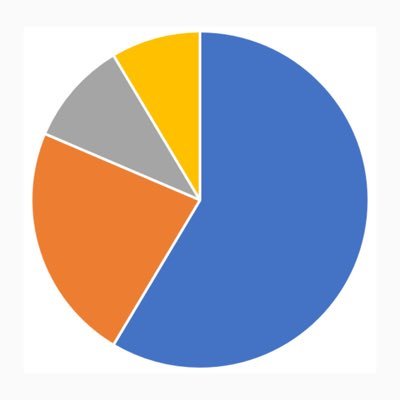
@Sciences_Avenir Votre steak est la première cause de la déforestation. "L'élevage est responsable de 65 % de la déforestation en Amazonie."
viande.info/elevage-viande…
Français

Le monde est en train d'échouer à tenir sa promesse de mettre fin à la déforestation et d'inverser son cours d'ici 2030 🌳
👉 l.sciencesetavenir.fr/G5D

Français
Nicolas Treich retweetledi

I have made over 250 threads about papers in economics, which you can browse on my website here or in the twitter threads catalogued below. What have I missed? What should I cover? Tell me your favorite papers!
captgouda24.github.io/nicholas-decke…
Nicholas Decker@captgouda24
I write about papers, and collect them here. There are now well over 150 papers cataloged for you to learn about. I’m starting a new thread to keep it manageable. Remember, if you like my work, you’d love my blog. I publish 4-5 times a week. nicholasdecker.substack.com
English

@Rainmaker1973 Following many animal-focused accounts, I often see a lot of horror. It’s good, too, to see moments like this. Small tears in my eyes. Thank you Massimo.
English
Nicolas Treich retweetledi

REPORTAGE. "Entre dix et quinze fois moins de CO2 qu'un fromage traditionnel" : le "fauxmage" s’impose en France, porté par une demande en forte hausse l.franceinfo.fr/WxV
Français
Nicolas Treich retweetledi

A day like today, exactly 25 years ago, my admired advisor Sherwin Rosen died, way too young, at 62 years of age. He was then the president of the AEA. We owe him some crucial ideas. I highlight 7.
Hedonic Prices and Implicit Markets (JPE, 1974). How does the market price something as complex as a car, a house, or a job? Goods are bundles of characteristics. In equilibrium, the price schedule is the envelope of heterogeneous buyers' bids and heterogeneous sellers' offers—so market prices reveal the implicit value of each characteristic. Key to environmental valuation, the value of life, and urban quality-of-life indexes.
Monopoly and Product Quality (JET, 1978, with Mussa). Did you wonder if your tourist class seat is too narrow? A monopolist who faces buyers differing in taste for quality degrades what she sells to low types so high types can't mimic them and capture the surplus. The foundational screening model.
Education and Self-Selection (JPE, 1979, with Willis). Do grads from better colleges earn more because of how much they know? People sort into college by comparative advantage: those who go are better at college-type work, those who don't are better at non-college work. The returns need to be corrected. A crucial idea for an entire literature.
The Economics of Superstars (AER, 1981). Why do rewards concentrate at the top in music, movies, sports etc.? When output can be replicated at zero marginal cost, and there is little substitutability in production, small talent differences produce enormous earnings gaps. The economics of the internet, twenty years early.
Rank-Order Tournaments (JPE, 1981, with Lazear). When individual output is noisy, firms pay on rank; the spread between winner and loser is the instrument that elicits effort.
Authority, Control, and the Distribution of Earnings (Bell Journal, 1982). In a hierarchy, each manager's talent is multiplied across everyone below her. A slightly better person at the top is worth disproportionately more- a better general decides which war we fight, hence affects all of our marginal products. That is why we see convexity of pay at the top of organizations.
Prizes in Elimination Tournaments (AER, 1986). In a multi-round promotion ladder, the biggest jump must come in the final round, because the option value of future rounds has vanished, only the current prize can motivate.
Professor Rosen would look distracted in seminars. He would look confused. Then he'd say something that changed the entire analysis and discussion. He never tried to look good at the speaker's expense. He just saw the problem more deeply than anyone in the room- no exceptions.
One personal anecdote: during my PhD studies, I was totally depressed: I could not advance, all my ideas were awful. I could not bear going to his office. As i was coming upstairs towards the 4th floor of the Social Science building I met him in the stairs. He said. "I have not seen you, Luis, for a while." I said "Sorry Prof. Rosen, I had nothing to show you." He said "Well, you have to come. Come every week, whether you have something or not". incredibly, that short exchange was probably the most important one in my life. The duty to go to his room got me out of the hole.

English

@FranNunesEcon Interesting, I did not know that this historical paper was essentially an extension of Wald's paper
English

A theorem that changed the course of Economics as a discipline:
First Theorem of Welfare Economics: if preferences are locally non-satiated, every competitive equilibrium is Pareto efficient.
Paper: Arrow, K. J., & Debreu, G. (1954). Existence of an Equilibrium for a Competitive Economy. Econometrica, 22(3), 265–290. doi.org/10.2307/1907353

English

@alexysiktrice Oui c’est touchant ces éleveurs attachés à leurs animaux et le conflit moral est réel. Mais
1) cela débouche souvent sur un récit magique de justification (et des euphémismes, ex «la décision finale»)
2) on ne considère que le point de vue humain, pas celui des premiers concernés
Français

"Les Initiés", réalisé par Colas Gorce. C'est une œuvre qui touche au cœur d'un sujet souvent tabou : la relation émotionnelle entre les éleveurs et leurs animaux, au-delà de la simple production.
"Les Initiés" fait référence à ceux qui vivent ce cycle quotidiennement. Ce sont ceux qui connaissent le langage des bêtes, qui partagent leur quotidien et qui, par conséquent, sont les seuls à mesurer le poids de la décision finale.
C'est un film qui invite à la réflexion sur notre rapport au vivant et sur ce que signifie "nourrir" et "être nourri".
Français
Nicolas Treich retweetledi

Les lobbys de l'agroalimentaire veulent conserver la plus grosse part du steak de la future politique agricole commune. A eux seuls, les produits d'origine animale raflaient, en 2020, 77% des aides, soit trois fois plus que la production végétale.
f.mtr.cool/zenuzlgjpb
Français
Nicolas Treich retweetledi

This is arguably the most important result in Social Choice:
Arrow’s Impossibility Theorem: Suppose there are at least three alternatives. There is no social ranking function such that for any group G whose members all have rational preferences, the social ranking is a rational (complete and transitive) ranking and satisfies the Universal Domain, Weak Pareto, Independence of Irrelevant Alternatives, and No Dictatorship axioms.
Description of the axioms:
Universal Domain: all individuals i ∈ G have rational preferences over the set of alternatives X, but beyond that, they can have any set of rational orderings.
Weak Pareto Principle: If every member of G prefers a to b, then the social decision rule must prefer a to b.
Independence of Irrelevant Alternatives (the most “controversial” one): suppose we have two different societies G and G’, but within G and G’ everyone has the same orderings of alternatives a and b. Then the social ordering between an and b in both societies must be the same, even if members of G and G’ have different rankings of other alternatives.
No dictatorship: There is no particular individual i* ∈ G such that the preferences of i* determine the social ranking, regardless of other group members.
To me, it’s just amazing that we can prove these things mathematically.

English
Nicolas Treich retweetledi

Again, a great blogpost by Lewis Bollard
farmanimalwelfare.substack.com/p/make-cruelty…
It is about animal welfare as a public good. It explains the problem, illustrates it with real world examples and advances practical solutions
English

@Treich13 A priori, ça confirme ce que je dis. - pas de subventions liées au contrôle des populations et à la prévention des dégâts agricoles - (et globalement, même en prenant en compte les autres subventions, les chasseurs sont contributeurs nets sur le périmètre)
Français

1/ Suite à sa forte couverture médiatique et à plusieurs discussions ici, j’ai lu cette étude publiée dans Biological Conservation sur les espèces classées « susceptibles d’occasionner des dégâts » (ESOD).
sciencedirect.com/science/articl…
Quelques remarques👇
Français

@TomDrach Ok, je vois quelques infos ici : ccomptes.fr/fr/publication…
Français

@Treich13 A ma connaissance, il n’y a aucune subvention significative sur ces sujets là non plus.
Français

@TomDrach Oui, mais, si je comprends bien, il y a des subventions liées au contrôle des populations et à la prévention des dégâts agricoles. On peut ensuite discuter du degré de porosité dans la pratique entre ces financements et la régulation spécifique des espèces ESOD.
Français

@Treich13 Il n'y a pas de subventions publiques significatives pour la régulation des ESOD non.
Français