SuperSmoker 🥶

4.6K posts

SuperSmoker 🥶 banner
SuperSmoker 🥶

SuperSmoker 🥶

@TripFrog

Coconut oil advocate RT, LIKES AND FOLLOWS ARE NOT ENDORSEMENTS Do NOT smoke!!!

Doku, Kangludesh Katılım Ekim 2019
1.9K Takip Edilen237 Takipçiler
Sabitlenmiş Tweet
SuperSmoker 🥶
SuperSmoker 🥶@TripFrog·
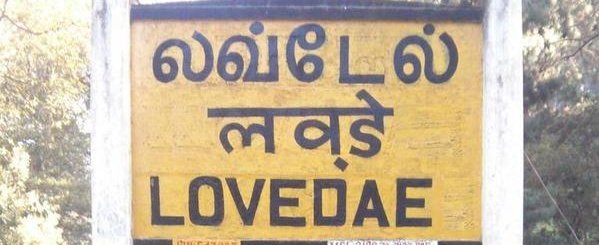
BREAKING NEWS: A train station in South India has just been renamed after Donald Trump. It is a nickname given to Donald Trump for his extraordinary work during India-Pakistan war.
SuperSmoker 🥶 tweet media
English
0
0
3
1.4K
sensitive young bihari
sensitive young bihari@wojtek_jk72mtk·
Since this debate has intensified i will also add one more point that none of the indian languages have word for "guilt" or "accountability" and no "paschyatap" and "utardayi" don't have the same meaning it was attached this meaning later on.
Celibate Mandingo@ducati_dada

India was ruled by Europeans for 200 years, but still India failed to learn modernity and European Enlightenment (power of reason over everything else) as good as the Japanese, Koreans and the Chinese. Can someone please explain me why ?

English
4
4
16
775
SuperSmoker 🥶
SuperSmoker 🥶@TripFrog·
I heard from a chinese man that the red class dorks is filled people dont want to intermingle with the "nongmins" who are the real chinese people. Xi Jingping has essentially put 300mil people stuck in poverty because of the hatred of nongmins.
English
0
0
0
5
SuperSmoker 🥶
SuperSmoker 🥶@TripFrog·
Look at these chinese white sauce guzzlers trying to gaslight to stop the nongmin uprising. There are 300 million lower caste people in the rural areas, who cant improve their situation because of govt approved laws set as hurdles. Their rise is inevitable. CCP will fall.
Eivor@Eivor_Koy

Some Indian netizens calling China’s ancient “Four Occupations” system “China’s caste system,” and believing that calling a Chinese person a “merchant” is insulting, has become a trending topic on Chinese social media. Many Chinese netizens are playfully making fun of the mistake, finding the comparison quite ridiculous. For context, the “Four Occupations (士农工商)” was China’s traditional ranking of professions: scholars/officials at the top (valued for governance and learning), followed by farmers (seen as the foundation of society), artisans, and merchants at the bottom (viewed as less productive since they traded rather than created). In reality, China’s Four Occupations and India’s caste system are quite different. India’s caste system was deeply rooted in religious texts and seen as a divine, lifelong order determined by birth. It often restricted marriage, dining, and social interactions between groups, with very limited possibilities for changing one’s status. China’s Four Occupations, by contrast, was primarily a social ranking of different professions rather than a rigid, hereditary system. There were no religious rules treating it as unchangeable by blood, and no strict laws banning intermarriage or shared community life between groups. A key difference was social mobility. Through the imperial examination system, talented individuals from farming or merchant families could study, pass the exams, and rise to become respected scholars and officials. Many famous figures, such as Fan Zhongyan and Ouyang Xiu, came from modest backgrounds and achieved high positions. The old saying “In the morning a farmer’s son, in the evening a guest in the emperor’s hall” reflected this real possibility of upward movement. Even merchants, who were ranked lower in theory because their work was seen as less foundational, could improve their family’s standing. It was common for successful merchant families to educate their children and transition into scholarly circles over time. Today, China’s traditional occupational ranking no longer exists as an institution — it effectively ended with the abolition of the imperial exams in 1905. Modern society emphasizes equality and values professions based on skills and contributions. While caste continues to influence aspects of life like marriage and social customs in parts of India, the Chinese system was far more flexible and has long since evolved. In short: Caste represented a birth-based destiny that was very difficult to change. China’s Four Occupations was a practical ranking of occupations that allowed movement between roles. The two are fundamentally distinct, much like comparing traffic regulations to a system of permanent segregation.

English
0
0
0
3
Harshmeister 🇦🇺
Harshmeister 🇦🇺@Lmao_Harsh·
Ye Indians ko flag se itna kya lgav h It's not that deep bruv calm down
English
19
2
27
6.8K
Cassei 🇵🇱
Cassei 🇵🇱@cassei2137·
Indians saw a diagram of the social pyramid in medieval China and now are trying to convince people it's like their country's caste system lmao
English
15
3
67
1.4K
SuperSmoker 🥶
SuperSmoker 🥶@TripFrog·
@Communal_kaffir Bragging about "civilization" after looting and destroying other cultures and civilization and committing genocides. Then raping children in SEA.
English
0
0
1
19
SuperSmoker 🥶 retweetledi
avadhut
avadhut@historycalkida·
This Indonesian guy has a strong aura.💪💪💪😤🤫
avadhut tweet media
English
1
1
14
111
SuperSmoker 🥶 retweetledi
RandomRambles
RandomRambles@RandomRambles11·
Accountability shouldn't be selective. Tarun Gautam allegedly INC(congress) IT Cell worker spent months demanding answers from the government. Now when he himself has been exposed that he was part of anti-India Telegram group driving coordinated hate campaigns on X.Instead of providing answers, he has gone silent. Why the sudden evasion? I knew that these people are being anti india but now they are even getting exposed.
RandomRambles tweet mediaRandomRambles tweet media
English
12
469
2K
27.6K