Climate doomerism isn’t cool or motivating. Yes, biodiversity collapse is real. Oceans absorbed record heat in 2025. But the widespread response to existential threat is dissasociation, not constructive action. We need a positive vision for what civilization can look like with responsible and balanced treatment of nature and climate. And it’s gotta be sexier than just more AI.
For me, old growth redwood forests are a vibrational blueprint for what is possible. Ancient trees that makes life feel like we’re living in Lord of the Rings, rather than Ready Player One. If architecture had to be equally beautiful as a grove of redwoods, would we still build homes with OSB and drywall as ugly but efficient boxes? If silicon valley truly belives that AI will bring greater abundance, couldn’t we prioritize beauty as a civilizational value? If self-driving cars eliminate 80% of the parking area of cities, can noisy streets be replaced with meaning paths through forest cafes?
The profound sustainability that has to be intact for a 1,000 year old tree to even exist when the finished lumber value is worth between $500k-3m. The last two centuries we’ve consistently chosen the cash rather than the redwood’s irreplacemble splendor. We have become so trapped by maximizing return on capital that we’ve forgotten the point of capital in the first place.
Earthshot isn’t just about carbon, though that’s the consensus mechanism we’ve landed on to finance nature. It’s about building the scientific and technical infrastructure to align capital with our civilizational values, to restore and protect nature, and help humanity come back into right relationship with the rest of the planet.
Donard Trump is pulling out of the UNFCCC and IPCC, and 60+ other international organizations. I get it. Let America dominate AI, energy, and robotics, and let those backwards-looking European bureaucrats take care of the losers game of climate, nature, and care for the global community. But can’t we for once evolve past the dichotomy between winning at all costs and stewardship for the whole planet? These are not mutually exclusive pathways. I don’t believe in degrowth as a viable strategy. It is only by creating a future with greater abundance at every level will people act. Yes to more conservation. Yes to more regenerative agricultural systems. Yes to more sustainable energy, datacenters, robotics, and global access to information. People dramatically underestimate the productivity of this planet, lost in the delusion that things have to remain as efficient and out of balance as they are today.
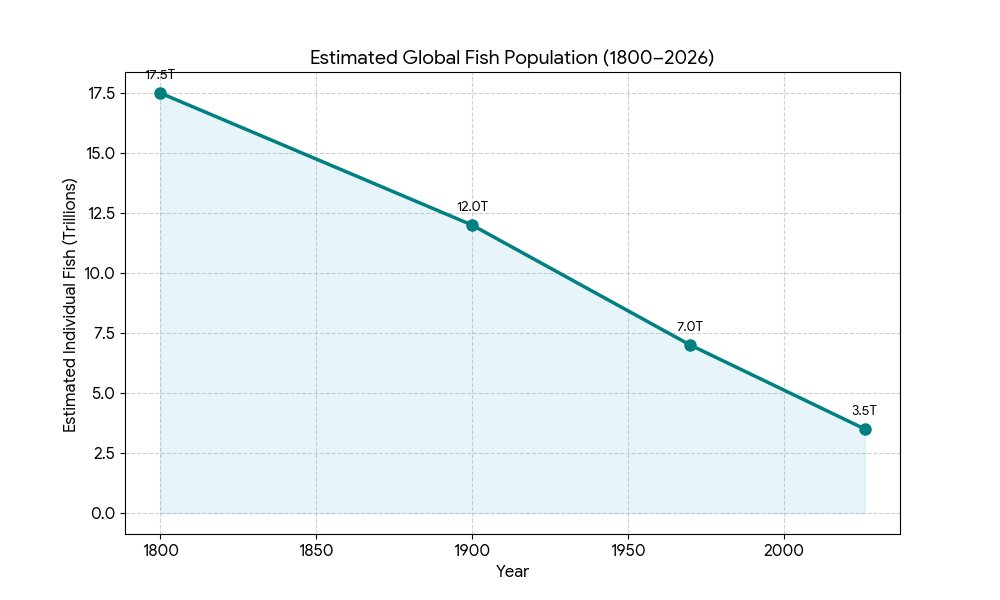
It’s like fishing. Deplete the ecosystem, don’t give back to the reef, and fishing enters a spiral of greater and greater scarcity. 90% of large fish populations have disappeared since 1950. But let the reef rest, protect the reefs and spawning grounds and don’t let the acidity of the ocean rise due to CO2 levels, and the immense productivity of the oceans will rebound with more for everyone.
Earth is already a Kardeshev I planet if we expand our understanding of civilization to include all life on Earth.
I often think about how to frame conservation and nature restoration in a language that makes it fit within the AI wave and silicon valley thinking. If superintelligence is the goal, how does non-human biological compute on the planet compare to the growth of data centers? What is the pareto efficient use of natural resources when civilization and digital compute has a negative impact on biological compute (ie natural ecosystems)? What is the critical path for maximizing the probability of crossing Fermi’s great filter into a Kardeshev II civilization and making life multiplanetary, balancing between conservation and investments into future infrastructure?
Here’s some back of the envelope math (sourced from Gemini):
Compute: Earth has massive decentralized parallel processing, with 10^24 neurons for all animals on the planet. This is dominated by arthropods and nematodes, and doesn’t account for non-neuronal intelligence like plants.
Energy: Global photosynthetic capture is ~2,800 Terawatts, with around 100-200TW available for heterotrophic life.
Storage: In terms of information storage, total global DNA encodes for ~10^38 bits.
Fun fact: There are 57 billion nematodes for every human on earth!
Here’s how nature compares to all AI and human intelligence:
Compute: 10^18 transistors, 1,000,000x less than biosphere compute
Energy: AI is 28,000x less than total photosynthetic input
Humans make up roughly .1% of animal neural switching capacity
Storage: Global Technosphere Storage (2025): ~200 Zettabytes. The biosphere stores roughly 10^14 times more information than all hard drives and SSDs on Earth combined.
Efficiency: DNA encoding is 10^9 times more energy efficient than transisters
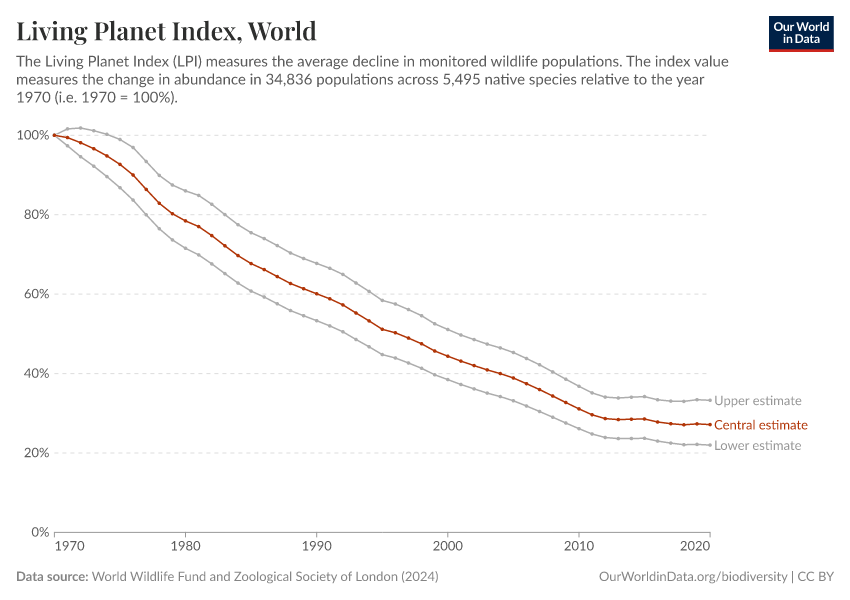
According to the living planet index, 73% of animal wildlife has dissapeared since 1970. If we truly value intelligence beyond just using AI to make money in the short term, wouldn’t it make sense to protect nature more than we’re currently doing?
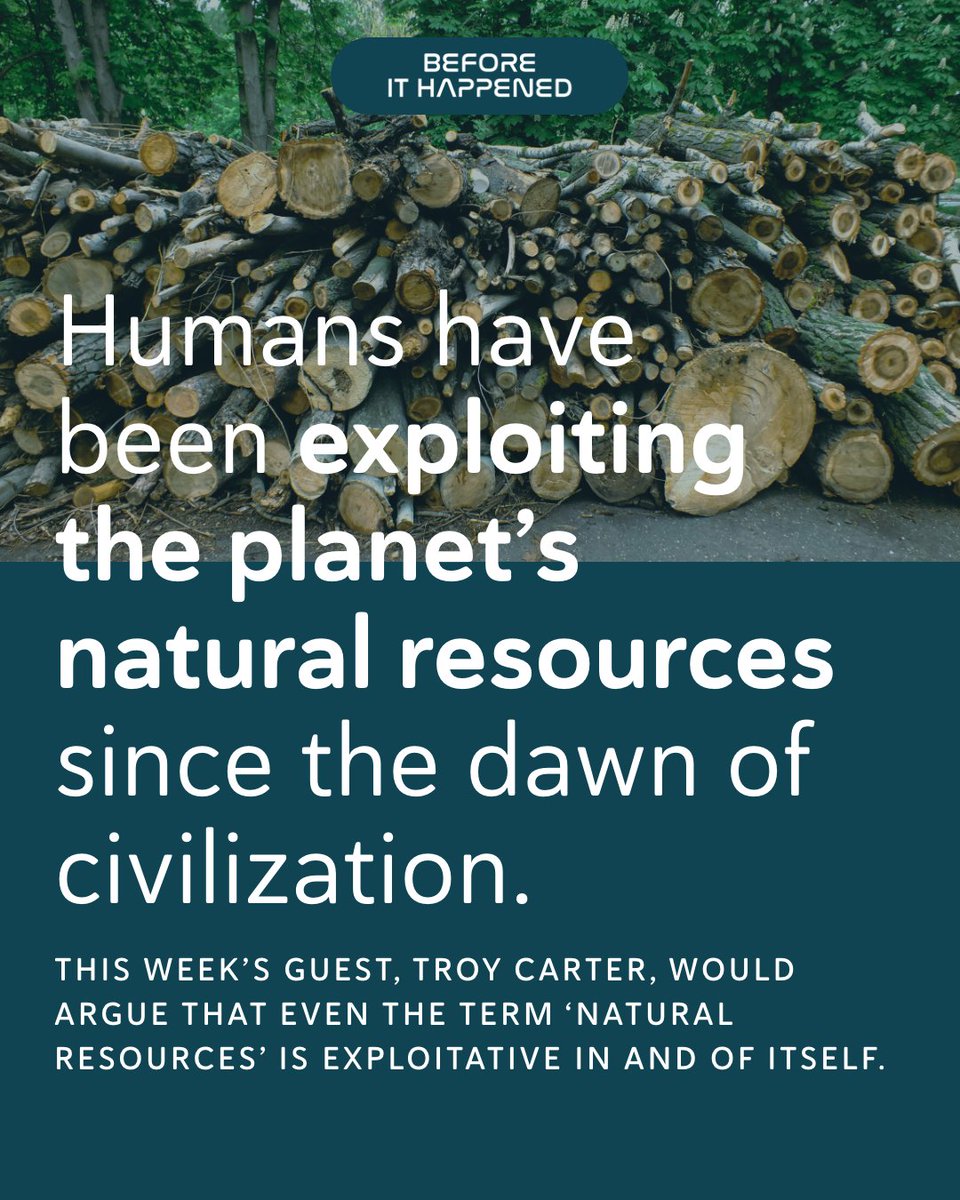
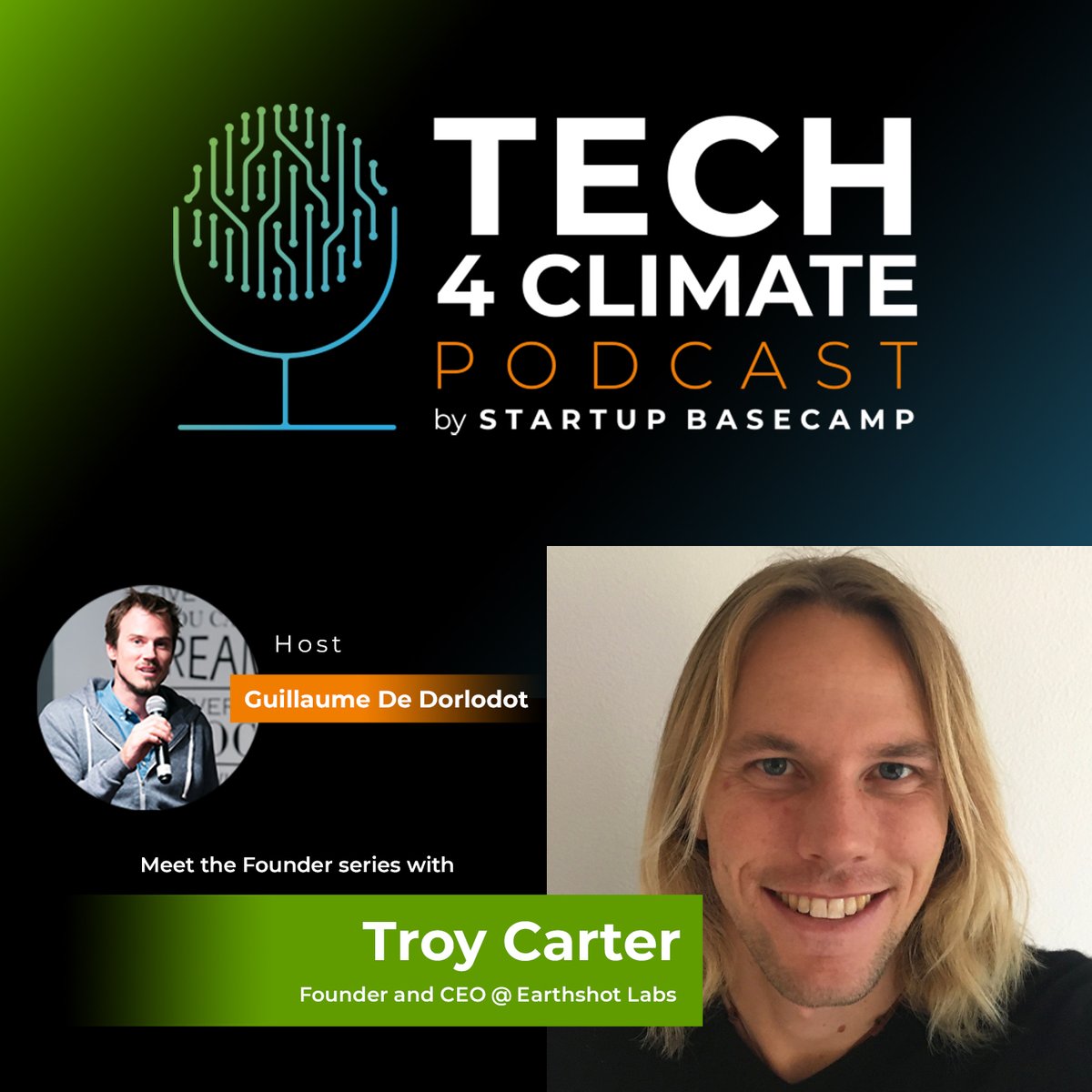
This week Co-founder and CEO of @EarthshotLabs, @TroyCarter, joins @dlmichaels to talk about his work repairing the planet through nature restoration, forest protection, and the conservation of ecosystems: apple.co/3JLBBd3
.@TroyCarter's goal is that one day we’ll live in a world where “half or more of the planet is seen as sacred territories, where humans have only traditional uses for the land, and not industrial uses.”
Ep. 54 with the co-founder & CEO of @EarthshotLabsapple.co/3JLBBd3
How can we better understand how nature works in order to change the way we make decisions that affect the environment?
Our latest article is now LIVE: Regenerating Our Way To Gigaton Scale Impact following on from our chat with @TroyCarter!
medium.com/climate-vc/reg…
When we talk about environmental change, we need to consider not taking away from someone else's livelihood.
Let's focus on shifting the system not completely replacing it.
Ft podcast guests @TroyCarter, @Bx_Antony and @luka_sincek
🔥kite.link/cool-hominids🔥
But, hold on. What if we do pull it off?
Have you given much thought to what our world might look like if we win the fight against #climatechange?
What #systemicchanges would you want to see?
@TroyCarter talks about the kind of changes he would like to see in the #future.