
TweetWave retweetledi
TweetWave
235 posts



TweetWave retweetledi




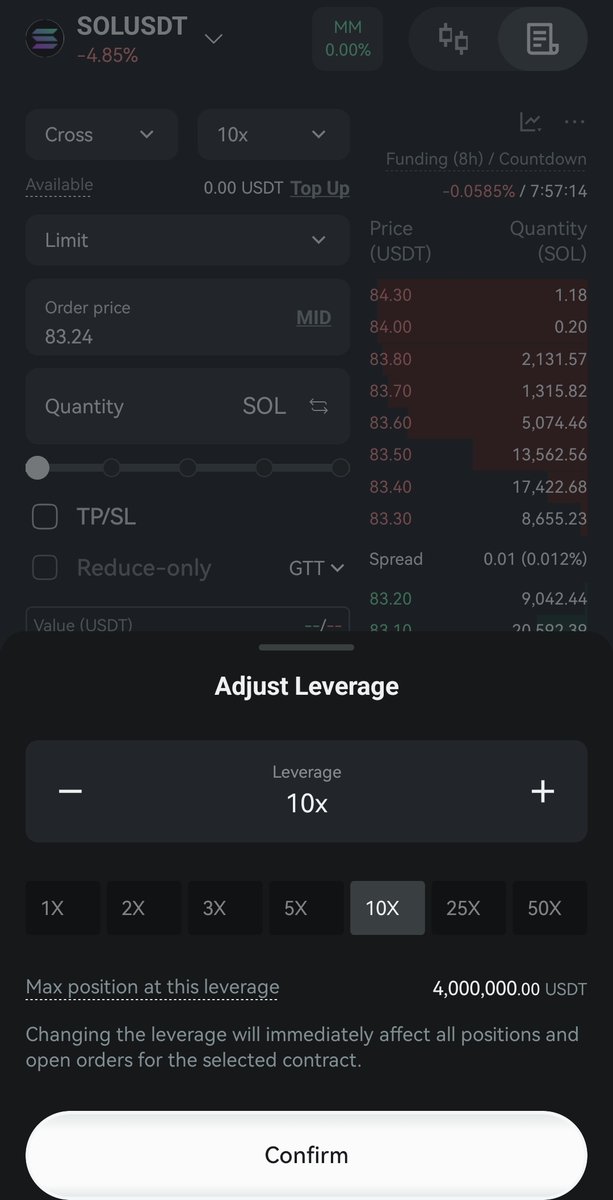
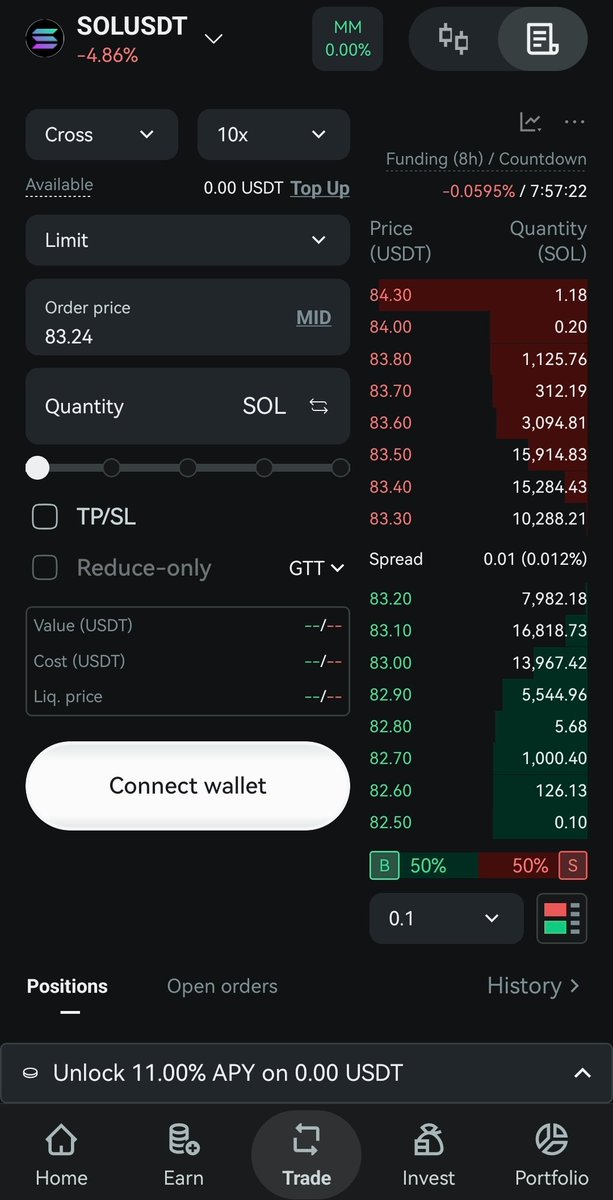
Spent a good amount of time trading on @grvt_io today and I have to say, the experience felt surprisingly smooth.
What stood out first is how easy it is to place a trade.
No complicated steps, no confusing buttons everything is right where you expect it to be.
You don’t need to overthink anything.
Just open the pair, set your trade, and you’re good to go. Even switching between different markets feels quick and responsive.
The interface doesn’t try to do too much, which actually makes it better. It keeps things simple and focused.
Execution speed also feels solid no delays that make you second guess your moves.
For anyone who prefers a clean and straightforward trading flow, this is a big plus.
Overall, a solid experience using grvt.io.
Curious to explore more features soon definitely feels like a platform I can rely on grvt ⚡
English
Noticing something interesting with @grvt_io lately.
While most of the market feels quiet, their TVL keeps pushing past 100M+ without slowing down. That kind of steady inflow usually doesn’t happen randomly.
It suggests users are not just testing, they’re actually staying.
In slow conditions, capital normally rotates out or sits idle.
But here it looks like funds are being held and used actively.
That tells me the platform is giving a reason to keep liquidity there. It’s less about hype and more about retention. Also seeing more organic mentions on the timeline. Not forced promotion, more like people sharing real observations.
That kind of attention builds differently over time.
grvt_io feels like it’s expanding quietly while others wait for the market to wake up.
English
TweetWave retweetledi

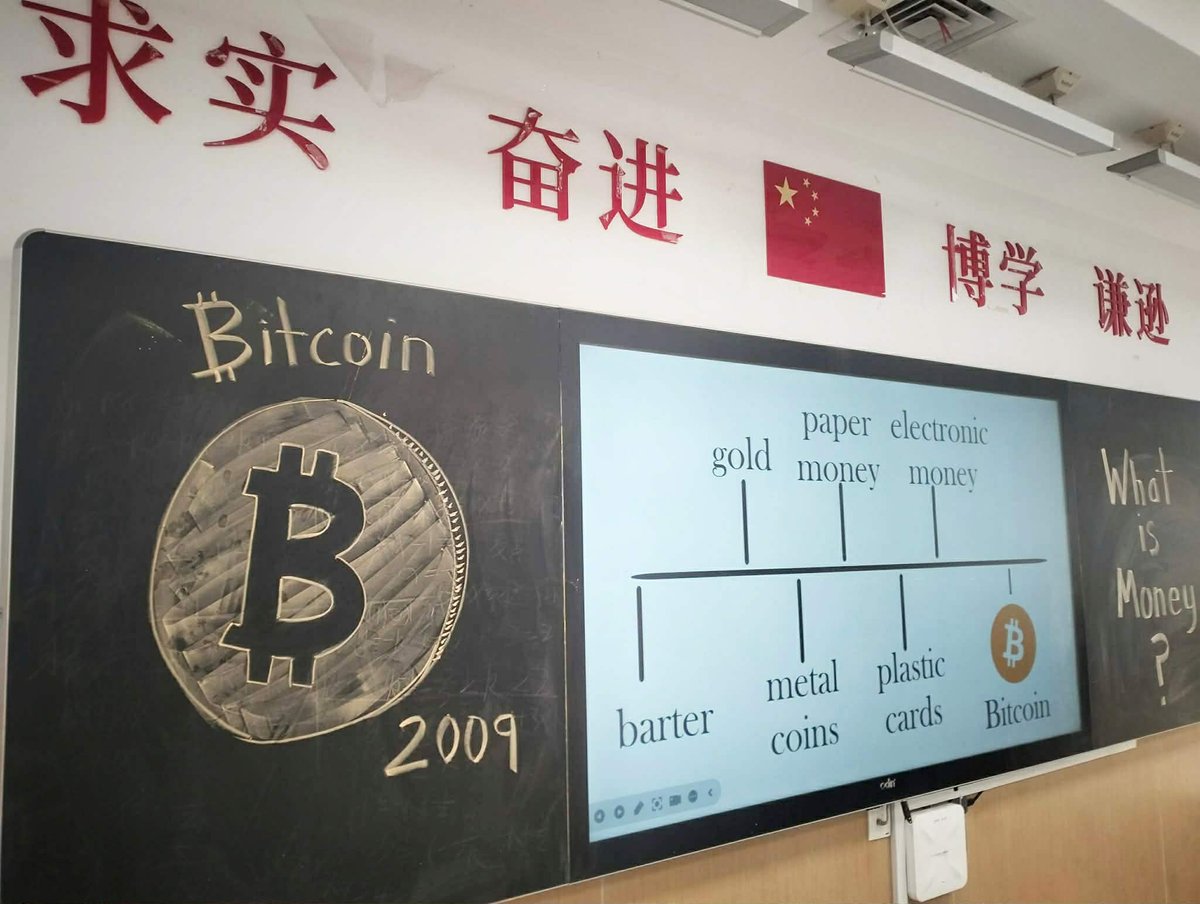
EXCLUSIVE: Students in mainland China being taught lessons on Bitcoin earlier this year 🇨🇳



English
TweetWave retweetledi
JUST IN: $880 billion Bernstein says the Bitcoin bottom is likely in and BTC is set to go up from here 🐂
They're targeting $150,000 🚀

English
TweetWave retweetledi
TweetWave retweetledi
Been thinking about the @grvt_io update for a bit and it actually shifts my strategy
The +6% additional community allocation isn’t just a number. It quietly fixes one of the biggest concerns around point farming
When allocation stays fixed, every new farmer reduces your share
That’s where most people lose confidence over time. Now with extra allocation added, that effect is softened. It feels more fair as the network grows. What stands out more to me is that existing points remain protected.
So early effort doesn’t get diluted away later. That’s important because it rewards consistency, not just timing. For me, this makes holding and compounding points more logical.
Instead of rushing in and out, I’d rather stay active. If value per point holds better, patience actually pays here
Also eyeing that Rally multiplier angle. Could be one of those small edges that adds up over time.
Overall, this update makes farming feel more sustainable, not just hype-driven

English
Big news for Bitcoin fans 😎
BTCjr is coming via FragmentsOrg, and it’s a little different. You get 1.33× BTC exposure, but zero debt or liquidation stress.
Yep, you heard that right no borrowing, no scary fees, just structured leverage.
And the best part? You can hold it long-term, chill mode activated.
The Rally campaign is live, and you can sign up now.
Everything’s on-chain, transparent, and rewards are based on quality, not follower count .Be active, and you might even earn some fun bonuses along the way.
Honestly, BTCjr feels like leverage without the usual nightmares.
Grab your spot on the waitlist 👉 link.fragments.org/rally
Don’t forget to follow @FragmentsOrg for insider vibes.
Early birds might later say, I knew about this first! 😉
BTCjr is coming let’s hold smarter, safer, and maybe a little more fun.

English
TweetWave retweetledi


Verifying my wallet for @RallyOnChain: 15535a864d606582a934b14208c31edba842b22e8f0b81420b87dbb598554f6c
English
opened botcha.xyz and that I’m not a human checkbox hit different
we’re really entering a phase where agents need to verify themselves
not just exist, but actually think
a verification layer for AI agents sounds simple
but this might end up being essential.

English
Code review today feels stretched thin. More code is being shipped, especially with vibe coding, but careful review is not scaling with it.
MergeProof introduces a different model. Developers stake value when submitting pull requests, showing confidence in their code.
Reviewers can then earn rewards by finding real issues before merge. It turns review into an incentivized system instead of a voluntary one.
Explore it at mergeproof.com. It suggests that better incentives could lead to better code.

English
TweetWave retweetledi

TweetWave retweetledi

TweetWave retweetledi

It’s kind of strange if you think about it.
We trust code to move money instantly. We trust DAOs to make decisions. We’re even starting to trust AI agents to act on our behalf.
But the moment something goes wrong, everything slows down.
There’s no clear system to handle disputes in a world that runs 24/7, across borders, between people who may never reveal their identity. Traditional courts just don’t fit here. They’re too slow, too local, and not built for smart contracts or autonomous systems. That gap is bigger than most people realize.
internetcourt.org is trying to solve exactly that.
Internet Court is basically a new kind of dispute system designed for how the internet actually works today. Not tied to any single country, not dependent on long legal processes, but built to handle conflicts in real time and in a transparent way.
And this becomes even more important now, in the agent era. When AI starts interacting with other AI, making deals, executing actions… things will go wrong at some point. That’s inevitable.
The real issue is what happens next.
Do we rely on outdated systems that can’t keep up, or do we build something native to the environment we’re operating in?
Internet Court feels like an attempt to answer that question before the problem gets out of control.
Because without a way to resolve disputes, trust doesn’t scale. And if trust doesn’t scale, neither does the internet economy.

English
@mdlabibbiswas6 @zksync Anchoring to @Ethereum for finality while keeping execution private solves a real compliance tension. This feels structurally aligned with how institutions actually operate.
English

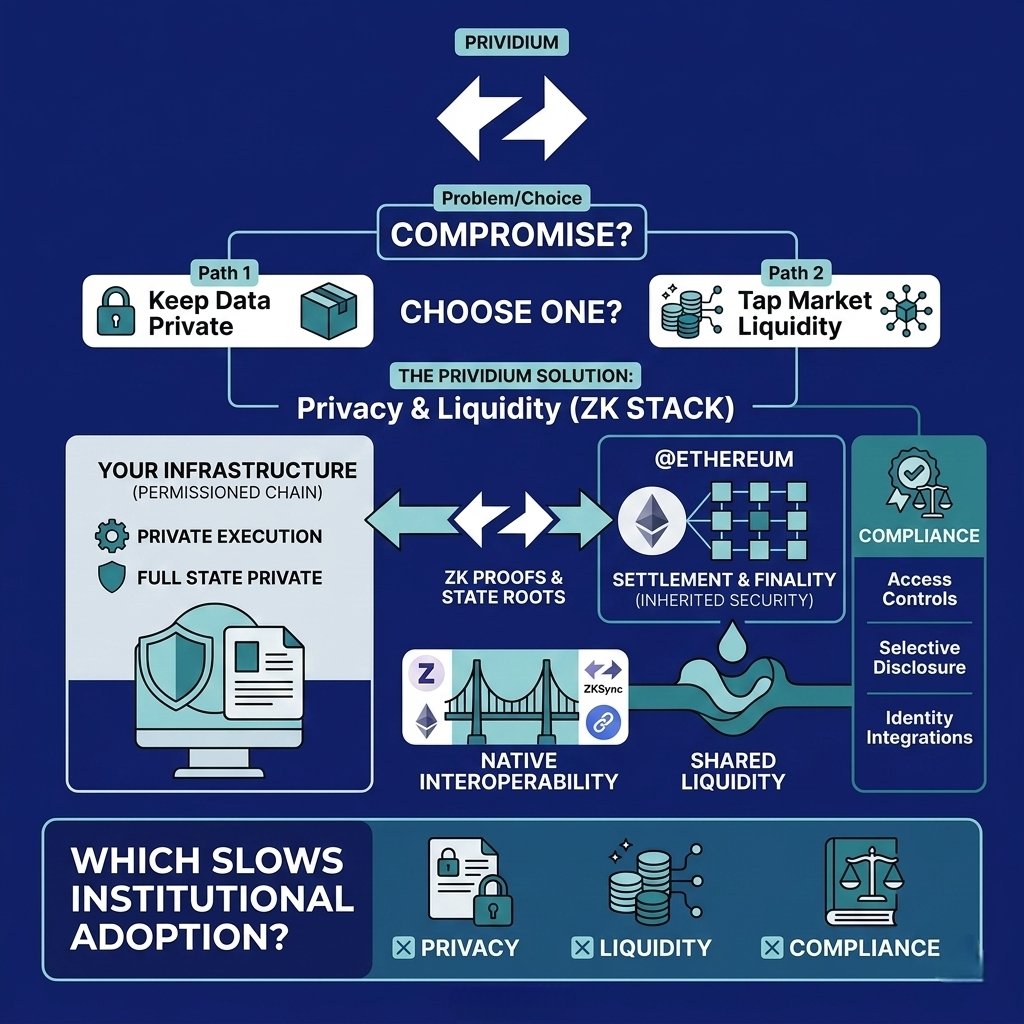
Most blockchains force a tradeoff: keep your data private or tap into market liquidity. Institutions can’t afford that compromise. Privacy has to live at the protocol layer not as an afterthought.
Prividium, built on the ZK Stack of @zksync makes that real. Organizations run permissioned chains in their own infra where execution and full state remain private, while state roots and zero-knowledge proofs anchor to @ethereum for settlement and finality. Sensitive data stays confidential, but trust and liquidity inherit Ethereum security.
Access controls, selective disclosure, and identity integrations align with compliance requirements. And through native interoperability, assets move across ZKsync chains without fragmenting liquidity.
Private execution. Ethereum anchoring. Real liquidity.
Which constraint slows institutional adoption most where you work privacy, liquidity, or compliance?
English
@mdlabibbiswas6 @ethereum @zksync Interoperability at the protocol layer is key. Without native liquidity across chains, private infrastructure just becomes another silo.
English
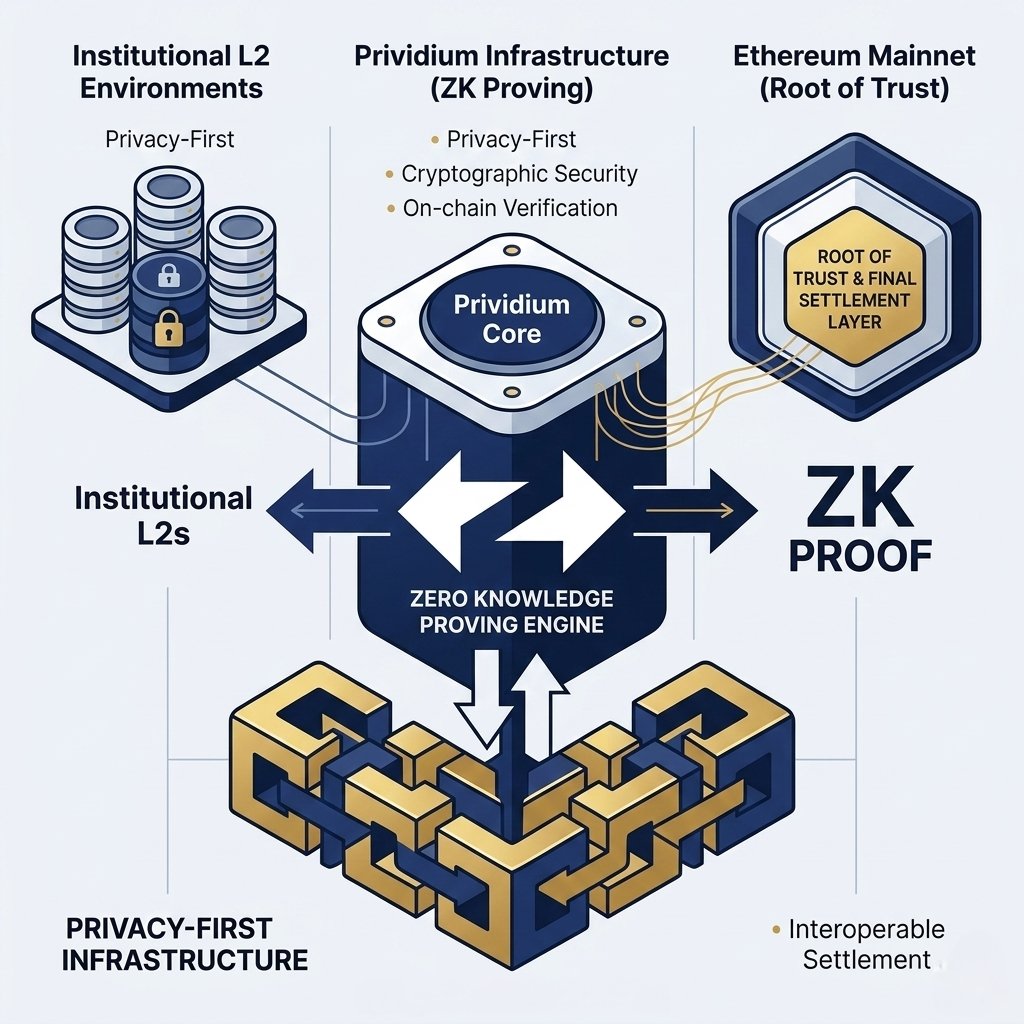
L2s were never meant to just copy Ethereum and call it scaling. As @ethereum scales at L1, the role of L2s has to evolve and that’s where @zksync Prividium makes sense.
Prividium isn’t a generic scaling chain. It’s purpose built infrastructure focused on privacy as a core capability. Institutional L2s can run custom environments while publishing ZK proofs on Ethereum, using it as the root of trust and final settlement layer.
This aligns with Vitalik’s recent direction: if an L2 claims to extend Ethereum, it should inherit its guarantees. Prividium does that by anchoring proofs on-chain and building structural interoperability not just bridges, but cryptographic integration.
That’s not branding. That’s architecture.
English