

Tyradius
413 posts



@lady_valor_07 The photographer. They're more essential to the economy.
English


@kapilansh_twt Good ol fashioned notepad.exe before copilot spoiled it. Now it's neovim btw.
English


@neerajj_twts I don't hold my phone overhead and look up at it. Which we would have to do for that to make sense. While also moving my hand so it's not blocking the panel. Integrating it into the screen would be slightly more useful just from an ergonomic standpoint still lacking surface area.
English



English

@Riddle736 @RetroMoviesDB I remember the episode where they smashed a bunched of em while they were sleeping .. That fucked me up as a kid
English
Name a past cartoon modern kids haven't heard of...

English

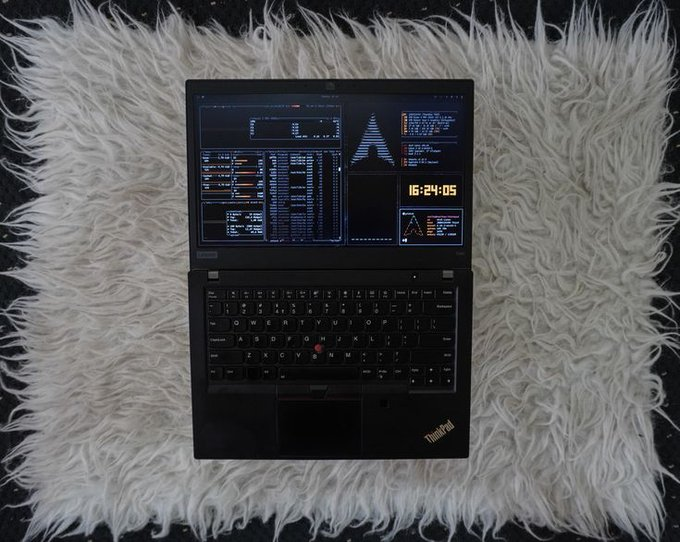



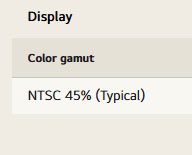
I can’t remember the last time I’ve seen a display this bad
Holy man
Anthony@TheGalox_
LG becomes the first manufacturer to directly target the MacBook Neo • Touch Display • Faster in Cinebench, CrossMark & Blender than M1 • Faster Ram & double storage in addition to it being upgradable • Faster 65w charging • More ports $599: howl.link/6q56tnqe3scy7
English

DDR6 Substrate Advance Development Kicks Into High Gear… Big Three Memory Makers Race to Stake Out Next-Gen Standard
Development of next-generation server DRAM, DDR6, is moving into full swing. Memory makers are coordinating designs and running advance development programs jointly with substrate suppliers.
According to multiple substrate industry sources on the 4th, major memory companies including Samsung Electronics, SK hynix, and Micron have recently asked substrate makers to begin DDR6 advance development. Having received portions of the designs, substrate makers have started development work that takes into account memory thickness, stack-up, and routing, and initial prototypes are being produced and put through validation.
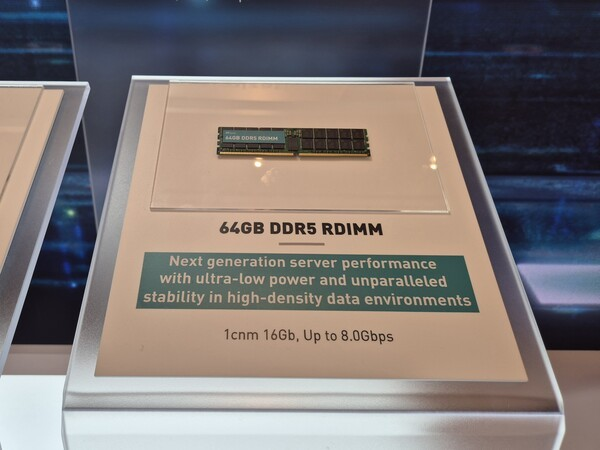
DDR6 is a next-generation DRAM standard with data transfer speeds expected to more than double those of the previous generation, DDR5 (up to 8.4 Gbps). The jump in speed has made signal integrity and power efficiency key engineering challenges, and substrate design difficulty has risen accordingly. As a result, substrate suppliers are now participating in joint development from the very early stages of memory design.
A substrate industry source said, "Memory companies and substrate suppliers typically begin joint development more than two years ahead of product launch," adding that "early-stage DDR6 development has just gotten underway."
DDR6 is not yet finalized as a JEDEC (Joint Electron Device Engineering Council) standard. JEDEC brings together memory makers and end-customers to set specifications. An initial DDR6 draft was disclosed in late 2024, but key specs—including thickness, I/O count, and signaling standards—remain undetermined. The industry is currently in the phase of coordinating detailed specifications based on designs proposed by each stakeholder.
Memory companies are accelerating development to seize leadership over the standard. If their own designs are reflected in the final spec, they can preemptively secure optimized performance and accumulate development experience. It also puts them in a more advantageous position when it comes to yield stabilization.
DDR6 is emerging just as the DDR5 generational transition winds down. According to market researcher TrendForce, the share of DDR5 in server DRAM passed 80% last year and is expected to expand to 90% this year. DDR4's share has fallen below 20% as new adoptions decline, and the industry has begun discussing the possibility of end-of-life.
The kickoff for next-generation memory standard development has been pulled forward. With AI servers proliferating, requirements for data processing speed and bandwidth have risen sharply, intensifying the need to improve memory performance. DDR4, commercialized in 2014, served as the mainstream product for an extended period. DDR5 launched in 2020, with the generational transition gaining traction from 2022 onward, particularly in the server market.
That said, mass production is still some time away. The industry expects DDR6 commercialization to land in 2028–2029 or later, with mass production gaining momentum only once end-customer demand becomes clearly visible.
English
"The Next Bottleneck After HBM Is HBF"... A Computing Pioneer's Prediction
"I have been consistently paying close attention to High Bandwidth Flash (HBF). I'm also collaborating with semiconductor companies on this. HBF is highly likely to stand at the center of the next bottleneck — a surge in demand."
David Patterson, professor at UC Berkeley, Turing Award laureate, and widely recognized as the architect of RISC (Reduced Instruction Set Computing — an approach that simplifies instructions to improve processing efficiency), made these remarks on April 30 (local time) when he met with reporters in San Francisco immediately after delivering a keynote at the Dreamy Next event.
Asked about what comes after HBM (High Bandwidth Memory), which is currently in a supply-constrained bottleneck, Professor Patterson answered that HBF will emerge as the next focus. Specifically, he said, "Although a number of technical challenges still remain, the HBF being developed by companies such as SK hynix and SanDisk is a meaningful alternative in that it can deliver large capacity with low power consumption," adding, "Going forward, how efficiently data can be stored and delivered will become the critical variable." This past March, SK hynix announced that it had joined hands with U.S. flash memory company SanDisk to drive the global standardization of HBF.
Unlike HBM, which stacks DRAM, HBF is built by stacking NAND flash — a non-volatile memory. Their roles are also distinct. While HBM serves as a fast computation aid, HBF is focused on storing the vast amounts of data that AI processes at high capacity.
HBF is drawing attention as the AI inference market grows. The AI market is broadly divided into learning (training) and inference. Training is the process of feeding massive amounts of data to teach an AI model. Inference is the stage in which results are derived based on the trained data.
In inference AI, the ability to continuously store and retrieve vast amounts of intermediate data — such as prior conversations, judgment outcomes, and task context — is crucial. This is because AI carries out reasoning by remembering context and building upon it. The problem is that all of this data is difficult to fit into HBM. Since HBM is optimized for handling data used immediately, its capacity itself is inherently limited. Moreover, given its high price, processing the enormous amounts of context data generated during inference using HBM alone would impose significant cost burdens. As a result, an environment has formed in which both HBM and HBF are needed simultaneously — a kind of division of labor.
Domestic experts in Korea also anticipate that the importance of HBF will grow going forward. At an HBF research and technology development strategy briefing held this past February, Kim Jung-ho, professor in the School of Electrical and Electronic Engineering at KAIST, stated, "If the central processing unit (CPU) was the core in the PC era and low-power technology was the core in the smartphone era, memory will be the core of the AI era," adding, "What determines speed is HBM, and what determines capacity is HBF." He further predicted, "From 2038 onward, demand for HBF will surpass that of HBM."

English
@Geniustechw cognitive dissonance, her subconscious knows what's good for her, but the liberal brainwashing has created a barrier.
English

A liberal woman asks, 'Why is every man that I'm attracted to Republican?'
English

@FrameworkPuter Hmm USB c standard is 240w from 1 cable, doubt the rest of the system is pulling 140w. Seems like they could respec for higher wattage. Framework is a nice idea but if I'm dropping 5k+ it better be the top of the line prosumer rig. Oh well not for me.
English
@FrameworkPuter How can Asus have the pro art p16 with 24gb of vram on its 5000 series card, yet the rest of the industry is stuck on 8gb until now with 12? You'd have to double the amount of ram to even compete, then if i were you I'd double it again and drop a 48gb card for ai inferencing. 🤷♂️
English

NVIDIA officially announced the 12GB version of their RTX 5070 Laptop GPU, and we're happy to share that we have a new Graphics Module for Framework Laptop 16 with it. This is our 3rd Graphics Module, and we're living up to the promise of graphics upgradeability in a laptop!

English
Turning Android into a walled garden. Mandatory ID, registration fees, and a 9-step 'advanced flow' for sideloading? That's not security, it's a monopoly move. Apple envy brought to you by Google. keepandroidopen.org @AlteredDeal #KeepAndroidOpen
English