UJJAWAL KM YADAV 🇮🇳

1.3K posts

UJJAWAL KM YADAV 🇮🇳 banner
UJJAWAL KM YADAV 🇮🇳

UJJAWAL KM YADAV 🇮🇳

@UJJAWALKM

Cogito, ergo sum/ law enthusiast👨‍⚖️

Varanasi, India Katılım Şubat 2015
544 Takip Edilen296 Takipçiler
UJJAWAL KM YADAV 🇮🇳 retweetledi
Pragya Paarijat Singh
Pragya Paarijat Singh@parijatpragya·
Justice is not a family privilege. It is a public trust. No access, no appearance, no exception where impartiality can even be questioned. Because the moment perception is compromised, faith in the institution fractures.The judiciary survives not merely on judgments, but on public confidence. Reform cannot wait. No kith and kin should be permitted to practice before same court or have access to non court precincts in connection with pending matters. #Transparency #Lawtwitter
English
0
1
8
517
UJJAWAL KM YADAV 🇮🇳 retweetledi
Ramin Nasibov
Ramin Nasibov@RaminNasibov·
My dog after eating my philosophy book
Ramin Nasibov tweet media
English
1.6K
20.9K
146.7K
2.2M
UJJAWAL KM YADAV 🇮🇳 retweetledi
Aditya Chauhan
Aditya Chauhan@sirfaditya·
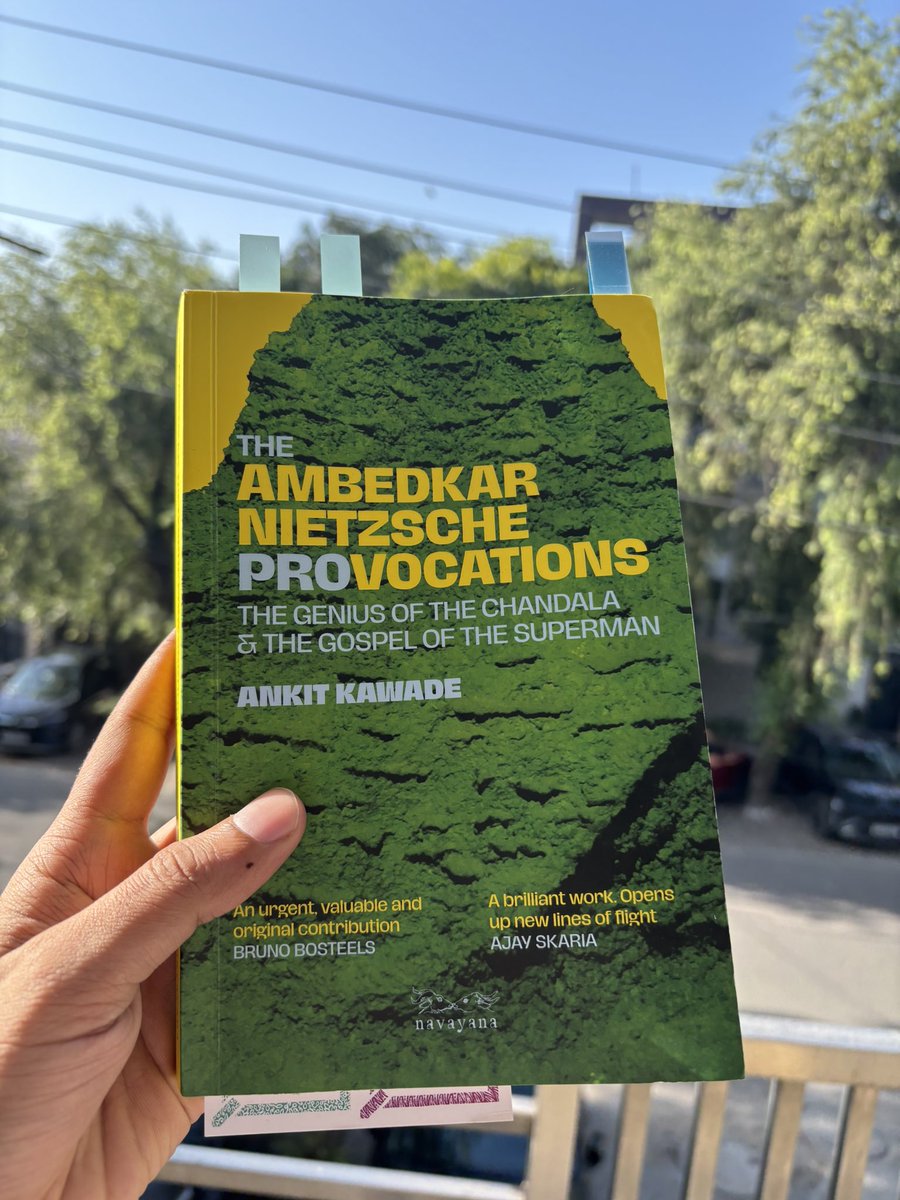
Reading this fascinating scholarly book by Ankit Kawade which contrasts Ambedkar’s treatment of Manusmriti with that of Nietzsche’s. Review this weekend.
Aditya Chauhan tweet media
English
8
8
180
5.3K
UJJAWAL KM YADAV 🇮🇳 retweetledi
Ihtesham Ali
Ihtesham Ali@ihtesham2005·
A Soviet psychologist walked into a café in 1927 and watched a waiter do something impossible. He remembered every open order at every table. Perfectly. Without notes. Without effort. Then a table paid their bill. She asked him to repeat the order. He couldn't remember a single item. She spent the next two years figuring out why. What she found is now the operating system underneath every platform fighting for your attention. Her name was Bluma Zeigarnik, and she was a graduate student at the time, sitting with her professor Kurt Lewin, watching the waiters work the room. What caught her attention was something so ordinary that it had been happening in restaurants for centuries without anyone asking why. The waiters could remember every open order with perfect accuracy. Table four wanted the schnitzel with no sauce. Table seven had changed their wine twice. Table twelve owed for three coffees and a dessert. Every detail, held without effort, without notes, without any visible system at all. But the moment a table paid their bill, the information vanished. Completely. Lewin tested it on the spot. He called a waiter back minutes after a table had settled up and asked him to recite the order. The waiter could not do it. Not partially. Not approximately. The information was simply gone. Zeigarnik went back to her lab and spent the next two years turning that observation into one of the most replicated findings in the history of psychology. Here is what she proved, and why it changes how you think about attention, memory, and almost every piece of media you have ever consumed. She gave participants a series of tasks. Some tasks they were allowed to finish. Others were interrupted before completion. Then she tested recall across both groups. The unfinished tasks were remembered at nearly twice the rate of the completed ones. Not slightly better. Nearly twice. The brain was holding the incomplete work in a state of active tension, returning to it, keeping it warm, refusing to file it away. The finished tasks were closed, archived, released. The unfinished ones were still running. She called it the resumption goal. When the brain commits to a task and cannot complete it, it opens a file that stays open until resolution arrives. That open file consumes a portion of your cognitive bandwidth whether you are thinking about it consciously or not. It surfaces in idle moments. It pulls at the edge of your attention during other work. It is the thing you find yourself thinking about in the shower when you were not trying to think about anything at all. This is not a flaw in human cognition. It is a feature. The brain evolved to finish things. An open loop is a signal that something important is unresolved. Keeping that signal active increases the probability that you will return to it and complete it. In an environment where most tasks had real survival stakes, this was an extraordinarily useful mechanism. In the modern world, it is the most exploited vulnerability in human attention. Netflix did not invent the cliffhanger. But it industrialized it in a way no medium before it ever had. When a show ends on an unresolved question, it does not just create curiosity. It opens a file in your brain that stays active until the next episode closes it. The autoplay countdown that begins at 15 seconds is not a convenience feature. It is a precise calculation about how long the average person can tolerate an open loop before the discomfort of not knowing overrides every other intention they had for the evening. One more episode is not a choice. It is your brain doing exactly what it was designed to do: return to what is unfinished. The writers who built Lost, Breaking Bad, and Succession understood this intuitively without ever reading a psychology paper. Every episode ended on an open question. Every season finale answered three things and opened five more. The entire architecture of prestige television is a Zeigarnik machine running at industrial scale. But television is not where this gets dangerous. Every notification on your phone is an open loop. Every unread email is an open loop. Every task you wrote on a list and have not yet crossed off is an open loop. Each one is consuming a small but real portion of your available attention, pulling fractionally at your focus, degrading your capacity to be fully present in whatever you are actually doing right now. TikTok's algorithm does not just serve you content you like. It serves you content that ends one loop and immediately opens another, keeping the resumption system permanently activated so the cost of stopping always feels higher than the cost of continuing. The research on this accumulation effect is striking. Psychologists studying cognitive load have found that unfinished tasks do not sit passively in memory. They actively interrupt. They surface at the wrong moments. They are the reason you are reading something and suddenly remember an email you forgot to send. The brain is not malfunctioning. It is running its resumption system exactly as designed. It is just running it across forty open loops simultaneously, in an environment that generates new ones faster than any human nervous system was built to process. The most important practical implication Zeigarnik's research produced is one that most people use backwards. David Allen built his entire Getting Things Done system on the insight that the only way to close a cognitive open loop is to either complete the task or make a trusted commitment to complete it later. Writing something down in a system you actually trust has the same effect on the brain as finishing it. The file closes. The bandwidth is released. This is why writing a task down feels like relief even before you have done anything about it. You have not solved the problem. You have simply told your brain that the loop is registered and will be returned to, which is enough for the resumption system to stand down. The inverse is equally true and far more destructive. Every task that lives only in your head, unwritten and unscheduled, is an open loop burning cognitive resources around the clock. The mental cost is not proportional to the size of the task. A tiny nagging obligation consumes the same active tension as a major project. Your brain does not discriminate by importance. It discriminates by completion. Zeigarnik published her findings in 1927. The paper sat in academic literature for decades before anyone outside psychology paid attention to it. Then television got good. Then the smartphone arrived. Then the entire attention economy was engineered, largely by people who understood intuitively what she had proven scientifically: an open loop is the most powerful hook available to anyone who wants to hold human attention. Netflix knew it. Instagram knew it. Every designer who ever made a notification badge red instead of grey knew it. The café in Vienna is long gone. The mechanism she discovered there is now the operating system underneath every platform fighting for your time. Every "to be continued." Every unread notification. Every thread that ends with "part 2 tomorrow." All of it is the same waiter, the same unpaid bill, the same brain refusing to let go of what it has not yet finished. Zeigarnik noticed it over coffee in 1927. A century later, it is the most valuable insight in the history of media. And nobody taught it to you in school.
Ihtesham Ali tweet media
English
234
2.5K
8.7K
848.6K
UJJAWAL KM YADAV 🇮🇳 retweetledi
SANJAY HEGDE
SANJAY HEGDE@sanjayuvacha·
I know of lawyers who read their briefs early in the morning, deliver their lines in court and completely forget the details of the case by evening. They only remember whether they have been paid for the performance or not. A fascinating look into psychology in the tweet below.
Ihtesham Ali@ihtesham2005

A Soviet psychologist walked into a café in 1927 and watched a waiter do something impossible. He remembered every open order at every table. Perfectly. Without notes. Without effort. Then a table paid their bill. She asked him to repeat the order. He couldn't remember a single item. She spent the next two years figuring out why. What she found is now the operating system underneath every platform fighting for your attention. Her name was Bluma Zeigarnik, and she was a graduate student at the time, sitting with her professor Kurt Lewin, watching the waiters work the room. What caught her attention was something so ordinary that it had been happening in restaurants for centuries without anyone asking why. The waiters could remember every open order with perfect accuracy. Table four wanted the schnitzel with no sauce. Table seven had changed their wine twice. Table twelve owed for three coffees and a dessert. Every detail, held without effort, without notes, without any visible system at all. But the moment a table paid their bill, the information vanished. Completely. Lewin tested it on the spot. He called a waiter back minutes after a table had settled up and asked him to recite the order. The waiter could not do it. Not partially. Not approximately. The information was simply gone. Zeigarnik went back to her lab and spent the next two years turning that observation into one of the most replicated findings in the history of psychology. Here is what she proved, and why it changes how you think about attention, memory, and almost every piece of media you have ever consumed. She gave participants a series of tasks. Some tasks they were allowed to finish. Others were interrupted before completion. Then she tested recall across both groups. The unfinished tasks were remembered at nearly twice the rate of the completed ones. Not slightly better. Nearly twice. The brain was holding the incomplete work in a state of active tension, returning to it, keeping it warm, refusing to file it away. The finished tasks were closed, archived, released. The unfinished ones were still running. She called it the resumption goal. When the brain commits to a task and cannot complete it, it opens a file that stays open until resolution arrives. That open file consumes a portion of your cognitive bandwidth whether you are thinking about it consciously or not. It surfaces in idle moments. It pulls at the edge of your attention during other work. It is the thing you find yourself thinking about in the shower when you were not trying to think about anything at all. This is not a flaw in human cognition. It is a feature. The brain evolved to finish things. An open loop is a signal that something important is unresolved. Keeping that signal active increases the probability that you will return to it and complete it. In an environment where most tasks had real survival stakes, this was an extraordinarily useful mechanism. In the modern world, it is the most exploited vulnerability in human attention. Netflix did not invent the cliffhanger. But it industrialized it in a way no medium before it ever had. When a show ends on an unresolved question, it does not just create curiosity. It opens a file in your brain that stays active until the next episode closes it. The autoplay countdown that begins at 15 seconds is not a convenience feature. It is a precise calculation about how long the average person can tolerate an open loop before the discomfort of not knowing overrides every other intention they had for the evening. One more episode is not a choice. It is your brain doing exactly what it was designed to do: return to what is unfinished. The writers who built Lost, Breaking Bad, and Succession understood this intuitively without ever reading a psychology paper. Every episode ended on an open question. Every season finale answered three things and opened five more. The entire architecture of prestige television is a Zeigarnik machine running at industrial scale. But television is not where this gets dangerous. Every notification on your phone is an open loop. Every unread email is an open loop. Every task you wrote on a list and have not yet crossed off is an open loop. Each one is consuming a small but real portion of your available attention, pulling fractionally at your focus, degrading your capacity to be fully present in whatever you are actually doing right now. TikTok's algorithm does not just serve you content you like. It serves you content that ends one loop and immediately opens another, keeping the resumption system permanently activated so the cost of stopping always feels higher than the cost of continuing. The research on this accumulation effect is striking. Psychologists studying cognitive load have found that unfinished tasks do not sit passively in memory. They actively interrupt. They surface at the wrong moments. They are the reason you are reading something and suddenly remember an email you forgot to send. The brain is not malfunctioning. It is running its resumption system exactly as designed. It is just running it across forty open loops simultaneously, in an environment that generates new ones faster than any human nervous system was built to process. The most important practical implication Zeigarnik's research produced is one that most people use backwards. David Allen built his entire Getting Things Done system on the insight that the only way to close a cognitive open loop is to either complete the task or make a trusted commitment to complete it later. Writing something down in a system you actually trust has the same effect on the brain as finishing it. The file closes. The bandwidth is released. This is why writing a task down feels like relief even before you have done anything about it. You have not solved the problem. You have simply told your brain that the loop is registered and will be returned to, which is enough for the resumption system to stand down. The inverse is equally true and far more destructive. Every task that lives only in your head, unwritten and unscheduled, is an open loop burning cognitive resources around the clock. The mental cost is not proportional to the size of the task. A tiny nagging obligation consumes the same active tension as a major project. Your brain does not discriminate by importance. It discriminates by completion. Zeigarnik published her findings in 1927. The paper sat in academic literature for decades before anyone outside psychology paid attention to it. Then television got good. Then the smartphone arrived. Then the entire attention economy was engineered, largely by people who understood intuitively what she had proven scientifically: an open loop is the most powerful hook available to anyone who wants to hold human attention. Netflix knew it. Instagram knew it. Every designer who ever made a notification badge red instead of grey knew it. The café in Vienna is long gone. The mechanism she discovered there is now the operating system underneath every platform fighting for your time. Every "to be continued." Every unread notification. Every thread that ends with "part 2 tomorrow." All of it is the same waiter, the same unpaid bill, the same brain refusing to let go of what it has not yet finished. Zeigarnik noticed it over coffee in 1927. A century later, it is the most valuable insight in the history of media. And nobody taught it to you in school.
English
9
44
293
37.4K
Piyush Rai
Piyush Rai@Benarasiyaa·
Real Mirzapur, UP - straight out of the reel! A lawyer named Rajeev Singh was shot dead during his morning walk in Mirzapur, UP. The shooter and his accomplice jumped on their bike to flee, but the engine refused to start. In panic, the riders quickly interchanged positions. The shooter desperately kicked the bike to life as angry onlookers rushed in to grab them. One of the assailants whipped out his pistol and aimed it straight at the crowd. The engine finally roared alive. The duo sped off, leaving chaos behind. Just like the show.
English
161
791
3.3K
489.3K
UJJAWAL KM YADAV 🇮🇳 retweetledi
Ameet Datta 🇮🇳
Ameet Datta 🇮🇳@DattaAmeet·
There was not even a whisper among lawyers about this Judge. To the contrary he was known to be straight as an arrow. And brilliant. Beyond Tragic. "History will record the unfairness": Justice Yashwant Varma withdraws from JIC inquiry | barandbench.com/news/litigatio…
English
12
15
101
5K
Piyush Rai
Piyush Rai@Benarasiyaa·
11000 litres of milk was poured into the Narmada river during a religious event.
English
297
333
1.1K
582.6K
भारत समाचार | Bharat Samachar
मिर्जापुर : असिस्टेंट कमिश्नर आशीष उपाध्याय पहुंचे गांव ➡UPPCS की परीक्षा पास कर असिस्टेंट कमिश्नर बने ➡गांव और क्षेत्र के लोगों ने आशीष का किया स्वागत ➡आशीष उपाध्याय को क्षेत्रीय लोगों ने दी बधाई #Mirzapur #UPPCS #UttarPradesh
हिन्दी
6
16
269
13K
UJJAWAL KM YADAV 🇮🇳 retweetledi
Kalpit Veerwal
Kalpit Veerwal@kalpitveerwal·
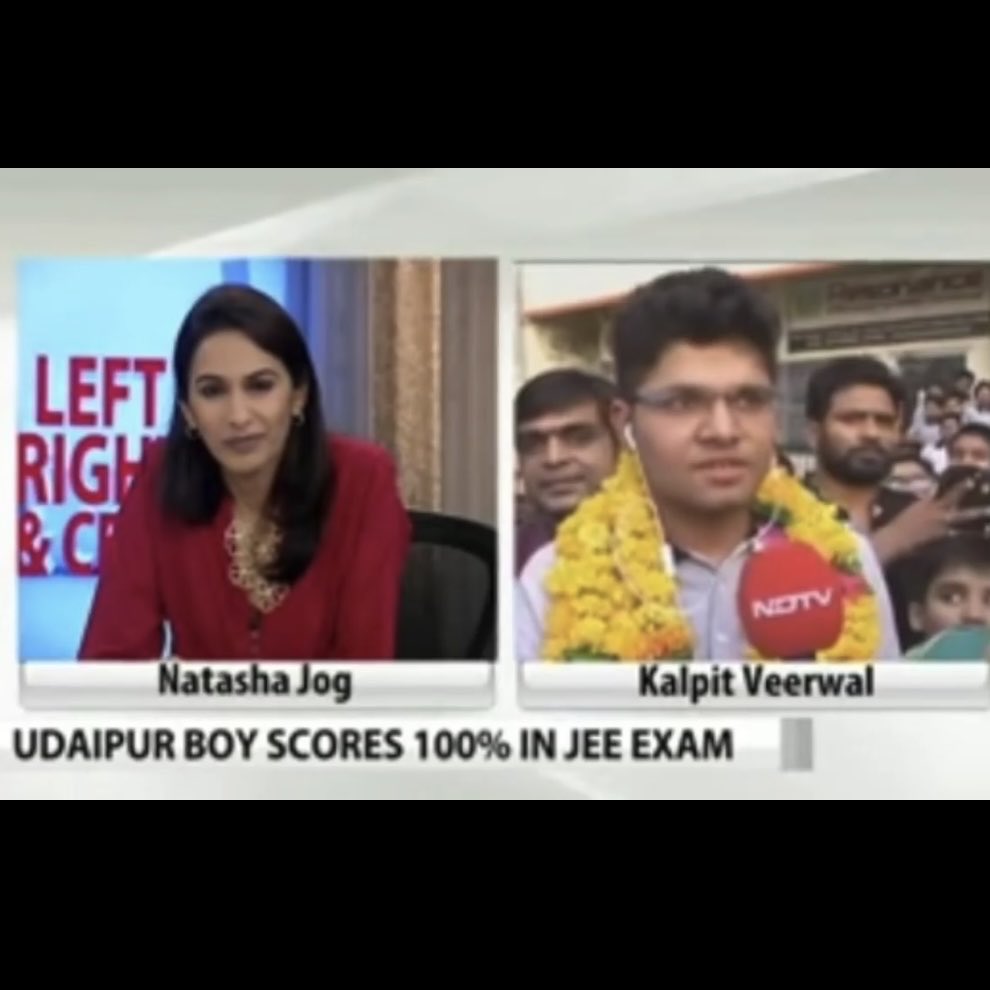
9 year ago today (2nd April 2017), I gave my JEE. I got AIR 1 and became the only person ever to score a perfect 360/360 score. This day looked normal back then but it changed my life. I went from yet another high schooler to national news overnight. The traditional corporate IIT route never appealed to me, and the popularity I enjoyed due to my rank helped me pursue so many different careers. Over the years, I’ve been an educator, built businesses, spoken across the country, invested, travelled, and very recently, started releasing my own music as a singer-songwriter. I’ve been focusing a lot more on investing and music lately, and you’ll hear more of my music this year (link in comments) Thanks to everyone who has supported me in my journey. In more ways than one, it is our story - not just mine - Kalpit Veerwal
Kalpit Veerwal tweet mediaKalpit Veerwal tweet mediaKalpit Veerwal tweet media
English
154
56
1.3K
584.1K
UJJAWAL KM YADAV 🇮🇳 retweetledi
Deadly Law
Deadly Law@DeadlyLaw·
“The most polarised State.” That’s how the Supreme Court described West Bengal today, after seven judicial officers were gheraoed for hours while performing their duties. Judges were carrying out revision of electoral rolls. They walked into work and ended up trapped inside a hostile crowd from afternoon till late night, with no timely intervention. Even after their release, their vehicles were attacked with stones and sticks. Three of the officers were women. The Supreme Court called it a “brazen attempt to browbeat judicial officers” and flagged a clear failure of the State machinery, questioning why no senior officials reached the spot despite being informed. SC has ordered deployment of central forces for protection of these officers, even at their residences if required, and handed over the investigation to a central agency.
English
3
10
32
3K
UJJAWAL KM YADAV 🇮🇳 retweetledi
Bar and Bench
Bar and Bench@barandbench·
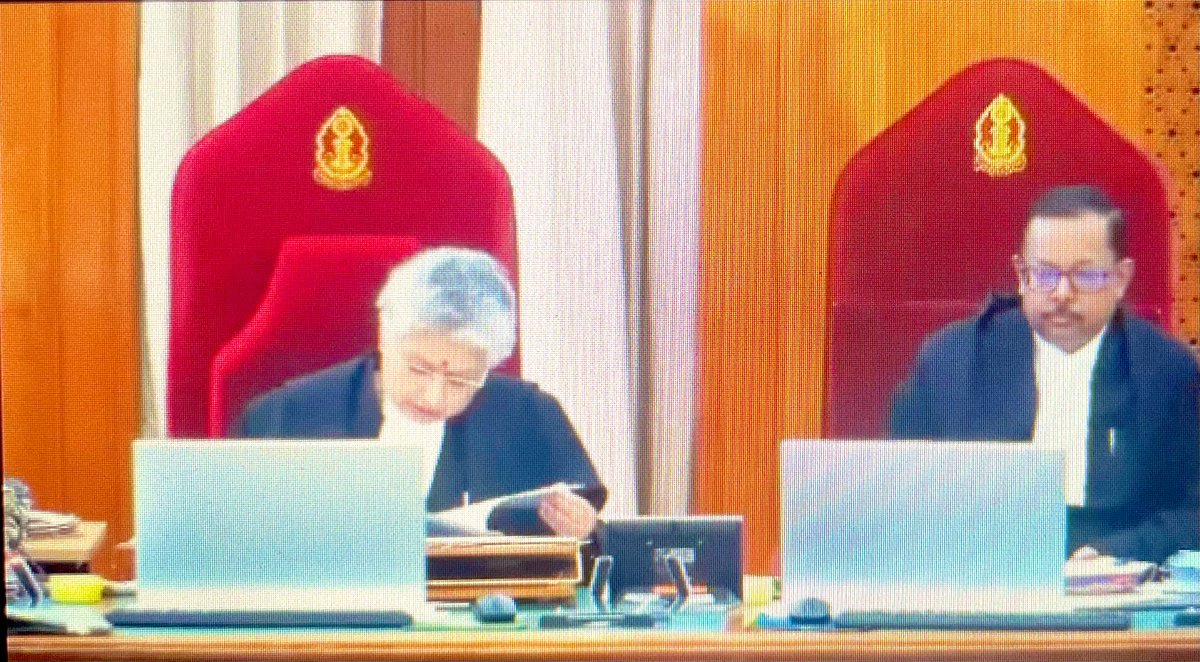
Supreme Court hears case of a man removed from CISF service because of unauthorised absence: ASG SD Sanjay: absence is of 11 days. Justice BV Nagarathna: this is a case for imposing cost with dismissal. We have been shouting. Pendency, pendency. Who is the biggest litigant? His dismissal is disproportionate. High court granted him relief. Instead of giving opinion that you will not go to Supreme Court, you still proceed against him. What had we said in the SCBA function? (referring to SCBA’s national conference where Justice Nagarathna recently spoke extensively about government being responsible for case backlog). We will impose cost in this case. We do not find any reason whatsoever to interfere with the impugned order. We fail to understand as to why the Union of India and others have approached this court. We dismiss this SLP with cost of Rs. 25000. Justice Nagarathna: we have taken the SCBA conference very seriously. It was not just to go to some resort and come back. We made preparations, we did homework. We spoke. Not to forget.
Bar and Bench tweet media
English
68
373
1.9K
259.9K
Sachin Gupta
Sachin Gupta@Sachingupta·
देहरादून में कार ओवरटेक के विवाद में फायरिंग करके रिटायर ब्रिगेडियर को मौत के घाट उतारने वाले 4 आरोपी गिरफ्तार !! रोहित कुमार, निखिल मल्होत्रा, संदीप सिंह, आदित्य चौधरी दिल्ली के रहने वाले हैं।
Sachin Gupta@Sachingupta

उत्तराखंड – देहरादून में स्कॉर्पियो और फॉर्च्यूनर सवार लोगों में ओवरटेक को विवाद हुआ, फिर गोलियां चली। वहां मॉर्निंग वॉक कर रहे रिटायर ब्रिगेडियर मुकेश जोशी की गोली लगने से मौत हुई। स्कॉर्पियो सवार फरार हुए, जबकि फॉर्च्यूनर पेड़ से जा टकराई। हमलावरों की तलाश जारी है।

हिन्दी
34
301
943
27.5K
UJJAWAL KM YADAV 🇮🇳 retweetledi
Anuradha Tiwari
Anuradha Tiwari@talk2anuradha·
She said this 20-25 years ago and every single word is still valid today. Literally, nothing has changed.
English
180
3.3K
19.7K
885.9K
मनुवादी बृजेश मिश्र/ Brijesh Mishra🇮🇳
मिर्जापुर के पंडित इसी लायक है, ठीक फटकार लगी है अनुप्रिया पटेल के कार्यालय पर, और करो दलाली अनुप्रिया पटेल की ब्राह्मणों। हकीकत यही है कि मिर्जापुर की सांसद घनघोर जातिवादी है।
हिन्दी
12
437
1.1K
20.4K
The Analyzer (News Updates🗞️)
The Analyzer (News Updates🗞️)@Indian_Analyzer·
🚨 Suvendu Adhikari makes blunt admission on Muslim votes. - "BJP does not get Muslim votes. Only around 0.65% Muslim votes, but I appeal to NATIONALIST & educated Muslims to vote against TMC" At least he is clear of his thoughts👌🏼
English
57
1.6K
10K
177.6K
UJJAWAL KM YADAV 🇮🇳 retweetledi
The Hindu
The Hindu@the_hindu·
University can't restrict peaceful expression of ideas that don't align with management's ideology: Delhi High Court trib.al/ViZIXHG
English
4
86
365
18.3K
UJJAWAL KM YADAV 🇮🇳 retweetledi
Live Law
Live Law@LiveLawIndia·
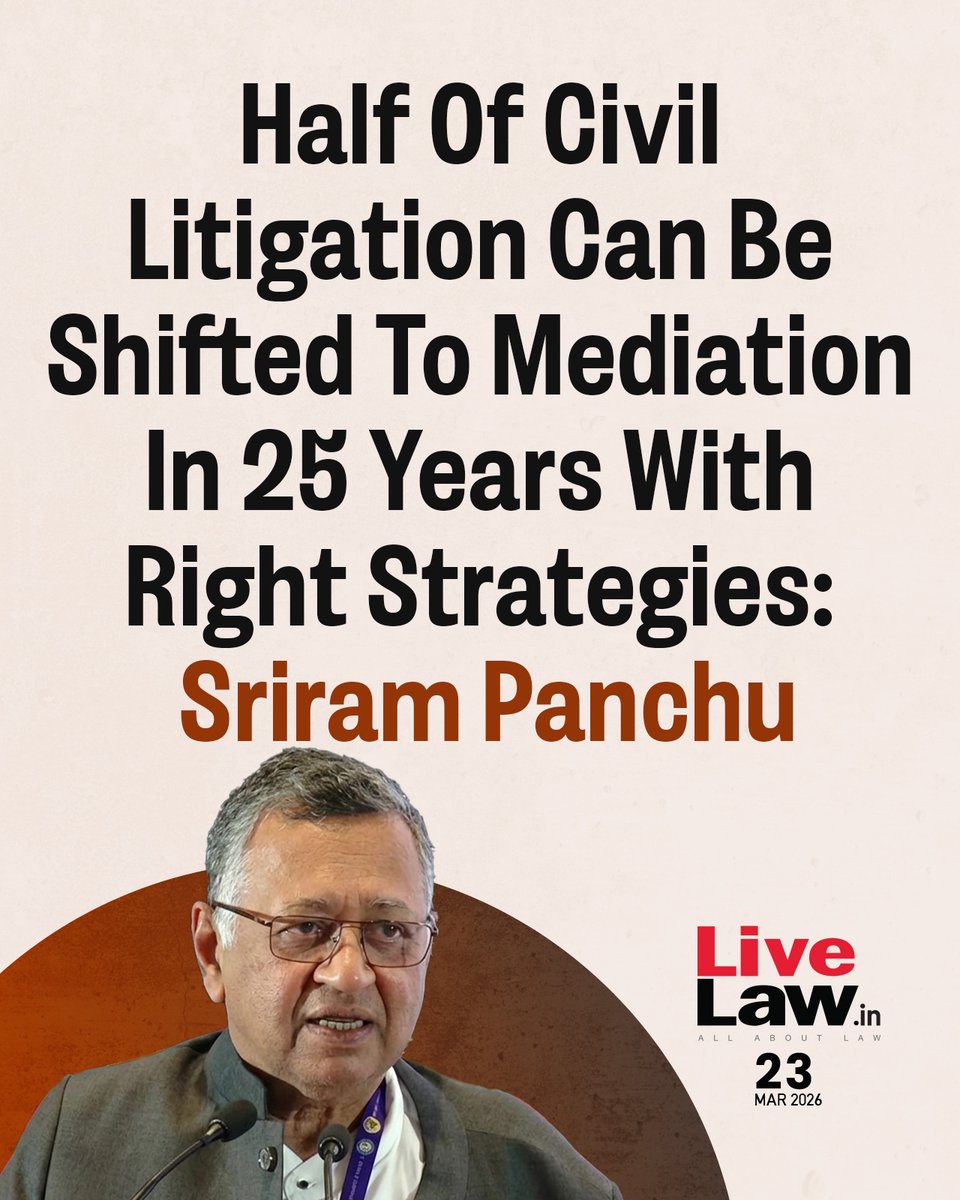
Panchu outlined strategies to make mediation a more effective and attractive dispute resolution mechanism. Read more: bitl.to/5nQT #SriramPanchu #mediation
Live Law tweet media
English
6
11
45
3.6K
UJJAWAL KM YADAV 🇮🇳 retweetledi
Bar and Bench
Bar and Bench@barandbench·
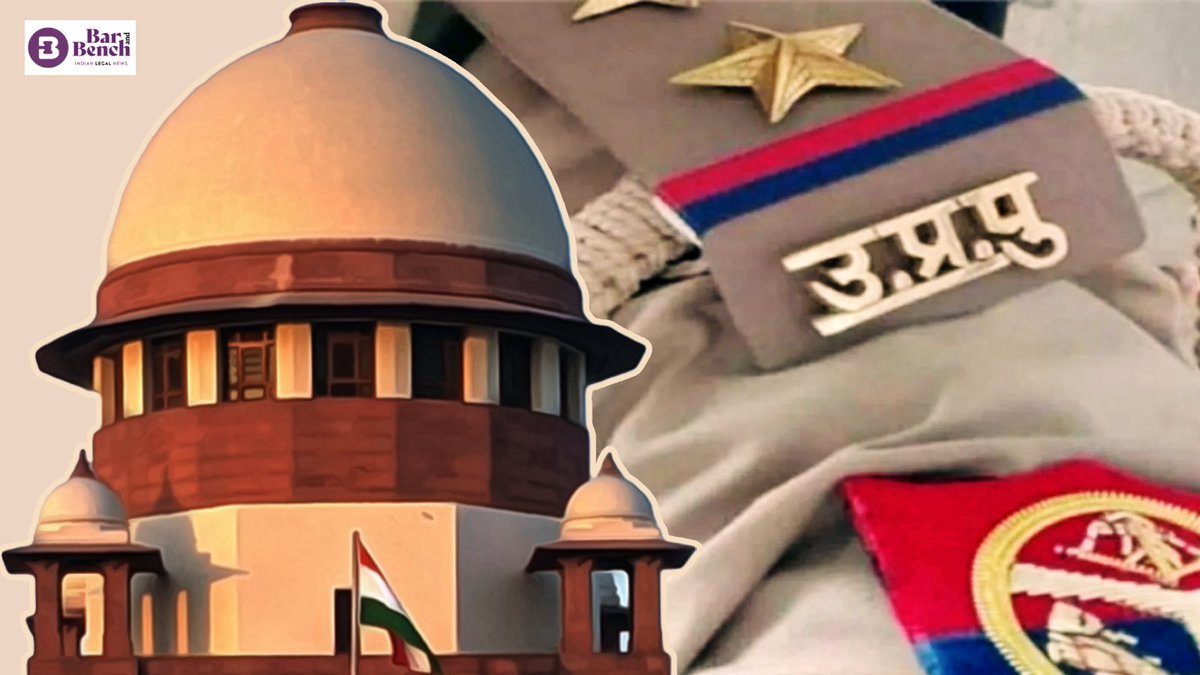
Supreme Court flags discrepancy in chargesheet filed by UP Police: Justice Pardiwala: A man was done to death, he was strangulated, cause of death was asphyxia, and UP police files chargesheet for culpable homicide and not murder? Just see the mockery. It’s a case of murder. And State is filing chargesheet for culpable homicide not amounting to murder. #UttarPradeshPolice #SupremeCourt
Bar and Bench tweet media
English
6
89
290
15.1K