
Vibhu Parcha

1.6K posts

Vibhu Parcha banner
Vibhu Parcha

Vibhu Parcha

@VibhuParcha

Every New Discovery is a Reminder that We are All Small and Stupid | Cardiomyopathy | Tx | MCS | LVAD | PV Loop Enthusiast🫀| #SoMe @Circ_Gen | @UABHeersink

Birmingham, AL, USA Katılım Haziran 2012
1.4K Takip Edilen475 Takipçiler
Vibhu Parcha retweetledi
Ying Wang
Ying Wang@yingwangyw·
1/🎉New preprint: Phenome-derived polygenic scores and social determinants jointly shape context-dependent disease risk. We evaluate disease risk along 2 axes: • how genetic liability is represented • the social context in which it is expressed medrxiv.org/content/10.648…
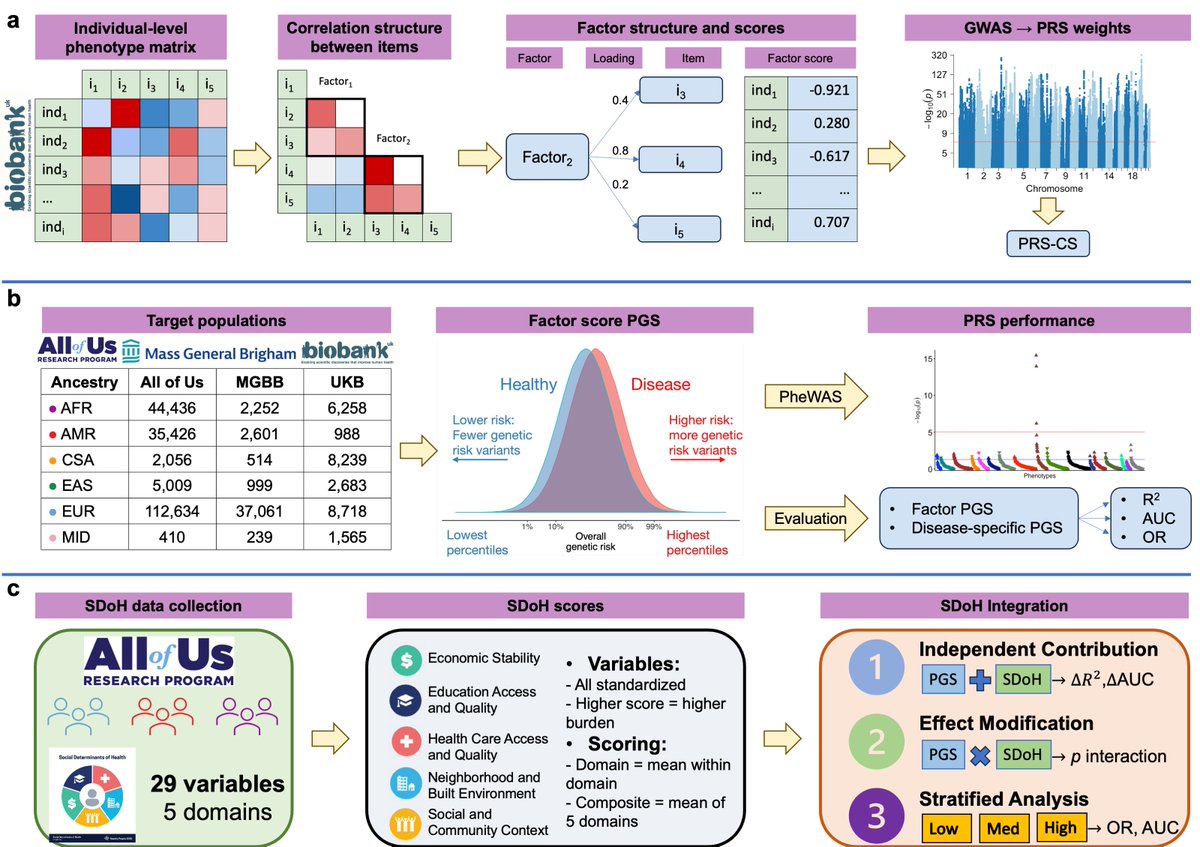
Ying Wang tweet media
English
1
6
18
891
Vibhu Parcha retweetledi
Sara Moscatelli
Sara Moscatelli@saramoscatelli7·
🧬 LMNA cardiomyopathy over 25 years: one gene, many trajectories A fascinating clinical letter reports a 25-year follow-up of a family carrying an LMNA frameshift variant (c.960del) 💡 Why is this important? Variants in LMNA are among the most well-known causes of genetic dilated cardiomyopathy: ~8% of DCM strong association with arrhythmias and conduction disease risk often independent of LVEF 👉 But what happens over decades? 👨‍👩‍👧 The family: one mutation, very different phenotypes From the pedigree and longitudinal data, 5 carriers showed marked intrafamilial variability: Sudden cardiac death at young age (proband at 32 years) Rapid progression to end-stage HF → heart transplantation Slowly progressive cardiomyopathy Mild arrhythmic phenotype with preserved function And importantly: 👉 Skeletal muscle involvement varied widely Limb-girdle muscular dystrophy (LGMD) Emery-Dreifuss muscular dystrophy (EDMD) Or minimal muscle symptoms ⚡ Arrhythmias first, structure later A key message: ✔️ Electrical abnormalities and arrhythmias may: precede structural disease occur even with preserved LVEF 👉 Reinforcing LMNA as a primary arrhythmogenic gene 📉 Disease progression is unpredictable Even within the same family: one patient → stable for decades another → rapid HF and transplant within months another → mild disease into adulthood 📌 As shown in the clinical summary (page 3), trajectories diverge significantly despite identical genotype. 🧬 Does genetics fully explain the phenotype? This study highlights: strong variable expressivity likely role of: modifier genes environmental factors polygenic background 👉 Same mutation ≠ same disease ⚠️ Clinical implications ✔️ LMNA patients require: early and lifelong surveillance aggressive arrhythmic risk assessment ✔️ Family screening is crucial: ✔️ Advanced therapies (including transplant): 🔬 Looking forward Despite incomplete understanding of mechanisms: inflammation and signalling pathways (e.g. MAPK) are implicated emerging strategies: antisense therapies exon skipping CRISPR-based approaches 🧠 Take-home message LMNA cardiomyopathy is not just a disease: 👉 it is a spectrum DOI: 10.1161/CIRCGEN.125.005528
Sara Moscatelli tweet media
English
0
9
33
1.3K
Vibhu Parcha retweetledi
Sourbha Satish Dani, MD, MSc, FACC, FASE
The Hook Cardiology trials keep telling you "20% risk reduction." But what if that same trial meant: → 1 in 50 patients helped (NNT 50) → 49 of 50 got zero benefit Welcome to the greatest trick in clinical trials: Relative Risk vs. Absolute Risk. A thread 🧵👇
English
17
100
304
40.4K
Vibhu Parcha retweetledi
Sara Moscatelli
Sara Moscatelli@saramoscatelli7·
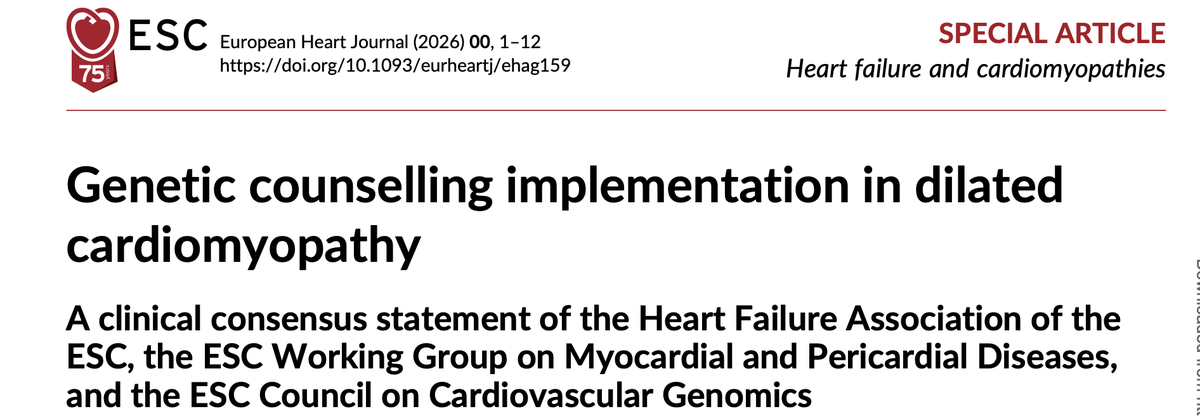
🧬 Genetic testing in Dilated Cardiomyopathy: are we using it right? A new ESC consensus highlights a key shift: genetics in DCM is no longer just about family screening—it’s now central to clinical decision-making. 🔍 Key messages 🧠 Not just monogenic anymore DCM is increasingly seen as a continuum: Rare variants (high impact) common variants (polygenic background) environmental triggers ➡️ Disease = interaction, not a single mutation 🧬 Who should be tested? → almost everyone Genetic testing is recommended when results can impact: ✔️ diagnosis ✔️ prognosis ✔️ treatment (e.g. ICD decisions) ✔️ family screening ➡️ Even “acquired” DCM does NOT exclude genetics 📊 Yield is variable but meaningful ~8–36% overall up to 55% in familial DCM ➡️ Still clinically impactful despite imperfect yield ⚠️ Gene panels: bigger ≠ better Large panels increase VUS Limited gain in actionable variants ➡️ Focus on validated disease genes is key 🔥 Genotype matters clinically Some genes carry higher arrhythmic risk: LMNA, FLNC, DSP, RBM20, PLN ➡️ Can influence ICD decision-making beyond EF 🧩 The real paradigm shift: interpretation Genetic results must be read in context: phenotype environment (e.g. myocarditis, chemo, pregnancy) penetrance ➡️ A variant alone is NOT the diagnosis 👨‍👩‍👧 Family impact is huge Enables cascade screening Can discharge gene-negative relatives Opens reproductive options 💡 Take-home message Genetic testing in DCM is no longer optional or “nice to have”— it’s becoming a core part of precision cardiology. 👉 But its value depends entirely on how well we interpret it. #Cardiology #DCM #Genetics #Cardiomyopathy #PrecisionMedicine #HeartFailure #ESC #MedEd 🧬🫀 doi.org/10.1093/eurhea…
Sara Moscatelli tweet mediaSara Moscatelli tweet media
English
0
24
61
4K
Vibhu Parcha retweetledi
PennCVI
PennCVI@PennCVI·
Congratulations to Andrew Landstrom!
PennCVI tweet media
English
0
2
9
368
Vibhu Parcha retweetledi
JHLT
JHLT@TheJHLT·
Comparative outcomes of bilateral lung vs. heart-lung transplantation in primary pulmonary arterial hypertension—insights from a UNOS database study. But the key question remains: can the RV recover—and what’s the best test to know? #PAH @SSaddoughi 🔗: jhltonline.org/article/S1053-…
English
0
5
12
758
Vibhu Parcha retweetledi
JHLT
JHLT@TheJHLT·
In this prospective, observational study of patients undergoing #LVAD implant, using intraop high-fidelity hemodynamics and 3D echocardiography the authors found reduced RV contractility and RV–PA coupling with individual response heterogeneity. @nicoa002 🔗: jhltonline.org/article/S1053-…
English
1
5
13
868
Vibhu Parcha retweetledi
Thermal
Thermal@ThermalPR·
Drs. @kiranmusunuru and @AhrensNicklas, leaders of the team behind baby KJ's personalized CRISPR therapy, have been named to @TIME's 100 Most Influential People of 2026 with a tribute written by CRISPR co-inventor, Nobel laureate, and Innovative Genomics Institute founder Dr. Jennifer Doudna. Their work proved that a CRISPR therapy can be designed, tested, and delivered for a single patient's unique mutation in just 6 months. That's a new standard of care for thousands of children born with rare genetic diseases. time.com/collection/100…
English
1
2
12
2.6K
Vibhu Parcha retweetledi
Abu Hurera
Abu Hurera@AbuhureraMD·
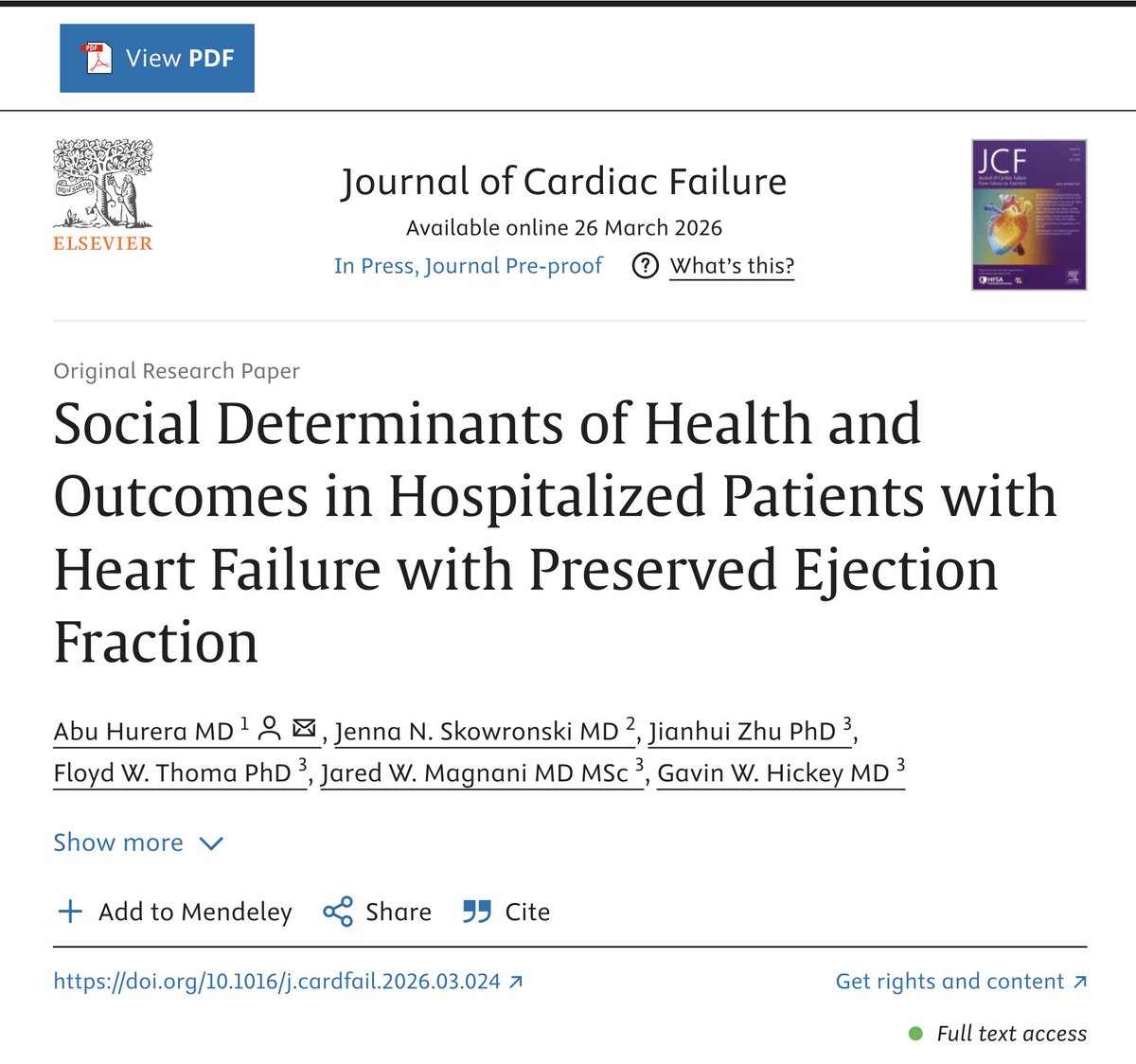
Thrilled to share that our paper, “Social Determinants of Health and Outcomes in Hospitalized Patients with Heart Failure with Preserved Ejection Fraction,” has been accepted in the Journal of Cardiac Failure. Grateful for the guidance and mentorship of @GavHick throughout this journey! doi.org/10.1016/j.card…
Abu Hurera tweet media
English
0
7
23
2.9K
Vibhu Parcha retweetledi
Shazli Khan
Shazli Khan@ShazliKhanMD·
We made it to the *final* episode of our Advanced Therapies series—and this one is really special. A powerful conversation on palliative care in heart failure with @SarahChuzi & Dr. Alix Barnes, who I learn from every single time. Check it out!
Shazli Khan tweet media
English
0
4
17
859
Vibhu Parcha retweetledi
Michael H. Beasley, MD
Michael H. Beasley, MD@MHBeasleyMD·
AHFTC training covers an enormous clinical landscape — MCS, transplant, shock, palliative care, etc. — often in a single fellowship year. I created the Heart Failure Fellow Lecture Series to help close the education gap. Free. No paywall. No sign-up. 🎓 @AHFTC" target="_blank" rel="nofollow noopener">youtube.com/@AHFTC
English
2
55
195
39K
Vibhu Parcha retweetledi
Ohad Oren, MD, MPH
Ohad Oren, MD, MPH@OhadOrenMDMPH·
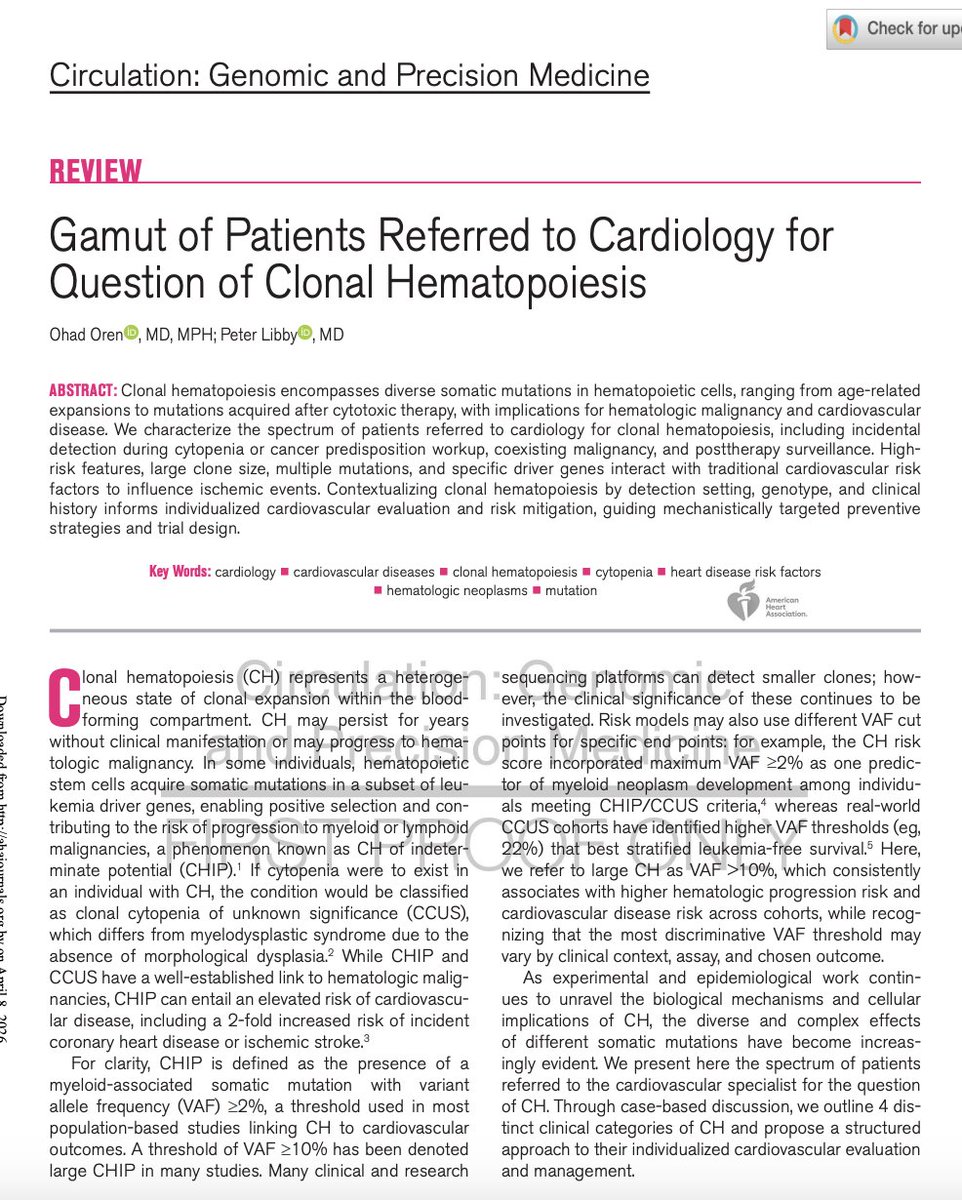
Pleased to share our new @Circ_Gen article: Dr. Peter Libby and I present the spectrum of patients referred to cardiology for clonal hematopoiesis, define context- and biology-based categories, and outline a structured approach to CV evaluation and management Link below
Ohad Oren, MD, MPH tweet mediaOhad Oren, MD, MPH tweet media
English
2
9
33
2.9K