Ramiro Villapadierna

13.6K posts

Ramiro Villapadierna banner
Ramiro Villapadierna

Ramiro Villapadierna

@Villapadierna

Jerez Candidata a Capital Europea de la Cultura. Gestor de instituciones. Diplomacia cultural. Europeísmo e hispanismo. Montañero, baterista, tanguero

Pre: 52.322583,9.810733 Katılım Eylül 2008
625 Takip Edilen1.4K Takipçiler
Ramiro Villapadierna retweetledi
mtoscano
mtoscano@mtscano·
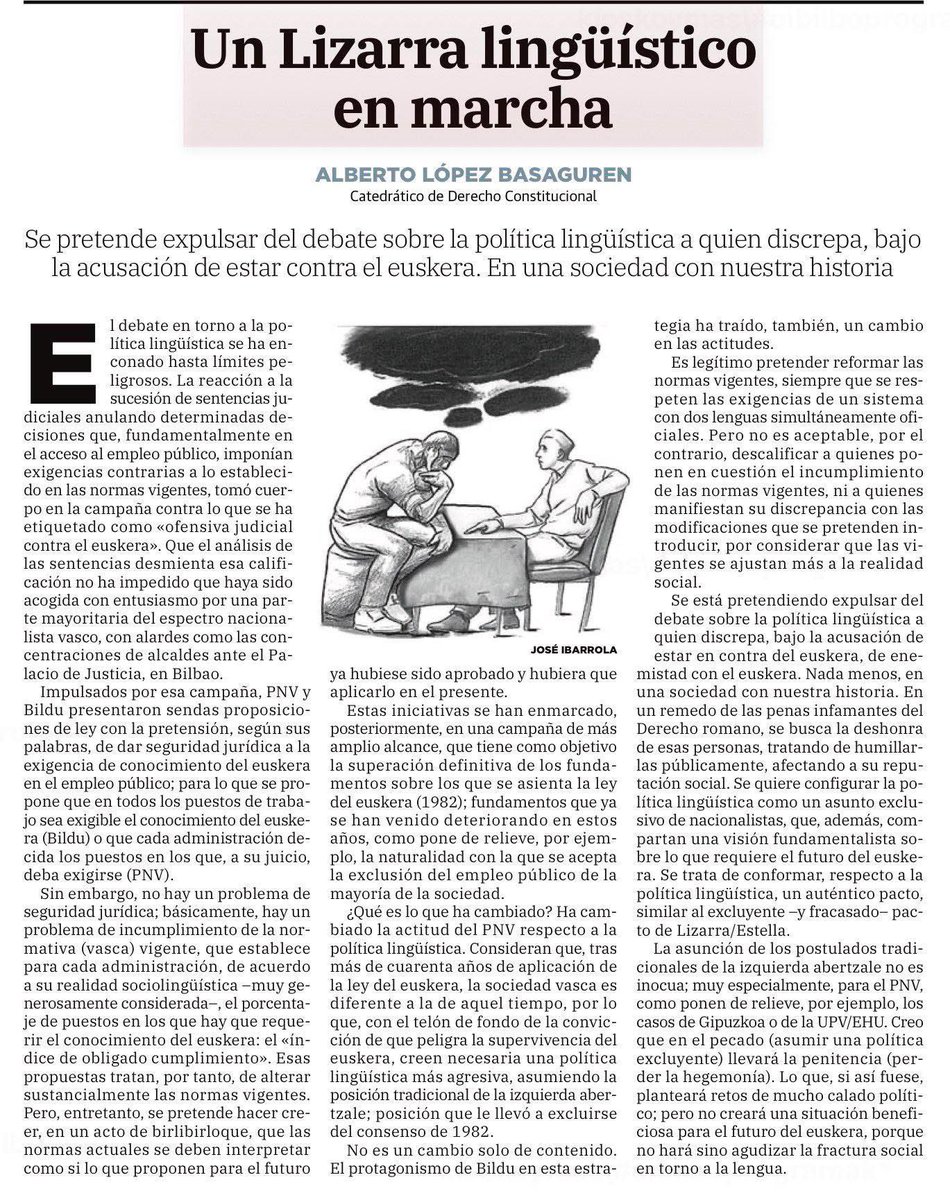
López Basaguren sobre la radicalización de la política lingüística en el País Vasco. Que se veía venir. Vía @LOPEZ_LERA_AB
mtoscano tweet media
Español
1
14
29
802
Ramiro Villapadierna retweetledi
Ethic
Ethic@Ethic_·
🎙️José María Beneyto: «Hemos construido el experimento político más novedoso y mejor armado de la historia: la Unión Europea». #EntrevistasEthic  ethic.es/entrevista-jos…
Español
0
6
9
556
Ramiro Villapadierna retweetledi
Luke Stegemann
Luke Stegemann@lukestegemann·
At this time each year I always return to my life-long favourite movie - Il Vangelo secondo Matteo.
Luke Stegemann tweet media
English
1
2
17
634
Ramiro Villapadierna retweetledi
Convivencia Civica Catalana
Convivencia Civica Catalana@CCivicaCatalana·
¿Os acordáis cuándo los Mossos investigaron los gritos de odio a España y amenazaron con sanciones por el "Puta España", el "Español, el que no bote" y los pitos al Himno Español en el Camp Nou? Yo tampoco.
Español
88
4.3K
11.1K
147.6K
Ramiro Villapadierna retweetledi
Fundación Civismo
Fundación Civismo@CivismoF·
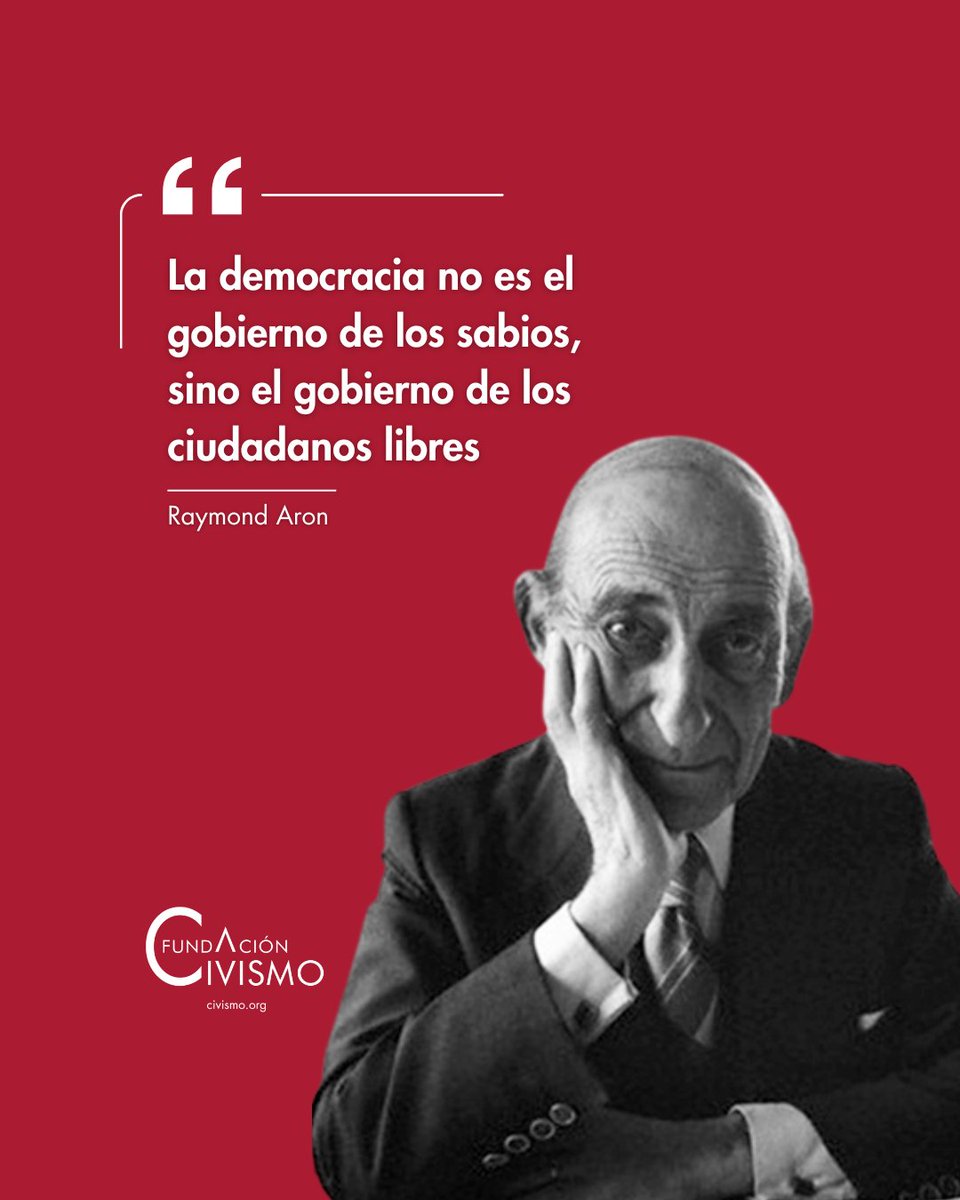
🗣️«La democracia no es el gobierno de los sabios, sino el gobierno de los ciudadanos libres». Frase del filósofo y sociólogo francés Raymond Aron. ➡️Os invitamos a ver el Seminario de Pensamiento con @oscarelia_ sobre el autor: youtu.be/nM8Z0JwSV-o?si…
YouTube video
YouTube
Fundación Civismo tweet media
Español
0
10
10
552
Ramiro Villapadierna retweetledi
Pablo Malo
Pablo Malo@pitiklinov·
“Las personas más comprometidas con el comunismo en la Unión Soviética no eran los obreros, sino la élite educada. Un estudio retrospectivo realizado en la década de 1990, titulado «Ética laboral y el colapso del sistema soviético», analizó qué grupos eran los más partidarios del sistema soviético. Los investigadores descubrieron que, en comparación con los trabajadores de fábricas y los obreros semicualificados, las personas en puestos de cuello blanco —especialmente aquellas con niveles más altos de educación— eran significativamente más propensas a expresar lealtad al Partido Comunista. En algunos casos, el apoyo era entre dos y tres veces mayor entre las élites. En otras palabras, el apoyo más fuerte al sistema no provenía de los de abajo, sino de aquellos que se encontraban en posiciones relativamente ventajosas dentro de él. Esto va en contra de la suposición común de que las ideologías igualitarias o redistributivas son impulsadas principalmente por los más desfavorecidos. En la práctica, suelen ser más fuertemente respaldadas por personas que están más cerca de la cima de la jerarquía social: aquellas que se benefician de la estructura institucional del sistema o que están bien posicionadas para desenvolverse con éxito dentro de él.” Me parece interesante que en el wokismo actual (lo trata por ejemplo Musa al-Gharbi en We Have Never Been Woke) ocurre algo parecido: las actitudes más “woke” (fuerte énfasis en identidad racial, género, privilegio, diversidad como capital simbólico, etc.) son mucho más comunes entre las élites simbólicas (profesionales altamente educados que trabajan con ideas, discursos, medios, academia, derecho, HR, tech, etc.) que entre las clases trabajadoras o las comunidades minoritarias más desfavorecidas.
Rob Henderson@robkhenderson

The people most committed to communism in the Soviet Union weren’t the workers—it was the educated elite. A retrospective study conducted in the 1990s titled "Work Ethics and the Collapse of the Soviet System," examined which groups were most supportive of the Soviet system. The researchers found that, compared to factory workers and semi-skilled laborers, individuals in white-collar positions—especially those with higher levels of education—were significantly more likely to express loyalty to the Communist Party. In some cases, support was two to three times higher among elites. In other words, the strongest support for the system came not from those at the bottom, but from those in relatively advantaged positions within it. This runs counter to the common assumption that egalitarian or redistributive ideologies are primarily driven by the least well-off. In practice, they are often most strongly endorsed by people closer to the top of the social hierarchy—those who benefit from the system’s institutional structure, or who are positioned to navigate it successfully.


Español
72
577
1.5K
124.3K
Ramiro Villapadierna retweetledi
Marcos Ondarra
Marcos Ondarra@MarcosOndarra·
El odio está permitido en los campos de fútbol españoles, pero solo cuando es dirigido contra lo español.
Español
90
1.1K
5.4K
102.5K
Ramiro Villapadierna retweetledi
A. de Mora
A. de Mora@antoninomora·
Estamos haciendo una cuestión de Estado un “musulmán el que no bote” mientras la selección nacional lleva sin poder jugar en el Camp Nou desde el 21 de enero de 1987 porque el segundo equipo del país odia a su propia nación. Dime tú si vivimos en un meme infinito
Español
320
2.6K
9.8K
126.2K
Ramiro Villapadierna retweetledi
María José García-Pelayo
María José García-Pelayo@MJGarciaPelayo·
El Miércoles Santo de Jerez tiene nombre de mujer: Amargura.
Español
1
5
24
1.5K
Ramiro Villapadierna retweetledi
Rafael Maldonado
Rafael Maldonado@RGMaldo·
'Flaubert dejaría escrito que el mundo se iba a volver “tremendamente imbécil y muy aburrido” y que las futuras generaciones tendrían que “aprender a moverse en una sociedad de pavorosa grosería”, donde proliferaría la nueva figura del “hombre de negocios', dice hoy V-Matas. Sí.
Español
3
13
61
1.9K
Ramiro Villapadierna
Ramiro Villapadierna@Villapadierna·
IA llena, cabeza vacía
Derek Thompson@DKThomp

Writing is thinking, and people who outsource the full writing process to AI will find their screens full of words and their minds empty of thought. But also: All writing involves and has always involved “outsourcing”—reaching outside of the writer’s mind to pull in pieces of the world, before and after the work of making words. Writers draw their ideas from other people, books, articles; after writing they often rely on outside copy editors, fact checkers, transcribers. Some of this stuff is just going to be done by AI in the future, and the boundaries between “good behavior” and “bad behavior” will have some blurry lines, and we should be honest and open about the blur rather than declare everybody with an open Claude window a part of the slopclass. Anybody who says AI transcription of long interviews obliterates the identity of a writer is being a little silly. But what about copy editing? Claude is a fast and decent copy editor, but it is inhuman to rely on it for that function? Is it moral to google “Econ papers on income transfers for child poverty” but immoral to write the same thing as an AI prompt? What about throwing 500 muddled words into ChatGPT and saying “does this make any sense? what do you think I’m trying to say here?” That’s going to be useful for some people. At an aesthetic level, I don’t like copy-pasting AI paragraphs into articles and pressing publish. That feels like me cheating myself. It feels like de-skilling. But the idea that “using AI” is anathema to the identity of being a writer is, in a few years, going to sound an awful lot like claiming that “using a computer” is a violation of the craft of writing. (Which, haha, maybe it is and we should all just go back to Steinbeck and his pencils; but talk about ships that have sailed.)

Español
0
0
0
65