Vincent Ducrey

11.2K posts

Vincent Ducrey banner
Vincent Ducrey

Vincent Ducrey

@vincent_ducrey

President @parisecoforum @HUBinstitute & ex @gouvernementFR Focusing on ✨#Ai 🌿#ESG ⏩#Organisation & #parenting

🇫🇷🇪🇺& 🌏 Katılım Mayıs 2007
3.7K Takip Edilen25.6K Takipçiler
Vincent Ducrey retweetledi
EU Economy & Finance
EU Economy & Finance@ecfin·
1⃣ week to go for the Brussels Economic Forum! On 7 May, we'll gather high-level speakers, decision-makers and experts to discuss Europe's AI Economy in the global race. ✍️Register now and join the #EUBEF26 debate on 7 May: link.europa.eu/6YVvHG
EU Economy & Finance tweet media
English
0
3
3
869
Vincent Ducrey retweetledi
Mehdi (e/λ)
Mehdi (e/λ)@BetterCallMedhi·
rien ne ressemble plus violemment au choc de revenir en Chine et de réaliser à quel point l'occident est devenu une civilisation qui demande la permission avant de construire à Shenzhen un gamin de 20 ans qui a une idée à 8h du matin a un prototype fonctionnel à 18h le même jour, dans le même temps un diplômé français achète une formation à 1500 euros pour apprendre à valider son idée avec un canvas notion qu'il ne montrera à personne, attend l'avis de 4 mentors linkedIn qu'il n'a jamais rencontrés, lit 12 livres sur le lean startup pour bien comprendre la méthodologie & 6 mois + tard le hamin chinois a vendu sa boite à Tencent pendant que le français en est encore à choisir le nom de son LLC sur shine je pense que le vrai problème CULTUREL c'est qu'on a appris aux jeunes occidentaux et notamment aux européens que l'entrepreneuriat était une recette de cuisine, ouvrez le bon livre m, suivez les bonnes étapes obtenez le bon résultat alors que que personne ne sait rien, personne n'a jamais rien su et tous les empires industriels de l'histoire ont émergé d'une combinaison de hasard de séréndipité et d'une seule personne qui a juste commencé sans avoir compris d'avance pour rappel Brian chesky (Airbnb) a loué son matelas gonflable parce qu'il ne pouvait pas payer son loyer, Zeng Yuqun de CATL a démonté des batteries dans un garage de Shenzhen sans savoir où ça allait le mener et la vérité c'est que l'illusion du plan parfait est le mécanisme de protection psychologique préféré de ceux qui ont peur de commencer le meilleur conseil que j’ai à vous donner ici c’est juste de commencer, ouvrez votre laptop ce soir et codez la version moche de votre idée, soudez vos premiers prototypes même mal foutus dans votre garage, lancez votre premier produit avec un site web hideux, vendez votre premier service à un client trouvé sur un groupe Telegram… vous comprendrez en 3 jours d’action concrète ce que vous n’auriez jamais compris en 3 ans de réflexion abstraite, le seul algorithme qui a jamais fonctionné dans toute l’histoire de la création humaine c’est commencer mal mais itérer rapidement, échouer publiquement, apprendre violemment & recommencer en mieux foncez comme des bourrins sans vous poser 36000 questions parce que les questions trouvent leurs réponses dans le faire jamais dans le penser et soyons honnêtes sur le vrai blocage, ce qui paralyse 90% des aspirants bâtisseurs c'est le regard des autres beaucoup plus que le manque de compétences, la peur de paraître stupide aux yeux de la famille des collègue ou des amis on préfère ne rien tenter et garder la dignité sociale plutôt que d'essayer et de risquer le ridicule public, c'est exactement le mécanisme qui a tué l'industrie française depuis 30 ans et qui continue de tuer chaque trimestre des centaines d'idées brillantes dans les têtes de gens qui n'oseront jamais les sortir si vous êtes dans un environnement social qui rit des gens qui essaient je ne peux que vous conseiller de juste changer d'environnement, déménagez dans le bon endroit mais sortez de l'écosystème qui vous tire vers le bas je suis persuadé que la seule chose qui sépare aujourd'hui un bâtisseur d'un commentateur c'est le courage de paraître stupide pendant 18 mois en échange d'avoir construit quelque chose qui compte pendant les 30 années suivantes bref je pense que j’ai UNE NOUVELLE FOIS été trop long mais vraiment entourez vous avant tout de weirdos qui construisent, qui échouent, qui recommencent, qui passent leur temps à itérer & surtout qui ne demandent pas la permission et qui se foutent de ce que pense autrui dites vous que dans 10 ans vous serez la moyenne pondérée des 5 personnes avec qui vous passez le plus de temps, choisissez les donc comme vous choisiriez les fondations d'une maison qui doit résister à toutes les tempêtes de votre vie
Français
57
331
1.7K
158.8K
Vincent Ducrey
Vincent Ducrey@vincent_ducrey·
Lancement de notre nouveau livre sofaeconomics.com qui analyse l'essor durable de la Sofa Economics et ses impacts sur les nouveaux usages domestiques, offrant des clés stratégiques pour les entreprises face à cette transformation profonde des comportements de consommation. @HUBInstitute @ParisEcoForum
Français
0
0
1
210
Vincent Ducrey retweetledi
Brian Distelburger
Brian Distelburger@bdistel·
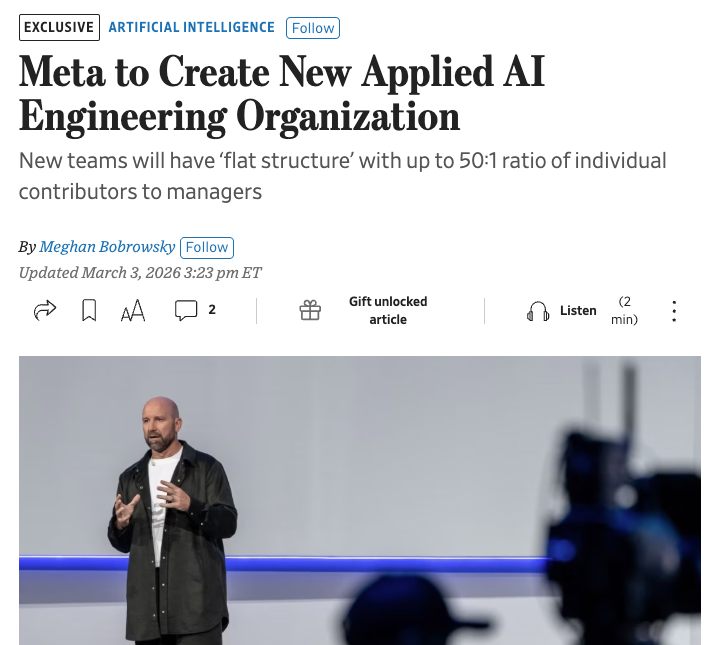
Meta just announced a new applied AI engineering organization with a target ratio of 50 employees to 1 manager. Read that again. 50 to 1. That's not a management structure. That's barely management at all. And I think it tells us something profound about where work is heading. For decades, the conventional wisdom on management span of control has been somewhere between 5 and 10 direct reports. Anything beyond that was considered unwieldy. The logic made sense: managers existed to coordinate work, transfer knowledge, review output, and keep teams aligned. But AI is collapsing the need for most of that. When AI handles code review, generates documentation, runs evaluations, and synthesizes data - the bottleneck is no longer information flow between humans. The bottleneck is decision-making clarity. It's knowing what to build and why. It's understanding the operating context deeply enough to move fast without constant supervision. That changes what management even means. The future manager isn't someone who oversees 8 people's work. They're someone who sets the operating context for 50 people and trusts them to execute. Less review, more alignment. Less delegation, more direction-setting. Less "how are you doing this" and more "here's why we're doing this." And that has massive implications beyond Meta. If the value of a manager shifts from coordination to culture-setting, then every company needs to rethink what it's actually selecting for in leadership. It's no longer about technical depth or even project management rigor. It's about the ability to articulate values, reinforce decision-making frameworks, and build an environment where autonomous people can do their best work. The companies that figure this out will run leaner, move faster, and attract better talent. The ones that don't will keep hiring managers to do jobs that AI already does better. We're not entering an era where management disappears. We're entering an era where management becomes almost entirely about culture, context, and values - and almost nothing about oversight. The 50:1 ratio isn't an experiment. It's a 𝘱𝘳𝘦𝘷𝘪𝘦𝘸.
Brian Distelburger tweet media
English
0
1
9
1.4K
Vincent Ducrey retweetledi
Mehdi (e/λ)
Mehdi (e/λ)@BetterCallMedhi·
I spent time in Shenzhen last year and when I saw Merz come back from China saying Germans need to work more I immediately knew what broke his brain because I lived the exact same cognitive shock my first week in Huaqiangbei I burned through 4 prototype iterations of a motor controller board for less than a thousand bucks total, back home a friend was working on something similar and spent over 12 thousand for a single revision that took almost two months to arrive when you live that contrast in your own hands with your own project something permanently shifts in how you see the world and it goes way deeper than speed & cost what Shenzhen actually built is a collective learning organism, imagine 20 PCB fabs 15 injection mold shops 30 component distributors and a hundred firmware freelancers all within a 2km radius, looks insanely redundant from the outside until you realize redundancy is actually information density in disguise I watched this firsthand with an injection mold supplier I was working with, this guy had seen a hundred founders iterate similar thermal designs over 6 months so he proactively modified his tooling before I even opened my mouth, he knew what I needed before I knew what I needed, the intelligence lives in the relationships between the nodes and it compounds daily the west thinks about manufacturing as a cost center you optimize by centralizing… China accidentally built a distributed neural network of manufacturing intelligence where knowledge diffuses horizontally across thousands of agents faster than any single western company can process internally so when Merz comes back and says we need to work a bit more I think he saw the problem but COMPLETELY misdiagnosed the solution, telling Germans to work harder is like telling a horse to gallop faster when the other side built a combustion engine the gap is ARCHITECTURAL it’s ecosystem density, you need a custom connector in Shenzhen you walk 200 meters, in Munich you send an email and wait 3 weeks it’s iteration speed, parallel search vs sequential optimization at the system level, it’s risk tolerance, Chinese founders ship something broken on Monday fix it Tuesday ship again Wednesday while European companies are still in the approval phase for the pilot program of the feasibility study… and Merz only saw the surface, what he missed is the tier 2 cities like Hefei Chengdu Wuhan replicating the Shenzhen model at scale right now BYD going from irrelevant to outselling every european automaker combined in roughly 5 years, Huawei building its own 7nm chip under maximum sanctions when every analyst said it was physically impossible & behind all of that a government that treats advanced manufacturing as an existential national priority while europe debates whether AI needs another ethics committee I think what we’re watching is the most asymmetric economic competition in modern history and most western leaders are still framing it as a productivity problem when it’s actually an ontological one Europe & America are optimizing variables that China stopped tracking years ago meanwhile China is compounding on dimensions the west has no framework to even measure Merz at least had the courage to name it out loud and I respect that genuinely but working a bit more inside a broken architecture just means you arrive at the wrong destination slightly faster
Megatron@Megatron_ron

NEW: 🇩🇪🇨🇳 German Chancellor Merz says Germans need to work more in order to match China: “We are simply no longer productive enough. Each individual may say, “I already do quite a lot.” And that may be true. But when you return from China, ladies and gentlemen, you see things more clearly. With work-life balance and a four-day week, long-term prosperity in our country cannot be maintained. We will simply have to do a bit more.”

English
898
5.5K
26.6K
4.1M
Vincent Ducrey retweetledi
Figure
Figure@Figure_robot·
Introducing Helix 02 It's our most powerful model to date - it's using the whole body to do dishes end-to-end and it's fully autonomous
English
369
780
5.1K
1.1M
Vincent Ducrey
Vincent Ducrey@vincent_ducrey·
15 Trends for 2026: The Era of Real Impact & Systemic Integration If 2025 was the year of fascination with generative AI and regulatory compliance, 2026 asserts itself as the year of operational maturity. We are no longer talking only about potential, but about measurable performance, technological sovereignty, and environmental regeneration. To anticipate 2026 is to choose not to endure the future, but to orchestrate it. Here are the 15 major trends that define this new systemic era. 📥 Download PDF hubinstitute.com/15-key-trends-…
English
0
0
0
161
Vincent Ducrey retweetledi
Paris Economic Forum
Paris Economic Forum@ParisEcoForum·
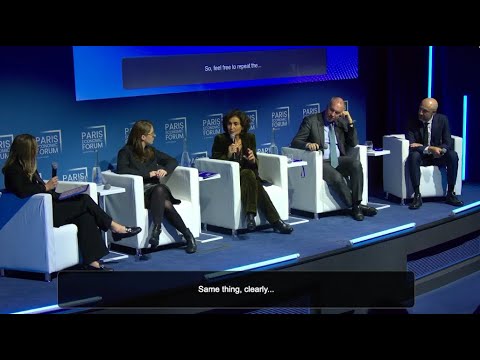
Last week, the Paris Economic Forum by HUB Institute hosted a critical discussion on the urgent nexus between artificial intelligence, human capital, and the prerequisite for durable economic expansion. Moderated by @EMMANUELCUGNY (Journalist and President, AJEFI), the panel included @OlivierFaron (MEDEF), Benoît Derigny (@ManpowerGroupFR ), and @lau_devil (Sorbonne). The consensus: institutional friction and outdated education models are the biggest threats to AI adoption. 1. 🌐 The Institutional Barrier: Speed vs. System The greatest risk is the slow, bureaucratic institutional response to reskilling at scale. Key Insight: Public-private partnerships must accelerate certification pathways for new skills, replacing legacy qualifications. The Policy Imperative: A nationally coordinated investment in local vocational infrastructure is needed to ensure the AI dividend benefits all regions. Key Quotes: OLIVIER FARON (MEDEF): "The true cost of AI adoption is not the hardware; it's the institutional friction preventing us from re-tooling the workforce at scale." EMMANUEL CUGNY (AJEFI): "The economic imperative is clear: companies that fail to invest in upskilling today will find their human capital balance sheet profoundly devalued tomorrow." 2. 🧠 Education: From Users to Ethical Architects Professor Devillers argued that merely training employees to use AI is insufficient. Future competitive advantage demands professionals capable of governing and ethically engineering these systems. Key Insight: Education must build "AI literacy" atop a strong ethical foundation to mitigate algorithmic bias and ensure responsible deployment. The key quote of each panelist: LAURENCE DEVILLERS (Sorbonne): "AI's power demands an ethical architecture built on deep knowledge. We must not just train users, but ethical architects of the technology itself." 3. 🤝 Corporate Leadership: Talent Stewardship Benoit Derigny emphasized that the traditional corporate model of "talent scouting" is failing in an environment of perpetual skill scarcity. Leaders must embrace talent stewardship—prioritizing internal upskilling as a core retention strategy. Key Insight: HR strategy must proactively integrate AI planning with career pathing, differentiating between roles that will be augmented versus those made redundant. The Primary Risk: Mass structural unemployment resulting from corporate unwillingness to invest in existing employees. This requires integrating workforce development metrics into mandatory ESG reporting. The key quote of each panelist: Benoît Derigny (ManpowerGroup France): "We must shift the corporate mentality from 'talent scouting' to 'talent stewardship.' Upskilling is the new retention." #ParisEconomicForum #ParisEcoForum @vincent_ducrey
English
1
1
1
139
Vincent Ducrey retweetledi
Paris Economic Forum
Paris Economic Forum@ParisEcoForum·
The Territorial Imperative: Why Local Economies are the New Engines of Global Growth At the recent Paris Economic Forum, a critical session — "Réinventer la croissance : Les territoires au cœur de la transformation" — dissected the paradigme shift underway: regional economies are no longer peripheral but strategic catalysts for sustained, sustainable growth. Moderated by Gwénaëlle Barzic @Gwenaelleb (Journalist, @LesEchos), the panel featuring institutional leaders like @ADublanche (Vice-President, @iledefrance) de France) and corporate innovators like @thierrygadou (CEO, @vusiongroup ) and Dorothee Dayraut Jullian (Director of Public Affairs, @mobiliansfr ) delineated the roadmap for transforming local potential into national competitiveness. The discussion centered on how territories must now become active spaces of convergence between digital innovation, industry, and strategic public policy. 📈 Regional Policy: The Attractiveness Pivot Alexandra DUBLANCHE, REGION ILE DE FRANCE: "The future of French competitiveness hinges on making the industrial and digital convergence a tangible local reality across our regions, not just a national aspiration." 💡 Tech Convergence and Proximity Economies Modern digital infrastructure is identified as the critical factor in localizing value creation, enabling traditional physical commerce and industrial assets to compete globally. Economic Insight: The fusion of physical assets with digital solutions (e.g., IoT, smart logistics) is essential for dramatically improving local commerce efficiency, empowering businesses against global, virtualized competition. Growth Driver: Focused investment in proximité (proximity) infrastructure ensures that communities become self-sufficient yet connected hubs, streamlining activities from work and learning to consumption and care. Thierry GADOU, VUSION: "Digitalization is the definitive bridge to the local future. It transforms physical infrastructure into smart infrastructure, redefining how we capture value in the proximity economy." ♻️ Industrial Decarbonization and Workforce Integration The transformation of core industries, particularly mobility, presents a dual challenge and opportunity: achieving carbon neutrality while integrating the necessary industrial transformation into local employment structures. Industrial Insight: The swift decarbonization of mobility demands an immediate and massive public-private effort to reskill local workforces, effectively converting traditional mechanical centers into green technology and maintenance hubs. Regulatory Focus: Public affairs must proactively shape regulation to de-risk and incentivize large-scale investment in sustainable mobility solutions that cater specifically to the logistical needs of regional supply chains. Dorothée DAYRAUT-JULLIAN, MOBILIANS: "Achieving the ecological transition is profoundly linked to our industrial and human capacity. Territories must be equipped with the policy frameworks and the talent to support the entire lifecycle of next-generation mobility." Full Panel > youtube.com/watch?v=ePPhXm… #ParisEconomicForum #ParisEcoForum #PEF
YouTube video
YouTube
Français
0
1
0
90
Vincent Ducrey retweetledi
Paris Economic Forum
Paris Economic Forum@ParisEcoForum·
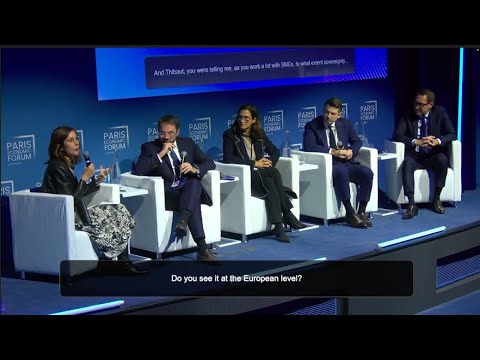
Innovation, Investment, and Sovereignty: Dissecting Europe's New Competitiveness Agenda At the Paris Economic Forum, a high-stakes panel comprising policy architects and leading industrial figures convened to dissect the core challenge facing French and European industry: how to move beyond post-crisis recovery and secure long-term global competitiveness. Journalist @adeguigne (@LeFigaro_News) moderated a crucial conversation with @f_lesache (Vice President for Europe, @medef ), Orianne Chenain (Head of the Competitiveness Department, Direction Générale des Entreprises @Economie_Gouv ), Jean-Philippe Cartier (CEO, HB INVEST), and Thibault Martin-Dondoz (CEO, Peugeot Frères Industrie). The consensus was clear: the new drivers of economic success are tightly bound to strategic autonomy and radical transformation. 1. 🤝 The Imperative of Industrial Sovereignty The policy takeaway from the session highlighted that industrial sovereignty is no longer a political buzzword but the essential foundation for economic resilience and the green transition. Targeted Public Action: Orianne Chenain (DGE) delineated the government's shift towards targeted public policies, moving away from broad subsidies to strategic support for key sectors (e.g., semiconductors, critical raw materials) to secure supply chains and technological leadership. European Policy as a Shield: Fabrice Le Saché (MEDEF) stressed the need for a cohesive European industrial policy that provides a regulatory shield against unfair international competition while facilitating intra-European scaling for market champions. Sovereignty of Production: The ultimate goal is to ensure a 'sovereignty of production,' guaranteeing that control over essential industrial capacity remains within the bloc, safeguarding employment and high-value technical expertise. 2. 💰 Financing the Dual Transition The panel underscored that the massive capital requirements for the simultaneous digital and energy transitions demand a new paradigm for private and public investment. The Investment Gap: The discussion centered on bridging the valley of death between R&D innovation and industrial scale-up, which requires patient, long-term capital to absorb the inherent risks of breakthrough technologies. Attracting Private Equity: Jean-Philippe Cartier (HB INVEST) emphasized the role of private capital in de-risking innovative projects, noting that clearer, stable regulatory frameworks are essential to directing institutional funds toward capital-intensive green and digital manufacturing projects. Innovation as a De-Costing Lever: Investment must be seen not merely as an expenditure but as the key to lowering future costs. The deployment of AI and smart automation is critical to offsetting high domestic production costs and regaining a structural advantage. 3. ⚙️ Redefining Industrial Competitiveness For companies operating in a high-cost environment, innovation is the only sustainable competitive advantage against international pressure. The Transition Challenge: Thibault Martin-Dondoz (Peugeot Frères Industrie) shared the reality of industrial leaders grappling with simultaneously managing the costs of the energy transition, the pressure of international competitors, and the need for continuous technological modernization. Depth of Innovation: Competitiveness is being redefined by deep, disruptive innovation—not incremental changes. This includes process innovation (e.g., circular economy models) as much as product innovation (e.g., new materials or AI-driven services). Talent and Skills: The final bottleneck identified was the urgent need for a skills revolution. Industrial success hinges on attracting and training a new generation of engineers and technicians capable of managing complex digital, robotic, and sustainable production systems. > Full Panel : youtube.com/watch?v=H3pQd9… #ParisEconomicForum #ParisEcoForum
YouTube video
YouTube
English
0
1
2
91
Vincent Ducrey retweetledi
Paris Economic Forum
Paris Economic Forum@ParisEcoForum·
New Dawn in Buenos Aires: Argentina's Ambassador Dissects the Economic Paradigm Shift at the Paris Economic Forum As the global economy grapples with shifting geopolitical and resource imperatives, understanding the internal reform movements of key resource nations is an imperative. @IanArgentinoS Sielecki, the Republic of Argentina's Ambassador to France, sat down with @vincent_ducrey, President of the Paris Economic Forum, to dissect the strategic implications of Argentina's nascent economic trajectory. The central, high-stakes theme discussed was: The necessity of structural reform and the nation's ambitious push for global reintegration after years of policy volatility. 🇫🇷 Une Nouvelle Ère à Buenos Aires : L'Ambassadeur de l'Argentine Décortique le Changement de Paradigme Économique au Paris Economic Forum. Alors que l'économie mondiale est aux prises avec des impératifs géopolitiques et de ressources en mutation, il est impératif de comprendre les mouvements de réforme interne des nations clés en matière de ressources. Ian Sielecki, Ambassadeur de la République Argentine en France, s'est entretenu avec Vincent Ducrey, Président du Forum Économique de Paris (PEF), pour décortiquer les implications stratégiques de la trajectoire économique naissante de l'Argentine en marge de l'événement. Le thème central et crucial abordé était : L'impératif de la réforme structurelle et l'ambition nationale d'une réintégration mondiale après des années de volatilité politique. 🇦🇷 Nuevo Amanecer en Buenos Aires: El Embajador Argentino Diseca el Cambio de Paradigma Económico en el PEF 💡 Mientras la economía global lidia con imperativos geopolíticos y de recursos cambiantes, comprender los movimientos de reforma interna de las naciones clave en materia de recursos es un imperativo. Ian Sielecki, Embajador de la República Argentina en Francia, se sentó con Vincent Ducrey, présidente del Foro Económico de París (FEP), para diseccionar las implicancias estratégicas de la incipiente trayectoria económica argentina al margen del evento. El tema central y de alto riesgo discutido fue: El imperativo de la reforma estructural y el ambicioso impulso nacional hacia la reintegración global tras años de volatilidad política. #ParisEconomicForum #ParisEcoForum #PEF. . @JMilei @EmmanuelMacron @Cancilleria_Ar @francediplo
English
0
1
0
72
Vincent Ducrey retweetledi
Paris Economic Forum
Paris Economic Forum@ParisEcoForum·
Reconfiguring the Global Economy: OECD Strategic Foresight Delineates New Growth Frontiers 📰 The Geopolitical Imperative: Reshaping Global Value Chains At the recent Paris Economic Forum, @kierzenkowski (Senior Counsellor for Strategic Foresight and Head of the Strategic Foresight Unit at the @OECD) and @vincent_ducrey (President of the Paris Economic Forum) dissected the structural forces compelling a complete re-evaluation of global economic architecture. The central theme: Reconfiguring the global economy: the new frontiers of growth according to the OECD. The core analysis highlighted that geopolitical fragmentation is no longer a risk factor but a defining condition that requires a shift from efficiency-at-all-costs to mandated resilience. 💡 The Twin Transitions: Digitalization Meets Sustainability The discussion underscored that the next decade's growth will be driven by the convergence of the digital and green transformations, which must be institutionally supported to avoid deepening global inequalities. Policy Takeaway: Governments must move beyond siloed industrial policy to integrate AI governance with energy transition planning, treating both as a single, interdependent capital expenditure cycle. Strategic Implication: The imperative for advanced economies is to de-risk key supply chains—particularly for critical minerals and semiconductors—via targeted "friend-shoring" mechanisms, prioritizing geopolitical alignment over marginal cost savings. 🤝 The Human Capital Paradigm Shift A significant portion of the session was dedicated to the labor market, where the exponential acceleration of AI adoption is creating systemic skills mismatches at an unprecedented scale. Urgent Call: The institutional barriers preventing agile upskilling must be dismantled. The focus must transition from protecting jobs to protecting the worker’s ability to transition through comprehensive and portable lifelong learning accounts. Future of Work: The "new frontiers of growth" necessitate a reform of social contracts to support a more fluid workforce, ensuring that the productivity gains from technology are widely distributed and do not exacerbate social polarization. 🗣️ Key Quotes on the Institutional Response Rafal Kierzenkowski: "We are not just witnessing cyclical change; this is a paradigm shift where economic advantage will hinge on the institutional agility to manage systemic risks—from climate breakdown to technological dependence. Policy can no longer be reactive; it must be anticipatory." Vincent Ducrey: "The forum's mission is to translate foresight into action. The OECD’s framework gives us a clear mandate: the greatest risk is inaction, and the new frontiers of growth will only be unlocked by bold, coordinated public and private capital deployment." #ParisEconomicForum #ParisEcoForum #PEF
English
0
2
1
146
Vincent Ducrey retweetledi
Paris Economic Forum
Paris Economic Forum@ParisEcoForum·
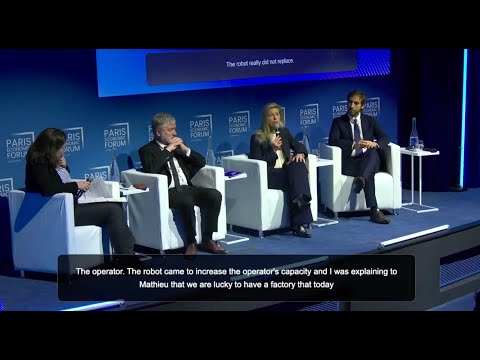
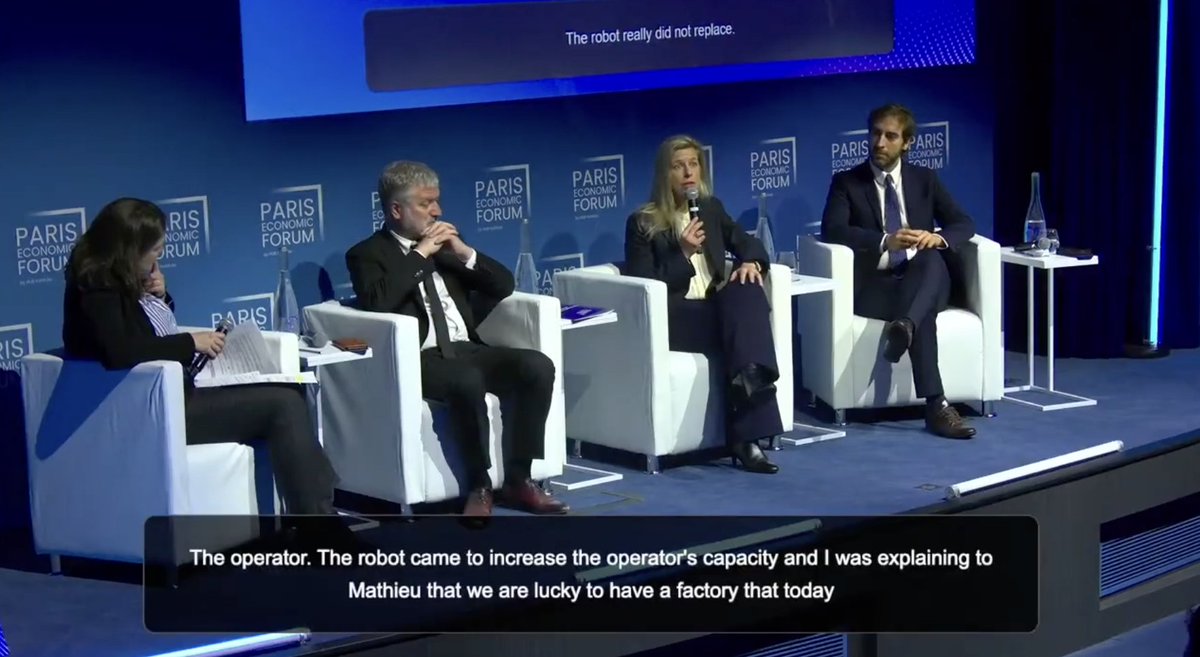
Innovation is the New Engine: Corporate Leaders Dissect the Imperative to Reconcile Competitiveness and Climate Transition A critical, forward-looking panel at the Paris Economic Forum—titled "Concilier compétitivité et transition climatique grâce à l'innovation"—dissected the new economic mandate: leveraging deep technological and organizational innovation to achieve both competitive advantage and net-zero resilience. The conversation elevated the climate constraint from a compliance cost to the most powerful driver of industrial restructuring. The distinguished panel featured: @BrisRocher (President, @GroupeRocher) @mathieuflamini (CEO & Co-Founder, @GFBiochemicals) @ElyetteRoux (Executive Vice President, @Nexans_ ) @caromontaigne (Deputy Editor-in-Chief, @HBRFrance ) 🔬 Green Chemistry and Product Decoupling The discussion underscored that the true paradigm shift lies in replacing fossil-based inputs with bio-based materials, necessitating a fundamental rethinking of industrial chemistry and manufacturing processes. Key Insight 1: The economic viability of the transition hinges on breakthroughs in molecular substitution, where performance parity must meet cost competitiveness. Mathieu Flamini (GFBiochemicals): "We've proven that sustainable chemistry is not a compromise; it's a superior, de-risked alternative. The market is moving, but policy must accelerate the adoption curve." Bris Rocher (Groupe Rocher): "For a consumer brand, the climate promise must be embedded in the product's DNA. The consumer's trust is the ultimate premium for biomimicry and circularity." Key Insight 2: Scaling novel materials requires regulatory clarity and secure sourcing of sustainable biomass, turning the supply chain into a competitive moat. Mathieu Flamini (GFBiochemicals): "The next industrial revolution won't be defined by data, but by bio-sourcing and the ability to scale non-fossil carbon derivatives globally." Bris Rocher (Groupe Rocher): "Our commitment to nature cannot be theoretical. It requires decades of sustained investment in land, regenerative practice, and a circularity loop that closes the material pathway." ⚡ Electrification and Industrial Resilience The panelists unanimously identified mass electrification—of transport, industry, and infrastructure—as the most immediate and profound enabler of decarbonization, with a critical focus on the infrastructure that transmits this new energy. Key Insight 1: Achieving climate goals is impossible without a massive upgrade to global power grids and the core components of energy transmission and efficiency. Elyette Roux (Nexans): "The silent revolution is in connectivity. Every kilowatt of renewable energy needs a smarter, more efficient cable to reach the end-user. That is where innovation meets capacity." Caroline Montaigne (HBR France): "The lesson from successful industrial transformation is that leaders must bet big on core infrastructure changes early, treating energy security as a non-negotiable strategic asset." Key Insight 2: Electrification must be paired with digital solutions to optimize usage and minimize peak demand, shifting the focus from simple energy generation to total system efficiency. Elyette Roux (Nexans): "We must move beyond manufacturing to 'smart electrification.' The future of industrial competitiveness is rooted in real-time energy efficiency and grid digitalization." Caroline Montaigne (HBR France): "The challenge is organizational as much as technical. Companies must fuse their digital and sustainability teams into a single, cohesive unit to unlock system-wide efficiencies." Full Video > youtube.com/watch?v=qWeRwV… #ParisEconomicForum #ParisEcoForum #PEF
YouTube video
YouTube
Paris Economic Forum tweet media
Français
0
2
3
10.4K
Vincent Ducrey retweetledi
Paris Economic Forum
Paris Economic Forum@ParisEcoForum·
The Consumer Paradigm Shift: How 'Sofa Economics' is Redrawing Corporate Strategy and Value Chains At the recent Paris Economic Forum (PEF), a high-level panel titled "Le consommateur architecte du changement" (The consumer architect of change) dissected the fundamental re-orientation of global commerce. Moderated by @quentinperinel of @LeFigaro_News , the discussion—featuring Vincent Sussfeld (@BNPP_PF ), Hervé Miralles (@emilfreysa France), and @KrausCarine (@CarrefourFrance )—delineated a silent yet powerful shift in consumer behavior. The central premise, driven by an exclusive study, is that the consumer's domicile has become the new centre of gravity, demanding a rapid corporate and institutional pivot. 📉 Theme 1: The New Calculus of Consumption The panel analyzed the findings of an unprecedented survey of over 3,000 French citizens, revealing the complex trade-offs consumers are now making, which fundamentally redefine market strategies. Trade-off Complexity: Citizens are now constantly arbitrating between purchasing power, responsibility (sustainability), and practicality—a three-dimensional challenge that legacy business models fail to address. Demand for Transparency: A key imperative for the corporate sector is to explore new levers for client engagement, transparency, and durability to rebuild trust and justify value in this new landscape. Policy Insight: This shift requires institutions to facilitate an "economy of the immediate" that simultaneously encourages long-term durability and accessibility, fundamentally challenging the assumption that speed and sustainability are mutually exclusive goals. 🏠 Theme 2: The Redefinition of Value Chains: The 'Sofa Economics' Paradigm The discussion, rooted in the "Sofa Economics" report findings, articulated a structural re-engineering of the economy driven by the convergence of daily life toward the home. Proximity as the New Premium: Economic lines are shifting as activities—from working and training to consuming and caring—converge, making proximity, fluidity, and comfort the essential new standards of value delivery. Strategic Transformation: The primary objective for businesses must be identifying how these new consumption behaviors are radically transforming corporate strategies across retail, finance, and mobility. The Nexus of Data and Distribution: The future of value creation will be found in leveraging synergies between finance, data, and distribution to preemptively meet these nuanced consumer expectations. 🤝 Theme 3: The Corporate Engagement Imperative The panelists underscored that winning in this new economic era requires a holistic commitment that reconciles operational performance with societal obligations, forging deeper social connection. Value Creation Mandate: Companies must not simply observe these trends but actively interrogate how to create value in this new environment while ensuring accessibility and strengthening the social connection. Leadership for Resilience: The integration of sustainability and social connection into core strategy is no longer a peripheral concern but a central lever of competitiveness and corporate resilience. Panel Consensus: The core strategic takeaway is: "To thrive in the economy of the immediate, corporations must stop viewing sustainability as a compliance cost and start embedding it as the fundamental architecture for delivering comfort and trust to the consumer." #ParisEconomicForum #ParisEcoForum #PEF @vincent_ducrey @HUBInstitute
English
0
1
0
74
Vincent Ducrey retweetledi
Paris Economic Forum
Paris Economic Forum@ParisEcoForum·
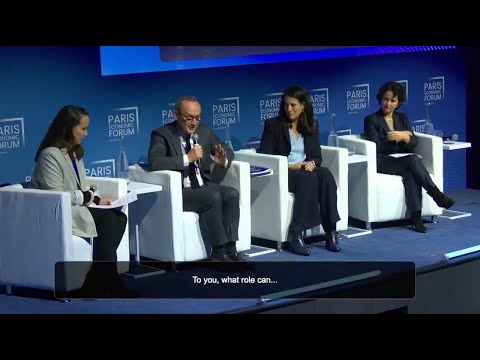
2030 Mandate: Dissecting the Triple Imperative for a Resilient, Innovative, and Inclusive France The Paris Economic Forum recently hosted a pivotal session to dissect the strategic policy roadmap for the coming decade. The panel featured a high-impact coalition of stakeholders: @auroreberge (Minister for Gender Equality and the Fight against Discrimination @gouvernementFR ), Joel TRONCHON (Global VP Sustainability, @LOrealGroupe ), @comrejen (Managing Director & Chief Impact Officer, Groupe @EchosParisien_M ), and @Gemenne (Professor, @HECParis ), moderated by @BarbHADDAD 🛡️ Theme 1: Structural Resilience and the Human-Centric Turn The expert panel stressed that true national resilience is no longer merely an economic or financial metric, but a profound human and territorial challenge. The Territorial Imperative: The task of marrying ecological transition, economic attractiveness, and inclusion is a fundamentally territorial and human undertaking, moving beyond purely national strategies. Key Insight from Academia: Professor Gemenne's contributions underscore the need to integrate climate and resource security into every facet of long-term economic planning to pre-empt future systemic shocks. 💡 Theme 2: Innovation and the Green Transition Lever Corporate and media leaders articulated the urgent need to position innovation—particularly in sustainability—as the primary engine of competitive growth. The Corporate Mandate (L'Oréal): Major corporations are tasked with operationalizing the ecological transition, making sustainability (as championed by Joël Tronchon) a core value-driver that generates both profit and positive impact. Media's Role in Impact: Corinne Mrejen's dual role in a major media group and as Chief Impact Officer highlights the institutional barrier of communication, where narratives must connect policy with tangible local outcomes to build public support. Strategic Consensus: The consensus holds that investing in ecological innovation is not a constraint on growth but the essential precondition for long-term industrial attractiveness. ⚖️ Theme 3: Inclusion as an Economic Pillar Minister Aurore Bergé’s participation framed inclusion—gender equality, social equity, and fighting discrimination—not as social expenditure but as an integral pillar of a functional, innovative economy. The Inclusion-Attractiveness Nexus: Achieving genuine national "attractiveness" for talent and investment depends fundamentally on demonstrating a robust commitment to inclusion. The Minister's Vision: "Building an innovative France is impossible without an inclusive France. Our goal for 2030 is to synthesize these mandates, proving that equity is the strongest form of resilience." @vincent_ducrey @HUBInstitute #ParisEconomicForum #ParisEcoForum #PEF > Full Panel Video : youtube.com/watch?v=UW_vp3…
YouTube video
YouTube
English
0
1
2
81