Paris Economic Forum

127 posts

Paris Economic Forum banner
Paris Economic Forum

Paris Economic Forum

@ParisEcoForum

Brings together economic leaders, experts & public decision-makers to shape tomorrow's economy. #ParisEcoForum

Paris, France Katılım Mart 2025
250 Takip Edilen193 Takipçiler
Paris Economic Forum
Paris Economic Forum@ParisEcoForum·
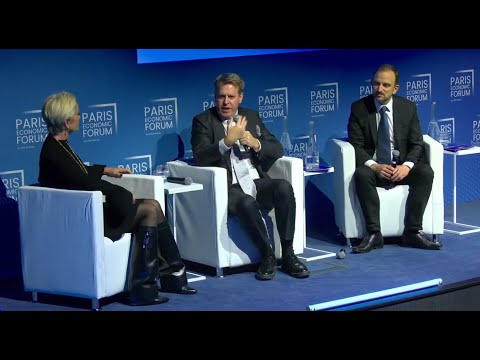
🚀 Low Altitude Economics: Henri Seydoux Dissects the Drone Paradigm Shift and Europe’s Scaling Imperative At the Paris Economic Forum, a high-stakes discussion led by Moderator @vincent_ducrey (President of the Paris Economic Forum) and featured guest Henri Seydoux (CEO of @Parrot ) dissected the concept of "Low Altitude Economics"—the burgeoning industrial and strategic activity between 20 and 100 meters. The core theme was the drone revolution, its journey from a consumer toy to a central pillar of modern defense, and the institutional barriers preventing Europe from achieving global high-tech scale. Key Takeaways 💡 The Drone's Three Eras: From Toy to Geopolitical Tool Mr. Seydoux delineated the drone's unexpected evolution through three distinct phases, illustrating how necessity drives technological significance: Era 1: The Romantic Geek Startup: The initial phase, roughly 15 years ago, was defined by innovation aimed at creating novel consumer toys and complementary mobile electronics. Era 2: The China Inc. Investment Surge: The market was subsequently dominated by Chinese entities, who strategically sought "empty boxes" in industrial sectors. They captured the market through billions of dollars in investment to create scalable consumer and niche professional products (e.g., video, agriculture, mapping) . Era 3: The Defense Tech "Uberization": The conflict in Ukraine triggered the current, critical phase. The war has become "Uberized," driven by software, peer-to-peer networks, and millions of low-cost, disposable aerial robots. Key Insight: Drones provide a superior cost-to-effect ratio, with $1 invested providing significantly more defense value than traditional European armaments in the current conflict. 💰 The High-Tech Investment Mandate and Scale The discussion underscored that the drone industry—and high-tech in general—is fundamentally an investment business, requiring capital far beyond conventional European venture standards: The Investment Barrier: High-tech, Seydoux argued, is defined by the necessity for vast, deep investment (citing $100 billion invested in autonomous driving over 20 years). Parrot itself invested over 300 million euros to compete in the early market . Need Creates Form: The success of high-tech ideas like "flying robots" depends on adapting to a "necessity." The utility of an object—from the internet to the drone—often becomes apparent only after its technological possibility is realized. The Software Industrial Complex: The future of defense is about bringing high-tech into the military, which fundamentally means an industry of software—putting sophisticated robotics and AI-driven logic into the hands of users, akin to putting an iPhone in a pocket [. Key Insight: High-tech requires an institutional willingness to invest hundreds of millions or billions; anything less is insufficient for global scale, a mindset often viewed as "shocking" in Europe . 🇪🇺 The European Scaling Challenge and Strategic Imperative The forum concluded by addressing the most pressing strategic hurdle for European industry and its political leadership: The Scaling Gap: European companies consistently struggle to transition from modest investment (tens of millions) to the hundreds of millions required to achieve industrial scale and market dominance. A Political and Technological Wake-Up Call: The CEO noted that if Ukraine fails, "Europe loses," emphasizing the political and technological relegation the continent faces. The Catalyst: The current geopolitical momentum offers Europe a "small chance" to finally create a cohesive, globally competitive drone industry by leveraging the strategic necessity driven by the conflict. Key Insight: Despite abundant talent in Europe, the problem remains the "depth of investment." Without a fundamental shift toward accepting and enabling high-capital, high-risk scaling, the continent will continue to lag in critical next-generation technologies youtube.com/watch?v=Z9M0_J… #ParisEconomicForum #ParisEcoForum #PEF
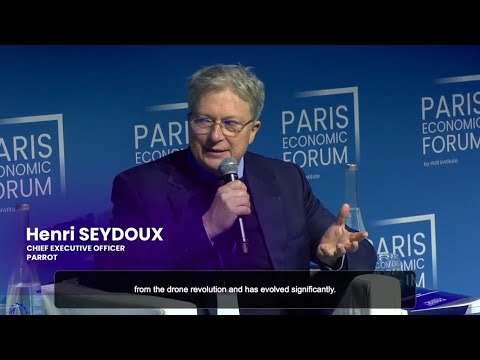
YouTube video
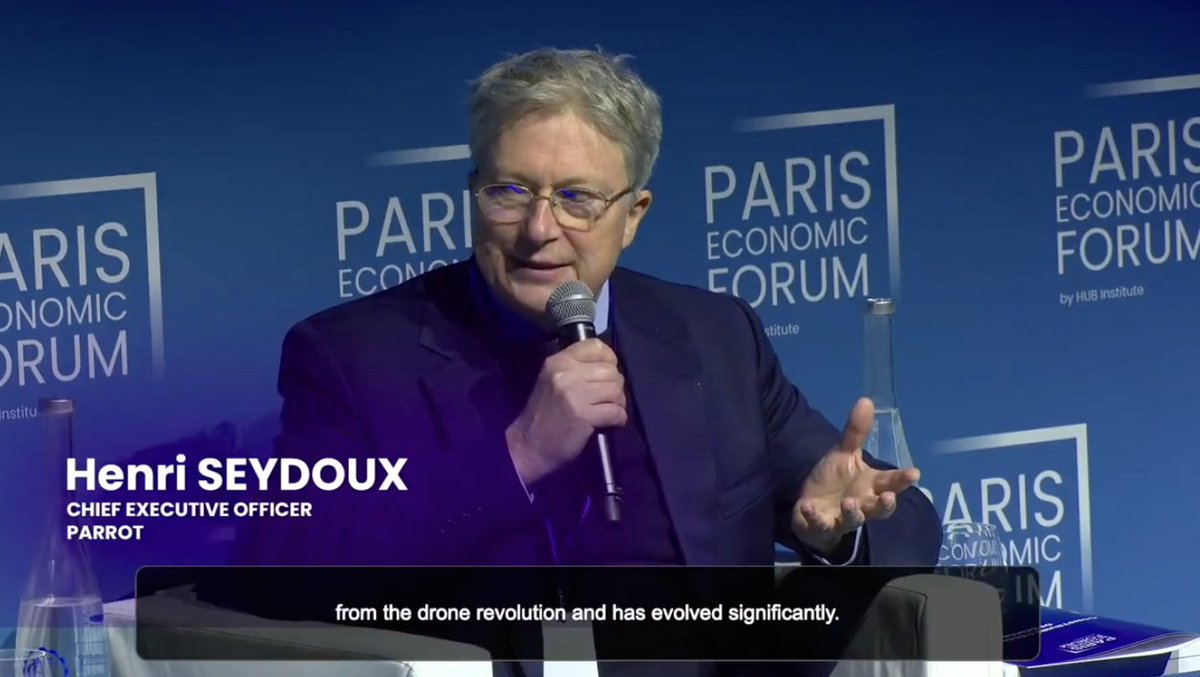
YouTube
Paris Economic Forum tweet media
English
0
2
0
190
Paris Economic Forum
Paris Economic Forum@ParisEcoForum·
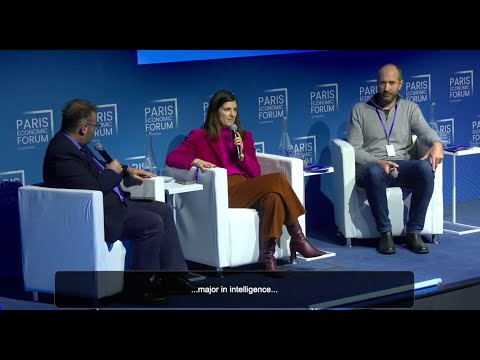
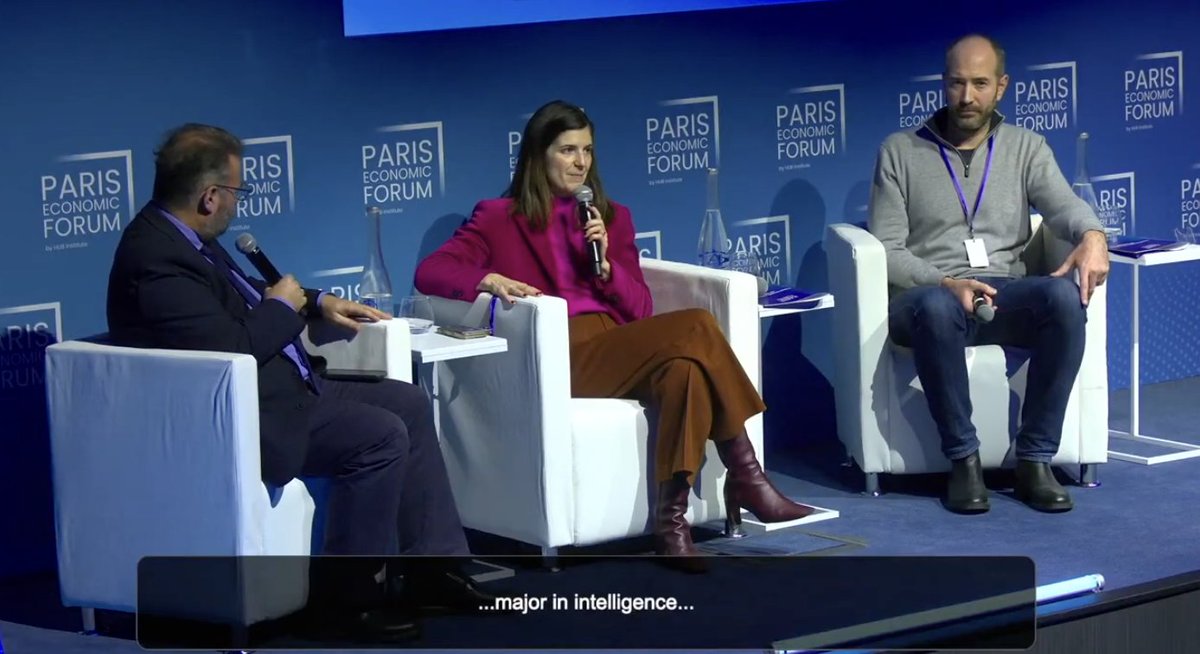
AI's Next Frontier: The Global Race for Humanoid Robotics. The convergence of Artificial Intelligence and physical robotics is creating a new geopolitical battlefield. At the Paris Economic Forum, @vincent_ducrey (President, Paris Economic Forum) dissected this paradigm shift with @guillaumgrallet (Technology Reporter, @LePoint and author of the book #Pionniers), exploring how humanoids are moving beyond the hype and how emerging economies, particularly in Africa, are forging their own path in AI governance and development. 💡Theme 1: The Humanoid Hype vs. Reality The discussion centered on the imperative to bridge the gap between powerful language models (like ChatGPT) and machines that understand the "sensitive world"—the physical reality of gravity, temperature, and environment. Bridging the Model Gap: Humanoids are essential for enabling AIs to develop true "World Models," addressing the critique that current chatbots lack an understanding of the physical world (as described by Yan LeCun) The Three-Tier Market: The emerging humanoid market is rapidly segmenting into three economic categories: Child Tutors (small, sub-$2,000), Home Assistants ($15,000-$25,000), and high-cost Industrial Humanoids (six-figure investment). Key Quote (Vincent Ducrey): "The connection between AI and the physical world... arrives at a moment of evolution where, in fact, the two universes meet" 🚀 Theme 2: The Geopolitical Showdown & China's Strategy The panelists framed the race for humanoid dominance as a fierce "battle for power" between the United States and China, with significant implications for global supply chains and technological standards. State-Backed Acceleration: Beijing is deliberately accelerating the domestic industry, mirroring its strategy for electric vehicles (EVs). China boasts over 100 humanoid constructors and has established at least five "Robot Parks"—dedicated training grounds for rapid model deployment. The Software Supremacy: Investment confirms that the true battleground is not the physical hardware, but the AI/software component. The majority of financial focus remains on developing the intelligence necessary to operate the robot, rather than the physical chassis. European Open-Source Ambition: Europe's notable contribution is the open-source movement, exemplified by French-founded Hugging Face's "Le Robot" project. Their goal is to replicate their platform success in software to create an open-source hardware ecosystem, challenging proprietary models. 🌍 Theme 3: Africa's Multipolar AI Model Guillaume Grallet, drawing from his research in Pionniers, highlighted a refreshing model of innovation emerging from the African continent, focused on solving local problems without relying on established tech giants. Building a Local Ecosystem: Initiatives like the Indaba conferences ("gathering" in Swahili) and the work of the African Institute of Mathematical Sciences (AIMS) are creating a vibrant, self-sufficient research community, supported by the diaspora [ ABOUT #PARISECONOMICFORUM A global platform convening leaders, innovators and policymakers to shape the future of sustainable growth, competitiveness and societal transformation. Where strategic foresight meets actionable solutions for economies, industries & cities facing accelerated change.
English
0
1
1
135
Paris Economic Forum
Paris Economic Forum@ParisEcoForum·
AI's Economic Tectonic Shift: Productivity, Sovereignty, and the Restructuring of Value Chains The IA ECONOMICS panel at the Paris Economic Forum brought together leading voices from technology, industry, and media to dissect the profound economic impact of Artificial Intelligence. Moderated by @MelissaBellCNN, Senior International Correspondent at CNN, the discussion featured strategic insights from @stevejarrett , Chief AI Officer at @orange , and @PierreYvesC , Global Chief Digital Officer at @Pernod_Ricard . The central theme explored how AI is not merely optimizing processes, but fundamentally restructuring global productivity, challenging notions of technological sovereignty, and redrawing the map of international value chains. C. Thematic Sections (Key Takeaways) 🚀 Scaling AI for Enterprise Productivity The corporate executives delineated the shift from experimental AI projects to large-scale, enterprise-wide deployment, emphasizing the mandatory institutional redesign required for true productivity gains. Key Insight 1: Achieving material productivity uplift demands a shift from niche tools to AI-driven re-engineering of core business functions, necessitating a top-down cultural and skill transformation. Key Insight 2: The next frontier of value creation lies in integrating generative AI to create hyper-personalized consumer experiences and optimize complex, highly regulated global distribution networks. Key Insight 3: Synthesized Quote (Steve Jarrett): "The economic dividend of AI won't come from automation alone; it will be unlocked by its ability to augment human decision-making at unparalleled scale and speed." 🛡️ The Imperative of Technological Sovereignty The discussion pivoted to the geopolitical dimensions of AI, framing technology access and control as a critical component of national and corporate resilience. Key Insight 1: The risk of relying on a limited number of non-domestic providers for foundational AI models and hardware (chips) poses an unacceptable geopolitical vulnerability to both states and multinational corporations. Key Insight 2: Policy and investment must prioritize the cultivation of indigenous digital infrastructure, data centers, and specialized talent to ensure data autonomy and regulatory control over critical computational assets. Key Insight 3: Synthesized Quote (Melissa Bell): "Technological sovereignty is the new energy security. Nations that do not control their AI infrastructure will find themselves on the wrong side of the next digital divide." 🔗 AI's Impact on Global Value Chains The panel explored how AI is shortening, optimizing, and making value chains more resilient, particularly in industries with complex regulatory and logistical footprints. Key Insight 1: AI-driven predictive analytics and autonomous operations are leading to a radical de-coupling of location and optimization, enabling localized manufacturing while maintaining global coordination efficiency. Key Insight 2: The most durable competitive advantage will accrue to firms that successfully integrate AI-governed supply chain resilience into their core operational planning, moving beyond simple cost reduction. Key Insight 3: Synthesized Quote (Pierre-Yves Calloc'h): "AI is transforming the value chain from a sequential line into an intelligent, adaptive network that can self-heal under geopolitical and climate pressures." Full Panel Video : youtube.com/watch?v=g2vz5C… #ParisEconomicForum #ParisEcoForum #PEF
YouTube video
YouTube
English
0
1
0
146
Paris Economic Forum
Paris Economic Forum@ParisEcoForum·
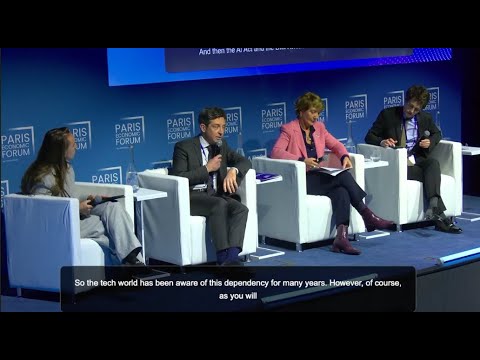
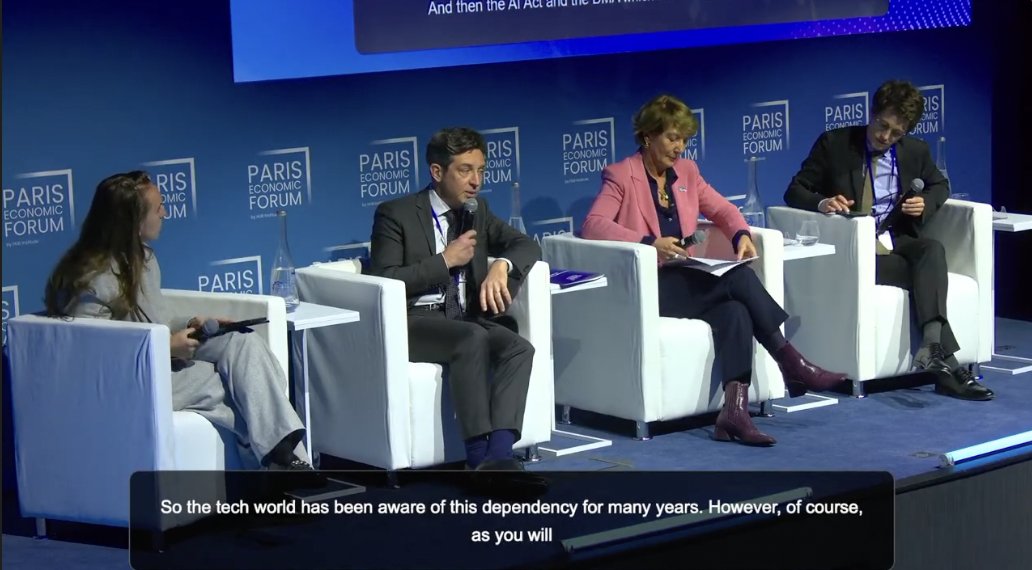
The AI Infodemic: Policy, Profit, and the Recomposition of Global Information The rapid integration of Artificial Intelligence is not merely changing how we search; it is fundamentally recomposing the access, creation, and circulation of information globally. At a critical session of the Paris Economic Forum, an elite panel dissected this paradigm shift, moving beyond the hype to address the structural and governance challenges. Moderated by @vincent_ducrey (President, PEF), the discussion featured @ClaraChappaz (Former Minister Delegate for AI and Digital Technology) and Hugo Micheron (Chief Executive Officer, @ARLQ_AI ), providing a vital interface between policy, technology, and market strategy. 💡 The Regulatory Imperative for Digital Sovereignty The conversation emphasized that a piecemeal approach to AI governance will fail to secure democratic information spaces. The focus must be on creating resilient frameworks that balance innovation with accountability. Agile Governance is Key: The imperative is for regulatory bodies to move faster than the technology, focusing on sector-specific risks—particularly in media and political communication—while avoiding broad measures that stifle competitive advantage for European AI firms. The Global Standard Challenge: Effective governance requires a new form of institutional barrier to disinformation, necessitating transatlantic and multilateral cooperation to establish standardized data provenance and authenticity protocols for generative models. The Key Quote (Chappaz): "Digital sovereignty is not about building walls; it is about setting the standards within those walls. If we do not govern the flow of information, the AI models of others will govern us." 🚀 Economic Recomposition: IP, Ownership, and the New Creator Economy From the perspective of enterprise and market dynamics, the speakers delineated how AI is challenging established concepts of intellectual property and creating new economic rents. The IP Friction Point: A clear tension exists between the economic drive for open-source foundation models—which accelerate innovation—and the need to protect the intellectual property rights of creators whose work is scraped and synthesized to train these models. This ambiguity must be resolved to unlock the next wave of creative investment. Hyper-Personalized Access: Businesses are leveraging AI for radical hyper-personalization of information, transforming the user experience but simultaneously creating new, potent forms of information gatekeeping where access is tailored and filtered by proprietary algorithms. The Key Quote (Micheron): "The economic value is shifting from the content itself to the trust and authenticity layer that surrounds it. Enterprises that can prove provenance will win the next decade." 🛡️ Redefining Trust and Information Resilience The core takeaway was the existential threat sophisticated generative models pose to societal trust, underscoring the urgency for both technical and behavioral solutions. The Authenticity Crisis: The speed and scale of AI-generated content (including sophisticated deepfakes) demand an immediate public-private investment in digital authenticity tools and watermarking standards to maintain a functioning public discourse. Resilience as National Security: Information resilience must be recognized as a core national security pillar. The pace of AI-driven information circulation far exceeds traditional governmental or journalistic mechanisms for crisis response and factual verification. The Key Quote (Ducrey): "The true cost of AI is not in hardware; it is in the erosion of collective trust. This discussion is not theoretical—it is an imperative for a stable economic future." Full Panel Video : youtube.com/watch?v=RoXYZd… #ParisEconomicForum #ParisEcoForum #PEF
YouTube video
YouTube
Paris Economic Forum tweet media
English
0
1
2
115
Paris Economic Forum
Paris Economic Forum@ParisEcoForum·
The AI-Inclusion Paradox: Global Tourism Leaders Chart a Course for a Sustainable Future At a high-level global forum on the future of travel, a distinguished panel convened to dissect one of the industry's most critical strategic challenges: balancing the rapid acceleration of Artificial Intelligence (AI) with the fundamental need for Inclusion and Social Equity. Moderated by @MelissaBellCNN, Senior International Correspondent for @CNNFrancePR, the discussion featured two key institutional voices shaping the global tourism paradigm: @Shaikha__Nasser Al Nowais, Secretary-General Elect of UN Tourism @UNWTO , and @adam_oubuih , Chief Executive Officer of @atout_france. The conversation underscored that technological progress without deliberate social governance risks widening institutional barriers. Key Takeaways 💡 Theme 1: The Dual Digital & Human Imperative The core challenge delineated by the panelists is not whether to adopt AI, but how to ensure its deployment actively drives inclusivity, rather than creating new accessibility gaps. Key Insight 1: AI and smart tools are imperative for modernizing visitor experiences and managing infrastructure, but their value is only realized when they make travel easier and better for all, including underrepresented groups and those with accessibility needs. Key Insight 2: The primary institutional risk lies in a fragmented digital landscape. Governments and private sectors must align on data standards and privacy protocols to prevent a "two-speed" tourism economy where only large players benefit from technology. Key Quote (Shaikha Nasser Al Nowais): "Digital transformation is no longer a choice but a necessity for tourism. We must harness AI and smart infrastructure not just to enhance efficiency, but to preserve heritage and optimize visitor flows, alleviating the pressures of over-tourism." Key Quote (Adam Oubuih): "The digital transition for tourism must be anchored in our commitment to environmental and inclusive practices. Technology must serve the authentic human experience of a destination, not eclipse it." 🌐 Theme 2: Future-Proofing Destination Strategy Adam Oubuih offered a national strategic perspective, focusing on how leading destinations must leverage the dual forces of AI and inclusion to ensure long-term, equitable regional growth. Key Insight 1: Sustainable growth is achieved by re-balancing tourism flows, utilizing digital tools (AI, data analytics) to redirect visitors from over-touristed hubs toward rural and lesser-known regions that preserve cultural heritage and local identity. Key Insight 2: Institutional response demands investment in the "strong foundations" of a destination—namely, safety, healthcare, and high-quality infrastructure—to support growth that benefits local communities first. Key Quote (Melissa Bell - Moderator Synthesis): "The industry must transition from measuring sheer visitor numbers to measuring value density—ensuring every tourist interaction generates social and economic wealth for the local community." 🤝 Theme 3: Global Policy & The Pillars of Transformation Shaikha Nasser Al Nowais presented a policy roadmap for the global sector, emphasizing the role of tourism as a driver of global prosperity and peace, founded on clear, action-oriented policy pillars. Key Insight 1: Tourism's true potential for economic empowerment comes from prioritizing opportunities for local communities, women, and youth. Inclusivity is not a CSR footnote; it is a core mechanism for sustainable wealth distribution and capacity building. Key Insight 2: The imperative for global partnerships and policy cohesion across UN Tourism’s member states is critical to translating vision into tangible outcomes, particularly in building resilience against economic and environmental uncertainty. Key Quote (Shaikha Nasser Al Nowais): "We must look beyond numbers to deeper impact, beyond growth alone to growth with purpose. Tourism connects not just destinations, but dreams; it creates jobs, preserves heritage, and brings hope where it's needed most." Key Quote (Shaikha Nasser Al Nowais): "The future of tourism belongs not just to the well-traveled, but to the underrepresented. We must advocate for structural fairness, supporting microgrants and policy inclusion for women-led tourism startups in low-income countries." #ParisEconomicForum #ParisEcoForum #PEF @vincent_ducrey @HUBInstitute
English
0
1
1
120
Paris Economic Forum
Paris Economic Forum@ParisEcoForum·
Financing the Future: Scaling Innovation from Lab to Market Cap. The imperative of the ecological transition is no longer a footnote—it is the central driver of industrial strategy and competitiveness. At the Paris Economic Forum, a panel of leading minds dissected the institutional and financial architecture required to accelerate this transformation from ambition to reality. Moderated by @Gwenaelleb (@LesEchos), the discussion featuring Jean-Marc Oury (IAGE), @Tatianajama (@SistaFund), and @mathieucaron (@euronext) focused on bridging the gap between technological innovation, patient capital, and the public markets necessary for massive scaling. 🔬 Deep Tech & The Scaling Imperative The conversation emphasized that foundational, science-based innovation is crucial, but requires a new mindset for deployment, one that reconciles radical scientific breakthroughs with industrial practicality. Bridging the Gap: Moving from a lab-bench concept to an industrial solution necessitates "patient capital" that accepts longer time horizons and higher initial technological risk than traditional venture funding. The Sobriety Principle: Innovation must be focused on efficiency and resource "sobriety" (frugality), turning environmental constraints into a key source of competitive advantage and cost optimization. Jean-Marc Oury: "We need to re-engineer not just the environment, but the very definition of return on investment. The transition's biggest challenge is not inventing new tech, but making it industrial scale, sustainably." 🤝 The Venture-to-IPO Capital Ladder The panelists from the private and public financing worlds detailed the necessary synergy between early-stage venture funding and public market liquidity to sustain long-term growth. Venture’s Role: Early-stage funds like Sistafund are essential catalysts, de-risking innovative models and validating the management teams capable of execution. This sets the stage for exponential growth. Market Liquidity: Euronext's role is to provide the critical primary market structure, offering scale-up capital and liquidity events necessary for deep-tech companies to realize their full potential and attract global institutional investors. Mathieu Caron: "The stock market is the ultimate accelerator. To achieve system-wide transformation, we need clear pathways from seed funding to IPO, ensuring that sustainable value creation is rewarded by the primary markets." ⚖️ Redefining the Value of Transformation The group concluded that true transformation requires policy and capital alignment that values impact alongside traditional financial metrics, moving beyond simple regulatory compliance. Impact as a Financial Metric: Investors must integrate environmental and social impact not as an afterthought, but as an intrinsic measure of a company's future resilience and long-term profitability. Governance and Transparency: Standardizing ESG reporting is vital to create trust across the entire capital chain, allowing public markets to accurately price the risks and opportunities associated with the transition. Tatiana Jama: "Financing innovation is financing behavioral change. For that, capital must be smart, bold, and focused on companies that build systemic resilience, not just short-term profit spikes." Full Video : youtube.com/watch?v=Jj9qzG… #ParisEconomicForum #ParisEcoForum #PEF
YouTube video
YouTube
English
0
1
1
192
Paris Economic Forum
Paris Economic Forum@ParisEcoForum·
The Digital Sovereignty Imperative: How Europe's Innovation Can Fuel Economic Growth At the recent Forum Économique de Paris, a high-level panel dissected the critical policy nexus of Souveraineté numérique (Digital Sovereignty) and Croissance économique (Economic Growth). The consensus was immediate: technological autonomy is no longer merely a strategic goal but the fundamental prerequisite for enduring prosperity. The discussion, moderated by journalist @CharliePERREAU (@LesEchos), featured leading figures whose sectors sit at the heart of this challenge: Stéphane Pallez (CEO, @fdj_united ), Renaud Sibel (CEO, @Eudonet_CRM ), and academic Simon Bunel (Researcher & Lecturer, ECOLE NORMALE SUPERIEURE). 🌐 Theme 1: Defining the Sovereign Tech Stack The panelists delineated a clear roadmap, arguing that sovereignty is achieved not through isolation, but by controlling key algorithmic and data value chains within Europe. Institutional Imperative: Sovereignty demands robust domestic cloud infrastructure and aggressive IPR protection to shield European innovation from extraterritorial legal risks. Primary Risk: Institutional and regulatory barriers in Europe, particularly fragmentation and slowness in establishing data pooling mechanisms for AI development, are identified as the primary risk to achieving competitive scale against US and Chinese tech giants. Key Quote (Stéphane Pallez): "The state-linked enterprise must be a pioneer in secure digital transformation, proving that scale and security are not mutually exclusive." 💡 Theme 2: Innovation as the New Growth Engine The discussion pivoted to the necessary policy tools to translate technological capabilities into economic output, emphasizing a shift toward Deep Tech and strategic procurement. Policy Takeaway: Economic growth is structurally dependent on a coordinated strategy to subsidize and de-risk Deep Tech innovation, moving beyond consumer-facing applications and into foundational B2B infrastructure. Market Failure: The "valley of death" for European software scale-ups is a market failure that requires aggressive public procurement policies favouring domestic alternatives to global incumbents. Key Quote (Renaud Sibel): "We need an explicit 'European preference' in procurement, not for protectionism, but for building market champions capable of global competition and innovation." 🔬 Theme 3: The Academic and Geopolitical Nexus The session concluded by framing technological autonomy within a wider geopolitical and educational context, underscoring the urgency of connecting research to industry. Strategic Vulnerability: Digital dependency on non-European suppliers is a critical geopolitical vulnerability, necessitating a unified European foreign policy stance on technology transfers and critical component supply chains. Bridging the Gap: Universities and research labs must be systematically linked to industrial application through shared funding and talent programs to rapidly transfer foundational science into commercial, sovereign technologies. Key Quote (Simon Bunel): "Our research must directly inform policy, demonstrating that technological autonomy is the new foundation of national security and the long-term prosperity of the Eurozone." 📰 The Journalist's Synthesis Key Quote (Charlie Perreau): "The consensus is clear: without a coordinated European investment surge and regulatory streamlining, sovereignty risks becoming a mere rhetorical aspiration rather than a competitive and economic reality." Full Panel Video : youtube.com/watch?v=v9yGgs… #ParisEconomicForum #ParisEcoForum #PEF
YouTube video
YouTube
Paris Economic Forum tweet media
Română
0
1
2
83
Paris Economic Forum
Paris Economic Forum@ParisEcoForum·
2030 Mandate: Dissecting the Triple Imperative for a Resilient, Innovative, and Inclusive France The Paris Economic Forum recently hosted a pivotal session to dissect the strategic policy roadmap for the coming decade. The panel featured a high-impact coalition of stakeholders: @auroreberge (Minister for Gender Equality and the Fight against Discrimination @gouvernementFR ), Joel TRONCHON (Global VP Sustainability, @LOrealGroupe ), @comrejen (Managing Director & Chief Impact Officer, Groupe @EchosParisien_M ), and @Gemenne (Professor, @HECParis ), moderated by @BarbHADDAD 🛡️ Theme 1: Structural Resilience and the Human-Centric Turn The expert panel stressed that true national resilience is no longer merely an economic or financial metric, but a profound human and territorial challenge. The Territorial Imperative: The task of marrying ecological transition, economic attractiveness, and inclusion is a fundamentally territorial and human undertaking, moving beyond purely national strategies. Key Insight from Academia: Professor Gemenne's contributions underscore the need to integrate climate and resource security into every facet of long-term economic planning to pre-empt future systemic shocks. 💡 Theme 2: Innovation and the Green Transition Lever Corporate and media leaders articulated the urgent need to position innovation—particularly in sustainability—as the primary engine of competitive growth. The Corporate Mandate (L'Oréal): Major corporations are tasked with operationalizing the ecological transition, making sustainability (as championed by Joël Tronchon) a core value-driver that generates both profit and positive impact. Media's Role in Impact: Corinne Mrejen's dual role in a major media group and as Chief Impact Officer highlights the institutional barrier of communication, where narratives must connect policy with tangible local outcomes to build public support. Strategic Consensus: The consensus holds that investing in ecological innovation is not a constraint on growth but the essential precondition for long-term industrial attractiveness. ⚖️ Theme 3: Inclusion as an Economic Pillar Minister Aurore Bergé’s participation framed inclusion—gender equality, social equity, and fighting discrimination—not as social expenditure but as an integral pillar of a functional, innovative economy. The Inclusion-Attractiveness Nexus: Achieving genuine national "attractiveness" for talent and investment depends fundamentally on demonstrating a robust commitment to inclusion. The Minister's Vision: "Building an innovative France is impossible without an inclusive France. Our goal for 2030 is to synthesize these mandates, proving that equity is the strongest form of resilience." @vincent_ducrey @HUBInstitute #ParisEconomicForum #ParisEcoForum #PEF > Full Panel Video : youtube.com/watch?v=UW_vp3…
YouTube video
YouTube
English
0
1
2
81
Paris Economic Forum
Paris Economic Forum@ParisEcoForum·
The Consumer Paradigm Shift: How 'Sofa Economics' is Redrawing Corporate Strategy and Value Chains At the recent Paris Economic Forum (PEF), a high-level panel titled "Le consommateur architecte du changement" (The consumer architect of change) dissected the fundamental re-orientation of global commerce. Moderated by @quentinperinel of @LeFigaro_News , the discussion—featuring Vincent Sussfeld (@BNPP_PF ), Hervé Miralles (@emilfreysa France), and @KrausCarine (@CarrefourFrance )—delineated a silent yet powerful shift in consumer behavior. The central premise, driven by an exclusive study, is that the consumer's domicile has become the new centre of gravity, demanding a rapid corporate and institutional pivot. 📉 Theme 1: The New Calculus of Consumption The panel analyzed the findings of an unprecedented survey of over 3,000 French citizens, revealing the complex trade-offs consumers are now making, which fundamentally redefine market strategies. Trade-off Complexity: Citizens are now constantly arbitrating between purchasing power, responsibility (sustainability), and practicality—a three-dimensional challenge that legacy business models fail to address. Demand for Transparency: A key imperative for the corporate sector is to explore new levers for client engagement, transparency, and durability to rebuild trust and justify value in this new landscape. Policy Insight: This shift requires institutions to facilitate an "economy of the immediate" that simultaneously encourages long-term durability and accessibility, fundamentally challenging the assumption that speed and sustainability are mutually exclusive goals. 🏠 Theme 2: The Redefinition of Value Chains: The 'Sofa Economics' Paradigm The discussion, rooted in the "Sofa Economics" report findings, articulated a structural re-engineering of the economy driven by the convergence of daily life toward the home. Proximity as the New Premium: Economic lines are shifting as activities—from working and training to consuming and caring—converge, making proximity, fluidity, and comfort the essential new standards of value delivery. Strategic Transformation: The primary objective for businesses must be identifying how these new consumption behaviors are radically transforming corporate strategies across retail, finance, and mobility. The Nexus of Data and Distribution: The future of value creation will be found in leveraging synergies between finance, data, and distribution to preemptively meet these nuanced consumer expectations. 🤝 Theme 3: The Corporate Engagement Imperative The panelists underscored that winning in this new economic era requires a holistic commitment that reconciles operational performance with societal obligations, forging deeper social connection. Value Creation Mandate: Companies must not simply observe these trends but actively interrogate how to create value in this new environment while ensuring accessibility and strengthening the social connection. Leadership for Resilience: The integration of sustainability and social connection into core strategy is no longer a peripheral concern but a central lever of competitiveness and corporate resilience. Panel Consensus: The core strategic takeaway is: "To thrive in the economy of the immediate, corporations must stop viewing sustainability as a compliance cost and start embedding it as the fundamental architecture for delivering comfort and trust to the consumer." #ParisEconomicForum #ParisEcoForum #PEF @vincent_ducrey @HUBInstitute
English
0
1
0
74
Paris Economic Forum
Paris Economic Forum@ParisEcoForum·
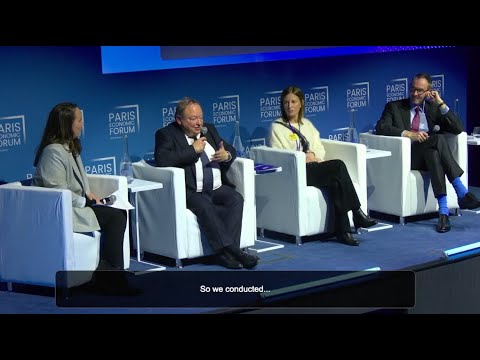
Innovation is the New Engine: Corporate Leaders Dissect the Imperative to Reconcile Competitiveness and Climate Transition A critical, forward-looking panel at the Paris Economic Forum—titled "Concilier compétitivité et transition climatique grâce à l'innovation"—dissected the new economic mandate: leveraging deep technological and organizational innovation to achieve both competitive advantage and net-zero resilience. The conversation elevated the climate constraint from a compliance cost to the most powerful driver of industrial restructuring. The distinguished panel featured: @BrisRocher (President, @GroupeRocher) @mathieuflamini (CEO & Co-Founder, @GFBiochemicals) @ElyetteRoux (Executive Vice President, @Nexans_ ) @caromontaigne (Deputy Editor-in-Chief, @HBRFrance ) 🔬 Green Chemistry and Product Decoupling The discussion underscored that the true paradigm shift lies in replacing fossil-based inputs with bio-based materials, necessitating a fundamental rethinking of industrial chemistry and manufacturing processes. Key Insight 1: The economic viability of the transition hinges on breakthroughs in molecular substitution, where performance parity must meet cost competitiveness. Mathieu Flamini (GFBiochemicals): "We've proven that sustainable chemistry is not a compromise; it's a superior, de-risked alternative. The market is moving, but policy must accelerate the adoption curve." Bris Rocher (Groupe Rocher): "For a consumer brand, the climate promise must be embedded in the product's DNA. The consumer's trust is the ultimate premium for biomimicry and circularity." Key Insight 2: Scaling novel materials requires regulatory clarity and secure sourcing of sustainable biomass, turning the supply chain into a competitive moat. Mathieu Flamini (GFBiochemicals): "The next industrial revolution won't be defined by data, but by bio-sourcing and the ability to scale non-fossil carbon derivatives globally." Bris Rocher (Groupe Rocher): "Our commitment to nature cannot be theoretical. It requires decades of sustained investment in land, regenerative practice, and a circularity loop that closes the material pathway." ⚡ Electrification and Industrial Resilience The panelists unanimously identified mass electrification—of transport, industry, and infrastructure—as the most immediate and profound enabler of decarbonization, with a critical focus on the infrastructure that transmits this new energy. Key Insight 1: Achieving climate goals is impossible without a massive upgrade to global power grids and the core components of energy transmission and efficiency. Elyette Roux (Nexans): "The silent revolution is in connectivity. Every kilowatt of renewable energy needs a smarter, more efficient cable to reach the end-user. That is where innovation meets capacity." Caroline Montaigne (HBR France): "The lesson from successful industrial transformation is that leaders must bet big on core infrastructure changes early, treating energy security as a non-negotiable strategic asset." Key Insight 2: Electrification must be paired with digital solutions to optimize usage and minimize peak demand, shifting the focus from simple energy generation to total system efficiency. Elyette Roux (Nexans): "We must move beyond manufacturing to 'smart electrification.' The future of industrial competitiveness is rooted in real-time energy efficiency and grid digitalization." Caroline Montaigne (HBR France): "The challenge is organizational as much as technical. Companies must fuse their digital and sustainability teams into a single, cohesive unit to unlock system-wide efficiencies." Full Video > youtube.com/watch?v=qWeRwV… #ParisEconomicForum #ParisEcoForum #PEF
YouTube video
YouTube
Paris Economic Forum tweet media
Français
0
2
3
10.4K
Paris Economic Forum
Paris Economic Forum@ParisEcoForum·
Reconfiguring the Global Economy: OECD Strategic Foresight Delineates New Growth Frontiers 📰 The Geopolitical Imperative: Reshaping Global Value Chains At the recent Paris Economic Forum, @kierzenkowski (Senior Counsellor for Strategic Foresight and Head of the Strategic Foresight Unit at the @OECD) and @vincent_ducrey (President of the Paris Economic Forum) dissected the structural forces compelling a complete re-evaluation of global economic architecture. The central theme: Reconfiguring the global economy: the new frontiers of growth according to the OECD. The core analysis highlighted that geopolitical fragmentation is no longer a risk factor but a defining condition that requires a shift from efficiency-at-all-costs to mandated resilience. 💡 The Twin Transitions: Digitalization Meets Sustainability The discussion underscored that the next decade's growth will be driven by the convergence of the digital and green transformations, which must be institutionally supported to avoid deepening global inequalities. Policy Takeaway: Governments must move beyond siloed industrial policy to integrate AI governance with energy transition planning, treating both as a single, interdependent capital expenditure cycle. Strategic Implication: The imperative for advanced economies is to de-risk key supply chains—particularly for critical minerals and semiconductors—via targeted "friend-shoring" mechanisms, prioritizing geopolitical alignment over marginal cost savings. 🤝 The Human Capital Paradigm Shift A significant portion of the session was dedicated to the labor market, where the exponential acceleration of AI adoption is creating systemic skills mismatches at an unprecedented scale. Urgent Call: The institutional barriers preventing agile upskilling must be dismantled. The focus must transition from protecting jobs to protecting the worker’s ability to transition through comprehensive and portable lifelong learning accounts. Future of Work: The "new frontiers of growth" necessitate a reform of social contracts to support a more fluid workforce, ensuring that the productivity gains from technology are widely distributed and do not exacerbate social polarization. 🗣️ Key Quotes on the Institutional Response Rafal Kierzenkowski: "We are not just witnessing cyclical change; this is a paradigm shift where economic advantage will hinge on the institutional agility to manage systemic risks—from climate breakdown to technological dependence. Policy can no longer be reactive; it must be anticipatory." Vincent Ducrey: "The forum's mission is to translate foresight into action. The OECD’s framework gives us a clear mandate: the greatest risk is inaction, and the new frontiers of growth will only be unlocked by bold, coordinated public and private capital deployment." #ParisEconomicForum #ParisEcoForum #PEF
English
0
2
1
146
Paris Economic Forum
Paris Economic Forum@ParisEcoForum·
New Dawn in Buenos Aires: Argentina's Ambassador Dissects the Economic Paradigm Shift at the Paris Economic Forum As the global economy grapples with shifting geopolitical and resource imperatives, understanding the internal reform movements of key resource nations is an imperative. @IanArgentinoS Sielecki, the Republic of Argentina's Ambassador to France, sat down with @vincent_ducrey, President of the Paris Economic Forum, to dissect the strategic implications of Argentina's nascent economic trajectory. The central, high-stakes theme discussed was: The necessity of structural reform and the nation's ambitious push for global reintegration after years of policy volatility. 🇫🇷 Une Nouvelle Ère à Buenos Aires : L'Ambassadeur de l'Argentine Décortique le Changement de Paradigme Économique au Paris Economic Forum. Alors que l'économie mondiale est aux prises avec des impératifs géopolitiques et de ressources en mutation, il est impératif de comprendre les mouvements de réforme interne des nations clés en matière de ressources. Ian Sielecki, Ambassadeur de la République Argentine en France, s'est entretenu avec Vincent Ducrey, Président du Forum Économique de Paris (PEF), pour décortiquer les implications stratégiques de la trajectoire économique naissante de l'Argentine en marge de l'événement. Le thème central et crucial abordé était : L'impératif de la réforme structurelle et l'ambition nationale d'une réintégration mondiale après des années de volatilité politique. 🇦🇷 Nuevo Amanecer en Buenos Aires: El Embajador Argentino Diseca el Cambio de Paradigma Económico en el PEF 💡 Mientras la economía global lidia con imperativos geopolíticos y de recursos cambiantes, comprender los movimientos de reforma interna de las naciones clave en materia de recursos es un imperativo. Ian Sielecki, Embajador de la República Argentina en Francia, se sentó con Vincent Ducrey, présidente del Foro Económico de París (FEP), para diseccionar las implicancias estratégicas de la incipiente trayectoria económica argentina al margen del evento. El tema central y de alto riesgo discutido fue: El imperativo de la reforma estructural y el ambicioso impulso nacional hacia la reintegración global tras años de volatilidad política. #ParisEconomicForum #ParisEcoForum #PEF. . @JMilei @EmmanuelMacron @Cancilleria_Ar @francediplo
English
0
1
0
72
Paris Economic Forum
Paris Economic Forum@ParisEcoForum·
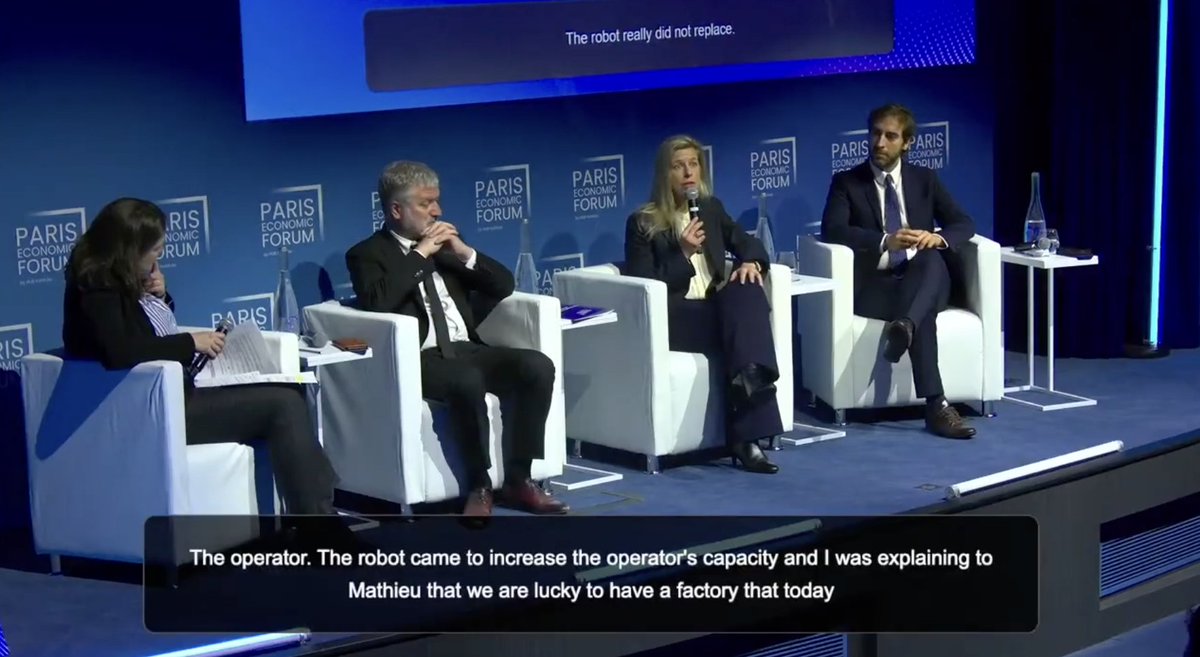
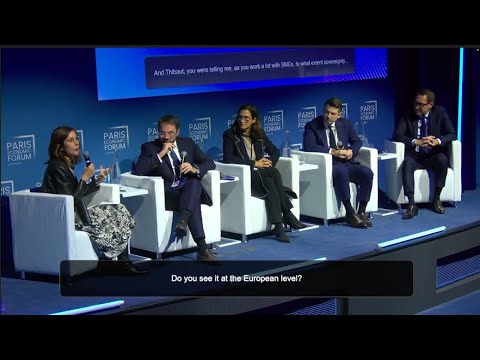
Innovation, Investment, and Sovereignty: Dissecting Europe's New Competitiveness Agenda At the Paris Economic Forum, a high-stakes panel comprising policy architects and leading industrial figures convened to dissect the core challenge facing French and European industry: how to move beyond post-crisis recovery and secure long-term global competitiveness. Journalist @adeguigne (@LeFigaro_News) moderated a crucial conversation with @f_lesache (Vice President for Europe, @medef ), Orianne Chenain (Head of the Competitiveness Department, Direction Générale des Entreprises @Economie_Gouv ), Jean-Philippe Cartier (CEO, HB INVEST), and Thibault Martin-Dondoz (CEO, Peugeot Frères Industrie). The consensus was clear: the new drivers of economic success are tightly bound to strategic autonomy and radical transformation. 1. 🤝 The Imperative of Industrial Sovereignty The policy takeaway from the session highlighted that industrial sovereignty is no longer a political buzzword but the essential foundation for economic resilience and the green transition. Targeted Public Action: Orianne Chenain (DGE) delineated the government's shift towards targeted public policies, moving away from broad subsidies to strategic support for key sectors (e.g., semiconductors, critical raw materials) to secure supply chains and technological leadership. European Policy as a Shield: Fabrice Le Saché (MEDEF) stressed the need for a cohesive European industrial policy that provides a regulatory shield against unfair international competition while facilitating intra-European scaling for market champions. Sovereignty of Production: The ultimate goal is to ensure a 'sovereignty of production,' guaranteeing that control over essential industrial capacity remains within the bloc, safeguarding employment and high-value technical expertise. 2. 💰 Financing the Dual Transition The panel underscored that the massive capital requirements for the simultaneous digital and energy transitions demand a new paradigm for private and public investment. The Investment Gap: The discussion centered on bridging the valley of death between R&D innovation and industrial scale-up, which requires patient, long-term capital to absorb the inherent risks of breakthrough technologies. Attracting Private Equity: Jean-Philippe Cartier (HB INVEST) emphasized the role of private capital in de-risking innovative projects, noting that clearer, stable regulatory frameworks are essential to directing institutional funds toward capital-intensive green and digital manufacturing projects. Innovation as a De-Costing Lever: Investment must be seen not merely as an expenditure but as the key to lowering future costs. The deployment of AI and smart automation is critical to offsetting high domestic production costs and regaining a structural advantage. 3. ⚙️ Redefining Industrial Competitiveness For companies operating in a high-cost environment, innovation is the only sustainable competitive advantage against international pressure. The Transition Challenge: Thibault Martin-Dondoz (Peugeot Frères Industrie) shared the reality of industrial leaders grappling with simultaneously managing the costs of the energy transition, the pressure of international competitors, and the need for continuous technological modernization. Depth of Innovation: Competitiveness is being redefined by deep, disruptive innovation—not incremental changes. This includes process innovation (e.g., circular economy models) as much as product innovation (e.g., new materials or AI-driven services). Talent and Skills: The final bottleneck identified was the urgent need for a skills revolution. Industrial success hinges on attracting and training a new generation of engineers and technicians capable of managing complex digital, robotic, and sustainable production systems. > Full Panel : youtube.com/watch?v=H3pQd9… #ParisEconomicForum #ParisEcoForum
YouTube video
YouTube
English
0
1
2
91