Visium Analytics, LLC retweetledi
Visium Analytics, LLC
1.8K posts

Visium Analytics, LLC
@VisiumAnalytics
Visium is a leading Agentic AI company providing world-class proprietary analytics and visualization solutions with our TruContext platform
USA Katılım Eylül 2014
1.8K Takip Edilen5.9K Takipçiler
Visium Analytics, LLC retweetledi

Full movies by the end of this year
SpaceXAI@SpaceXAI
See how @heavypulp made a trailer worthy of the big screen with this powerful new model:
English
Visium Analytics, LLC retweetledi

$VISM
AI as digital detective — love it. Plot twist: what happens when the detective is also a suspect? Autonomous AI agents analyzing billions of data points with persistent memory and admin-level access are doing the same thing your attacker is — just from the inside.
#TruContext watches the watcher.
#TruClaw governs what it can act on.
#TruContext #TruClaw #ShadowAI #CyberSecurity
@Fingers66 @sinazerbo
English
Visium Analytics, LLC retweetledi

53 DDoS Domains Taken Down by Law Enforcement securityweek.com/53-ddos-domain…
English

$VISM
CVE-2026-34197: improper input validation enabling arbitrary code execution, CVSS 8.8
CISA just added Apache ActiveMQ Classic to the Known Exploited Vulnerabilities catalog. Arbitrary code execution via improper input validation — and federal agencies have until April 30 to patch. ActiveMQ is a message broker. It's also exactly the kind of middleware your AI agents use to communicate, queue tasks, and pass instructions at machine speed.
An exploited message broker isn't just a vulnerability — it's a hijacked nervous system.
#TruContext maps the dependency.
#TruClaw governs what listens to it.
#TruContext #TruClaw #ActiveMQ #CriticalInfrastructure
English

$VISM
NIST will now only enrich CVEs meeting specific federal criteria
CVE submissions up 263% since 2020. NIST now triaging which vulnerabilities actually get enriched.
Translation: the vulnerability intelligence layer just got thinner while the attack surface keeps growing. If your AI agents are making trust decisions based on CVE data that may never be enriched, that's a governance gap — not a patch problem.
#TruContext sees the exposure NIST won't annotate. #TruClaw governs what acts on it.
#TruContext #TruClaw #CVE #AIGovernance
English

$VISM
When this month's Patch Tuesday includes a zero-day in Microsoft Defender that escalates to SYSTEM — the tool guarding your environment just became the highest-value target in it.
167 vulnerabilities. 2 zero-days. 20 RCE bugs.
While your team triages the advisory, your AI agents are still running with yesterday's trust model.
#TruContext maps the exposure.
#TruClaw governs what moves through it.
Patch fast — but know what's operating while you do. #TruContext #TruClaw #PatchTuesday #ZeroDay
English

The Coast Guard just ended 20 years of "we'll get to it." Ships, ports, offshore rigs — all now required to designate a cybersecurity officer by July 2027.
Here's the uncomfortable follow-up: a cybersecurity officer can't govern what they can't see. If autonomous AI is already operating across those OT networks before the officer is even hired, the mandate starts with a blind spot.
#TruContext fixes the visibility problem. #TruClaw closes it.
#TruContext #TruClaw #CriticalInfrastructure #ZeroTrust
@Fingers66 @sinazerbo
English

The US Coast Guard has made cybersecurity mandatory for all US-flagged ships, ports, and offshore oil rigs — ending 20 years of voluntary compliance. Every facility must now designate a cybersecurity officer, complete annual security assessments, and separate IT networks from operational technology (the systems that control engines, navigation, and drilling equipment) by July 2027. The regulations mirror requirements already in place for power grids and international shipping — industries that have seen measurable improvement after mandatory cybersecurity rules took effect. If you rely on ferries, cruise ships, or offshore services, know that cyberattacks on these systems could disrupt schedules or compromise safety until networks are separated. ⚠️
#CyberNewsLive
darkreading.com/cybersecurity-…
English

Microsoft Defender zero-day: full device control handed to an attacker through the one tool you trusted not to need governing.
In 2026 your security tools are software too — with permissions, network access, and system-level reach.
#TruContext sees what every process on your network is doing, including your defenses. Because apparently someone has to.
#TruContext #TruClaw #MicrosoftDefender #CyberSecurity
@Fingers66 @sinazerbo
English

🛡️ Falla en Microsoft Defender puede darle control total del equipo a un atacante
Microsoft Defender es la herramienta de protección incluida en muchos equipos con Windows.
Microsoft acaba de corregir una vulnerabilidad 0-day en esa aplicación.
Un 0-day es una falla que ya fue descubierta y que puede empezar a usarse antes de que todas las empresas se actualicen.
El riesgo no empieza desde cero.
El atacante necesita una entrada previa al equipo.
Pero una vez dentro, esta falla le puede abrir la puerta al nivel más alto de control del sistema.
⚠️ ¿Qué pasó?
La vulnerabilidad CVE-2026-33825 permite una elevación de privilegios.
Es decir, que un usuario con permisos básicos suba al nivel SYSTEM, el nivel más alto de control en Windows.
Según Microsoft, el problema está en la forma en que la plataforma de antimalware controla ciertos accesos internos.
Con ese nivel de control, un atacante puede:
- Desactivar defensas
- Instalar malware
- Abrir cuentas nuevas
- Acceder a datos sensibles.
Microsoft dijo que no hay explotación confirmada por ahora, pero sí considera que el uso en ataques es “más probable”.
La versión corregida es la 4.18.26030.3011 o superior.
💡 ¿Qué deben hacer?
Pidan a TI validar hoy la versión de Microsoft Defender en todos los equipos.
Revisen qué usuarios tienen acceso local innecesario a laptops y servidores.
Limiten privilegios administrativos en el día a día.
Confirmen que TI detecte intentos de desactivar herramientas de seguridad.
Apliquen esta misma revisión a otras herramientas críticas: una falla local puede volverse control total si ya hubo una intrusión previa.

Español

$VISM
Your edge is not just infrastructure. It is exposure." Exactly right — and in 2026 your AI agents are edge too.
Every autonomous agent authenticating to external APIs, pulling packages, executing at the boundary is a soft edge adversaries are already mapping.
Phantom Panda moved in 3 days.
#TruContext and #TruClaw don't need 3 days to see it.
#TruContext #TruClaw #PhantomPanda #CyberIntelligence
@Fingers66 @sinazerbo
English

Your edge is not just infrastructure. It is exposure.
Adversaries are already prioritizing it and moving faster than most teams can respond.
In the less than 60 seconds video, we break down:
🔺 Why the edge is now the entry point
🔺 How fast exploitation is happening
🔺 Where visibility gaps create risk
Watch the video for the full picture, then go deeper in the 2026 Global Threat Report and see how Falcon Exposure Management helps you get ahead of it. crwdstr.ke/6016B6fjVE
English


$VISM
GenAI now writes phishing emails, runs recon, and generates malware. Your legacy tools were built for a different war.
#TruContext™ sees the full threat picture.
#TruClaw™ makes sure your own AI agents don't get
turned against you.
The arms race is on. Don't bring a firewall to an AI fight.
$VISM #Cybersecurity #AgenticAI #TruClaw
English

Man, it's a scary new world out there...
"yummy_adobe_exploit_uwu.pdf" — the threat actor named their zero-day exploit like a Discord meme and it still bypassed the latest Adobe Reader with zero user interaction.
If the attackers aren't taking your defenses seriously, maybe your defenses aren't serious enough.
#TruContext flags the fingerprinting activity before the exfiltration starts.
#TruClaw makes sure your AI agents aren't opening the next uwu.pdf on your behalf.
#TruContext #TruClaw #ZeroDay #CyberSecurity
@Fingers66 @sinazerbo
English

🛡️ Hackers Actively Attacking Adobe Reader Users Using Sophisticated 0-Day Exploit
Source: cybersecuritynews.com/adobe-reader-0…
A highly sophisticated, unpatched zero-day exploit is actively targeting users of Adobe Reader.
Detected by the EXPMON threat-hunting system, this malicious PDF file is designed to steal sensitive local data and perform advanced system fingerprinting.
The exploit functions flawlessly on the latest version of Adobe Reader. It requires no user interaction beyond simply opening the malicious document.
The attack begins when a victim opens a specially crafted PDF, initially submitted to malware analysis platforms under the file name “yummy_adobe_exploit_uwu.pdf”.
#cybersecuritynews

English

We saw this coming - Endpoint security tells you where the agent executes.
#TruContext tells you everything it touched getting there — every credential, every API, every lateral path.
#TruClaw decides whether it should have.
Controlling autonomous AI agents takes the full stack, not just the last mile.
#TruContext #TruClaw #AgenticAI #ZeroTrust
@Fingers66 @sinazerbo
English
Visium Analytics, LLC retweetledi

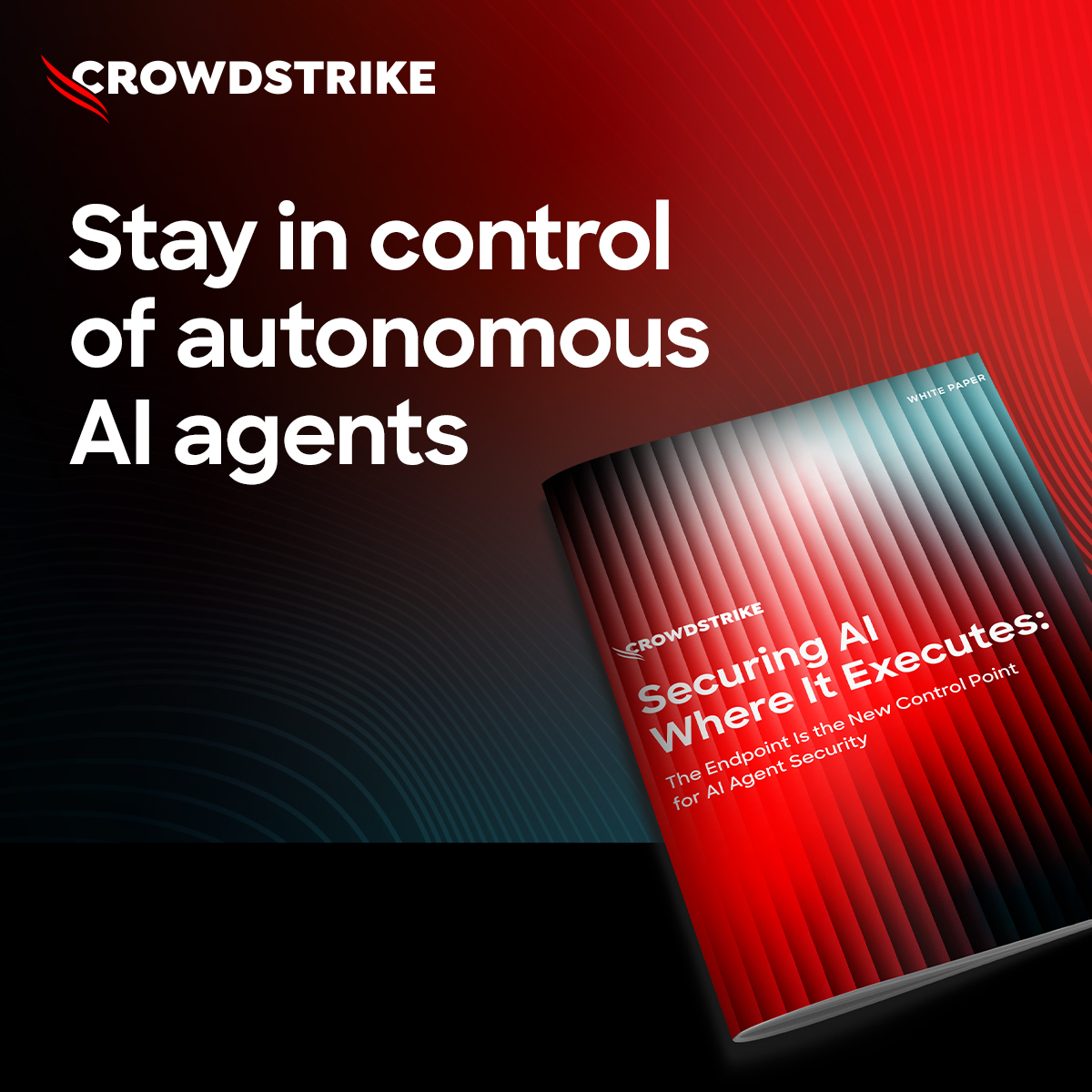
The rise of autonomous AI agents is redefining enterprise risk.
When software can act like a user, with direct access to systems and data, the endpoint becomes the new control plane for security.
Read more in our latest white paper → crwdstr.ke/6014B6adEi

English
Visium Analytics, LLC retweetledi

$VISM
🔥 Your security stack wasn't built for AI agents.
Firewalls. EDR. SIEM.
None of them see what's coming through an autonomous agent pipeline.
Every agent is a vector. Every pipeline is an attack surface.
#TruContext + #TruClaw were built for exactly this.
🔗 visiumtechnologies.com/blog/age-of-ag…
🔗 visiumtechnologies.com/solutions/truc…
English