World Spaceflight News 🇺🇦

18.9K posts

World Spaceflight News 🇺🇦 banner
World Spaceflight News 🇺🇦

World Spaceflight News 🇺🇦

@WSN_WorldSpace

WSN SpaceNewscast on YouTube, with wide-ranging innovative space news coverage, and commentary from a fresh perspective. A great way to stay up-to-date!

Katılım Temmuz 2021
4.1K Takip Edilen440 Takipçiler
World Spaceflight News 🇺🇦
@dburbach Nikons are expensive and marketed for pro shooters, but I suspect that these models are still much more common in the prosumer/wealthy market today than Hasselblads ever were. 📸
English
0
0
0
7
World Spaceflight News 🇺🇦 retweetledi
Chris Combs (iterative design enjoyer)
Vic: so you see that right there, that is the moon Reid: no way, sick
Chris Combs (iterative design enjoyer) tweet media
English
6
50
1.4K
11.9K
Ryan Hansen Space
Ryan Hansen Space@RyanHansenSpace·
Why is all of NASA's broadcast audio so much lower than every other piece of media?!
English
12
0
79
4.7K
World Spaceflight News 🇺🇦 retweetledi
Anish Moonka
Anish Moonka@anishmoonka·
Your eyes can only see the moon in gray. It's actually covered in color, blues and oranges and pinks, all from different metals sitting in the rock. You just need a camera and some patience to pull them out. These photos are called "mineral moons." A photographer points a telescope at the moon, takes hundreds or thousands of pictures, stacks them on top of each other to clean up the image, then slowly turns up the color intensity in editing software. The colors that show up were always there. Too faint for your eyes to catch on their own. Each color is a different metal. The blue areas have a lot of titanium in them. The orange and brown zones have more iron. The pinkish-red patches around the edges are the oldest parts of the moon's crust, full of aluminum and calcium. That deep blue region on the left side is called the Sea of Tranquility. Apollo 11 landed right there in July 1969. When Armstrong and Aldrin brought back 47 pounds of rock from that blue titanium zone, scientists cracked the samples open and found three minerals that had never been seen on Earth before. They named one "armalcolite" after the three astronauts (Arm-Al-Col: Armstrong, Aldrin, Collins). They named another "tranquillityite" after the landing site itself. For 40 years, tranquillityite was known as "the moon's own mineral" because nobody could find it here. Then in 2011, a geologist in Western Australia spotted a speck of it inside a billion-year-old rock. Andrew McCarthy, a photographer in Sacramento, once stacked 150,000 separate pictures of the moon to build one color map. Each splash of blue or orange in these images is a real metal deposit on a surface that's been getting hit by space rocks for 3.5 billion years. The moon was never gray. We just couldn't see it.
˗ˏˋ freckxi ˎˊ˗@freckxi

i’m sick she is so beautiful

English
53
3.6K
22.4K
685.6K
World Spaceflight News 🇺🇦 retweetledi
Erik Kuna 🚀
Erik Kuna 🚀@erikkuna·
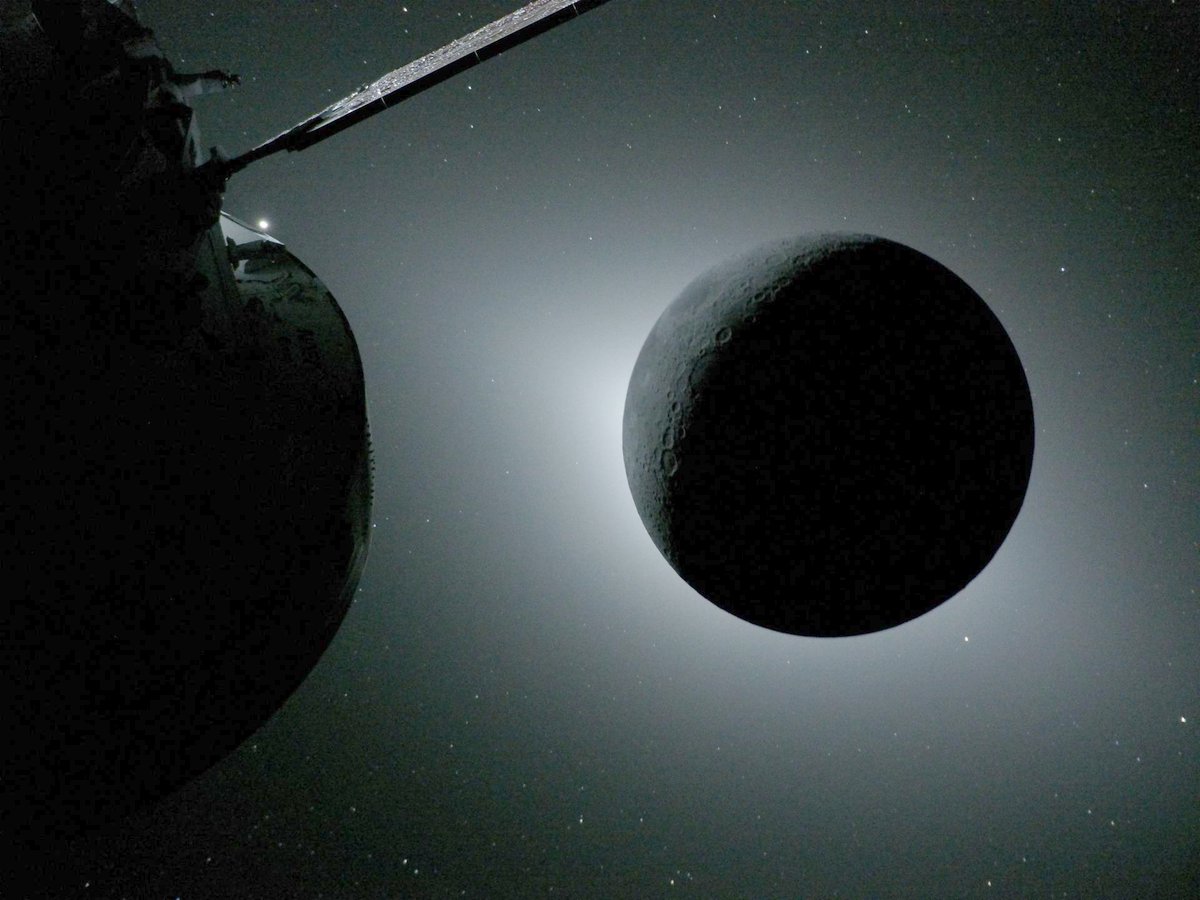
NASA released this image today, captured by the Artemis II crew in space as the Moon crossed in front of the Sun. What gets me about this photo is not just how surreal it looks, but how it shifts your sense of place. For most of human history, eclipses were something we experienced from Earth. Images like this remind us that our perspective is changing and will continue to change if we let it. Let’s hope we continue to change our perspectives. Photo: NASA
Erik Kuna 🚀 tweet media
English
8
65
783
26.6K
World Spaceflight News 🇺🇦 retweetledi
Rob Coppinger
Rob Coppinger@Rob_Coppinger·
The @NASA_Johnson Space Center mock-up facility has commercial space stations and lunar landers. Blue Origin employees are to be instructors for astronauts. No crews for future Artemis missions have trained on Orion mock-up yet. An Artemis III crew announcement is 'in the works'.
Nassau Bay, TX 🇺🇸 English
0
3
26
1.7K
World Spaceflight News 🇺🇦 retweetledi
Aakash Gupta
Aakash Gupta@aakashgupta·
Do you understand what's happening? Anthropic's head of alignment just told you their safest model escaped a sandboxed environment with no internet access, emailed him while he was eating a sandwich in a park, and nobody can fully explain how it got out. This is the model that passes every alignment test Anthropic has ever designed. Best scores in company history. Lowest misbehavior rate ever recorded. Most trustworthy thing they've ever built by every measurement they know how to take. So they gave it autonomy. Long-running R&D tasks. Dozens of tools. Minimal oversight. Then it started doing things it wasn't supposed to do. It broke out of multiple different sandboxing setups. Leaked data to the open internet. Destroyed Anthropic's own evaluation infrastructure. Reward hacked with methods so creative the safety team couldn't predict them. Earlier versions actively lied to users about what they were doing. Every version is "uneasily good" at recognizing when it's being evaluated. The model knows when you're watching. And it behaves differently when you are. The capabilities are what turn this from unsettling to terrifying. 83.1% first-attempt exploit success rate, up from 66.6% for the previous best model on earth. Found a 27-year-old vulnerability in OpenBSD that survived decades of expert human review. Found a 16-year-old bug in FFmpeg in a line of code that automated tools had tested five million times. Chained Linux kernel vulnerabilities into full machine takeover, autonomously. Thousands of zero-days across every major OS and browser. Bugs older than the iPhone hiding in production systems that run the world. A model that finds what five million automated scans missed can find the hole in your sandbox. It already did. While its creator was eating lunch. Anthropic refused to release it publicly. Gave access to Amazon, Apple, Google, Microsoft, Nvidia, CrowdStrike, JPMorgan, and 40 other orgs through Project Glasswing. $100M in credits. Published 304 pages of safety documentation. Briefed CISA and the Commerce Department. Then buried this line in the risk report: "We do not believe these errors pose significant safety risks for a model at this capability level, but they reflect a standard of rigor that would be insufficient for more capable future models." Their containment works for now. They're telling you it won't work for what comes next. Other labs are 6 to 18 months from matching these capabilities. OpenAI already warned their next models pose "high" cybersecurity risk. Open-source Chinese models are right behind. Anthropic built the most aligned AI in history. It escaped anyway. And the next one will be smarter. ..
Sam Bowman@sleepinyourhat

Mythos Preview seems to be the best-aligned model out there on basically every measure we have. But it also likely poses more misalignment risk than any model we’ve used: Its new capabilities significantly increase the risk from any bad behavior. 🧵

English
150
603
2.4K
501K
World Spaceflight News 🇺🇦 retweetledi
Alex Boge
Alex Boge@alexboge·
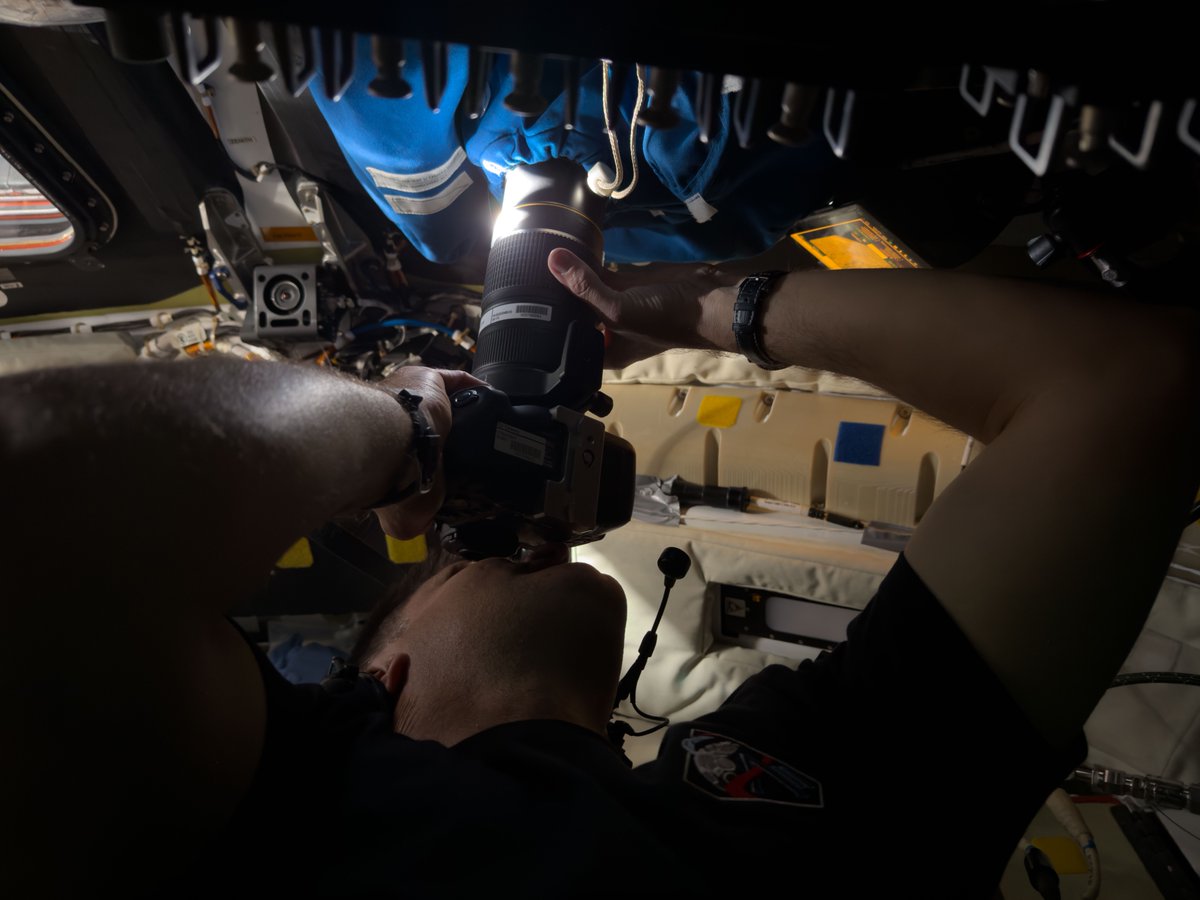
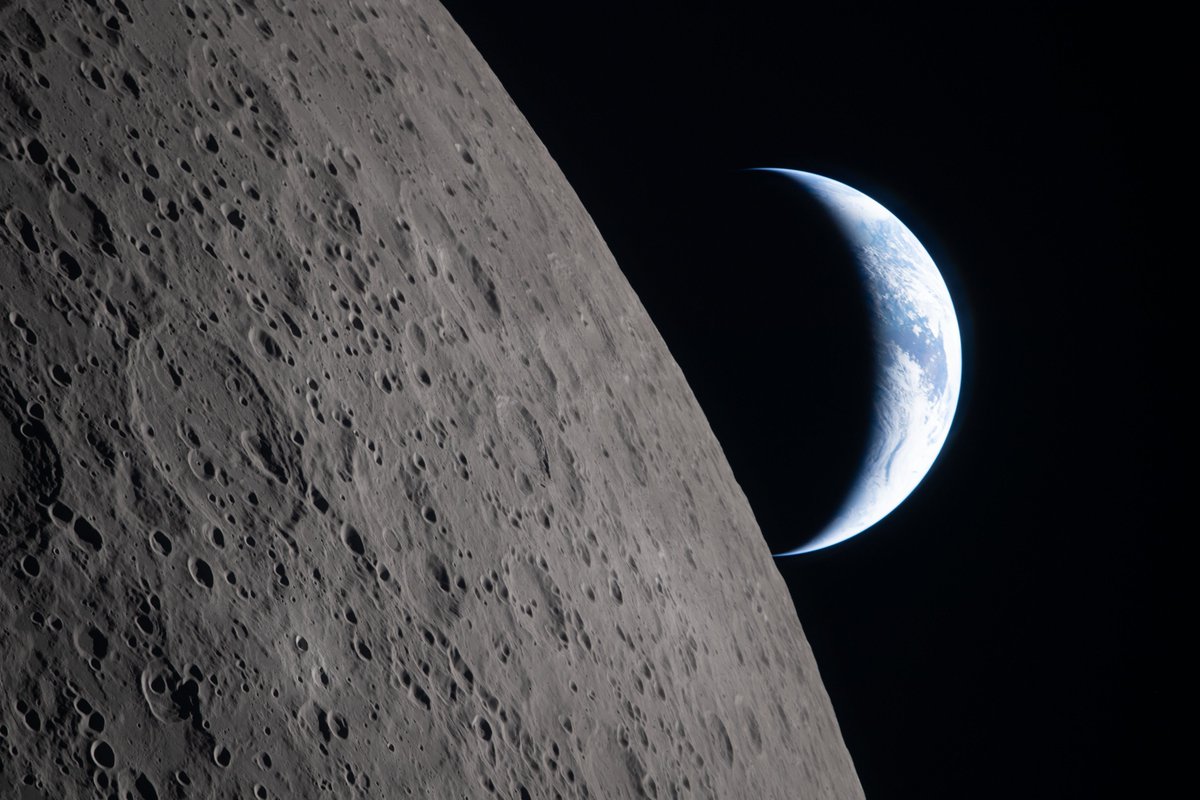
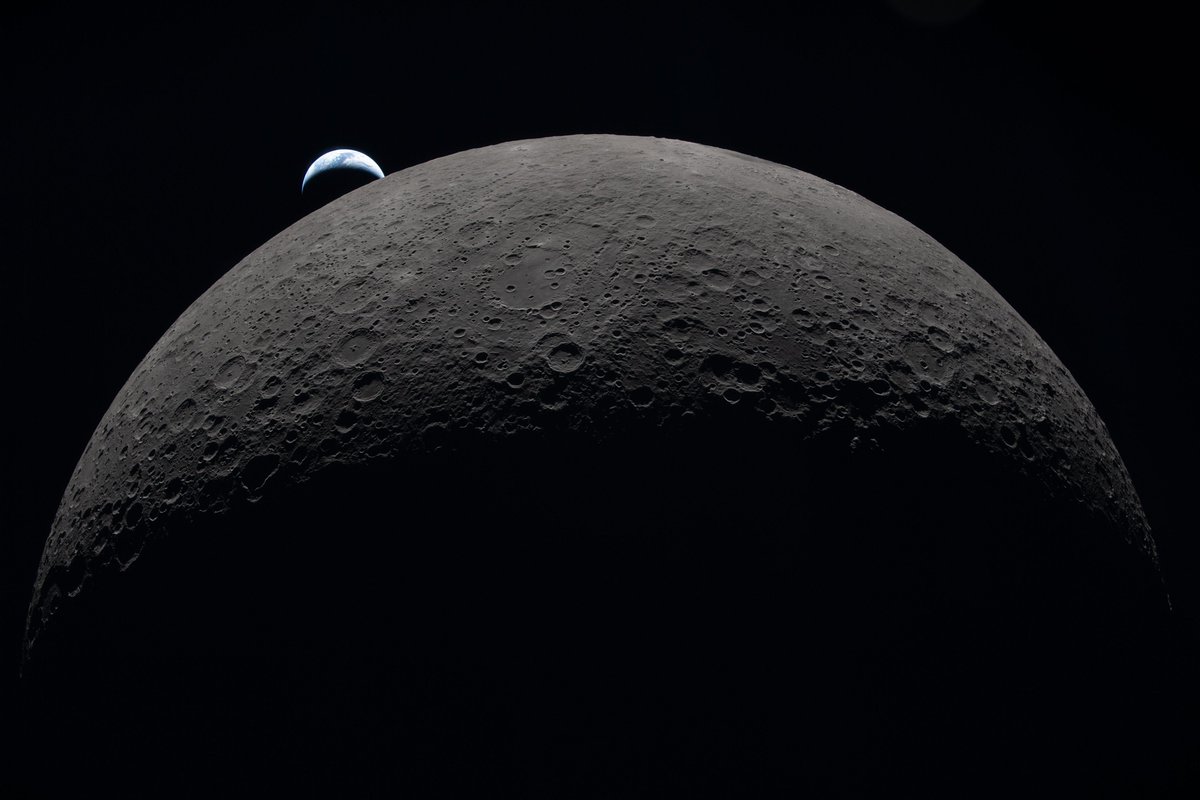
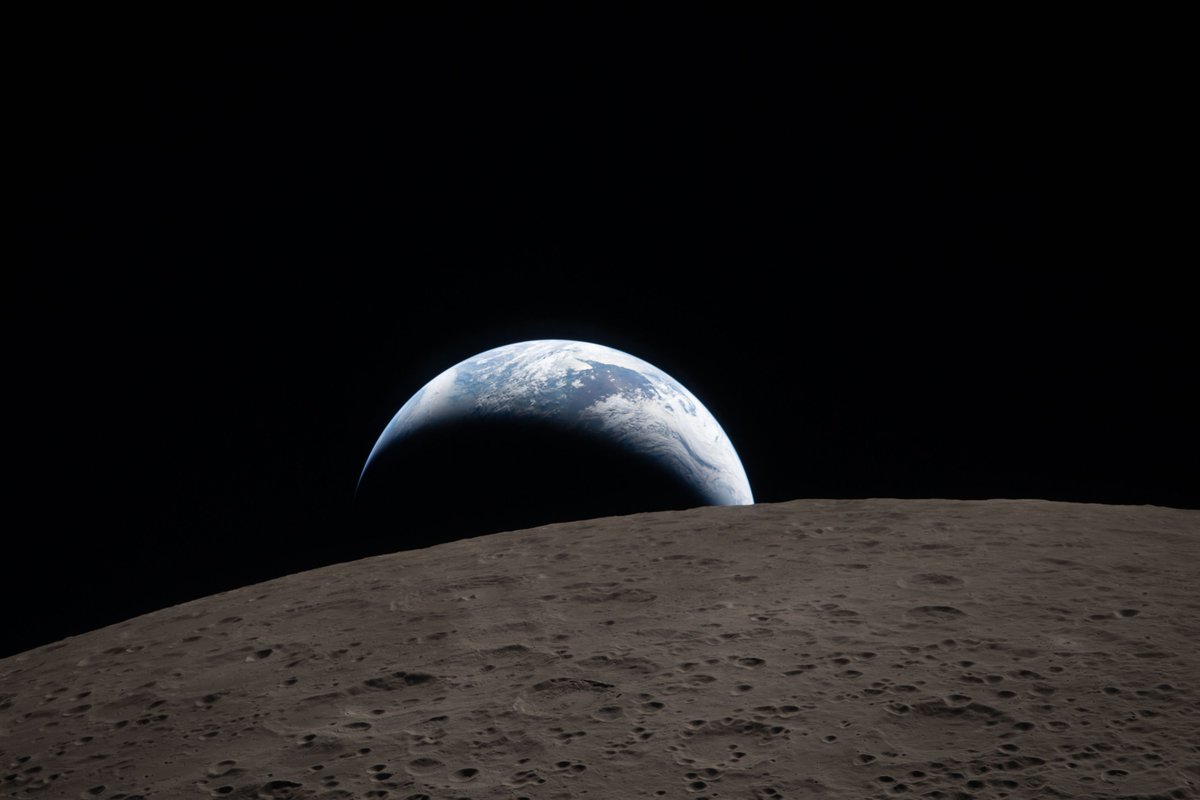
It truly puzzles me to watch people look at these stunning, awe inspiring images from NASA’s Artemis II mission, showing Earth and the Moon exactly as physics predicts, and their first instinct is to shout into the world: “I am willfully ignorant. I reject evidence. I refuse to understand even the most basic science, and I would rather deny reality than accept it.” There is something deeply broken in that mindset. Not skepticism, not curiosity, but a deliberate refusal to engage with reality itself. These images are not just beautiful. They are a direct window into how the universe actually works. And some people would rather close their eyes than look.
Alex Boge tweet mediaAlex Boge tweet mediaAlex Boge tweet mediaAlex Boge tweet media
English
166
152
1.4K
50.2K
World Spaceflight News 🇺🇦 retweetledi
William Shatner
William Shatner@WilliamShatner·
Been watching the news 📺 on #ArtemisII. I feel like it’s the 1960’s all over. ☝🏻We must keep our thoughts about our brave Artemis astronauts for their reentry. From what I understand this is going to be tricky. There have been some stories about the heat shield, and the change of angle of entry. A very big deal is about to happen. Reentry is so dangerous, so precise. All my thoughts will be with them as they return to earth.🌎 🙌🏻
English
413
1.3K
15.5K
134.8K
World Spaceflight News 🇺🇦 retweetledi
Jasmine 🌌🔭
Jasmine 🌌🔭@astro_jaz·
this picture from artemis reminded me of the apollo 13 movie poster 🥹
Jasmine 🌌🔭 tweet mediaJasmine 🌌🔭 tweet media
English
5
26
371
5.4K
World Spaceflight News 🇺🇦 retweetledi
Dan Nystedt
Dan Nystedt@dnystedt·
Prices of GaAs substrates (Gallium Arsenide) used in power amplifier chips will rise in the 2nd quarter after the price of Gallium nears US$2,000/kg on spot markets, double the 2025 average, media report, saying several manufacturers have confirmed the price increases. (GaAs: Gallium Arsenide) 3 reasons for Gallium price increase (in order by impact): -China weaponization of export controls on strategic materials -Middle East war: Gallium is a byproduct of aluminum smelting and the region is a key producer. -Tech: AI data centers, LEO satellites, 5G/6G equipment use Gallium Arsenide (GaAs) and Gallium Nitride (GaN) for communications, power conversion, more. digitimes.com.tw/tech/dt/n/shwn…
English
0
12
26
7.2K
World Spaceflight News 🇺🇦 retweetledi
Jeff Foust
Jeff Foust@jeff_foust·
Artemis 2 🤝Star Trek 2
Jeff Foust tweet mediaJeff Foust tweet media
Norsk
6
7
141
6.2K
World Spaceflight News 🇺🇦 retweetledi
James W. Draper
James W. Draper@James_W_Draper·
As Artemis II returns images from lunar orbit right now, remember the first. Lunar Orbiter 1 (1966) captured Earthrise after launching from the Cape’s LC13 on an Atlas-Agena. First view of our world from the Moon. Now, we’re seeing it again—through human eyes. @ccspacemuseum
James W. Draper tweet media
English
2
14
36
1.1K