Kevin Waldron

597 posts

Kevin Waldron banner
Kevin Waldron

Kevin Waldron

@WaldronLab

British/Irish in Poland ---------------------- Institute Professor, Lab of Metalloprotein Biology, IBB-PAS, Warsaw ---------------------- Tweets entirely my own

Warsaw Katılım Mart 2023
815 Takip Edilen725 Takipçiler
Sabitlenmiş Tweet
Kevin Waldron
Kevin Waldron@WaldronLab·
New paper alert! Just out, the latest in our study of the evolution of a fascinating family of metalloenzymes, the iron- or manganese-dependent superoxide dismutases (SodFMs). In this work, we’ve probed the evolutionary mechanism.
English
1
0
3
126
Kevin Waldron retweetledi
Maddie Lee, PhD
Maddie Lee, PhD@m_janelee·
academic conferences are crazy because it’s like Let’s go to the most beautiful place in the world and then look at powerpoints for 12 straight hours
Notre-Dame-des-Anges, Québec 🇨🇦 English
130
4.3K
56.7K
1.4M
Kevin Waldron retweetledi
Anish Moonka
Anish Moonka@AnishA_Moonka·
That one neuron connects to about 7,000 others. Your brain has 86 billion of them. Do the math and you get somewhere around 100 trillion connections inside your head. More connections than stars in 1,500 galaxies. And each connection point is way more complicated than anyone expected. A Stanford lab found that every single connection contains about 1,000 tiny switches that can store memories and process information at the same time. So your brain is running roughly 100 quadrillion switches right now, while you read this sentence. The wild part is the power bill. Your brain runs on 20 watts. That’s less energy than the light in your fridge. The world’s fastest supercomputer needs 20 million watts to do the same amount of raw calculation. A million times more power for the same output. We’re still nowhere close to understanding how any of this works. In October 2024, a team of hundreds of scientists finished mapping every single connection in a fruit fly’s brain. Took six years and heavy AI help. That fly brain had 140,000 neurons. Yours has 86 billion. Google and Harvard also mapped a piece of human brain last year, a speck smaller than a grain of rice. That speck alone contained 150 million connections and took 1,400 terabytes to store. The lead scientist said mapping a full human brain at that detail would produce as much data as the entire world generates in a year. A tiny worm had its 302 brain cells mapped back in 1986. Almost 40 years later, scientists still can’t fully explain how that worm’s brain keeps it alive. Your brain has 86 billion of those cells, each one wired to thousands of others, each wire packed with a thousand switches, all of it humming along on less power than a lightbulb.
Nicholas Fabiano, MD@NTFabiano

This is 1 of 86 billion neurons in your brain.

English
328
2.9K
12.6K
862.7K
Kevin Waldron retweetledi
Thomas P (TOM) Logan 🇯🇵 🇺🇸
📌🇺🇸💔 アメリカ人として、これほど辛い言葉を口にするのは非常に苦しいことですが、真実をありのままに伝えなければなりません。 今、母国アメリカでは批判的思考能力、基礎的な教養、市民としての良識や参画意識、他者への共感、そして過去の歴史的失敗から教訓を学ぶ姿勢など、あらゆる面で驚くべき崩壊が起きています。 これはまさに、社会が崖っぷちに向かっている状況の雛形(テンプレート)と言えます。このような社会は、自らの内面的な腐敗を鏡のように映し出し、それに共鳴するドナルド・トランプ氏のような不適格な人物を、自分たちの代表として選んでしまうのです。
Thomas P (TOM) Logan 🇯🇵 🇺🇸 tweet media
日本語
415
5.6K
17.6K
1.4M
Kevin Waldron retweetledi
Sci-Fi Archives
Sci-Fi Archives@SciFiArchives·
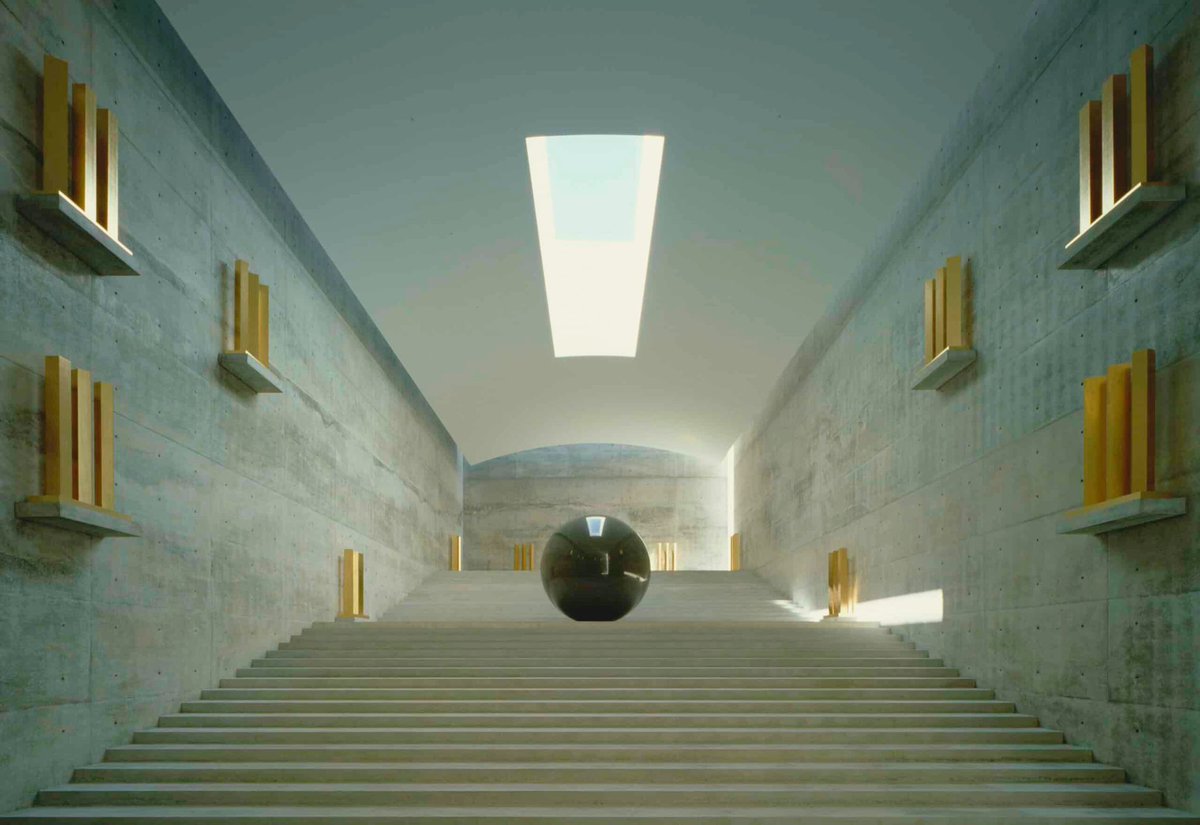
The sublime architectural work of Tadao Ando
Sci-Fi Archives tweet mediaSci-Fi Archives tweet mediaSci-Fi Archives tweet mediaSci-Fi Archives tweet media
English
6
361
2.8K
63.6K
Kevin Waldron retweetledi
Dr. Akhil 🇮🇳
Dr. Akhil 🇮🇳@DrAkhilX·
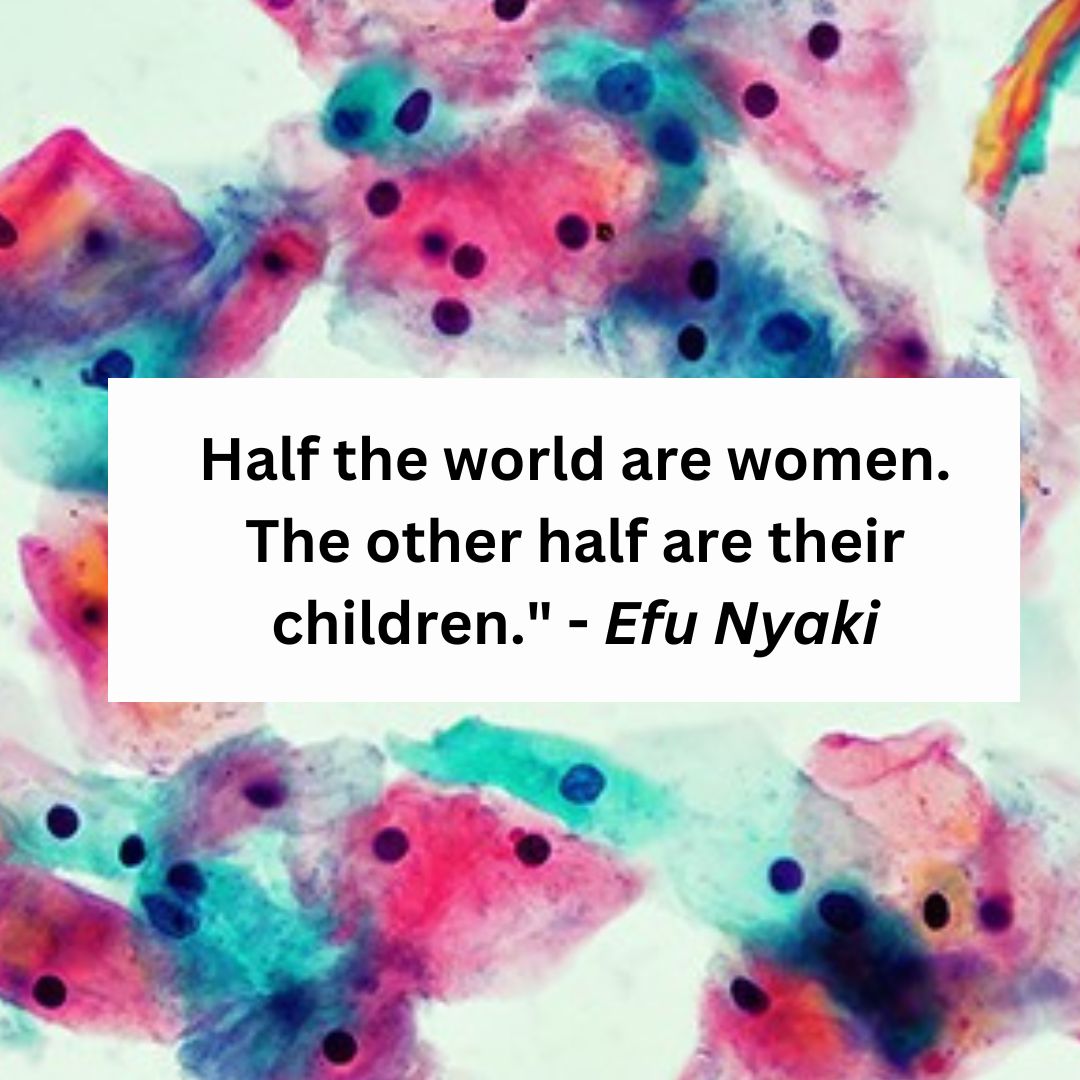
Greek physician George Papanicolaou invented the Pap smear technique for cervical cancer screening. After his PhD, he immigrated to the US in 1913 with wife, for research opportunities. In U.S he couldn't recruit subjects for vaginal smears. His wife stepped in, providing daily samples from 1914 for over 21 years—about 7,600 tests—collecting and preparing them herself since George lacked a U.S. medical license. While working at Cornell University Medical College, New York, these samples allowed George to track cellular changes from her reproductive years through menopause, establishing baseline patterns for normal and abnormal cells, which was foundational for identifying cancer indicators. All the work of George was possible only because of his wife, Andromachi Mavrogeni Papanicolaou (known as Mary, born in 1890 in Greece), who decided to step in as a volunteer human subject. George was poor in English and had communication problems, which made the hurdle of obtaining a medical license even greater when he landed in the U.S. It would be impossible for George to advance his research without his wife stepping in. The couple chose not to have children to dedicate themselves to science. In the early 1940s, George Nicholas Papanicolaou’s work got international recognition. The couple later in 1961 moved to Miami and founded the Papanicolaou Cancer Research Institute at the University of Miami. George died on February 19, 1962, from a myocardial infarction. His Pap smear method revolutionized cervical cancer screening, saving millions of lives globally. After George's death, Mary continued his work at the institute. In 1969 ( seven years after the death of George), the American Cancer Society honored her for her contributions.The citation highlighted her "unselfish contributions," including her role as the primary human subject for over 21 years, her unpaid work as a lab technician and manager at Cornell, and her recruitment of other volunteers, all while handling household duties to allow her husband to focus on research. On this Women's Day, let us celebrate not only the ladies who are frontline achievers but also those who contribute to the betterment of the world in the background, through the strong resilience which encompasses womanhood. Glory to Andromachi Mavrogeni Papanicolaou and her husband. Happy Women's Day!
Dr. Akhil 🇮🇳 tweet media
English
10
602
2.5K
41.1K
Kevin Waldron retweetledi
Itsuki Haru
Itsuki Haru@ItsukiiHaru·
Japan in 60 minutes🇯🇵
Eesti
80
2.2K
11.8K
418.9K
Kevin Waldron retweetledi
James Throt MBBS, MD, PhD, FRCPath
We are being gaslit into believing that the impulsivity, cruelty & polarisation we are seeing is purely cultural & political. That explanation is psychologically comforting, but inaccurate. It means we don't have to examine biology. But we must. COVID has entered the chat 🧵
English
34
478
1.6K
107.3K
Kevin Waldron retweetledi
Tom Goodwin
Tom Goodwin@tomfgoodwin·
We should remember that how good the research done by an LLM seems is inversely proportional to how well you know the domain.
English
35
51
381
14.8K
Kevin Waldron retweetledi
Darek.MolBiol
Darek.MolBiol@DariuszNowicki_·
Chcemy doganiać Europę w B+R? To spójrzmy na liczby: 8,5% – średni wzrost wynagrodzeń w 2025 3% – waloryzacja wynagrodzeń w nauce Nie da się wzmacniać nauki, systemowo osłabiając ludzi, którzy ją robią. #BiedaWNauce #3procentNaNaukę #Nędza #PosełKulasek #GadamyżeRobimy
Nauka w Polsce@naukawpolsce

Nakłady na B+R w Polsce muszą dogonić średnią europejską, mamy w rządzie tego pełną świadomość - powiedział minister nauki @MarcinKulasek @MNiSW_GOV__PL naukawpolsce.pl/aktualnosci/ne…

Polski
2
8
69
3.8K
Kevin Waldron
Kevin Waldron@WaldronLab·
And appreciation also to the funders of this work: @BBSRC (UK), @NIH (US) and @NCN_PL (Poland). An international and multidisciplinary effort.
English
0
0
2
32
Kevin Waldron
Kevin Waldron@WaldronLab·
Huge thanks to the team members on the study: Kacper and Eilidh, during my time in Newcastle, and Rafał from the Warsaw team @IBBPAS. Also, to collaborators Arnaud, who helped with the crystallography, and long-time US collaborator Thomas Kehl-Fie.
English
1
0
2
18
Kevin Waldron
Kevin Waldron@WaldronLab·
New paper alert! Just out, the latest in our study of the evolution of a fascinating family of metalloenzymes, the iron- or manganese-dependent superoxide dismutases (SodFMs). In this work, we’ve probed the evolutionary mechanism.
English
1
0
3
126