Wanda Alger

703 posts

Wanda Alger banner
Wanda Alger

Wanda Alger

@WandaAlger5

Writer, speaker, married to a pastor, author of 10 books about prayer, leadership, the church, and walking in the power of the Spirit. https://t.co/CZsRliWeVj

Katılım Ekim 2021
393 Takip Edilen7.9K Takipçiler
Wanda Alger
Wanda Alger@WandaAlger5·
TEN INDICATORS OF TRUE REPENTANCE When leaders in the Body of Christ are caught in sin, it is their response to the charges that will ultimately reveal the true state of their heart. Scripture describes those who are truly serious about making things right versus those who simply deflect their guilt and defend their own reputation. 1. TRUE REPENTANCE NAMES THE SIN TRUTHFULLY AND SPECIFICALLY. (Proverbs 28:13) An honest heart will call the sin as God calls it: deceit, immorality, abuse of power, partiality, intimidation, exploitation, cover-up, or falsehood. There will be no hesitation in naming the sin as God does (Psalm 51; Ephesians 5:11–13). THE FALSE VERSION DOWNPLAYS THE OFFENSE. Saying “mistakes were made,” “boundaries were crossed,” or “I was in a season of weakness,” seeks to lessen the charge and minimize the sin. Reframing a repeated pattern of offense as a momentary lapse in judgment reveals a heart that is unwilling to admit fault and take ownership for the transgression. (1 John 1:8-9) 2. TRUE REPENTANCE FULLY EMBRACES CORRECTION AND ACCOUNTABILITY. (2 Corinthians 7:11) An earnest heart will do whatever it takes to make things right in the sight of God and before others without trying to preserve a reputation or ministry. The priority is to reveal truth for everyone’s sake, not just defend one’s personal intentions. (1 Timothy 3:1-7) THE FALSE VERSION LABELS ACCUSATIONS AS SLANDER, DIVISION, PERSECUTION, OR A DEMONIC ATTACK. When the first response is to act more upset by the exposure than the sin itself, or to disqualify any charge as coming from a perceived enemy, it reveals an unwillingness to look at the evidence and weigh responsibly. (Proverbs 12:1; 15:31) 3. TRUE REPENTANCE IS QUICK TO HEAR, SLOW TO SPEAK, AND SLOW TO ANGER. (James 1:19-21) A humble heart will listen without prejudice in order to clearly understand the charges being brought, free of anger or resentment. A pure heart seeks the truth more than vindication. (1 Peter 5:1-3) THE FALSE VERSION IS QUICK TO DEFEND AND JUSTIFY THROUGH EMOTIONAL APPEALS. Tears, references to brokenness, childhood wounds, pressure, or burnout, may all be real, but can still function as deflection if they replace clear and open confession. When the accused draws attention to their own pain and victimization, their personal ego and need for validation have become more important than the pains inflicted on those they have hurt. (Romans 12:17-21) 4. TRUE REPENTANCE PRIORITIZES THE HARMED, NOT THE MINISTER OR MINISTRY. (Psalms 82:3-4) A true shepherd will acknowledge the specific sin committed and the specific pain suffered by an individual, showing care and compassion for those who have been harmed or mistreated. Forgiveness and appropriate restitution will be the priority, even at personal cost. (Isaiah 1:17) THE FALSE VERSION DEFERS THROUGH VAGUE APOLOGIES. Repeated claims of “I’m so sorry,” or declaring “I’m sorry if anyone was hurt” avoids admittance of guilt and diminishes the impact of specific sins inflicted on specific individuals. To generalize a wrongdoing without acknowledging the particular wrongs committed reveals an unwillingness to account for sins and seeks to bypass accountability. (Numbers 5:7, Matthew 5:23-24) 5. TRUE REPENTANCE RIGHTLY GRIEVES THE LOSS OF WITNESS FOR CHRIST. (1 Peter 2:12 NIV) A godly heart will grieve over the loss of testimony and stain upon the Body of Christ. The pain inflicted on others and the reproach upon the Church will be just as painful as the personal cost of sin. (Titus 2:7-8) THE FALSE VERSION SHIFTS FOCUS TO THE MINISTRY’S RIGHTEOUS CAUSE AND GOOD FRUIT. When focus is quickly shifted to “all the good we’ve done” or the “greater mission” of the ministry, the severity of sin is sidestepped in an attempt to bolster the gifts or talents of the accused. This grasping for recognition exposes idolatry of ministry and the lack of godly sorrow. (Psalm 51:3-5) 6. TRUE REPENTANCE BRINGS EVERYTHING INTO THE LIGHT WITH TRANSPARENCY AND FULL DISCLOSURE. (Ephesians 5:11-14) A repentant heart will not withhold details or seek to hide uncomfortable truths. There will be a readiness to give account for not only the charges being brought, but openly share about the process of accountability, including appropriate consequences, restitution, and all necessary actions being taken to address concerns and needed policy changes for the future. THE FALSE VERSION IS “HONEST” ONLY AFTER BEING CAUGHT WITH UNDENIABLE PROOF OF SIN. Those who feign remorse only after repeated exposure simply confirm their lack of personal conscience or conviction. When the fear of man is greater than the fear of the Lord, unrepentant hearts will spin the details to their own advantage in order to maintain control of a false narrative. (Proverbs 8:13) 7. TRUE REPENTANCE SPEAKS CONSISTENTLY WITHOUT SPRITUAL EMBELLISHMENT. (Matthew 5:37) Someone who wants to walk in the light will tell the whole truth from the very beginning, without changing narratives or details. There will be no attempt to spiritualize their sin, but a readiness to confess their faults without excuse. THE FALSE VERSION WILL CHANGE THE DETAILS TO BENEFIT THE ACCUSED AND SHAME THE VICTIM. When storylines change and narratives continually shift, it demonstrates a manipulation of facts to benefit the one being charged. When words are twisted and details change, the one speaking only reveals their intent to confuse and control. (Acts 20:30) 8. TRUE REPENTANCE INVITES OUTSIDE INVESTIGATION AND OVERSIGHT. (Proverbs 27:6) A minister of integrity will seek correction and counsel from outside his circle of friends and peers. Objective truth will be sought for the sake of the Church rather than limiting oversight to those influenced by ministry loyalties or partiality. (Hebrews 13:17) THE FALSE VERSION SEEKS A QUICK RESOLUTION IN HOPES OF “MOVING ON.” Avoidance of third-party investigations or input given by trained counselors or psychologists reveals a need to control a narrative. Any assumption that a leader’s sin is only “spiritual” (can be dealt with “in house”) and void of other potentially destructive (mental or psychological) causes is blind, presumptuous, and dangerous to the Body of Christ. (1 Timothy 5:21) 9. TRUE REPENTANCE COMMUNICATES CLEAR AND SPECIFIC CHANGES FOR THE FUTURE. (1 Corinthians 9:27) Repentance is not merely confession; it is changing direction. The fruit of repentance is not behavior modification, but a change of heart and a commitment to long term transformation. This will be seen in strategic changes to ministry policies, as well as personal commitments to long term accountability. Trust and credibility must be reestablished through consistent godly practices over time. (James 2:24, 4:8) THE FALSE VERSION TREATS FORGIVENESS AS CANCELLATION OF CONSEQUENCES. Calling for forgiveness, mercy, and “love” in hopes of sidestepping the consequences exposes a leader unwilling to surrender their influence or platform. When being charged with spiritual malpractice or abuse, forgiveness is not the issue. Restitution and rebuilding trust are the first steps in true restoration. (Matthew 3:8) 10. TRUE REPENTANCE SURRENDERS TITLE, OFFICE, AND PLATFORM WHEN BIBLICALLY DISQUALIFIED. (Mark 10:45) Leaders of integrity understand the sacred charge given to them and will yield any claim or right in maintaining their positions of influence when biblical standards have been violated. They will willingly lay down their ministry for the honor of Christ and step away from all public ministry with no expectation of returning. (Titus 1:5-9) THE FALSE VERSION SEEKS QUICK RESOTRATION AND RETURN TO MINISTRY. Selfish ambition and idolatry of ministry becomes apparent when compromised leaders refuse to step down or remove themselves from the spotlight. The more one grasps for the microphone or platform, the more entrenched they are in their own delusion of importance. When “the call” is touted as priority, character has been dismissed and they disqualify themselves from any position of true spiritual authority.
English
1
7
16
815
Wanda Alger
Wanda Alger@WandaAlger5·
@Karla15366154 Fits pretty well, actually:-). A man-made idol that will burn in the end.
English
0
0
1
69
Karla
Karla@Karla15366154·
@WandaAlger5 Wood in my dreams has often represented idols but don’t know if that relates to yours.
English
1
0
1
82
Wanda Alger
Wanda Alger@WandaAlger5·
Last night I had a dream where I saw something encroaching upon my house as a warning. As I looked out the window it looked like a net of some kind that sought to encompass my entire home. It was brown and wooden. Hard and fixed. The net resembled honeycomb and seemed to have a life of its own. But it kept growing and getting bigger. Every time I looked, it had covered more territory and was about to engulf me. It seemed to come out of nowhere. Just when I thought it would take over, I then looked and saw huge mounds of snow that had formed all around my house. They had been formed and fashioned like tall round buffers. One after another, the pillars of hardened snow formed a line in front of my house. And nothing could pass by them. Upon waking, I went to Scripture for answers. Why was the wooden net shaped like honeycomb? What did it represent and why did it feel so sinister? I knew that snow often represents purity. Was this some kind of message? When I had gone to bed, I had been thinking of the pervading lies and deception that are infiltrating the Church. Especially from some who are now being found to be false prophets who misuse and abuse the word of the Lord. Words are being twisted and stories are being woven by compromised men who seek to cover up their sin. Was my dream a response to my concerns? As I searched and prayed, I found that honey and honeycomb often refers to words being spoken. That which we taste and eat. The common admonition is to eat God’s Word like honey (Psalm 119:103). And yet, in my dream, this honeycomb net was hard and manmade. Almost like a silent plague of words. For the lips of a forbidden woman drip honey, and her speech is smoother than oil, but in the end she is bitter as wormwood, sharp as a two-edged sword (Proverbs 5:3-4). Set a guard, O Lord, over my mouth; keep watch over the door of my lips! Do not let my heart incline to any evil, to busy myself with wicked deeds in company with men who work iniquity, and let me not eat of their delicacies (Psalms 141:3-4)! I believe this parable in the night is a warning about taking in the words of those given to sin. There are voices among us who are seeking to take us in through their smooth talk and deceptive words. Hoping to win us over through flattery or vain promises, they want us to receive their words as truth, when in fact they are lies. Do not desire his delicacies, for they are deceptive food (Proverbs 23:3). We need to guard our hearts from the influence of deceptive words by establishing God’s Word as a buffer. Gods Word is pure and holy. It cleanses us and keeps us from any compromise and deception. We must establish His Word as greater than any words spoken through those who claim to know His voice, but have hardened their hearts and despise the true word of the Lord. Thus says the Lord of hosts: “Do not listen to the words of the prophets who prophesy to you, filling you with vain hopes. They speak visions of their own minds, not from the mouth of the Lord" (Jeremiah 23:16).
English
3
9
62
2K
Wanda Alger
Wanda Alger@WandaAlger5·
In a dream the other night, I was watching a gathering where a woman was beginning to lead worship. She was describing her situation which was bleak and dry. I saw a rock sticking out of the ground as she described a hardness of soil and things not going well. And yet in spite of this, she began to speak of her faith in God and her unwavering hope in His promise to come through. She was standing alone, and yet her faith was resolute in a God that would not let her down. She began to weep and I woke up feeling the depth of her cry in the midst of a seemingly hopeless situation. I sensed an exhortation to never give up in our faith. When faced with impossible odds, our flesh wants to give in, take control, and save ourselves. But true faith in God is willing to wait for His response, defying the natural order in order to give Him alone the glory. As I woke up in tears, feeling the depth of this woman’s cry, I thought of Habakkuk 3:17-19: “Though the fig tree should not blossom, nor fruit be on the vines, the produce of the olive fail and the fields yield no food, the flock be cut off from the fold and there be no herd in the stalls, yet I will rejoice in the LORD; I will take joy in the God of my salvation. GOD, the Lord, is my strength; He makes my feet like the deer's; He makes me tread on my high places.” I believe there may be some who bear witness with this dream. Perhaps having to stand before others, you are determined to declare the faithfulness of God, even in the midst of your own barrenness. But know that your witness and testimony of faith is powerful. It is being heard and recorded. It carries weight and moves heaven. And it will move things in the natural, as well, as you fix your gaze on Him and never lose your song of praise. He will not fail you.
English
8
18
102
1.8K
Wanda Alger
Wanda Alger@WandaAlger5·
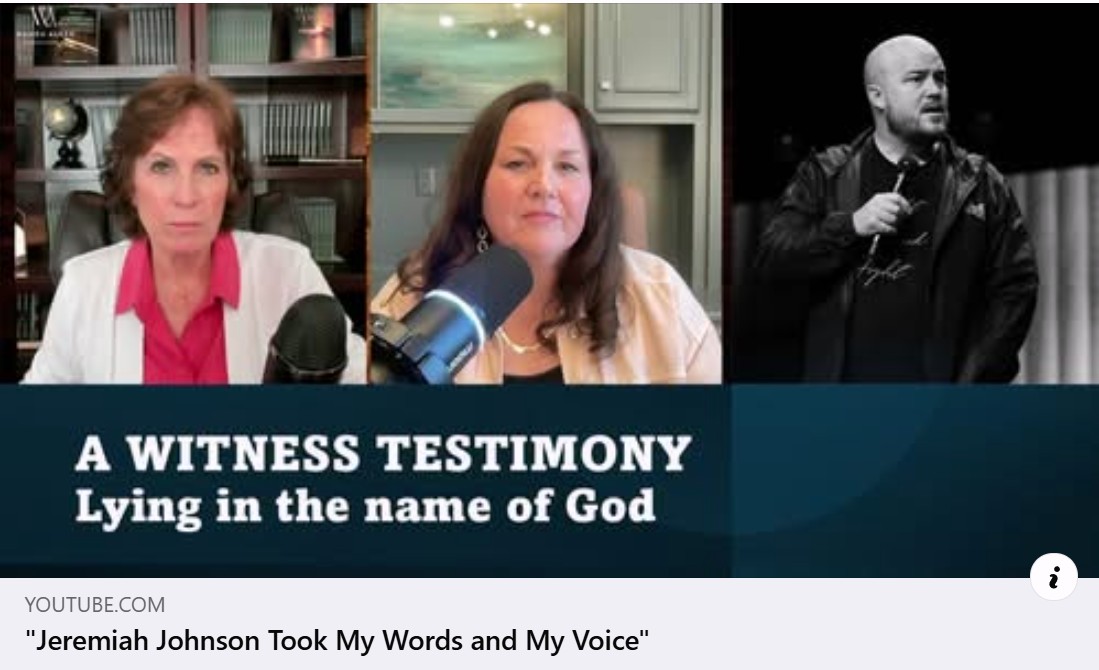
This is the hardest thing I’ve ever had to post… When Nancy reached out to me and I heard her testimony, it only confirmed what I had already known in my spirit. And I felt the grief of the Lord's heart over this man who so many have followed. The Lord soon clarified my role in this: “Let two or three prophets speak and let the others weigh what is said.” (1 Corinthians 4:29) I know I have a responsibility before the Lord to bring this issue into the light so that it can be properly weighed by the Body of Christ. Please take the time to read Nancy’s letter and listen to her account. And then weigh it against Scripture to see what is true, right, and good. youtu.be/bzvmn1B6_qM?si…
YouTube video
YouTube
Wanda Alger tweet media
English
3
14
73
5.3K
Wanda Alger
Wanda Alger@WandaAlger5·
A WITNESS TESTIMONY REGARDING CHARGES AGAINST JEREMIAH JOHNSON A Personal Account Based on Scriptural Standards and Documented Patterns If we really care about prophetic integrity and the scriptural standards for godly leadership, Nancy’s testimony should cause all of us to push the Pause button. I’ve personally spoken with Nancy and believe her testimony to be true and well documented. Highlighting her story is not about taking down a ministry, but calling those in the prophetic community to account. Either we value what God’s Word demands of prophetic gifts and those who operate in them, or we don’t. This account may be the test. nancyknopp.com/a-witness-test…
English
6
5
23
1.6K
Wanda Alger
Wanda Alger@WandaAlger5·
What does it actually mean to plagiarize a prophetic word? And why is this such a grievous sin in God’s eyes? To plagiarize is to “take the work or an idea of someone else, and pass it off as one's own.” Scripture calls this stealing (“I am against the prophets… who steal My words from one another.” Jeremiah 23:30) This is not only dishonest, but it lacks giving honor to whom honor is due (Romans 13:7). To take someone else’s revelation, inspiration, teaching, or prophecy and state it as if God gave it to you, is highly unethical and totally unacceptable for any leader of integrity. But let’s get practical. All of us can get inspired by reading or hearing words and insights from others. And if it is a true Spirit-inspired message, there will be an anointing on it that stirs something fresh inside of us. I have had this happen many times when reading authentic prophetic words from others. Something in my spirit jumps when reading it and it causes faith to rise. I may even receive an additional insight that either compliments or expands the original word. Even so, I recognize that any additional revelation I receive only came because of the original word from someone else. When this has happened and I want to share it, I purpose to always cite the original source that inspired me. I want to give credit where credit is due. Even if I feel I have another angle or bullet point to add, I want to provide the proper context by commending the one who first shared it. I believe this is the honest, and honorable thing to do. And this is even more critical to do when sharing the exact same word from someone else. To plagiarize something is to bypass this step altogether and simply post something as if you were the originator. Even if it just gives the impression that it was yours due to lack of details, it is not ethical, fair, or honest. And especially if the one posting it is a recognized leader and influencer, the implications are even more serious because of the example being set. As one who has posted prophetic words for years, I am beginning to see how social media posting has become a mixture of good, bad – and highly questionable. In our desire to see prophetic ministry championed, we have gotten slack in upholding God’s standards and given too much room for presumption and conjecture. And though this certainly isn’t true of everyone, it’s something we should all be aware of. Scripture is clear that the gift of prophecy is available to all, and we are all encouraged to pursue it. And I believe there is a place to share prophetic words online. But they must all pass the same test of authenticity and accuracy. I don’t want to settle for copied words or second-hand revelations. More importantly, I want to recognize them when they appear. Scripture actually demands it.
English
1
5
16
598
Wanda Alger
Wanda Alger@WandaAlger5·
My husband recently heard from the Lord that He was PRUNING the church. I totally agree. Many in the Church are feeling the pains of what The Vinedresser is cutting away. Rotting and diseased roots are being exposed and that which is barren and not yielding any fruit is being cut back and even removed. Every branch in Me that does not bear fruit He takes away, and every branch that does bear fruit He prunes, that it may bear more fruit. (John 15:2 ESV) But note what Scripture says. God doesn’t always cut away that which is bad. He also cuts away what is deemed to be “good.” We may see this “good” and become discouraged that it too must be cut back in order for new growth to come. And yet, that’s exactly what He does. For an even greater harvest. This is a time of not only pruning, but separation. Separating between the flesh and the spirit. Identifying that which is true and holy, and that which is carnal and defiled. Confronting mixture and double-mindedness in the Body of Christ. And we shouldn’t be surprised, for this is what happens for any who desire to abide in the Vine. His desire is that we bear much fruit for the Kingdom and for His glory. Thankfully, for those who have had “ears to hear and eyes to see” the GOOD that is coming out this pruning season, there has been some good and much-needed fruit that has emerged. Even though there are disagreements concerning some of the charges and allegations against various leaders, and ongoing debate about the process involved, there is some good fruit beginning to bud. Here’s just a bit of what I’ve personally seen: • Believers are beginning to ask more questions about those they follow and reconsidering what scripturally qualifies someone claiming spiritual authority. • Many are beginning to take more time to study what the Word says about the supernatural, godly leadership, and how the church should be governed. • The gifts of the Spirit are being examined more carefully according to scriptural protocols instead of cultural preferences or personal experiences. • Leaders are becoming more aware of the responsibility they have to their followers and are reassessing some of their ministry procedures and practices. • Social media users are now more aware of what is posted online and stepping up to rightly discern and weigh. • A new generation of leaders are embracing the challenges and starting to bring reformation to both sound doctrine and operating in the gifts of the Spirit. • Teachers of the Word and Seers in the Spirit are beginning to collaborate and consult together in order for the Word and Spirit to walk side by side. So rather than seeing this time as a negative or even destructive work of man, I see it is a sovereign work of the Spirit that is just beginning to blossom. Ultimately, anything that comes from the True Vine, will not only last, but thrive. That’s actually something to look forward to.
English
2
4
28
589
Wanda Alger
Wanda Alger@WandaAlger5·
For those who have discounted social media for having any place in the process of weighing prophecies or holding ministers accountable, we have to acknowledge the realities of having an online audience. There is both a privilege and a cost in gaining a footprint online and influencing the masses. Social media platforms are no longer just forms of entertainment, past times for boredom, or a place to sell products. Social media has become a viable ministry field for many in the Body of Christ. Regardless of the traps and abuses, social media provides opportunities to share the gospel unlike any other medium of our time. And just like any missionary endeavor, one who is called to an online platform can have a legitimate ministry that bears great fruit. It simply means that when teaching or prophesying online, a measure of the weighing of these messages must also happen online. Though primary accountability should always come from the home base regarding a minister’s personal integrity and biblical soundness, those who watch online also have a responsibility to engage and respond to what is posted. But what scriptural guidelines can we use? What about leaders who’s messages affect thousands of people beyond their own geographic oversight? What about those who promote various teachings or prophetic revelations that influence a global audience? The early church had no precedent for this. Biblical directives given for teaching the Word and operating in the spiritual gifts are always in a local setting. Nothing is mentioned about having a virtual audience of unseen millions. What other scriptural directives might work? 1 Corinthians 14:29 states, “Let two or three prophets speak, and let the others weigh what is said.” This is the protocol for testing prophetic words in the fellowship of believers. We know this not only protects the church from any error, but may in fact, deepen and enrich the word through additional insight and revelation from other prophetic voices. To weigh any message shouldn’t be seen as a negative response, or even disciplinary measure. It actually serves to sharpen our senses, deepen our discernment, and draw us closer to the heart and mind of Christ. And those who give such words or messages should actually welcome this kind of feedback. It’s iron sharpening iron. And the implication in this particular verse is that it starts with peer review by other leaders. There are still some who believe that any online commentary questioning the veracity of either a message or a messenger, is inappropriate. Due to emotional reactions and heated chats, many want to avoid controversy by simply scrolling past anything they don’t like or agree with. Worse yet, we have fallen into a trap of gauging the validity of a word to how many “Likes” it gets. We assume if there are enough “amens” posted in the comments, or enough views to a video, it must be true! But what if it isn’t? What if a word posted to thousands of people is wrong, biased, or even a mixture of truth and error? To other leaders online – what is our responsibility in “weighing in” on what is being preached and prophesied online? We have been told it should only be done behind closed doors. But, though there may be a precedent for face-to-face process when bringing a personal accusation, there is equal precedent in processing in the open where the influence has potentially massive impact. Yes, this can get sticky. But my point in bringing this up is to change the narrative about social media posting. Rather than seeing it as an evil to avoid, we must see it as an opportunity for growth. We each have a responsibility in how we post online. All of us will be held to account for every word spoken – and written. Leaders, even more so. And perhaps one of the reasons we are now having to deal with so much fallout in the prophetic movement is because we haven’t realized the potency of online ministry. It is valid and it is viable. The question is, how to test these messages in a way that exhibits the very standards we are calling for. Thoughts?
English
1
1
5
363
Wanda Alger
Wanda Alger@WandaAlger5·
@Vagabonder77 I see similar concerns. Even so, the majority of his work has been scripturally sound and verified. The challenge is that not enough leaders in the Charismatic (or prophetic) movement are speaking up. Maybe if "we" did, he'd focus on the things he's most qualified for.
English
1
0
1
55
Vagabond
Vagabond@Vagabonder77·
@WandaAlger5 Wanda, I deeply respect you-but what Mike is doing has crossed over from “about victims” to attacking the move & work of the Holy Spirit. He is anti new covenant prophecy & women being in leadership, among other things. He is attacking Holy Spirit revelation in various movements
English
1
0
0
20
Wanda Alger
Wanda Alger@WandaAlger5·
I don’t know Mike, personally, but I commend his conviction and have been rightly challenged by his assignment. To be willing to lay his well-established reputation on the line in order to sound a needed alarm says something. I may not agree with some of his conclusions, but I recognize a God-given charge that has merit and is bearing fruit. And though I don’t have near the following or influence that he does, I can relate to the cost of the call. Since covering some of these stories myself in the past two years, I have lost subscribers, been unfollowed, and received more criticism and backlash than the previous 15 years combined. Whatever “trust equity” has been built over time has been laid on the line. And yet, when I begin to question myself, I can’t escape the uncomfortable realities of the rampant sin, compromise, and outright abuses that have infiltrated the Church. Not only the spiritual and s*xual misconduct, but the lack of integrity regarding spiritual gifts and prophecy. And the utter disregard for qualifying some of our leaders according to biblical standards instead of popular opinion. It simply can’t continue. And though I’m pretty sure a majority of folks would agree on the overall problems, we just can’t seem to agree on the details. What’s being uncovered are not just leadership issues dealing with personal sins and character flaws, but deep theological and doctrinal divides regarding spiritual gifts, the supernatural realms, and church government. How are we to rightly judge things when we can’t even agree on the rules of the Book? What is our personal responsibility in this process? How much of our own perspective is determined by personal preference rather than scriptural truth? And if we truly believe this is God’s work and not man’s, do we have any personal conviction that would cause us to say or do something about it? Are we willing to pay a price - lose some friends - become unpopular - if it’s the right thing to do? Regardless of what you think about Mike Winger, I am thankful for leaders like him who walk the talk and don’t let peer pressure override their conscience. God’s not looking for perfection or even a process free of problems. He knows we can only do our part. Maybe He’s just looking for those whose love for the Body and Bride of Christ is greater than any fear of disapproval or the need to be liked.
Mike Winger@MikeWingerii

Goodbye. I am about to embark on the creation of several videos that will cause many to think that I’m off base, compromised, unspiritual, attacking the church, or otherwise not worthwhile anymore. I know this is going to happen but I’m proceeding anyways. Why? Because I think that accountability for villains in church leadership is important and God honoring. It honors God to defend the victims. It honors God to expose such deeds that the church would be unleavened. It honors God to refuse to participate in or tolerate false miracles, false prophecies, false leaders, oppressive systems, “elitist leaders” cultures, and unbiblical teachings. The problem is that accountability hasn’t come from within the movements that need it. Instead, movements like IHOPKC, Bethel, Morningstar, and others have enabled such abuses and blocked proper accountability. So it falls on the wider church to speak up and protect people. For those who will say that they have been blessed by my ministry before this and now are checking out, just know that I’m grateful for the opportunity to be part of God blessing you in some way. I understand that what I’m about to do can be seen as divisive, extreme, and unnecessary, especially to those who haven’t talked to the victims of such predators and false leaders. I don’t anticipate being able to convince the majority that what I’m doing is good and needful. Know that I am grateful for the chance to have ministered to you in the past and that I am doing my best to do what’s right and God-honoring in the future. When you think about it, Jeremiah and a number of OT prophets were dealing with opposition from those who basically thought they were being unnecessarily negative, divisive, and ungracious. Goodbye to those who will no longer view or support my content. I’m grateful I could help in the past and regret that this future project will inevitably result in me looking like an ungodly villain in your eyes.

English
1
0
10
900
Wanda Alger
Wanda Alger@WandaAlger5·
“Be still before the Lord and wait patiently for Him” (Psalm 37:7). I’m a doer. I get impatient when there seems to be a lull in activity or needed changes don’t happen. And being a resourceful person, this can be a dangerous place as I can easily move ahead on my own. This morning the Lord asked me, “Are you willing to wait? Are you willing to sit still until I say to move?” Gulp. I realized how quickly I’ve gone ahead of Him, thinking it’s better to do “something” than “nothing.” And yet, in His economy of time, waiting is a “nothing” that will yield much more fruit than my self-motivated “something.” He doesn’t reward just working servants, but waiting ones
Wanda Alger tweet media
English
3
2
19
335
Wanda Alger
Wanda Alger@WandaAlger5·
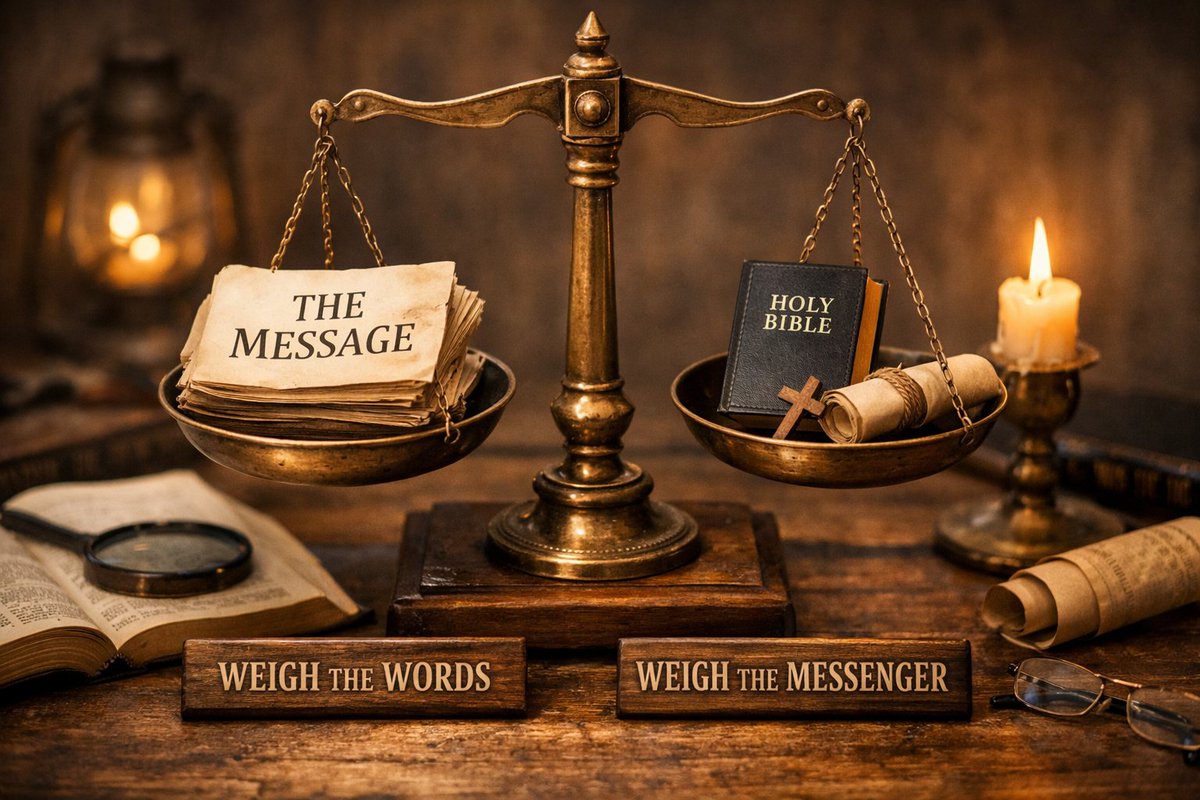
Restoring Integrity to the Prophetic Voice “Let two or three prophets speak, and let the others weigh what is said.” (1 Cor 14:29 ESV) In the call for greater prophetic accountability among leaders and influencers, there is a likely distinction needed between testing one’s character and testing one’s prophetic revelation. Even a person of good character can “miss” a prophetic word (Matt 16:21-23), just as a compromised individual can receive a “correct” word (1 Sam 19:23-24, John 11:50). Thus, I would suggest there needs to be more than just one kind of “weighing” when considering any kind of prophetic revelation (dream, vision, word, etc.). One’s character can only be rightly assessed by those who personally know that individual. This usually happens at the local level. It’s only when an individual or leader builds a consistent track record of integrity at home that true testing of character can take place. This has to do with one’s personal conduct and speech, the health of one’s marriage and family, the posture of one’s heart towards others, and a demonstration of Christ-like character and motive. It is also the place where leadership qualifications are proven and any gift is practiced, weighed, and tested for consistent fruit. It is only those close to an individual on a regular basis that are best suited to see the fruit of one’s life that would indicate a true heart after God and a valid gift. And the most important factor in this kind of accountability working is the individual asking for it. It is those who are truly humble of heart and willing to be corrected that God will favor and bless. "But this is the one to whom I will look: he who is humble and contrite in spirit and trembles at My Word.” (Is 66:2 ESV) But then there is the testing of one’s prophetic revelation, whether it’s a dream, vision, or impression (1 Thess 5:19-21). These need to be weighed, as well. Again, it is in the local setting where training begins. Rightly handling the Word of God starts here when seeking to interpret and rightly apply a prophetic revelation that will encourage and empower the local fellowship. Asking for feedback and collaborating with others is the best way to fine tune a prophetic gift. And the weight of this process doesn’t necessarily rest on those who give the feedback, but on the one who receives it and learns from it. This again reveals a posture of humility and a commitment to honoring the Lord and not just promoting one’s gift. But what does one do with prophetic revelations that are larger in scope? Revelations that point to a larger audience such as the broader Church or even the nation? This is where other considerations must be determined. Depending on those in the local setting who carry a similar burden or are rightly informed concerning national issues, there may be some limitations in the feedback given. Most pastors are focused primarily on their own flocks. Not every local leader may be prepared to properly vet a word given for the nation or even the Body of Christ at large. This is where peer review comes into play and an understanding of “fields of ministry” is critical. “But we will not boast beyond limits, but will boast only with regard to the area of influence God assigned to us, to reach even to you.” (2 Cor 10:13) The apostle Paul had great influence at national levels. He spoke before kings, governors, and rulers (Acts 24:10-21; 25:8-12; 26). He knew the “grace” given to him to operate at those levels of apostolic authority. But that “grace” is not extended to all. He taught in Ephesians 4:7 that each one has been apportioned a “measure” of grace for their particular call. The Greek word is “metron” and means an allotted portion. It means that some will be called to lead a local fellowship and others will be called to lead entire regions. Still others will carry great influence at national levels. Paul points out these “boundaries” and consistently urged believers to recognize the distinctions and judge accordingly (Rom 12:3). This is why weighing prophetic revelation at the national level is tested most effectively among those within that same metron (field). Just as local prophetic voices should collaborate together to weigh what is said (1 Cor 14:29-33), so must national prophetic voices collaborate together and weigh what is said. This is also true of those who have social media platforms with a global reach. And without any clear scriptural directive given for this kind of modern day field, we can only go by the principles already established concerning personal character, consistent fruit, and scriptural integrity. This is what has been greatly lacking in the prophetic movement in recent years. With the surge of national prophets and social media voices sharing the latest Word of the Lord (myself included), there is a much greater need for prophetic accountability at those levels. True, there are a few “prophetic councils” and even a few YouTube channels who have attempted to test and weigh prophetic words in recent years. But unless these attempts of oversight are in sync with character accountability from the local level, we are still missing the mark. What I am suggesting is that if we are to adequately weigh or test a prophetic revelation, especially at the national level or on social media, both the message and the messenger should be rightly discerned. Public persona can be misleading and even deceptive. Ascertaining motives based on a social media platform is not only unwise, but dangerous. And even if one’s character has already been proven trustworthy from those at home, their prophetic revelations must still be appropriately weighed and considered according to the biblical standard. To weigh the revelation of even a "trusted voice" is not an indication of mistrust, but an act of scriptural obedience. It is the only way to ensure the integrity of the word and receive God’s intended purpose. Based on all the recent exposures of prophetic abuse and misconduct, it is clear we have failed at properly vetting both prophetic messengers and prophetic messages. And it’s not just a matter of whether or not either are false. What’s even harder to detect – and even more deceptive - is MIXTURE. A mixture of Spirit and flesh; a combination of truth and error; an allowance of bad fruit as long as there’s some good along the way. Maybe the reason we have been “fooled” by some of these charlatans is because we have not recognized the mixture of righteous zeal and selfish ambition. We have tolerated carnal motives in order to get spiritual insight. Thus, the very real and present danger in the prophetic movement may not be false prophets as much as double-minded ones. Those who pretend to “…have zeal for God, but not according to knowledge…seeking to establish their own righteousness” (Rom 10:2-3). If we are to restore integrity to the prophetic gifts, we simply must do better at pursuing a righteous standard that honors the Word of God above the word of our favorite prophet. And perhaps we need to collectively repent for allowing things to get this bad before recognizing how far we’ve drifted. If we want to operate in the true spirit of prophecy, let's get back to the testimony of Jesus in both word and conduct (Rev 19:10).
Wanda Alger tweet media
English
1
4
16
468
Wanda Alger
Wanda Alger@WandaAlger5·
RE: An Open Letter about Jeremiah Johnson (Robert Gladstone) I've known about these charges for a while. But with limited personal experience and information, I've simply been praying that the Lord would direct those with firsthand information and history to bring this forward. I believe Gladstone is writing in the fear of the Lord, realizing the challenges involved. I also feel a responsibility in affirming this letter as JJ wrote an endorsement to my Sword to Scepter book back in 2020. (I've only spoken with him twice in person, and those times were brief). Gladstone's report should cause us all to pause and think twice. Not only about this particular case, but about what Scripture clearly dictates for those who are called to lead the Body of Christ. As a prophetic dreamer and one who has posted similar content in past years, I am committed to both personal and biblical integrity. I desire to always have a humility of heart that not only receives correction, but embraces it with thanksgiving. Scripture tells us the Father disciplines those He loves. It's for our good, and for HIS glory. open.substack.com/pub/robertglad…
Wanda Alger tweet media
English
1
0
10
922
Wanda Alger
Wanda Alger@WandaAlger5·
I was recently sent this article that addresses how deception and self-protection slowly creep into the lives of leaders in the church. Based on a powerful prophetic dream, the writer is appealing to current leaders to assess their own hearts and lives so that these tendencies will not take hold. He also offers an impressive PDF Restoration Guide that takes leaders through a self-evaluation with scriptures, prayers, and probing questions for consideration (link to PDF in the comments). “Paul warns that false teaching thrives when people prefer affirmation over formation and comfort over correction. When sound doctrine is resisted, teachers arise who speak what people want to hear rather than what they need to hear (2Ti 4:3–4). This is not merely an intellectual failure. It is a relational and moral failure. Truth is no longer received as something that governs life, but as something that serves preference. When this happens, teaching becomes shaped by audience appetite rather than divine truth. False teachers often emphasize knowledge while disconnecting it from obedience. They promise insight, freedom, or enlightenment, yet leave people unchanged and increasingly bound. Scripture describes this as a form of godliness without power—language and structure present, but transformation absent (2Ti 3:5). This is how deception settles inside leadership structures: truth spoken without truth lived, doctrine taught without discernment cultivated, knowledge increased without holiness deepened. Judgment beginning in the house of God is not abandonment—it is protection. It is the Father guarding His people and rescuing leaders from conditions that would ultimately destroy both shepherd and flock. The question in this hour is not whether confrontation is happening. The question is whether leaders will respond early—while restoration is still gentle.” awakeningdestiny.global/from-hollow-to…
English
1
3
14
447