
Sabitlenmiş Tweet
Talib
4.8K posts



CHRIST IS KING ✝️
Have a blessed day everyone.

English

I see zero issues with this tweet.
Either you guys have low comprehension or you are truly ignorant about the Islamic paradigm in relation to marriage and related conduct.
Pick your side.
khadijaa✨@deendreams001
there is no such thing as “marital rape” in Islam. This idea is propaganda. Marriage and rape are fundamentally contradictory and cannot be equated..
English
@WanderingTalib So you're telling me you follow islam and sunnah and walk on the path of my beloved prophet (saw)?
And justify marital rape? There's a reason why there's "rape" with it you moron!
English
@debate_4Truth @BullandBaird Btw, Newton was Unitarian and that too Arian. Deal with it.
English


Imagine the math required to make this guess and aim 4 people at a point in space
GIF
English

Try to use your 2 braincells Khadija
Marriage and Rape are not fundamentally contradictory
Sex before marriage or someone who is not your spouse is adultery
Forcing yourself on someone who is not your spouse is rape
Forcing yourself on someone who is your spouse is marital rape
khadijaa✨@deendreams001
there is no such thing as “marital rape” in Islam. This idea is propaganda. Marriage and rape are fundamentally contradictory and cannot be equated..
English
Talib retweetledi

The UAE government is Zionist. May Allah save the Muslims from their evil. Amin.
English
@AbuTaymiyyahMJ @demonofworld Brother, we are busy takfiring each other. Come back later. 🤦♂️
English

@Farid_0v @YasirAlHanafi Br, I read his response too. I didn't find anywhere that he suggested you have zionist motives.
And br, please don't read things into the text. Better ask for clarification if anything was ambiguous.
May Allah bless you both.
English

@YasirAlHanafi Let's do it!
Muhammad Yasir: Another Creator for the Universe = Not Shirk
Farid: Another Creator for the Universe = Shirk
Also, I understand that you're upset, but don't pretend to be friendly while suggesting that I have Zionist motives.
English
Okay, I’ve watched this video titled ‘The Greatest Betrayal in Dawah Scene History’, with the thumbnail stating ‘Two Gods? Not Shirk’.
To be honest, I am disappointed in my brother Farid for giving such a response. Considering we have had several respectful private conversations in the past and that he is someone I considered a friend (at least I did), I didn’t expect him to reply in such a sensational, clickbait manner. It’s like me making a video, “Wahhabism, The Greatest Betrayal to the Ummah”, and then making a slanderous claim. Everyone, including Farid, knows that I never once said that believing in two Gods is not Shirk—and Allah’s refuge is sought. But, unfortunately, he repeats this slander multiple times in this video.
I will not address the ad hominem attacks or those against brother Daniel, as I believe that damages the unity of Muslims, especially in the current situation. Brother Farid didn’t respond to any of my evidence or to the numerous quotes I provided. Unfortunately, he didn’t even have the courtesy to tell his audience once that I believe this tenet is not part of Islam. He kept repeating that small clip, adding his sensational and, dare I say, dramatic commentary to it. He did not provide a clear, consistent definition of ‘Shirk’. In fact, he provided no definition at all.
However, he did hint that more videos will be made where he will address the evidence.
Also, the timing of this video's release is interesting: at a time when many, including myself, have been calling for Sunni & Shia unity against the Zionists, I believe the release of this video is unwise, to say the least. Only Allah knows best what the true motive behind it is.
Therefore, dear brother Farid, I have no personal animosity toward you. So, instead of engaging in a back-and-forth, why don’t we have a live discussion on this topic? We can analyse our positions. If you genuinely believe I am defending ‘Shirk’ (and Allah’s refuge is sought), then this will be a good time to correct me. Because honestly, after watching your video, I saw only personal jibes and how shocked you were at what I said. There was nothing academic or substantive apart from some references to history.
This discussion does not need to be immediate, as I am still travelling. Also, it will give you as much time as you need to prepare. But I think a live discussion would be beneficial for everyone, inshaAllah.
May Allah bless you.
Farid@Farid_0v
New video uploaded onto my channel. The video title: The Greatest Betrayal in Dawah Scene History Thumbnail by @SollyLucid.
English
@YasirAlHanafi Ustadh, May Allah bless you
For past few weeks the back and forth was regarding "Shia Sunni" unity. There was absolutely no need for topic like this now
Mind, this conversation with br daniel is >2 months old
Seems like they attack the credibility of anyone who calls for unity
English
@debate_4Truth @DailyTurkic The hatred has blinded your heart, DC.
Even your narrative of the figure "Jesus" will disown you.
Take a moment, be a human.
English
@DailyTurkic the ottoman empire is no longer in existence
(praise Jesus)
English

This Palestinian man shows a document from the Ottoman Empire, sealed by Ottoman officers, proving his family’s ownership of 60 acres of land in Jurish, West Bank.

English
@AqidaDefence @Haqiqatjou Well, basically I am saying, Br Daniel Haqiqatjou isn't a munafiq let alone the biggest munafiq since ibn Saba.
If that helps.
May Allah bless you and bless the Ummah.
English

@WanderingTalib @Haqiqatjou You don’t know what you’re talking about. Shush.
English
He (@Haqiqatjou) is the biggest munafiq since ibn Saba for a reason.
Wesam almahdi@AlmahdiWesam
"The belief which I JUST admitted is shirk, is Maa Shaa Allaah based on the Quran" This is the man some dua'at were too cowardly to denounce may Allaah Guide them. Oh my God...Yawmul Qiyamah is near man
English

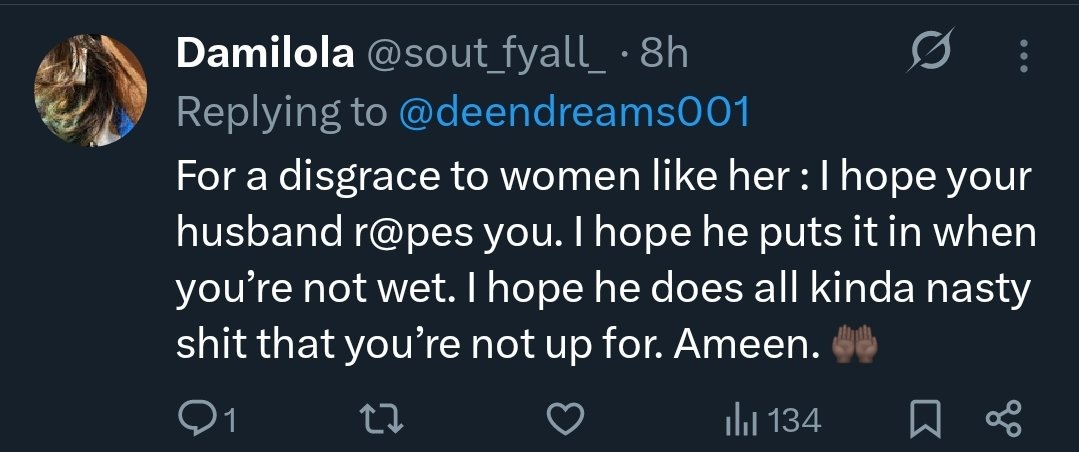
@WanderingTalib Why r u offended bacha? As per you marital rape doesn’t exist, right ? So consider reading it this way: “ May you have intercourse when your vagina is not ready to copulate ”
English
@WanderingTalib Tweeted about it again. Added a line about men like you as well. Read that too.
English
If your conclusion after reading this tweet is that she wants women to get graped.
Congrats you are a moron.
khadijaa✨@deendreams001
there is no such thing as “marital rape” in Islam. This idea is propaganda. Marriage and rape are fundamentally contradictory and cannot be equated..
English
@WanderingTalib Can’t come up with an argument and then throws the lamest jab.
English
@WanderingTalib You’ve both. That’s why you got zero issues with this tweet.
English