WeakConqueror
2.5K posts

WeakConqueror retweetledi

It’s not a secret it’s obvious and the third time should not be a charm.
Middle East & Africa@FTMidEastAfrica
Iran accuses US of seeking talks while preparing to invade ft.trib.al/CDZL1mx
English
WeakConqueror retweetledi

My Simple Rule for Effective Philanthropy: Founder in the Trenches
After two decades in philanthropy, here is my straightforward and simple advice: Do not give money to any organization unless the founder is deeply involved in day-to-day operations. Ignore the brand, glamour, and size of the organization.
I have paid heavy for this lesson.
This realization was reinforced while reading “The Wisdom of Whores: Bureaucrats, Brothels and the Business of AIDS” by Elizabeth Pisani, a British-American epidemiologist, public health consultant, author, and former journalist. Drawing from her extensive experience in HIV/AIDS prevention with organizations such as UNAIDS, the World Health Organization, the World Bank, and the U.S. Centers for Disease Control and Prevention,
a.co/d/04Clxr0g
Pisani exposes how NGOs often fail at solving real problems.
In her case, it’s about failure of of AIDS prevention
1. Bureaucratic Roadblock
Bureaucracy turned prevention into a spending and reporting exercise. Surging budgets attracted agencies and NGOs more focused on burning money and producing reports than on stopping infections. Success was measured by funds disbursed and procedures followed, not by lives saved. This caused massive misallocation.
2.Ideology from the Left
Left-wing ideology undermined effective prevention by prioritizing empowerment narratives and structural explanations over practical action. It portrayed condom non-use as a result of patriarchal oppression, favoring long-term “dignity” projects instead of immediate, targeted interventions.
3Ideology from the Right
Right-wing ideology, particularly religious conservatism, hindered progress by imposing moral judgments on proven tools.
It’s an interesting read.
Again, it’s my costly personal lesson in philanthropy - like venture investments, it’s mostly about the founder. First rule - make your judgement on the founders. Second rule - farther the founder is from the trenches, the greater the risk that the organization drifts away from its original purpose.
Branding, narrative, prestige of NGOs - doesn’t worth your money.

English
WeakConqueror retweetledi

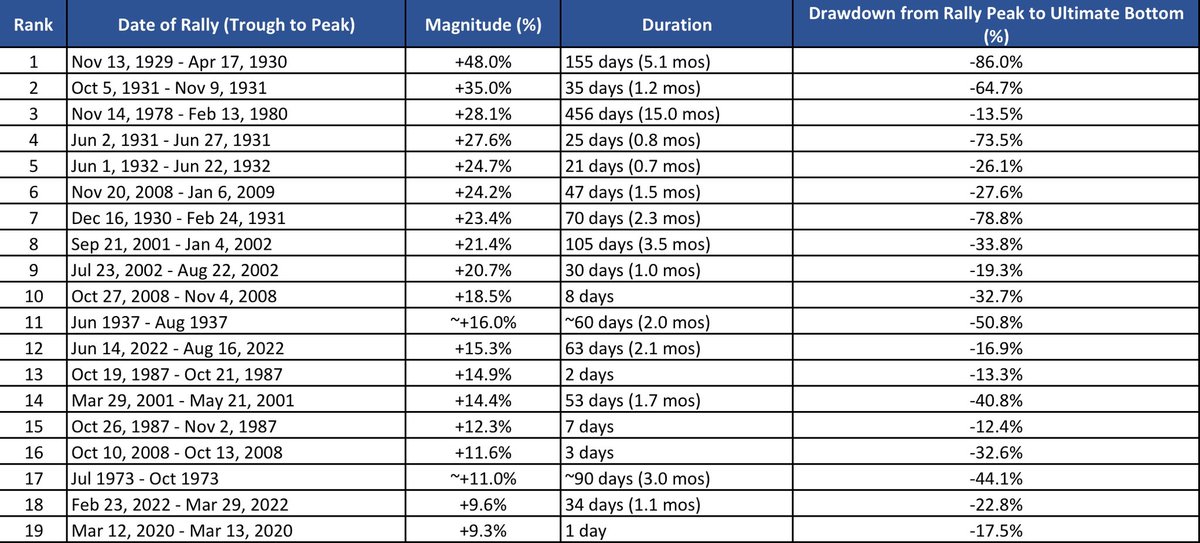
I feel badly for everyone replying to this who somehow think markets go down in a straight line.
I think SPX is not going to put in a longer term before it’s below 6000, but there will be some violent short term rallies. Like these:

Citrini@citrini
Likely going to put in a bottom on Monday…in the short term, at least.
English
WeakConqueror retweetledi

Dan wrote a good piece, but I see things differently on a few important points.
1. Buyer resistance to smartphone memory price hikes is largely confined to legacy memory like DDR4 — not memory broadly.
This distinction matters. It's true that some buyers have recently pushed back on price increases, but the target of that resistance has primarily been legacy memory like DDR4.
The market has been behaving rather abnormally of late. At one point, legacy memory like DDR4 was actually trading above DDR5 in price — a genuinely strange phenomenon. That distortion has since moderated as DDR5 prices have risen, but the spike at the time was difficult to explain through normal demand alone.
According to industry sources, a significant portion of the DDR4 price surge was attributable to Chinese stockpiling. That's what gave smartphone OEMs the room to respond — by downgrading specs on entry-level devices or trimming production volumes. In other words, there was flexibility on the legacy side.
DDR5 is a different story. As I noted in an earlier post, smartphone and PC makers accepted substantial DDR5 price increases in Q1 of this year, and even into Q2.
The implication is clear: DDR5 is not a negotiating target right now — it's closer to an essential input that buyers need to secure even at a premium.
What's more, flagship products built around DDR5 aren't easy to spec down. At most, a spec freeze is on the table.
I've also heard some buyers say they simply can't keep absorbing additional costs on legacy memory. What I failed to account for was that most market participants weren't drawing a clear enough distinction — that this dynamic was specific to legacy — and I didn't anticipate that gap in understanding.
2. Repeating a familiar playbook and adapting to structural change are two different things.
Dan portrayed investors who reflexively sell on spot price declines as sophisticated. I'd disagree.
Memory companies are no longer operating the way they used to. If anything, they're moving toward a model closer to what TSMC does — building out capacity after securing advance paymets and long-term demand visibility from key customers. Just a few days ago, Korean media reported that Samsung is in discussions to pursue prepayment-based agreements with the likes of Microsoft.
And yet the market still treats memory companies as textbook cyclicals. Even as contract structures and demand visibility that resemble TSMC's begin to emerge, the Big 3 trade at valuations that remain absurdly cheap by comparison.
Repeating the old playbook in a changed environment isn't sophistication — it's a failure to price in structural change.
I'm well aware of the counterargument. LTAs existed in prior cycles, and many were torn up when downturns hit.
But the memory companies know that better than anyone.
There's no reason to think they don't want TSMC-like valuations. And precisely because of that, the incentive to avoid repeating the old pattern — overcapacity that destroys their own cycle — is far stronger than it's ever been. They're working considerably harder than most people realize to pursue disciplined expansion rather than reflexive overbuilding.
It's disappointing to see so many participants still running the same old framework, watching spot prices tick on a screen rather than paying attention to how the industry itself is changing on the ground.
Dan Nystedt@dnystedt
English

@INArteCarloDoss I'm surprised that the regime is holding so well and I'm surprised that US/Israel were caught with their pants down w.r.t. the strait closure and drone warfare.
English

io sono ateo
ma sta roba che cazzo è????
sono impazziti
@INArteCarloDoss
First Squawk@FirstSquawk
Israeli police prevent the Latin Patriarch from holding Palm Sunday Mass at the Church of the Holy Sepulchre in Jerusalem
Italiano

@TCommodity Credo che Taiwan e Corea del Sud non avranno problemi a pagare il prezzo maggiorato dell'elio rispetto ad altri player
Italiano

La guerra in Iran stringe il cappio sull’elio e rischia di fermare il mercato dei semiconduttori
C’è un effetto collaterale della guerra in Iran: la crisi dell’elio. Un gas che non fa notizia finché non manca, ma la cui assenza può bloccare la produzione di semiconduttori, fermare le risonanze magnetiche e inceppare la catena globale dell’elettronica avanzata.
Il nodo centrale è Ras Laffan. Il complesso di QatarEnergy, tra i più grandi impianti industriali al mondo, produce circa un quinto del GNL globale e un terzo dell’elio mondiale. Gli attacchi con droni iraniani del 2 marzo ne hanno imposto lo spegnimento. Settimane dopo, un attacco missilistico balistico ha causato danni ingenti alla struttura. Le riparazioni richiederanno anni, con una riduzione stimata del 14% delle esportazioni annue di elio del Qatar a conflitto concluso. La società ha dichiarato forza maggiore il 4 marzo, sospendendo i contratti in essere.
Il prezzo spot dell’elio è già salito di circa il 25% da inizio anno sui mercati asiatici, il doppio rispetto all’incremento registrato in Europa e negli Stati Uniti. Ma il dato spot, che copre solo il 2% del mercato totale, anticipa ciò che si propagherà sui contratti a lungo termine man mano che le consegne in transito si esauriranno.
Le implicazioni industriali sono immediate. I produttori di semiconduttori utilizzano l’elio per raffreddare i wafer durante il processo di incisione, e non esiste un sostituto tecnicamente praticabile. Non si tratta di un ingrediente marginale: è un vincolo fisico di processo. Le principali applicazioni dell’elio per domanda — elettronica al 25%, medicale al 23%, industriale al 18% — disegnano una mappa di vulnerabilità che attraversa orizzontalmente l’economia globale.
I Paesi più esposti sono Corea del Sud e Taiwan.
Seul importa circa il 65% del suo elio dal Qatar e il 70% del petrolio dal Medio Oriente, quasi tutto in transito per Hormuz. Un doppio vincolo di approvvigionamento per un paese da cui dipende l’80% della produzione mondiale di chip HBM e quasi il 70% delle DRAM globali, con Samsung e SK Hynix come protagonisti.
A Taiwan, TSMC importa il 95% dell’energia e quasi tutto l’elio, con circa il 70% proveniente da Qatar e Medio Oriente. Come se non bastasse, la Corea del Sud importa il 90% del bromo, materiale essenziale nella formazione dei circuiti, da Israele.
Gli indici azionari di Seul e Taipei riflettono questa vulnerabilità: il MSCI Corea del Sud è ancora su del 38% da inizio anno, ma lontano dai massimi di febbraio quando segnava +57,7%; il MSCI Taiwan guadagna il 16,7%, contro un picco di +24,8%.
Chi ne trae vantaggio sono i produttori americani. Gli Stati Uniti sono il primo produttore mondiale di elio, davanti a Qatar, Algeria e Russia. Air Products, Linde ed ExxonMobil si trovano in una posizione di forza strutturale che la guerra ha ulteriormente consolidato.
Per concludere: l’Iran non ha colpito solo gas, petrolio e fertilizzanti, ha colpito l’elio, e con esso la spina dorsale produttiva dell’elettronica globale. Se Ras Laffan non riparte, la prossima crisi dei semiconduttori non nascerà da una guerra commerciale sui dazi, ma da un gas invisibile che nessuno aveva messo in bilancio.
Italiano

@Pressman2040 Sure the pentagon forgot the heat of the exhaust 🤣
Blocked for breaking my bullshit-o-meter
English

There's an old saying that whatever a person builds, there's a hole that will destroy it. For years, America has sold the world the idea that the F-35 Lightning II aircraft is invisible (Stealth). They spent $400 billion developing technology that deceives Radar by using Geometric Angles that scatter Electromagnetic waves. On every Radar, this massive aircraft appears like a Golf Ball, a ball that's hit by horses.
But on the day this plane entered Iranian airspace in March 2026, something happened that changed the history of modern warfare. Thermodynamics (physics) showed the world that even if you can hide your body, you can't hide your heat. I'm reiterating that physics is real.
The Pentagon's big mistake was forgetting that the engine propelling the aircraft at supersonic speeds generates a lot of heat. Iran didn't waste time looking for the plane on Radar; they switched to Infrared Search and Track (IRST). I'm also encouraging parents to push their kids, especially girls, to study physics.
To this device, the aircraft America is so proud of didn't appear like a Golf Ball or anything else; it was like a boiling pot in the middle of the night. Physics shows that anything hot emits Infrared light. Iran exploited this mistake using cheap thermal sensors to detect the world's most expensive aircraft and even managed to shoot it down.
This isn't just a loss of one plane; it's a global political disaster, indeed a disaster. Iran successfully captured the F-35's Thermal Signature and is sharing it with Moscow and Beijing. This means any defense system America built over 30 years collapsed overnight.
Now, any Russian or Chinese defense system can detect the F-35 from a distance by tracking its heat signature, without even looking at Radar. This is every air force's worst nightmare: when your billion-dollar aircraft becomes useless against a $10,000 technology.
The biggest loss is the psychological impact on pilots (The Human Element). Sure, software can be fixed, paint can be changed, but you can't erase fear from a pilot's heart. Now every F-35 pilot knows they're being watched. Where they once relied on being unseen, they'll now hesitate. This hesitation kills bravery and replaces skill with fear.
The Stealth myth is dead, and the world of war has entered a new chapter where heat will be the cause of great armies' downfall. The lesson is: never rely 100% on human-made things, because every structure has a backdoor. Physics doesn't lie; even if you blindfold the world, you can't erase the footprint you leave behind.
Nothing lasts forever.......
- Eng Viglo


English
WeakConqueror retweetledi

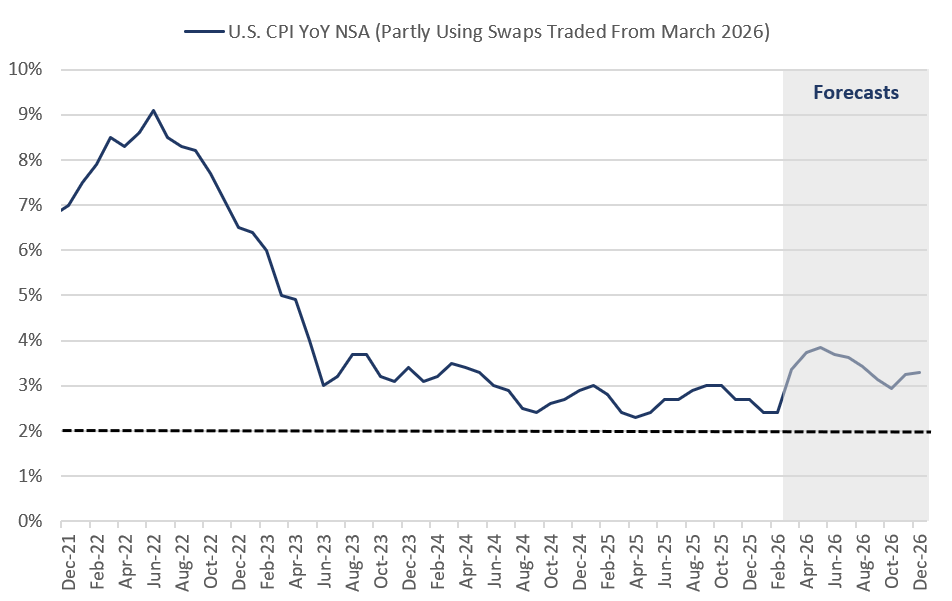
🇺🇸 #Inflation (CPI) swaps point to a peak in Q2 before a slowdown later this year.
On average, 2026 U.S. CPI should reach ~3.3% (v 2.7% in 2025).
➡ Pricing indicates that traders are assigning a high probability to a ceasefire occurring by by end of June (in line with betting markets).
➡ Additionally, as previously mentioned, shelter CPI is expected to continue normalizing in the coming months.
x.com/C_Barraud/stat…


English

🇪🇺 #Weekahead | Biggest Euro-Zone Price Jump Since 2022 Seen in First #G20 Data - Bloomberg
bloomberg.com/news/articles/…
English

Sure, let’s see how it will work-out for them
BFM@BFMTV
Guerre du Moyen-Orient: des Israéliens veulent coloniser le Sud-Liban
English
WeakConqueror retweetledi


@aleabitoreddit We are nearing the bottom, but we are not there yet...
I don't see enough despair yet.
English

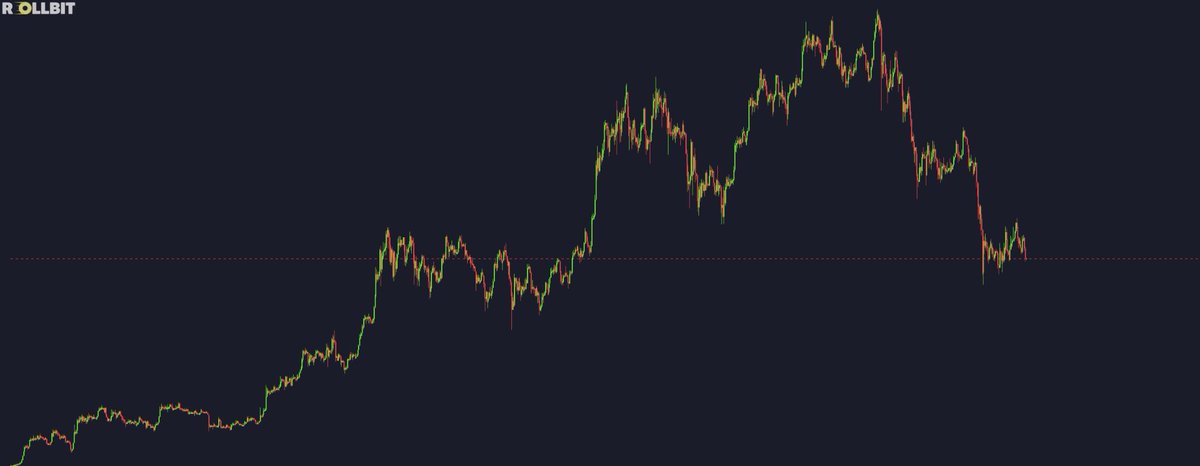
Markets are now in: “Bitcoin is Dead” section of the Rainbow Chart.
The last two times were:
- December 2022 - $18,650
- September 2023 - $25,210
Today: $66,666.43
As Bitcoin drops more, is this the end of the famous Rainbow Chart v2?
Especially as a psychological log regression model that retail follows.
Or is this a buying opportunity?
Could be yes to both.

English
WeakConqueror retweetledi

WeakConqueror retweetledi

Prismark: "T-Glass Supply Shortage from Japan's Nittobo Set to Widen"
Market research firm Prismark recently forecast that the supply shortage of T-glass from Japanese materials manufacturer Nittobo will continue to deepen. While Nittobo is expanding its T-glass production capacity, demand is growing at an even faster pace. When factoring in capacity expansion plans from competitors such as Taiwan Glass, the overall market supply shortage could ease somewhat — though competitor technology capabilities and big tech procurement decisions remain key variables.
T-glass is a glass fiber yarn used as a raw material for low-CTE (coefficient of thermal expansion) copper-clad laminates (CCL). As a key input material for printed circuit boards (PCBs), it is used not only in high-end smartphones such as Apple's iPhone, but also in semiconductor substrates for servers. T-glass is technically a Nittobo trade name, but given Nittobo's near-monopoly market position, the term has become the industry-wide generic for low-CTE CCL glass fiber yarn.
As the substrate area used in AI servers and data centers continues to grow, major tech companies including NVIDIA, Google, and Amazon have been exclusively sourcing T-glass from Nittobo. As a result, demand for T-glass began exceeding Nittobo's production capacity in the second half of 2024. At the time, multiple big tech companies approached Nittobo directly requesting capital investment in additional capacity, and Nittobo has been ramping production accordingly — but demand is outpacing supply even faster.
According to Prismark, Nittobo's T-glass production capacity stood at 500,000 square meters (㎡) as of Q1 this year. The combined capacity of all competing players in the market still falls short of Nittobo's alone. Estimated competitor capacities are as follows: Taiwan Glass (Taiwan) — 100,000 ㎡; Taishan Glass (China) — 50,000–100,000 ㎡; Grace Fabric Technology (China) — 100,000 ㎡; Nan Ya Plastics (Taiwan) — 50,000 ㎡. These companies have yet to meet big tech's technical qualification standards, leaving Nittobo in a position of effective market monopoly.
Both Nittobo and its competitors are expanding capacity. Nittobo plans to invest $530 million in its T-glass segment, and by 2028, its T-glass production capacity could double from the first half of this year. Looking at 2028 capacity estimates by vendor, Nittobo's share is projected at approximately 55%, with all other players collectively accounting for the remaining 45%.
However, when considering only Nittobo-qualified supply, Prismark forecasts that the T-glass shortage will persist through this year and next, and is expected to widen even further by 2028.
While not included in the Prismark report, one domestic PCB industry source noted: "Competitors are also undergoing T-glass technology evaluations with big tech, but the technology gap versus Nittobo remains substantial. Unless big tech changes its policy of using only Nittobo's product, the T-glass supply shortage will be difficult to resolve for the foreseeable future."
For reference, a lower coefficient of thermal expansion means less substrate warpage during high-temperature processing — an advantage for both substrate enlargement and finer circuit patterning requirements. When substrates warp during the fine circuit formation process at high temperatures, circuit traces can break. In Korea, companies such as Doosan and LG Chem produce CCL. Domestic companies that purchase CCL to manufacture semiconductor substrates include Samsung Electro-Mechanics, LG Innotek, Daeduck Electronics, Korea Circuit, and Simtech.

English

@RiccardoTrezzi Demography is destiny.
Quali sono i fattori che fanno aumentare il tasso di fertilita'?
L'austerita' non credo abbia aiutato cmq...
Italiano

🇮🇹 La cosa curiosa dei commenti che vedo sulle proiezioni di crescita (aggregata) è che nessuno ricorda il primo e determinante fattore per l’🇮🇹: la demografia. Siamo e saremo ultimi da/per molto tempo per una semplice ragione: abbiamo la demografia più avversa al mondo (o quasi).
È inutile dare la colpa all’Euro o all’Europa o all’ “austerità”, etc… siamo un Paese anziano e che non fa figli. Senza invertire questa tendenza, il resto per me è secondario.
OECD ➡️ Better Policies for Better Lives@OECD
#OECD Interim #EconomicOutlook: G20 GDP growth projections for 2026. 🇮🇳 6.1% 🇮🇩 4.8% 🇨🇳 4.4% 🇸🇦 4.0% 🇹🇷 3.3% G20 3.0% 🇦🇷 2.8% 🇦🇺 2.3% 🇺🇸 2.0% 🇰🇷 1.7% 🇧🇷 1.5% 🇲🇽 1.3% 🇨🇦 1.2% 🇿🇦 1.2% 🇯🇵 0.9% 🇫🇷 0.8% 🇩🇪 0.8% 🇬🇧 0.7% 🇷🇺 0.6% 🇮🇹 0.4% 🔗oe.cd/6pf
Italiano
WeakConqueror retweetledi

• be Konosuke Matsushita
• born into a wealthy Japanese family in 1894
• your father gambles the entire family fortune on the rice market and loses everything when you are 4 years old
• forced to drop out of school at age 9 to sweep floors in a bicycle shop just to survive
• you look around and realize electricity is the future, so you join the Osaka Electric Light Company and quickly become their youngest inspector
• at 22, you invent an improved, highly efficient light socket in your spare time
• you show it to your boss. He tells you it's useless and will never sell.
• most people would accept the rejection and stay at the safe corporate job
• you immediately quit, take your life savings of 100 yen, and start a company in your tiny dirt-floor apartment with your wife and teenage brother-in-law
• you nearly starve. You literally have to pawn your wife’s kimono just to buy food.
• finally, you get a hit with a two-way socket, but you notice a bigger problem: bicycle lamps in 1920s Japan use candles, which constantly blow out in the wind
• you engineer a bullet-shaped, battery-powered bicycle lamp that lasts for 40 hours
• you take it to the massive wholesalers. They laugh at you and refuse to stock it.
• you execute the ultimate asymmetric marketing hack: you completely bypass the gatekeepers
• you take the lamps directly to local bicycle shop owners, leave them in the stores for *free*, and tell them: "Turn it on. If it stays lit, pay me. If it dies, keep it."
• the lamps work perfectly. The public goes crazy. You have successfully hacked the distribution network.
• you formulate the "Water-Tap Philosophy": the stoic belief that an entrepreneur's duty is not just to make money, but to mass-produce goods until they are as cheap and abundant as tap water, eradicating poverty through sheer industrial scale
• WWII happens. The Allies dismantle your massive company and order you to be fired and purged from the industry.
• your own factory workers—who you treated with radical respect instead of viewing them as disposable cogs—literally protest the US military government
• your union petitions General Douglas MacArthur himself, demanding you be reinstated as CEO
• the US military is so confused by a labor union fighting *for* their corporate boss that they actually agree
• you rebuild from the ashes to create **Panasonic**
• live to 94, leaving behind a legacy built on the idea that business is a philosophical pursuit of human betterment
"If you make an honest mistake, I will forgive you. But if you compromise on our core values, I will fire you."


English
WeakConqueror retweetledi