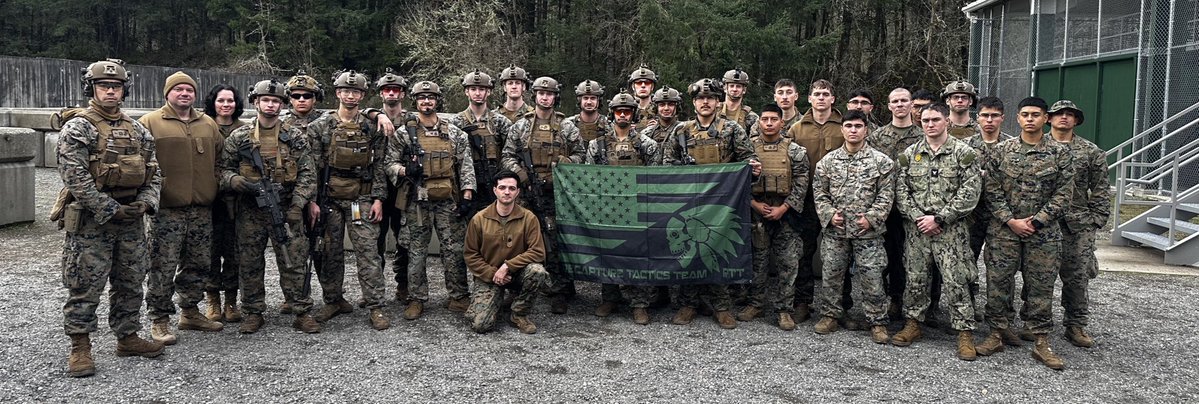
You don’t see a tracker tab very often.
And it’s the only tab I have. (And unauthorized for wear at the time). 🤣. Absolutely one of the best courses I’ve attended.
US Army Combat Trackers Course
The US Army Combat Trackers Course (also known as the Tactical Tracking Course or Combat Tracker Course) is specialized training in visual man-tracking (combat tracking). Soldiers learn to read "spoor"—human signs left behind like footprints, broken vegetation, scuff marks, discarded items, and waste—to pursue enemies, gather intelligence, locate hide sites or IED emplacers, conduct counter-IED operations, rescue personnel, and deny sanctuary.
It revives an ancient skill set influenced by Rhodesian, Malaysian, and Vietnam-era tactics. It serves as a low-tech force multiplier that complements modern tools like drones or night vision. It is not a permanent TRADOC institutional school with an ATRRS course number (like Ranger or Airborne School), nor an MOS. Instead, it is unit-requested, installation-specific, or delivered via Mobile Training Teams (MTTs) from contractors. Training typically lasts 10–14 days (~100 hours) and targets infantry, scouts, medics, MPs, MI, EOD, and small-unit leaders.
Recent and historical examples
- January 2023, Fort Huachuca, Arizona (with 111th MI Brigade and 18th MP Detachment soldiers): A two-week Tactical Tracking Course combined classroom mornings with afternoon field practicals. Soldiers tracked people/vehicles by boot prints or tire treads, aged spoor, practiced stealth/camouflage/counter-tracking, identified antitank mines/IED indicators, and operated in urban areas, zero-illumination nights (with NVGs/IR), and harsh weather. The capstone was a realistic scenario tracking wounded high-value targets, applying EPW procedures, providing medical care, setting up a helicopter LZ, and executing Black Hawk extraction. All teams succeeded. Participants called it “the most beneficial training I have ever received” and recommended every squad have at least one qualified tracker.
- 2011, Fort Hood, Texas (1st Cavalry Division): An 11-day course with similar focus on team-based spoor interpretation, macro-tracking to close gaps, and integration with aviation/night vision.
- Earlier versions existed at Fort Huachuca around 2008–2010s as the “US Army Combat Tracking School,” often led by experts with Rhodesian/Selous Scouts lineage. It has also appeared in the 25th Infantry Division’s Jungle Operations Training Course (JOTC) in Hawaii.
Typical curriculum
The standard 10-day/100-hour course is split into two 5-day phases:
Phase I (basics): Introduction to combat tracking, glossary/terms, team roles/formations, visual indicators & interpretation, human step dynamics, rules of tracking, lost spoor procedures, individual techniques, immediate action drills, advanced shooting, site exploitation.
Phase II (advanced): Aging spoor, counter-tracking/deception, camouflage/concealment/movement, surveillance, night tracking, urban tracking, mine/IED detection (C-IED lanes).
Variants exist for jungle environments, EOD/C-IED focus, or advanced urban/small-team tracking. Emphasis is on naked-eye/optics work plus optional integration with K-9s, drones, or intel assets.
How to attend
- Not open to the public or walk-ons.
- Units request through their S3/training officer or directly contact providers like Tactical Tracker Training School for an MTT.
- Some installations host periodic courses.
- Check with your chain of command or installation training office. It is especially popular for light infantry, scout teams, and EOD/route-clearance units. Refreshers are recommended.
🚨 To Active Duty Marines, Service Members Facing a Moral or Political Dilemma:
Dislike for the Honorable POTUS?
Control the controllables.
Dislike for the Honorable VPOTUS?
Control the controllables.
Dislike for the Honorable SecWar?
Control the controllables.
The Iran situation? Gaza? Israel? Tucker Carlson? Candace Owens?
Control the controllables.
The Honorable Elon Musk?
Get over it.
As an NCO, your one priority if war breaks out is crystal clear: Bring your Marines/Soldiers home. Channel your energy into that—not insubordination, not venting in front of your troops, not letting your big mouth become a liability.
We live by “Praise in public, disagree in private” for a reason because tongue holds the power of life and death and that’s the line between leadership and failure.
That’s the difference between you and me—Semper Fidelis 🦅🌎⚓️
Cocaine was once promoted as a medical “miracle drug,” and Sigmund Freud became one of its most famous early researchers and users. In the early 1880s, he wrote enthusiastically about its supposed benefits in what later became known as the Cocaine Papers. Whether Freud himself was addicted remains a matter of speculation.
The drug, derived from the South American coca plant, was first isolated in the mid-1800s but didn’t gain major medical attention until the 1880s. At that time, many physicians experimented with it without understanding its dangerous side effects or addictive potential.
Freud likely began using cocaine while working at the Vienna General Hospital. Inspired by reports of its energizing effects on exhausted soldiers, he obtained a sample for research and personal use. In letters to his fiancée, he described the drug’s mood-lifting effects and his intention to praise it in print.
In 1885, Freud published On Coca, arguing that cocaine had significant medical value. He continued using it into the 1890s, stopping only after nearly harming a patient while under its influence. His early enthusiasm mirrored that of many doctors who were slow to recognize the risks.
By the turn of the century, rising addiction rates made the dangers impossible to ignore. Cocaine appeared in countless unregulated tonics and sodas, prompting growing public concern. Pharmacists pushed for restrictions, and in 1914 the United States outlawed the drug under the Harrison Narcotic Act.
Cool historical photos: bit.ly/4cFoZT1
51-YEAR-OLD GOGGINS REENLISTS AND CHOOSES SUFFERING AGAIN
@davidgoggins has reenlisted in the U.S. Air Force at age 51 as a master sergeant, entering the elite Special Warfare Training Wing after receiving an age waiver.
The move places him back into one of the military’s toughest pipelines, where most candidates decades younger fail, despite Goggins already completing Navy SEAL training, Army Ranger School, and Air Force Tactical Air Controller training earlier in his career.
Most people midlife crisis buy a sports car, he picked a two-year training pipeline designed to break humans.
Source: NewsForce
Wow.
Joe Kent just revealed the last thing Charlie Kirk said to him:
“The last time I saw Charlie Kirk on this Earth was in June, in the West Wing.”
“He looked me in the eye and he said … Joe, stop us from getting into a war with Iran.”
“One of President Trump’s closest advisors was vocally advocating for us to not go to war with Iran and for us to rethink, at least, our relationship with the Israelis.”
“And then he’s suddenly publicly assassinated and we’re not allowed to ask any questions about that?”
“The investigation that I was a part of [with] the National Counterterrorism Center, we were stopped from continuing to investigate.”
“But there was still a lot for us to look into that I can’t really get into.”
“There’s unanswered questions.”
“We know, because of the text messages that have been made public, that Charlie was under a lot of pressure from a lot of pro-Israel donors.”
@joekent16jan19@TuckerCarlson
The U.S. Intelligence Community just released its 2026 Annual Threat Assessment, and it’s worth paying attention to.
The big takeaway is this:
The threat environment is not just about one war, one country, or one headline anymore. It is layered.
The report warns about cyber threats to U.S. networks and critical infrastructure from China, Russia, Iran, North Korea, and ransomware groups. It also warns that AI is accelerating modern warfare, intelligence analysis, cyber operations, and autonomous systems.
It highlights China as a long term strategic challenger with growing power in AI, critical minerals, supply chains, cyber capability, and pressure around Taiwan. The report also warns that any serious Taiwan conflict could disrupt semiconductors, trade, transportation, and global markets.
It says Russia remains an enduring threat with advanced conventional and nuclear forces, gray zone tactics, sabotage, cyber attacks, and the risk of escalation in a conflict that could spiral into something far worse.
The report also says cyber attacks against U.S. infrastructure are not theoretical. These actors are actively preparing, pre positioning, and probing for advantage. At the same time, WMD modernization is expanding, delivery systems are improving, and the threshold for use could become harder to predict.
My view:
Preparedness is not paranoia. It is just recognizing that modern risk is interconnected.
Power grid issues
Cyber disruption
Supply chain shocks
Financial instability
Regional wars spilling into global consequences
AI making all of it faster and harder to read in real time
This is why resilience matters.
Not because panic helps
Not because collapse is guaranteed tomorrow
But because fragile systems break faster than most people think
If you have food, water, backup power, communications, medical supplies, cash, and a plan, you are already ahead of the curve.
Most people wait for certainty.
Prepared people build margin before certainty arrives.
- Recon Survival
Watching MAGA influencers attack a decorated combat veteran like Joe Kent was wild.
Congratulations — you just alienated the entire veteran community. And that’s a big community.
If Joe Kent was a “leaker,” why did that claim appear after he resigned?
And if he’d been removed from intel briefings, he’d be useless in a counterterrorism role.
So why wasn’t he fired?
Either they kept a leaker in a top security job… or the smear came after.
One of the strangest things about DMT is how after you smoke it once, the smell is seared into your memory.
A white-yellow crystal that smells like a Payless shoe store stuffed with mothballs somehow evokes a more powerful nostalgia than your grandma's chocolate chip cookies
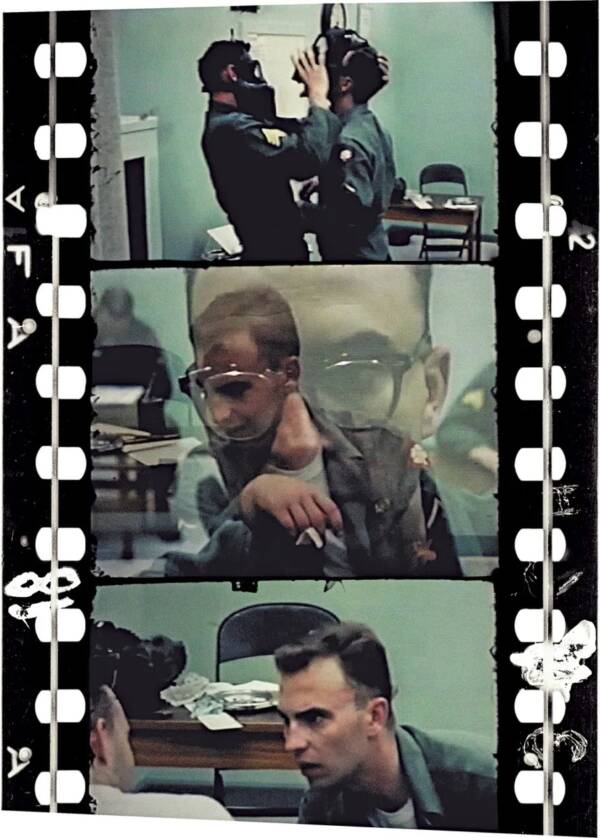
The U.S. Army dosed over 7,000 of its own soldiers with LSD at a classified facility in Maryland called Edgewood Arsenal.
Volunteers were told they'd be testing "new Army field jackets and clothing." No mention of drugs.
One soldier who had second thoughts was told: "You're going to do it. If you don't, you're going to jail. You're going to Vietnam either way — before or after."
The program ran for 27 years. The same government classified LSD as Schedule I while it was still administering it to teenagers in uniform.