Matias Woloski

6.7K posts

Matias Woloski banner
Matias Woloski

Matias Woloski

@woloski

Co-Founder of @auth0 (now @okta). Building @portalbosque_ 🌳 Digging into education + AI 👀

Katılım Mayıs 2008
2.3K Takip Edilen17.9K Takipçiler
Sabitlenmiş Tweet
Matias Woloski
Matias Woloski@woloski·
¿que herramientas le damos a un niño que será parte de la sociedad del 2030/40?
Español
11
8
77
17.2K
Matias Woloski
Matias Woloski@woloski·
beautifully articulated, this is the way. Everyone becomes a builder. I am doing a version of this with @portalbosque_ but using Telegram and @openclaw. From the front desk ppl to the psychopedagogue to finance, they watch how I iterate with the agents in different groups, learn, and start doing it themselves.
tobi lutke@tobi

x.com/i/article/2052…

English
0
1
21
5.8K
Matias Woloski
Matias Woloski@woloski·
my head these days 🤣 (a ver quien agarra la refe jaja)
Matias Woloski tweet media
Español
4
0
10
1.9K
Wiki Chaves
Wiki Chaves@wikichaves·
@woloski @portalbosque_ Hola Mati! Creo entender lo que estás buscando y creo que puedo ayudar. Querés que hablemos? Abrazo!
Español
1
0
2
65
Matias Woloski
Matias Woloski@woloski·
this is a good framing. I am about to hire 1/2 people for @portalbosque_ and this is something I think about a lot. hire people who can take on a problem space and iterate through it with taste and judgement. Developing judgment and taste feels much more closer to a designer than an engineer but shipping to prod requires eng. 🦄
Gokul Rajaram@gokulr

POD-OF-ONE: THE NEW ORG BUILDING BLOCK As a @coinbase board member, t’s been a privilege to watch @brian_armstrong @emiliemc, and the Coinbase team build a true AI-native company. Brian's whole post is worth reading in depth. I want to focus in on one thing that Coinbase is testing: “one-person product teams.” Most of the AI discourse has focused on one-person companies. The more powerful and more broadly applicable construct will likely be one-person teams inside companies. The old product org split context across 3 people. The designer held the user experience. The PM held the customer and prioritization context. The engineer held the code and systems context. Coordination was the price you paid to combine those views into one shipping decision. Agents reduce that coordination cost. A single high-agency person can now ask agents to draft flows, write code, run QA, summarize customer feedback, generate variants, check edge cases, and produce release notes. This model rewards a very specific kind of builder: • Technical enough to inspect the work • Product-minded enough to choose the right problem • Tasteful enough to reject mediocre output • Fast enough to ship before the org forms around the idea The scarce skill is judgment. One strong person with customer context and good taste can now do the work of a small pod. One weak person with agents just creates more output for someone else to review. This changes how early-stage founders should hire. The most useful hiring question is now: “Can this person own the outcome end-to-end?” That’s a higher bar than a functional job description. It blends product sense, technical range, design taste, writing clarity, and operating discipline. The title matters less. The span matters more. Call it pod-of-one thinking. A pod-of-one builder can go from ambiguous customer pain to shipped v1 without waiting for specs, mocks, tickets, handoffs, or meetings. Agents fill in missing labor. The human carries the context. Teams still matter. They should form when the surface area is real: multiple customer segments, production risk, complex GTM loops, or enough product depth that specialization pays for itself. Before that, a pod-of-one may be the fastest shipping unit in the company. Founders: hire people who can be pods-of-one, who can carry the whole problem in their head and use agents to increase their throughput.

English
2
0
14
2.7K
Matias Woloski
Matias Woloski@woloski·
@zenorocha build a klaviyo alternative. it gets expensive quickly mvp: define dynamic segments based on events + shopify integration
English
2
0
1
438
Zeno Rocha
Zeno Rocha@zenorocha·
I'm doing roadmap planning this week. What should we focus on for the next few months?
English
27
0
48
7.9K
Matias Woloski
Matias Woloski@woloski·
hace unos 4 años arranqué un proyecto musical con un grupo de amigos en Punta del Este, donde vivo. Las Portal JAM (dentro del proyecto "madre" @portalbosque_). 3+ horas de musica en vivo, más de 20 musicos/cantantes que van rotando. La hacemos una vez por mes y tocamos hitazos de todos los tiempos. El video es un peqeño sample de la ultima jam que hicimos la semana pasada, donde vinieron 350 personas (fuera de temporada en PdE) Tocar en vivo es de las cosas que más disfruto hoy. La energía que se siente es algo realmente único y especial. Ahora vamos a tocar en Buenos Aires por primera vez. Si queres sentir un poco de esa energía venite! 🎫 passline.com/eventos/la-jam…
Español
3
8
122
12.6K
Matias Woloski
Matias Woloski@woloski·
this company is building a product for medium/large organizations that helps you map all your processes and pain points by interviewing employees with an AI. This is what consultants from Accenture, BCG, Delloite, etc typically do to assess and provide insights. Great use of AI.
Nico Lopez@nicoaitech

We've talked to hundreds of people inside large enterprises about how they work. The pattern is always the same: they know something isn't working, but they can't tell you exactly what process is broken, how much it's costing, or what to fix first. Traditional consulting takes months to answer those questions. We built Horizon AI(usehorizon.ai) to solve that. The platform runs AI-powered conversations with employees across the entire organization, and each one surfaces what used to take weeks of interviews and consultants. When you do that at scale, you get a complete map of every process, inefficiency, prioritized, quantified, and ready to act on. Not a report. Not a dashboard. A system that goes from discovery to impact. Here's what that looks like in 60 seconds.

English
4
5
43
23.7K
Matias Woloski
Matias Woloski@woloski·
developers will turn into *ai ops engineers*. those who become good at it can make lots of money
Aaron Levie@levie

The more enterprises I talk to about AI agent transformation, the more it’s clear that there is going to be a new type of role in most enterprises going forward. The job is to be the agent deployer and manager in teams. Here’s the rough JD: This person will need to figure out what are the highest leverage set of workflows on a team are (either existing or new ones) where agents can actually drive significantly more value for the team and company. In general, it’s going to be in areas where if you threw compute (in the form of agents) at a task you could either execute it 100X faster or do it 100X more times than before. Examples would be processing orders of magnitude more leads to hand them off to reps with extra customer signal, automating a contracting review and intake process, streamlining a client onboarding process to reduce as many straps as possible, setting up knowledge bases than the whole company taps into, and so on. This person’s job is to figure out what the future state workflow needs to look like to drive this new form of automation, and how to connect up the various existing or new systems in such a way that this can be fulfilled. The gnarly part of the work is mapping structured and unstructured data flows, figuring out the ideal workflow, getting the agent the context it needs to do the work properly, figuring out where the human interfaces with the agent and at what steps, manages evals and reviews after any major model or data change, and runs and manages the agents on an ongoing basis tracking KPIs, and so on. The person must be good at mapping the process and understanding where the value could be unlocked and be relatively technical, and has full autonomy to connect up business systems and drive automation. This means they’re comfortable with skills, MCP, CLIs, and so on, and the company believes it’s safe for them to do so. But also great operationally and at business. It may be an existing person repositioned, or a totally net new person in the company. There will likely need to be one or more of these people on every team, so it’s not a centralized role per se. It may rile up into IT or an AI team, or live in the function and just have checkpoints with a central function. This would also be a fantastic job for next gen hires who are leaning into AI, and are technical, to be able to go into. And for anyone concerned about engineers in the future, this will be an obvious area for these skills as well.

English
1
5
16
5.7K
Matias Woloski
Matias Woloski@woloski·
I was talking about this today with a startup. I do the smallest spec possible and start iterating from there with prompts. I prefer that over a huge spec upfront… this way I can steer the ai towards my vision/taste and at the same time the feedback loop helps me cristalize the vision iteratively x.com/realBigBrainAI…
English
2
2
16
1.9K
Matias Woloski
Matias Woloski@woloski·
@tomasmalamud @steipete si ahora estoy pagando extra usage de claude y usandolo solo en modo "escribir spec" y despues lo paso a codex
Español
0
0
0
153
Tomás Malamud
Tomás Malamud@tomasmalamud·
@woloski @steipete Tal cual. Para programar Codex es buenísimo y se le escapan muchos menos bugs que a Claude, pero se nota bastante la falta de calidez. A veces es difícil entenderlo incluso
Español
1
0
0
634
Matias Woloski
Matias Woloski@woloski·
after a week using codex gpt 5.4 on openclaw I miss claude models a bit :/ I mean gpt is ok but lacks agency, character, proactiveness, forget stuff,… I think I used all the tips/tricks @steipete posted about set it to openai-codex/gpt5.4 tweak the soul tried different thinking modes any other tip?
English
3
0
4
2.3K
Matias Woloski retweetledi
Dustin
Dustin@r0ck3t23·
Elon Musk thinks the entire education system is built on a broken assumption. That every student should learn the same thing. At the same speed. In the same order. At the same time. Musk: “Everyone goes through from like 5th grade to 6th grade to 7th grade like it’s an assembly line. But people are not objects on an assembly line.” The model was designed for a factory economy. Standardized inputs. Predictable outputs. That economy is gone. The assembly line is gone. But the education system still runs on its logic. A student who masters algebra in two weeks sits through eight more weeks because the calendar says so. A student who struggles gets dragged forward because the schedule doesn’t wait. Neither is being served. Both are being processed. Musk: “Allow people to progress at the fastest pace that they can or are interested in, in each subject.” AI doesn’t teach a classroom. It teaches a student. One at a time. Every time. It skips what a student already knows. It finds where they’re stuck and approaches it from a different angle. It adjusts in real time. Not at the end of a semester when the damage is already done. A student obsessed with basketball learns fractions through shooting percentages. A student who builds in Minecraft learns geometry through architecture. The subject doesn’t change. The entry point does. No teacher with thirty students can do this. Not because they lack skill. Because the math doesn’t work. AI doesn’t have that constraint. Musk: “You do not need to tell your kid to play video games. They will play video games on autopilot all day. So if you can make it interactive and engaging, then you can make education far more compelling.” The brain isn’t broken. The format is. Kids learn complex systems and strategic thinking for hours voluntarily. Then walk into a classroom and can’t focus for twenty minutes. That’s not a discipline problem. That’s a design problem. Musk: “A university education is often unnecessary. You probably learn the vast majority of what you’re going to learn there in the first two years. And most of it is from your classmates.” Four years. Six figures of debt. And the real value comes from the people sitting next to you. Not the institution charging you. The degree doesn’t certify knowledge. It certifies endurance. Musk: “If the goal is to start a company, I would say no point in finishing college.” The system was built to train employees. If you’re not trying to be one, it has nothing left to offer you. Every lecture. Every textbook. Every curriculum. Now available instantly. Personalized to any learner. Adapted to any pace. The question isn’t whether the old model survives. It’s how long we keep forcing students through it while the replacement already exists.
English
2.5K
9.6K
38.1K
21.7M
Matias Woloski
Matias Woloski@woloski·
karpathy bringing clarity
Andrej Karpathy@karpathy

Judging by my tl there is a growing gap in understanding of AI capability. The first issue I think is around recency and tier of use. I think a lot of people tried the free tier of ChatGPT somewhere last year and allowed it to inform their views on AI a little too much. This is a group of reactions laughing at various quirks of the models, hallucinations, etc. Yes I also saw the viral videos of OpenAI's Advanced Voice mode fumbling simple queries like "should I drive or walk to the carwash". The thing is that these free and old/deprecated models don't reflect the capability in the latest round of state of the art agentic models of this year, especially OpenAI Codex and Claude Code. But that brings me to the second issue. Even if people paid $200/month to use the state of the art models, a lot of the capabilities are relatively "peaky" in highly technical areas. Typical queries around search, writing, advice, etc. are *not* the domain that has made the most noticeable and dramatic strides in capability. Partly, this is due to the technical details of reinforcement learning and its use of verifiable rewards. But partly, it's also because these use cases are not sufficiently prioritized by the companies in their hillclimbing because they don't lead to as much $$$ value. The goldmines are elsewhere, and the focus comes along. So that brings me to the second group of people, who *both* 1) pay for and use the state of the art frontier agentic models (OpenAI Codex / Claude Code) and 2) do so professionally in technical domains like programming, math and research. This group of people is subject to the highest amount of "AI Psychosis" because the recent improvements in these domains as of this year have been nothing short of staggering. When you hand a computer terminal to one of these models, you can now watch them melt programming problems that you'd normally expect to take days/weeks of work. It's this second group of people that assigns a much greater gravity to the capabilities, their slope, and various cyber-related repercussions. TLDR the people in these two groups are speaking past each other. It really is simultaneously the case that OpenAI's free and I think slightly orphaned (?) "Advanced Voice Mode" will fumble the dumbest questions in your Instagram's reels and *at the same time*, OpenAI's highest-tier and paid Codex model will go off for 1 hour to coherently restructure an entire code base, or find and exploit vulnerabilities in computer systems. This part really works and has made dramatic strides because 2 properties: 1) these domains offer explicit reward functions that are verifiable meaning they are easily amenable to reinforcement learning training (e.g. unit tests passed yes or no, in contrast to writing, which is much harder to explicitly judge), but also 2) they are a lot more valuable in b2b settings, meaning that the biggest fraction of the team is focused on improving them. So here we are.

English
0
0
1
1K
Matias Woloski
Matias Woloski@woloski·
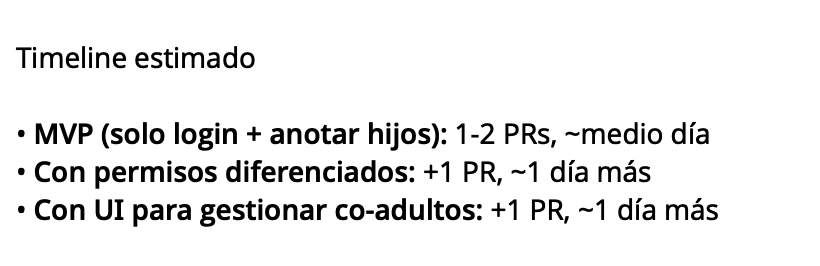
gotta love these fake estimations from AI models... they do their best to look like humans 🤣
Matias Woloski tweet media
English
5
0
20
7K
Andrés Matte
Andrés Matte@andresmatte·
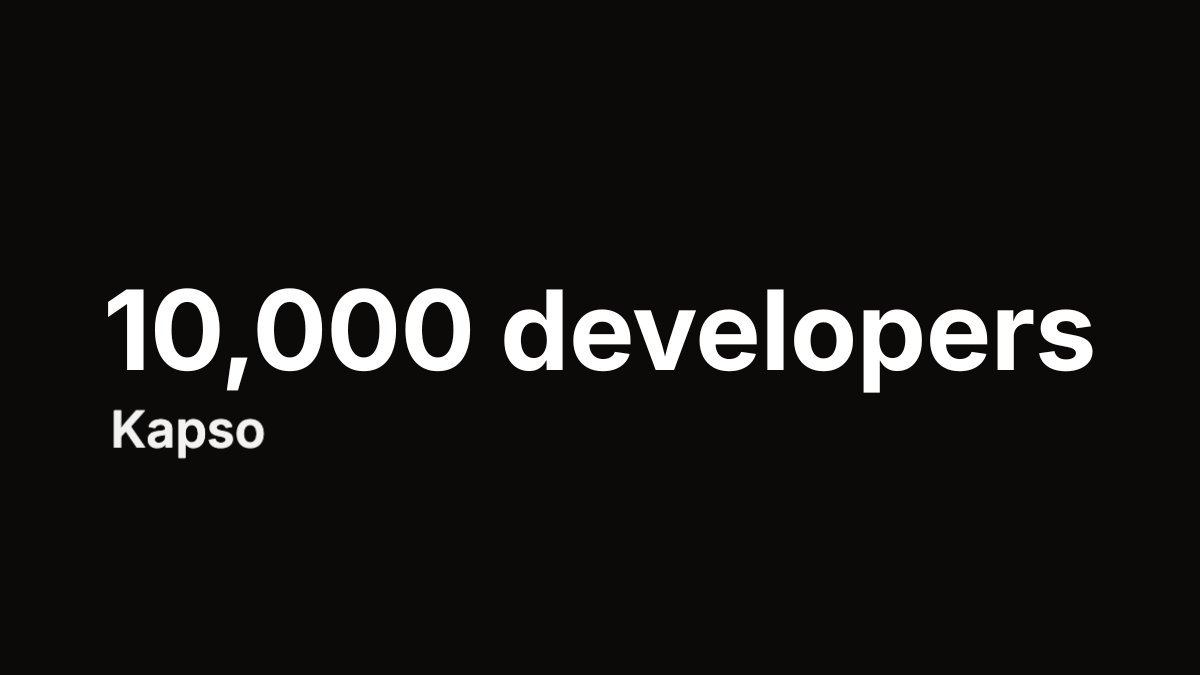
Two months ago, Kapso hit 5,000 developers. Today, we just crossed 10,000. We doubled in 10 weeks. No sales team. No paid ads. Just developers building on WhatsApp and telling other developers about it. WhatsApp is the operating system for millions of businesses around the world. We’re building the infrastructure layer that makes it all work: the best way for agents and developers to build, ship, and operate on WhatsApp. We have a lot more to share soon.
Andrés Matte tweet media
English
30
7
247
28.9K