Sabitlenmiş Tweet

What if robots could remember and learn from their own fastest success, even when it came from a “lucky” trial?
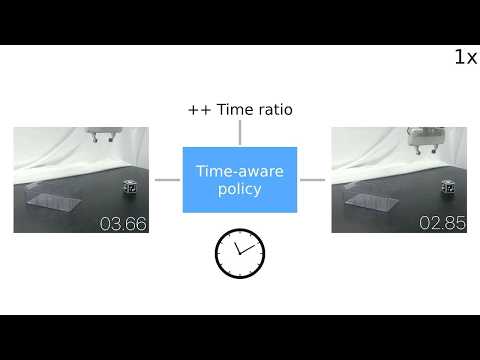
People often treat efficiency as something to optimize after success. Our new work, Temporal Self-Imitation Learning (TSIL), takes a different view: fastest success itself can be a useful training signal in reinforcement learning.
TSIL turns rare fast successes discovered during interaction into two learning signals: adaptive temporal targets that encourage faster completion in a self-paced way, and fast-success self-imitation that helps preserve efficient behaviors before they are forgotten.
Across 15 challenging long-horizon manipulation tasks, TSIL improves learning efficiency, task-completion efficiency, and training stability. If training your robot policy feels like endless tuning, give TSIL a shot😄!
Grateful to my advisor @Boyuan__Chen for the guidance and support on this work.
- Paper: arxiv.org/abs/2606.19752
- Project page: generalroboticslab.com/TSIL
- GitHub: github.com/generalrobotic…
English