Latest update as of 9pm, Friday.
All the screens where ‘Agra’ is playing.
This is it. You can watch the film here, and only here, as of now.
Please amplify, and let’s make this count 📷📷
@KanuBehl#MohitAgarwal#PriyankaBose@saregamaglobal#Agra
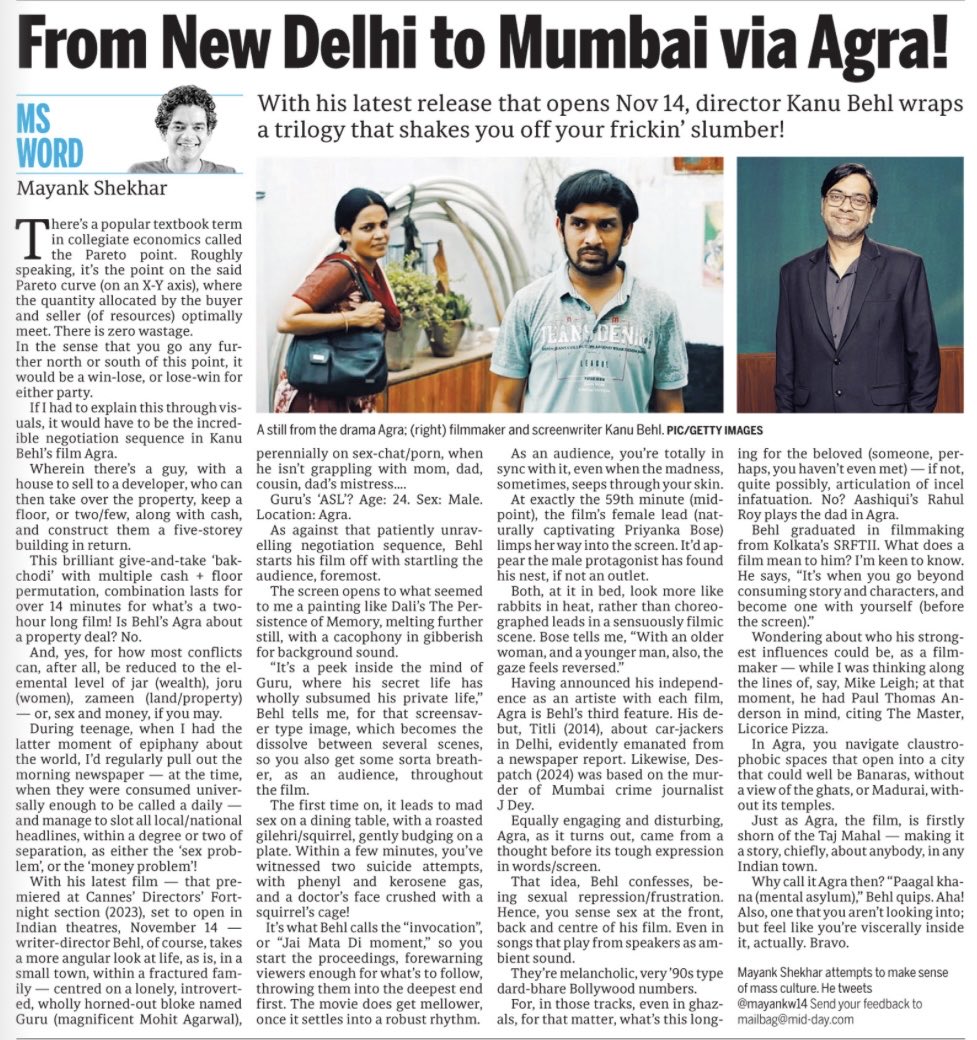
There’s a popular textbook term in collegiate economics called the Pareto point.
Roughly speaking, it’s the optimal point on the said Pareto curve (on an X-Y axis), where the quantity allocated by the owner & recipient (of resources) efficiently meet. There is zero wastage.
In the sense that if you go any further north or south of this point, it would be a win-lose, or lose-win for either party.
If I had to explain this through visuals, it would have to be the incredible negotiation sequence in Kanu Behl’s film Agra.
Wherein there’s a guy, with a house to sell to a developer, who can then take over the property, keep a floor or two/few, along with cash, and construct them a five-storeyed building in return.
This brilliant give-and-take ‘bakchodi’ with multiple cash + floor permutation, combination lasts for over 14 minutes for what’s a two-hour long film! Is Behl’s Agra about a property deal? No.
Also, yes, for how most conflicts can, after all, be reduced to the elemental level of jar (wealth), joru (women), zameen (land/property) — or, sex and money, if you may.
During teenage, when I had the latter moment of epiphany about the world, I’d regularly pull out the morning newspaper — at the time, when they were consumed universally enough to be called a daily — and manage to slot all local/national headlines, within a degree or two of separation, as either the ‘sex problem’, or the ‘money problem’!
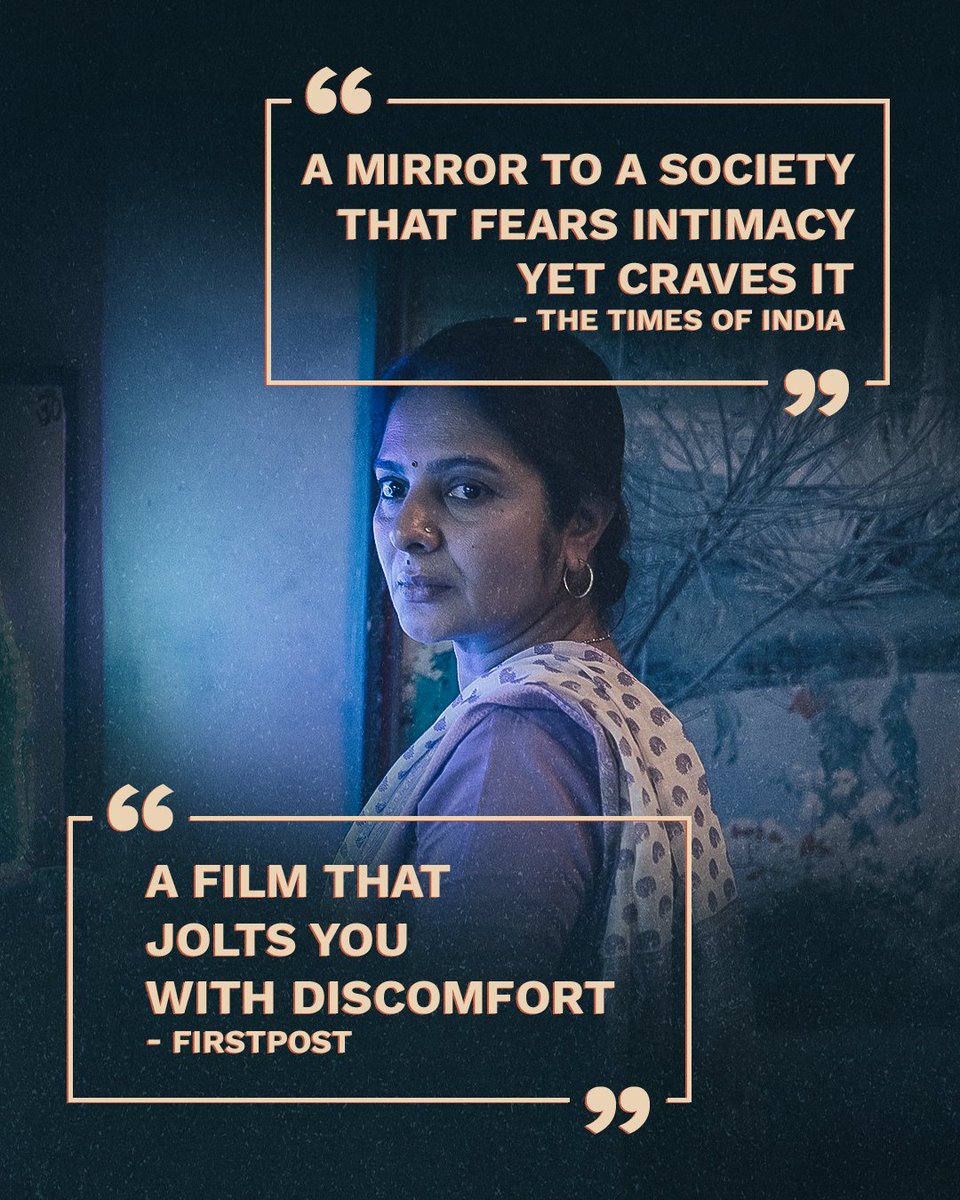
With his latest film — that premiered at Cannes’ Directors’ Fortnight section (2023), set to open in Indian theatres, Nov 14 — writer-director Behl, of course, takes a more angular look at life, as is, in a small town, within a fractured family — centred on a lonely, introverted, wholly horned-out bloke named Guru (magnificent Mohit Agarwal), perennially on sex-chat/porn, when he isn’t grappling with mom, dad, cousin, dad’s mistress….
Guru’s ‘ASL’? Age: 24. Sex: Male. Location: Agra. What about the film’s DNA?
Column👇🏽(link in bio).
#Agra review – A fever dream about sex, small towns, and the rot inside our polite Indian homes.
Caught a private screening of the original uncut version of #Agra by @KanuBehl at the infamous Shiva Preview Theatre (fyi, that sound system is phenomenal).
Everyone online keeps jacking off to the sex scenes and missing the point (The film got leaked because of an actor’s glorious scenes, hate the word - bold). We talk about sex like embarrassed virgins pretending to be experts.
But #Agra isn’t about sex, it’s about how sex haunts lonely people who don’t know what to do with their desires.
#KanuBehl isn’t making a “bold” film, he’s performing an autopsy. Every character here has been mangled by the weight of wanting. Their need for touch, power, ownership, it all becomes the same desperate clawing.
Sex isn’t just pleasure here, although the film does play to sensory pleasures in a flow, It’s something closer to breathing through a dirty, sweat drenched pillow. And through that, Behl has somehow made one of the most Indian films in recent memory.
Small-town India, where everyone’s horny, broke, and the family is just another cage you fuck up inside. People chase money and orgasms with equal desperation.
Everyone’s house is half-constructed, both physically and emotionally. We’ve all seen such homes where,
the father juggling mistresses,
the mother muttering her practical martyrdom,
the once-beautiful “other woman” rotting in her own compromise,
the son growing up to be both a victim and monster.
And Behl, thankfully, doesn’t wrap it in allegorical crap like half the festival films do. He shoots the grotesque straight. You want to look away but can’t.
Guru is repressed, pathetic, dangerous. But you understand him anyway, which is worse. He’s the guy you’d never trust, yet can’t stop understanding. You look at him and realise India is full of such men…horny, humiliated, marinated in repression.
#Agra isn’t disturbing because it’s “shocking.” It’s disturbing because it’s accurate. And what’s refreshing is that Behl doesn’t judge.
He just opens the wound and watches. No speeches, no morals. Most filmmakers can’t shut up. Behl knows when to step aside.
He doesn’t explain India, he lets India reveal itself in sweat, gossip, and cathartic moans.
It’s a wild, flawed, honest piece of work and probably the most truthful Indian film about repression since #MonsoonWedding for me.
#Agra will mess you up. Not because it’s shocking. Because it’s recognisable.
Because somewhere in the dark, as you watch these characters claw at desire, you’ll realise that most people live in some version of that house.