Yuzhou Chang

175 posts

Yuzhou Chang banner
Yuzhou Chang

Yuzhou Chang

@Yuzhou_Chang

Joint postdoc at OSUMC and BIDMC. Graph signal processing Spatial omics Graph representation learning

Ohio, USA Katılım Mart 2017
224 Takip Edilen129 Takipçiler
Yuzhou Chang retweetledi
Guangyu Wang
Guangyu Wang@Guangyu_Wang01·
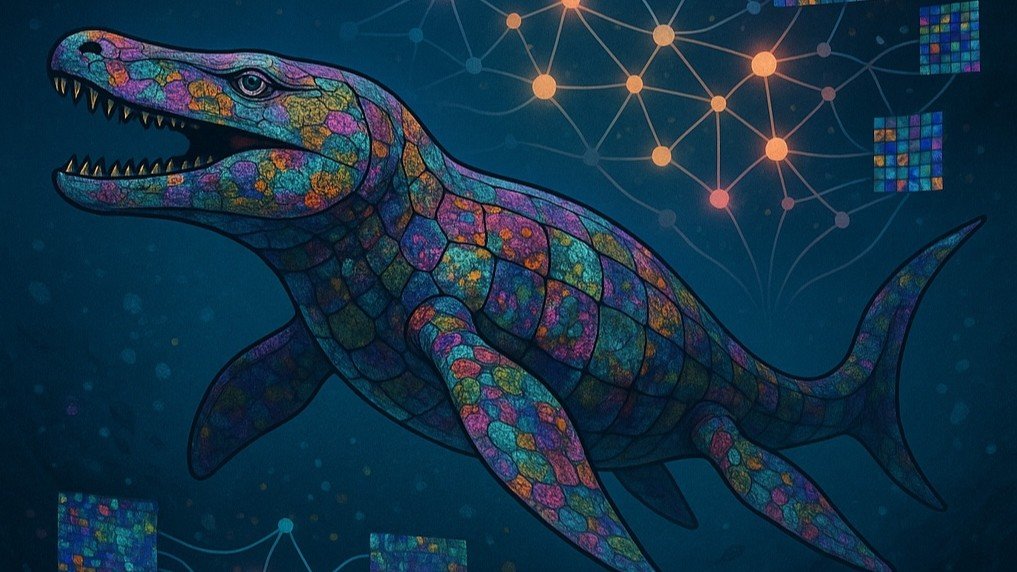
We are so happy to publish our new foundation model in Nature Methods. we trained OmiCLIP, a vision-omics due modalities model to bridge pathology image and transcriptomic, and Loki, a platform using OmiCLIP as backbone for ST and HE image cross analysis. nature.com/articles/s4159…
English
8
27
129
10.1K
Yuzhou Chang retweetledi
Victoria Slocum
Victoria Slocum@victorialslocum·
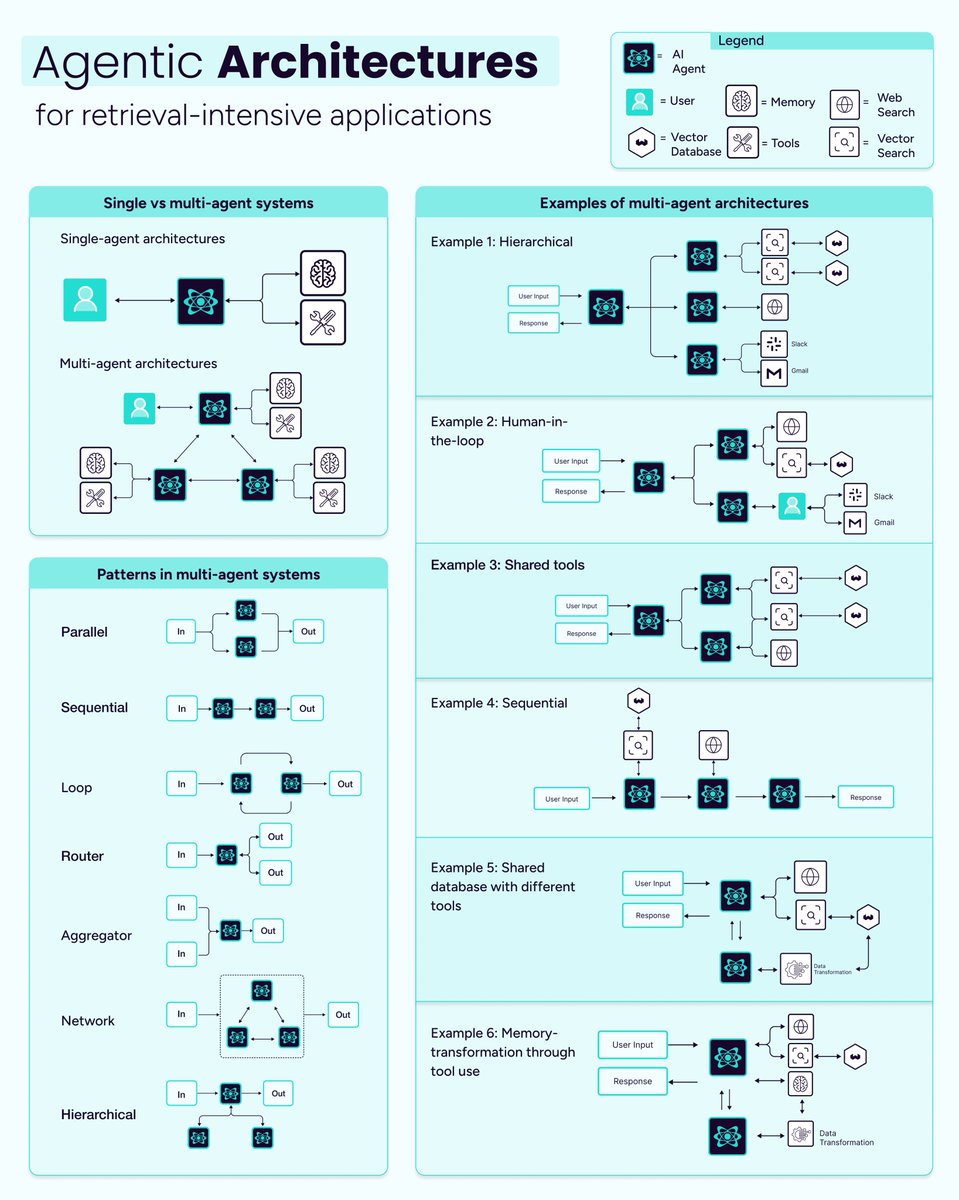
Multi-agent architectures are the FUTURE Here are 6 different types: 𝟭. 𝗛𝗶𝗲𝗿𝗮𝗿𝗰𝗵𝗶𝗰𝗮𝗹 (𝗩𝗲𝗿𝘁𝗶𝗰𝗮𝗹) 𝗔𝗿𝗰𝗵𝗶𝘁𝗲𝗰𝘁𝘂𝗿𝗲 A supervisor agent orchestrates multiple specialized agents. 𝘌𝘹𝘢𝘮𝘱𝘭𝘦: • One agent retrieves information from internal data sources • Another agent specializes in public information from web searches • A third agent specializes in retrieving information from personal accounts (email, chat) 𝟮. 𝗛𝘂𝗺𝗮𝗻-𝗶𝗻-𝘁𝗵𝗲-𝗟𝗼𝗼𝗽 𝗔𝗿𝗰𝗵𝗶𝘁𝗲𝗰𝘁𝘂𝗿𝗲 Incorporates human verification before proceeding to next actions, used when handling sensitive information. 𝟯/𝟱. 𝗡𝗲𝘁𝘄𝗼𝗿𝗸 (𝗛𝗼𝗿𝗶𝘇𝗼𝗻𝘁𝗮𝗹) 𝗔𝗿𝗰𝗵𝗶𝘁𝗲𝗰𝘁𝘂𝗿𝗲 Agents communicate directly with one another in a many-to-many fashion. Forms a decentralized network without strict hierarchical structure. 𝟰. 𝗦𝗲𝗾𝘂𝗲𝗻𝘁𝗶𝗮𝗹 𝗔𝗿𝗰𝗵𝗶𝘁𝗲𝗰𝘁𝘂𝗿𝗲 Agents process tasks in sequence, where one agent's output becomes input for the next. 𝘌𝘹𝘢𝘮𝘱𝘭𝘦: Three sequential agents where: • First query agent retrieves information from vector search • Second query agent retrieves additional information from web search based on first agent's findings • Final generation agent creates a response using information from both query agents 𝟱. 𝗗𝗮𝘁𝗮 𝗧𝗿𝗮𝗻𝘀𝗳𝗼𝗿𝗺𝗮𝘁𝗶𝗼𝗻 𝗔𝗿𝗰𝗵𝗶𝘁𝗲𝗰𝘁𝘂𝗿𝗲 Includes agents dedicated to transforming data. 𝘌𝘹𝘢𝘮𝘱𝘭𝘦: • A transformation agent that enriches data at insert-time or transforms existing collections There are also some other patterns that can be combined with these architectures: • 𝗟𝗼𝗼𝗽 𝗽𝗮𝘁𝘁𝗲𝗿𝗻: Iterative cycles for continuous improvement • 𝗣𝗮𝗿𝗮𝗹𝗹𝗲𝗹 𝗽𝗮𝘁𝘁𝗲𝗿𝗻: Multiple agents working simultaneously on different parts of a task • 𝗥𝗼𝘂𝘁𝗲𝗿 𝗽𝗮𝘁𝘁𝗲𝗿𝗻: A central router determining which agents to invoke • 𝗔𝗴𝗴𝗿𝗲𝗴𝗮𝘁𝗼𝗿/𝘀𝘆𝗻𝘁𝗵𝗲𝘀𝗶𝘇𝗲𝗿 𝗽𝗮𝘁𝘁𝗲𝗿𝗻: Collecting and synthesizing outputs from multiple agents Check out this ebook for more info: weaviate.io/ebooks/agentic…
Victoria Slocum tweet media
English
17
358
1.7K
179.8K
Yuzhou Chang retweetledi
Lambda
Lambda@LambdaAPI·
Multi-node NVIDIA HGX B200-accelerated clusters are available NOW, on-demand through Lambda 1-Click Clusters.
English
1
11
80
301.2K
Yuzhou Chang retweetledi
Ahmet F. Coskun
Ahmet F. Coskun@ahmetfcoskun·
Spatial proteomics is here, but spatial functional proteomics? Here is our Nature BME paper on spatial protein interactomics (nature.com/articles/s4155…) illuminating how 47 proteins co-localize/ interact within 20 nm and their function in tissues. @naturemethods @rita_strack
Nature Methods@naturemethods

The wait is over!! We are thrilled to announce that we have chosen Spatial Proteomics as 2024’s Method of the Year! 🥳 For more on Spatial Proteomics and a road map to this special issue, please see this month’s Editorial or read on in this thread. nature.com/articles/s4159…

English
3
50
297
32.9K
Yuzhou Chang retweetledi
Matt Dancho (Business Science)
RIP Data Scientists. The Generative AI Data Scientist is NOW what companies want. This is actually good news. Let me explain:
Matt Dancho (Business Science) tweet media
English
16
214
1.5K
259.6K
Yuzhou Chang
Yuzhou Chang@Yuzhou_Chang·
Lastly, I am very excited to integrate GSP, a novel mathematical theory based on graphs with novel types of spatial omics data. Moving forward, we will continue to explore and develop new theoretical models in conjunction with spatial biotechnology. ⏭️ To be continued ⏭️
English
0
0
1
99
Yuzhou Chang
Yuzhou Chang@Yuzhou_Chang·
Fifth, we apply SGCC across multiple samples, obtaining a series of SGCC scores as spatial factors. We then use differential expression analysis or time-series modeling to calculate gene expressions that correlate with these spatial factors. Yao has previously described.
English
1
0
1
92
Yuzhou Chang
Yuzhou Chang@Yuzhou_Chang·
Following Yao's post @yeoyaoyu , I'm very excited to share the principles of spectral graph cross-correlation (SGCC). I would also like to express my gratitude for the support and guidance from my co-mentors @SizunJ and @QinMaBMBL.
YaoYu Yeo@yeoyaoyu

Spatial proteomics & transcriptomics are amazing technologies that have transformed how we study diseases. Can we do more? Here's our new preprint that combines both assays into one! (massive thanks to @SizunJ @Yuzhou_Chang Huaying @QinMaBMBL et al. biorxiv.org/content/10.110…

English
1
3
8
2.1K
Yuzhou Chang retweetledi
YaoYu Yeo
YaoYu Yeo@yeoyaoyu·
Spatial proteomics & transcriptomics are amazing technologies that have transformed how we study diseases. Can we do more? Here's our new preprint that combines both assays into one! (massive thanks to @SizunJ @Yuzhou_Chang Huaying @QinMaBMBL et al. biorxiv.org/content/10.110…
English
5
28
95
32.1K
Yuzhou Chang retweetledi
Scholarship for PhD
Scholarship for PhD@ScholarshipfPhd·
Best Practices for Using AI When Writing Scientific Manuscripts (1/3)
Scholarship for PhD tweet media
English
3
283
1.1K
121.9K