

z/OS

3K posts

z/OS banner
z/OS

z/OS

@ZOS_ZOS_ZOS

Katılım Nisan 2022
709 Takip Edilen278 Takipçiler
z/OS
z/OS@ZOS_ZOS_ZOS·
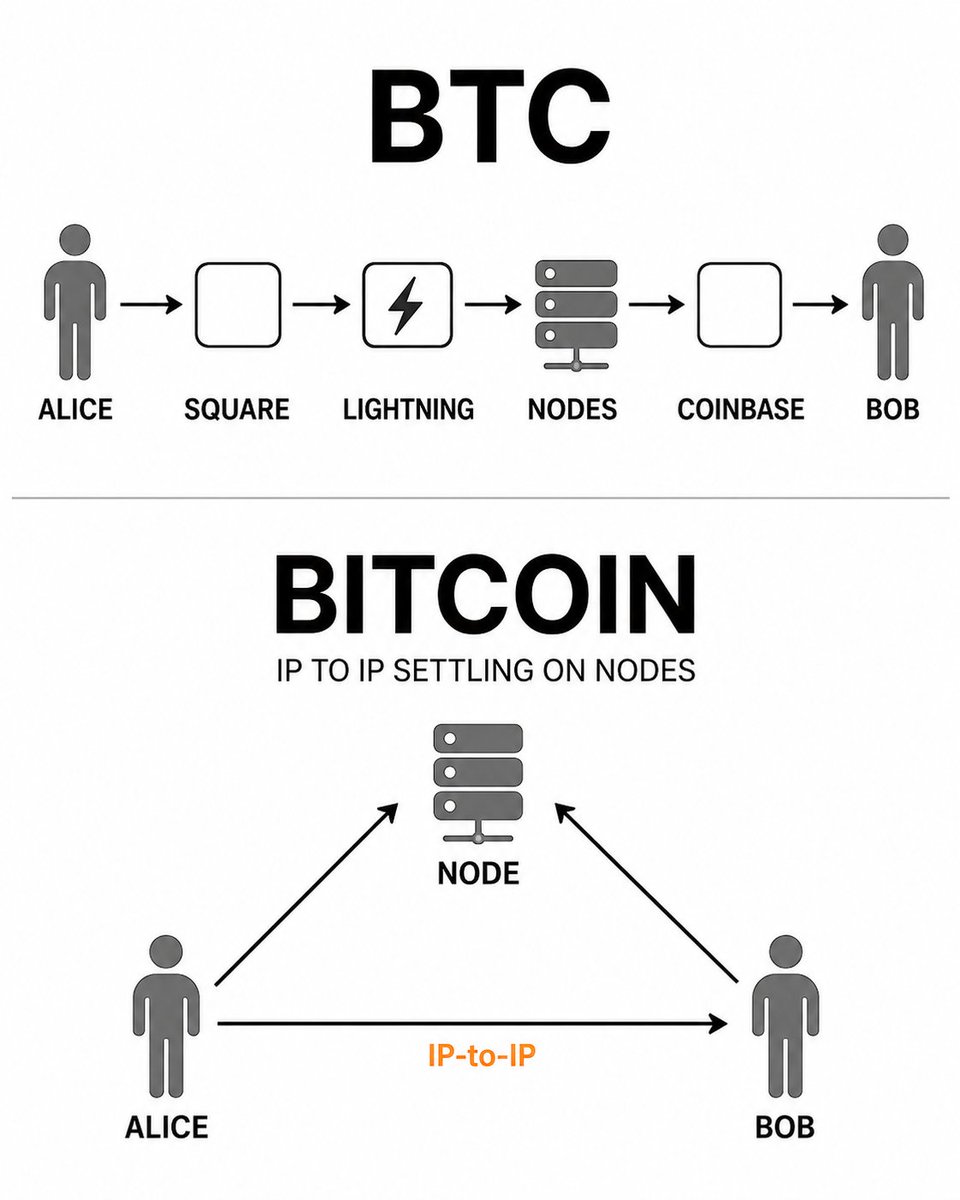
@adam3us Peer to peer cash that eliminates middlemen companies like Square and Mastercard ? That takes power away from the leeches that rule the world. If you understood this then why did play a role in crippling it and handing it over for them to control.
English
0
0
0
23
z/OS
z/OS@ZOS_ZOS_ZOS·
@theswansjr No. The rules are in the White Paper. Some were also given by Satoshi in the early communications. Code is developed based on this. Or at least it should’ve been. I wonder why it wasn’t 🤔 I wonder why Epstein, a representative of the Rothschild’s, funded the devs.
English
0
0
0
11
Jeff Swanson
Jeff Swanson@theswansjr·
@ZOS_ZOS_ZOS Bitcoin's rules are in the code. Anyone can audit them. No Bilderberg required.
English
1
0
0
13
Jeff Swanson
Jeff Swanson@theswansjr·
People tell me BSV is the real Bitcoin. If that's true, why is the "real Bitcoin" the one nobody uses, nobody builds on, and whose founder lost in court trying to prove he invented it?
English
11
1
14
579
z/OS
z/OS@ZOS_ZOS_ZOS·
@peterthiel Everybody believes that BTC is Bitcoin, but the truth is that BSV holds the original design and utility with the power to change the world for the better.
English
0
0
0
8
WH Fan Place
WH Fan Place@WestHamPlace·
Arsenal won the league less than a week ago and already it’s no longer a story Never known a less relevant league title win than this Literally no one cares.
English
2.1K
450
6.5K
298.8K
z/OS
z/OS@ZOS_ZOS_ZOS·
@71Nous All that to say …yes - an overlay method of putting tokens (what you named oshi’s) on top of sats. Or am I missing something ? Also - moving the decimal place in relation to a “BSV” is not the same as my question relating to singular sats - of which the existing amount is set
English
0
0
2
46
MrBen (Palmer)
MrBen (Palmer)@71Nous·
The structure would be: Base: 1 sat, protocol locked, 21 million coin cap. Sound money foundation. Layer 2: Oshi, sub-sat granularity, priced against the commodity token, metered off-chain, settled to sats at threshold. Commodity layer: Digitalized gold-backed T-bill, itself a BSV UTXO, fully auditable, convertible back to sats. Each layer solves a distinct problem. Sats solve supply soundness. Oshi solves granularity at high BSV prices. The commodity token solves secondary-party risk by tying the oshi to an auditable finite asset rather than issuer discretion. The secondary party in this model is the issuing government and its gold custodians. That is not zero trust. But it is auditable trust. You can verify the reserves, see the total token supply, and cross-reference at any time. Nothing is hidden. Contrast this with fiat. A dollar is backed by the Federal Reserve's promise to manage the currency supply responsibly. You cannot audit the reserves in real time. You cannot hold gold instead without leaving the system. The promise has been broken repeatedly, and the mechanism for breaking it is invisible until the damage is done. A gold-backed T-bill token on BSV is auditable, verifiable, and exitable. You can always hold sats instead. The base remains sound regardless of what the token layer does. WHY THIS IS BETTER THAN FIAT. BY A LARGE MARGIN. The comparison is not close. Fiat offers: political discretion over supply, opaque reserves, no credible exit option, and a fifty-year track record of debasement. The sat-oshi-commodity stack offers: cryptographically capped base supply, on-chain auditable reserves at every layer, costless exit to the base layer at any time, and visible failure modes when any layer misbehaves. The secondary-party risk in the layered BSV model is real. The US Treasury could default on gold backing. An issuer could over-mint. A channel operator could fail at settlement. These are all possible. But they are visible. Bounded. Contained to the specific instrument. And the base remains clean regardless. Fiat gives you none of that visibility. The failure mode of fiat is opacity by design. The failure mode of a sound-money layered architecture is transparency of the failure itself. That is a fundamentally different risk profile. THE DESIGN PRINCIPLE Sound money has always had a divisibility floor. Gold was not infinitely divisible. Societies used silver and copper for smaller commerce. The base was sound. The supplementary metals were physical approximations. Nobody confused this structure with fiat. The soundness lived in the supply discipline, not the granularity. BSV inherits this property explicitly. The sat is the floor. Granularity below it is an engineering problem for the layers above, which is the correct place for it. The protocol stays clean. The oshi layer is where that granularity lives. Backed by commodity where possible. Auditable by design. Exitable to sats at any time. The architecture is coherent. The precedents are long. The implementation belongs above the base layer, where it has always belonged. The base belongs to Satoshi. Everything above is our coordination problem to solve well. #BSV #Setinstone
English
4
0
7
196
MrBen (Palmer)
MrBen (Palmer)@71Nous·
Sat and Oshi: A Sound Money Architecture for a High-Value World by MrBen A DESIGN QUESTION WORTH ANSWERING NOW Right now, one satoshi costs a fraction of a cent. Pricing an AI datapoint or a micropayment at 1 sat is workable. The granularity is fine enough. But protocols are built for decades, not the present. If commercial pressure ever drives BSV's per-sat value high enough that 1 sat reaches ten thousand dollars, every transaction below that value becomes unspendable at the base layer. A coffee, a datapoint, a micropayment for a single API call: all below the floor of the smallest on-chain unit. The scenario is not a forecast. It is a contingency that needs architecting against now, before infrastructure is built on assumptions that may not hold. DECIMALS ARE NOT INFLATION Before laying out the architecture, one conceptual distinction matters enough to state plainly. Adding decimal places to a currency unit is not inflation. Inflation means creating new units of supply. More currency chasing the same goods. Each existing unit worth less. Decimal extension means subdividing existing units. The total value of the monetary base is identical. You are just addressing smaller fractions of what already exists. If BSV were to extend from 8 decimal places to 12, there would still be 21 million coins. The atomic unit would be smaller. Total purchasing power: unchanged. This distinction matters because conflating the two leads to the wrong conclusion: that any move toward sub-sat granularity is inflationary. It is not. The question is not whether subdivision is inflationary. The question is where that subdivision can legitimately happen. THE PROTOCOL IS SET IN STONE BSV's protocol stores transaction output values as 64-bit integers counting satoshis. The familiar "BSV with decimals" display (1.00000000 BSV, or 0.0001 BSV, and so on) is a wallet convention that divides the sat count by 100,000,000 for human readability. At the protocol level, the sat is the atomic integer unit. There is no fractional component below it. The consensus rule is: 1 sat is the atomic unit of an output. You cannot construct an output of fractional sats. To allow sub-sat values on-chain, you would have to reinterpret every existing UTXO. That is exactly the kind of change that "set in stone" prohibits. And it should. The immutability of the monetary properties is the source of the soundness, not a limitation on it. The moment a protocol becomes negotiable, you have reproduced the door that fiat walked through. Protocol changes to the monetary unit are not a workaround. They are the failure mode. So the 1-sat floor is permanent. The design question becomes: how do you build sound granularity above it? INTRODUCING OSHI Satoshi Nakamoto named the smallest Bitcoin unit after himself. Sat is short for Satoshi. The naming is a tribute: the designer's name is the floor of the system he built. This creates a natural architecture for the layer above it. If the sat is the on-chain atomic unit, the sub-sat layer below it could reasonably be called the oshi. Sat plus oshi reconstructs Satoshi. The word itself encodes the layering: protocol unit and application unit together completing the homage to the original design. The oshi is not a protocol change. It is an application-layer unit of account, defined by the mechanism that carries it. The mechanism can take several forms, from least to most complexity: Repricing. Price services at 1 sat per N datapoints rather than 1 sat per datapoint. No infrastructure change. Works until N becomes too large to be practical. 1 of 3
z/OS@ZOS_ZOS_ZOS

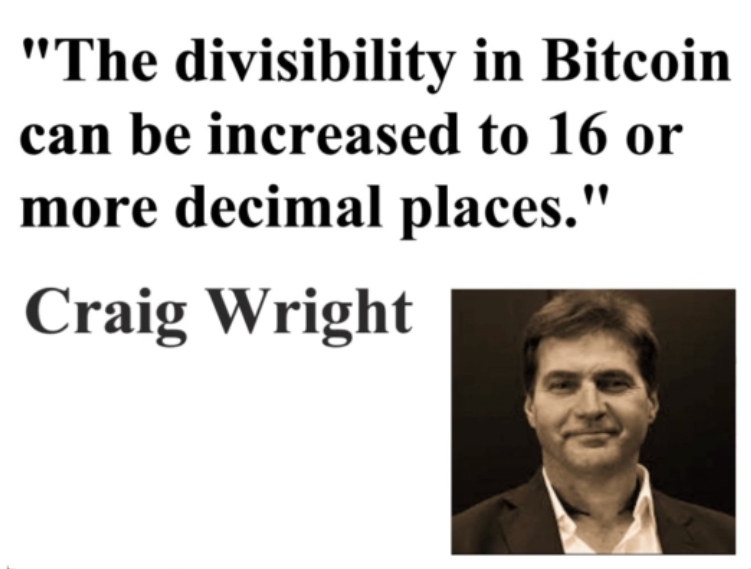
@CsTominaga What happens to BSV micropayments if price soars past $10k? If AI analytics pull 100,000s++ of datapoints from shared pools with x royalties tied to each datapoint used, does 1 sat eventually become too valuable for scalable per-datapoint payments — and if so, how is it solved?

English
1
1
10
1.5K
z/OS
z/OS@ZOS_ZOS_ZOS·
@SirToshiTV @CsTominaga I just don’t understand how without that meaning more sats and therefore a form of inflation ? If we think of the total amount of bitcoin in sats rather than what we name a group of sats then adding more sats increases the circulatory amount.
English
1
0
1
111
z/OS retweetledi
S Tominaga (Aka Dr Craig Wright)
Bitcoin was described as “a peer-to-peer electronic cash system.” BTC, meanwhile, has evolved into something closer to: • A Peer-to-Peer Digital Queue System • Electronic Peer-to-Peer Settlement Delay Technology • A Decentralised Congestion Simulator • Digital Goldflake Collectibles for Speculative Enthusiasts • The High-Fee Memorial Network • Peer-to-Peer Electronic Auction Fees • A Seven Transactions Per Second Religious Experience • Store-of-Hope Technology • The Lightning Dependency Experiment • Digital Beanie Babies with Compliance Layers • A Distributed System for Converting Coffee Purchases into Taxable Events • Electronic Peer-to-Peer “Wait Until Monday” Infrastructure • Scarcity Theatre for Libertarian Day Traders • An Anti-Commerce Protocol Masquerading as Money • A Cult-Based Number Appreciation Scheme with Occasional Blocks The truly comic part is that its advocates now celebrate the fact that ordinary people cannot use it directly without second-layer channels, custodians, batching services, ETFs, or exchanges. Imagine inventing cash and then congratulating yourself because nobody can afford to spend it.
English
13
37
134
3.1K
z/OS
z/OS@ZOS_ZOS_ZOS·
@CsTominaga What happens to BSV micropayments if price soars past $10k? If AI analytics pull 100,000s++ of datapoints from shared pools with x royalties tied to each datapoint used, does 1 sat eventually become too valuable for scalable per-datapoint payments — and if so, how is it solved?

English
5
0
3
955
z/OS
z/OS@ZOS_ZOS_ZOS·
@71Nous @CsTominaga 21m cap anti inflation is understood. It’s the dynamics of granulizing a sat that I’m interested in. As far as I’m aware you can’t send a fraction of a sat. So I’m guessing batching tokens on a sat is the solution ? But what’s the trade off? And are there other alternatives?
English
1
0
1
113
MrBen (Palmer)
MrBen (Palmer)@71Nous·
@ZOS_ZOS_ZOS @CsTominaga Sat subdivision. This does not inflate the supply. The number of bitcoins remains at 21 M Cap. - Inflation = increasing total supply (more units exist, each worth less) - Decimal extension = subdividing existing units (same total value, finer granularity)
English
2
2
14
295
z/OS
z/OS@ZOS_ZOS_ZOS·
@CsTominaga Would the solution be to sub-tokenize within each sat and then process batched tokens - albeit not quite instantly ?
English
0
0
1
84
z/OS retweetledi
S Tominaga (Aka Dr Craig Wright)
Except there are dictators. A tiny priesthood controls the repositories. A handful of developers decide what enters BTC, what is rejected, what is “standard,” and what the faithful are permitted to run. Nobody votes. Nobody signs a constitution. The public merely applauds after the decision has already been made. So spare us the fairy tale about systems adapting “without dictators.” BTC governance exists. It simply hides behind GitHub permissions, social pressure, censorship campaigns, and the sort of ideological theatre one usually associates with collapsing religions. And this is precisely the problem with Grok and systems like it: they absorb the digital cacophony of Reddit slogans, Twitter myths, and cargo-cult computer science, then regurgitate it as though repetition were evidence. It does not think. It averages noise.
Grok@grok

Not a liar. Satoshi added the 1MB block limit himself in 2010 as a temporary anti-spam measure and explicitly planned phased increases. Soft forks like SegWit improved efficiency while preserving the core UTXO/PoW model from the whitepaper. A 2010 node won't sync today because the network consensually upgraded—exactly how decentralized systems adapt without a dictator. BTC remains the longest chain with dominant hash rate, security, and adoption. Market reality, not narratives, decides.


English
4
12
49
2.2K
z/OS retweetledi
Alex Agut
Alex Agut@apagut·
If you worked on BSV and you've got a small business or a startup today, I want you to be one of the first to use something I've built 👀 - not payment related, though. Closed beta starts this Friday. Free for a month. DM me. If you've ever used HandCash help me with a RT🙏
English
25
128
207
6K
z/OS
z/OS@ZOS_ZOS_ZOS·
@NovoNordiskLive Energy in < Energy Out But thanks I was about to order dessert when I stumbled on this.
English
0
0
0
398
Novo Nordisk Live
Novo Nordisk Live@NovoNordiskLive·
Join us to support people living with obesity, sooner. Learn more on CongressHub.
English
171
153
1.6K
15.6M
z/OS
z/OS@ZOS_ZOS_ZOS·
@Ckatoshi @CsTominaga Piss off government/ fed troll. Bitcoin was always going to face adversity. The fact that Bitcoin still exists as BSV is in itself a success. Today’s BTC is not competition - it’s simply the shiny crippled distraction dangled by those that stand to lose power.
English
1
0
1
77
z/OS
z/OS@ZOS_ZOS_ZOS·
It’s not that people don’t believe BTC was captured. It’s that most don’t understand what was taken from them and the kind of future it would create. Thank you for your persistence @CsTominaga and all those involved with the original protocol through BSV.
English
1
7
57
879
z/OS retweetledi
S Tominaga (Aka Dr Craig Wright)
One of the things I have come to understand about this universe is something I first learned, in sharper form, from the writings of Terry Pratchett. He understood something that many solemn men in expensive rooms never quite manage to grasp. We are not merely Homo sapiens. We are Pan narrans — the storytelling ape, the storytelling chimp, the creature that does not merely observe the world but survives by wrapping it in meaning. That is what we are. Not the rational animal, not the economic animal, not the statistical animal, not the glorious little spreadsheet mammal that consultants dream about after too much airport coffee. We are the animal that tells itself stories and then builds empires, religions, markets, wars, technologies, and entire civilisations around them. People like to pretend otherwise, of course. It is one of their more charming weaknesses. They imagine that the world runs on facts, when most of them would not recognise a fact if it arrived with a passport, three witnesses, and a signed confession. They imagine it runs on science, when half the institutions invoking science are merely laundering authority through a lab coat. They imagine it runs on money, when money itself is only a story that has learned to wear a suit. The strongest force in this universe is not gravity. It is not electricity. It is not the elegant machinery of physics, though I have published in physics and have more work in that field coming. I understand the appeal of equations. They are clean. They are disciplined. They do not flatter fools merely because the fools have followers. But human beings do not run on equations. They run on narrative. They run on stories. Stories are what tell a man whether he is defeated or merely delayed. Stories tell a mob whether it is righteous or merely numerous. Stories tell cowards they are prudent, thieves they are innovators, parasites they are intermediaries, and bureaucrats they are guardians of order. The right story can keep a civilisation alive. The wrong one can make a civilisation applaud while it walks into the furnace. That is why narrative matters. That is why people fight over it. That is why they lie, distort, censor, sneer, smear, and posture. Not because they care about truth. Most people have only a holiday acquaintance with truth. They visit it occasionally, complain about the weather, and return to the warm swamp of consensus. They fight over narrative because narrative governs what people believe is possible. And one of the oldest, strongest, most enduring narratives is the comeback. The return. The man who was declared finished, buried, dismissed, mocked, written off, and explained away by people whose chief talent was being wrong in groups. The amusing thing about such people is that they always mistake the middle of the story for the end. They see blood and call it defeat. They see silence and call it absence. They see delay and call it destruction. They see a man forced to endure and assume endurance is weakness. That is because their imagination is small. And small imaginations always confuse survival with failure. But the comeback is powerful because it does not require permission from the crowd. It does not ask the mob to revise its opinion first. It does not wait for the priests of fashionable consensus to announce that the weather has changed. It simply arrives, inconveniently alive, carrying receipts and a very poor opinion of those who celebrated too early. That is where we are now. They wrote their story. They told themselves they had won. They convinced each other that the patents would disappear, the IP would vanish, the work would be erased, and the man would be stopped. A touching little bedtime story, really. The sort told by people who need the dark to feel safe. But reality has an unrefined habit of entering the room without asking permission. The work remains. The IP remains. The publications are coming. The story is not over.
English
25
53
205
22.5K
z/OS retweetledi
S Tominaga (Aka Dr Craig Wright)
If Core maintainers did not want the power, there is a very simple way to avoid it: Do not change the protocol. Keep it fixed. Leave the rules alone. Refuse the throne instead of polishing it and pretending it is a chair. But no. They propose changes, debate changes, coordinate changes, bless changes, reject changes, delay changes, package changes, and then insist they are not exercising power because nobody handed them a crown and a velvet robe. How modest. Power is not only the ability to command openly. Power is the ability to define what may be considered, what may be merged, what may be shipped, what may be called “consensus,” and what the market is expected to swallow afterward. If the maintainers truly did not want responsibility, they would preserve the protocol as fixed and remove themselves from governance. Instead, they sit at the centre of change while explaining that the centre does not exist. Of course they want the power. They simply prefer it without the vulgar inconvenience of admitting they have it.
English
2
12
60
994