Zain Azzo

119 posts

Zain Azzo banner
Zain Azzo

Zain Azzo

@ZainAzzo

Katılım Temmuz 2019
180 Takip Edilen112 Takipçiler
Zain Azzo
Zain Azzo@ZainAzzo·
@THOMASCHALDEAN My understanding is that the Shimun line was no longer recognized by Rome by the time Shimun X was the patriarch, yet, he still identified himself -like his predecessors- as patriarch of the Chaldeans, a name first given by Rome to Shimun Sulaqa some 50 year prior.
English
0
0
1
38
ܬܸܠ ܟܹܐܦܹܐ Thomas the Chaldean
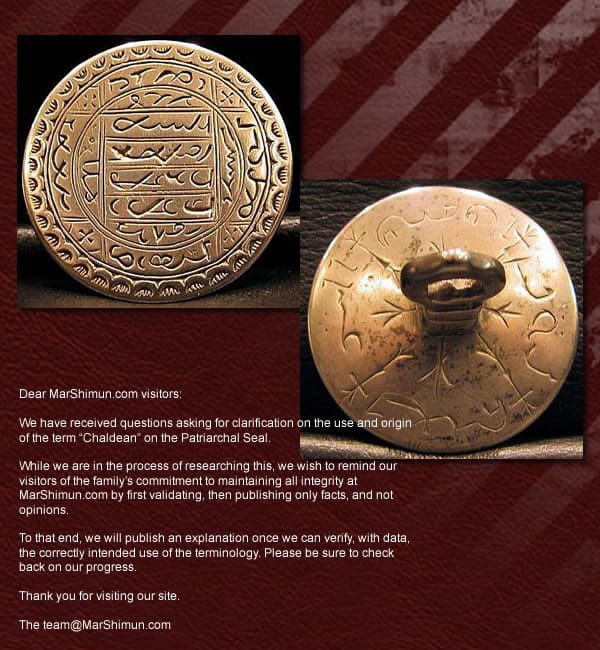
The Mar Shimun Memorial Foundation appears to have the highest quality and last updated photo of the seal.. One would expect an inquiry if the foundation has any more additional information regarding the lost Chaldean Seals whereabouts
ܬܸܠ ܟܹܐܦܹܐ Thomas the Chaldean tweet media
English
1
0
11
707
ܬܸܠ ܟܹܐܦܹܐ Thomas the Chaldean
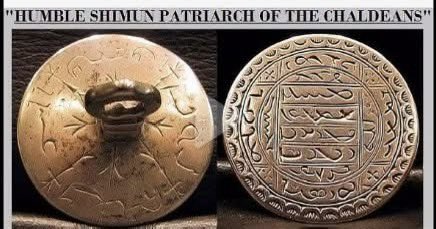
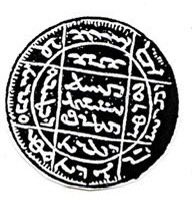
CHALDEAN TIMELINE ~ 1970 “The Lost Church of the East Chaldean Seal” For centuries, the Patriarchs of the Church of the East authenticated decrees with a circular seal inscribed in Syriac: “Patriarch of the Chaldeans.” This seal was not a Catholic artifact, but the official emblem of the Church of the East itself. Scholars such as Adrian Fortescue and George P. Badger documented impressions of similar seals, noting that the patriarchal title in Syriac often included “d’Kaldaye” (“of the Chaldeans”). This shows “Chaldean” had long been applied in Eastern and Western sources to Mesopotamian Christians, well before its adoption by the Catholic patriarchate. In addition, The Church of the East Patriarchs refused the heretical label “Nestorian,” and “Chaldean” provided a dignified, ancient alternative. Finally, retaining the title “Chaldean”, the Patriarchs of Qodchanis asserted they, not Rome, were the rightful heirs of the ancient Babylonian see. There are two theories of when the Seal went missing: 1) In 1970, amid schism and political upheaval in Iraq, the patriarchal seal was lost. That year, Mar Eshai Shimun XXIII was allowed to visit Iraq for the first time since exile, while at the same time the Iraqi government transferred patriarchal properties to the rival Ancient Church of the East . Some say in this turmoil, the historic seal disappeared. 2) The second but more probable theory starts in 1975 when Mar Eshai Shimun XXIII was assassinated in San Jose, California, not by outsiders but by Assyrian nationalists. In the chaos that followed his death, many of his personal and church belongings disappeared, and with them the historic seal. By the time the new Patriarch Mar Dinkha IV became Patriarch in 1976, no trace of the old “Chaldean” seal remained and a new seal was commissioned; this time inscribed with the word “Assyrian,” reflecting the Church’s formal renaming to the Assyrian Church of the East. With that, the old “Chaldean” title passed into history.. Its disappearance marked the end of an era when the Chaldean name bridged both branches of Mesopotamia’s ancient Christian church.
ܬܸܠ ܟܹܐܦܹܐ Thomas the Chaldean tweet mediaܬܸܠ ܟܹܐܦܹܐ Thomas the Chaldean tweet mediaܬܸܠ ܟܹܐܦܹܐ Thomas the Chaldean tweet media
English
6
4
33
7.5K
Zain Azzo
Zain Azzo@ZainAzzo·
@RobPutrus @weamnamou Also, European travelers who visited baghdad in the 1600s mention the presence of 80 “Nestorian” families living there. So over 400 years (since the fall of baghdad) baghdadi Christians were reduced to few hundreds.
English
0
0
0
20
Robbie
Robbie@RobPutrus·
@ZainAzzo @weamnamou (original) Baghdadis are native to their city, Baghdad's inhabitants descend from Ctesiphon, Seleucia & those inhabitants descend from Babylon city. The hypothesis of a large Baghdad Christian migration to Assyrian areas some are espousing is iffy, records for it is lacking.
English
2
0
2
82
Weam Namou
Weam Namou@weamnamou·
There was a short-lived Roman province named Assyria. It was established by the Roman Emperor Trajan in 116 AD during his campaign against the Parthian Empire, but it was abandoned shortly after his death in 117 AD. Specifically, Trajan annexed Adiabene, a region east of the Tigris, into a province he called Assyria. Some historians place it west, between the Tigris and the Euphrates.
Firas Alqosh@FAlqosh

@Mirarimst @weamnamou We explained to you 1000 times the talk here is about the ROMAN PROVINCE ASSYRIA, not the ancient Assyria in Mosul. If you were really Assyrians, why are you bothered and doing your best to prove it?

English
1
0
7
1K
Zain Azzo
Zain Azzo@ZainAzzo·
@RobPutrus @weamnamou After the fall of Baghdad to Mongols and to the tribes that followed (Turks and Persians), the patriarchate seat moved from baghdad to the north and virtually no Christians remained. There is a book called Christianity in fifteen century iraq that covers that.
English
1
0
0
49
Zain Azzo
Zain Azzo@ZainAzzo·
@weamnamou @RobPutrus Yes weak evidence either designations were used before the schism. Some Europeans called Aramaic Chaldean early on and we have the hagiographs on martyrs Sarah and Bahnam calling them children of Assyrian king
English
0
0
2
35
Weam Namou
Weam Namou@weamnamou·
I haven’t found evidence before 1445 showing Chaldeans identified as Assyrians—references only mention Jacobites and Nestorians. The Church of the East wasn’t called the Assyrian Church of the East until the 20th century. This identification as modern Assyrians seems new compared to older, well-established identities.
English
1
0
0
55
Zain Azzo
Zain Azzo@ZainAzzo·
@RobPutrus @weamnamou Of course. No doubt about the presence of ancient Chaldean or ancient Assyrians. The debate is about modern Iraqi Christians ethnicity. Clearly our ancestors in the first 2 centuries A.D. favoured their new faith-based identity over their ethnic one.
English
0
0
1
25
Robbie
Robbie@RobPutrus·
@ZainAzzo @weamnamou It's true the Chaldean term was first given by pope Eugene IV to the COE clergy in 1445 led by bishop Timothy of Tarsus, due to Rome associating Syriac with "Chaldaic" as a misnomer, However there were real Chaldeans in south Iraq, they were Sabat al-Bata'iḥ, pagan astrologers.
English
1
0
1
101
Zain Azzo
Zain Azzo@ZainAzzo·
@RobPutrus @weamnamou But your making an assumption baghdadis and other modern Iraqi Christians from the south were native of those areas. We have evidence that Patriarchs of the church of the east in Baghdad fled to the north after fall of Abbasids.
English
1
0
0
52
Robbie
Robbie@RobPutrus·
@ZainAzzo @weamnamou Ancestrally, Arabized North Mesopotamians like Shirqatis, Maslawis, and native speakers of Sureth/Surayt... are Assyrians, South Mesopotamians like South Iraqis, (Babilis, Baghdadis, ...Janubis) Mandaeans ..etc.. descend from the core populations of the Babylonians, Chaldeans.
English
1
0
2
93
Zain Azzo
Zain Azzo@ZainAzzo·
@weamnamou @RobPutrus My understanding those figures are post schism of 1553. Any evidence before that? Apart from the 1445 attempt at union with Rome that failed? It seems Rome called whoever made an attempt with it as Chaldean.
English
2
0
2
72
Weam Namou
Weam Namou@weamnamou·
Based on works by Maria Theresa Asmar, Father Elias El-Musili, and Father Joseph Naayem, the Chaldean identity is ancient and well-documented, with these authors explicitly identifying as Chaldeans. In contrast, "Assyrian" references before the mid to late 1800s are sparse. Modern Mesopotamians descend from a mix of peoples—Assyrians, Babylonians, Chaldeans, and others who spoke Syriac. While some identify as Assyrians today, it’s not accurate to call all Mesopotamians Assyrians. The Chaldean identity has distinct, ancient roots and deserves recognition.
English
1
0
0
56
Zain Azzo
Zain Azzo@ZainAzzo·
@RobPutrus @weamnamou Yes, there must be reasons to separate. So out of curiosity since you seem quite knowledgeable about this, do you think modern Mesopotamians are all Assyrians? Or they are a mix of all people who lived in Mesopotamia and spoke Syriac?
English
2
0
0
62
Robbie
Robbie@RobPutrus·
@ZainAzzo @weamnamou The ethnic distinction is based on the social fabric of these provinces even though they were under a centralized Sassanid system, the administrative/culture zones follow a mostly intrinsic pattern that preceded the Sassanids, i.e, Parthian, Achaemenid, Neo-Assyrian empires.
English
1
0
2
74
Zain Azzo
Zain Azzo@ZainAzzo·
@weamnamou @RobPutrus Yes, we are. Where we may differ is how confident we are about the ethnic separation of modern Mesopotamians.
English
0
0
1
12
Weam Namou
Weam Namou@weamnamou·
@RobPutrus @ZainAzzo It seems like we’re saying the same thing, no? We both recognize that the Parthians and Sassanians used "Asoristan" as a broader geographical or administrative term that included multiple regions and ethnicities.
English
2
0
0
55
Zain Azzo
Zain Azzo@ZainAzzo·
@RobPutrus @weamnamou Do you think the distinction in Shapur I inscriptions between Adiabene and Asorestan was ethnic? He does mention other regions which are not entirely ethnic based, like Mehsan further south. Could it be because Adiabene had some sort of independence at the time.
English
2
0
0
69
Robbie
Robbie@RobPutrus·
@ZainAzzo @weamnamou The Sassanid-Asorestan (misnomer) province which was strictly in the region of Babylonia, south Meso., was different from the province Nodshiragan (Atur-Adiabene, Nineveh-Arbil regions) interestingly Res Gestae Divi Sapori distinguished between Asurestan & Adiabene (Atur) ethnos.
English
1
0
4
127
Zain Azzo
Zain Azzo@ZainAzzo·
@RobPutrus @weamnamou Parthians and Sassanians called the entire region of Mesopotamia Asorstan which is not accurate since it lumped many ethnicities, however, it does explain why early church of east figured were called “of Assyrian origin” I think it is impossible to separate us ethnically
English
2
0
1
95
Robbie
Robbie@RobPutrus·
@weamnamou That is generally the claim, however the earliest sources for Trajan's Roman province of Assyria comes from later 4th century Byzantine writers Eutropius and Festus, (location debated by scholars) however, there's no archaeological evidence for such Roman province or occupation.
English
2
0
15
810
Zain Azzo
Zain Azzo@ZainAzzo·
@efremoyo @weamnamou @FAlqosh The confusing thing is the Sulaqa line of patriarchs of Chaldean church eventually went back to old traditions and another line (the Josephite line) became the Chaldean patriarchs, only to have a successor of Eliya line (Yohanna Hormizd) to take over that title.
English
0
0
0
37
Weam Namou
Weam Namou@weamnamou·
You’re proving my point. Samuel Jamil published his work in 1902. The earliest use of the "Assyrian" appellation appeared in the late 19th century (specifically the late 1800s) through the intervention of the Church of England and the American Presbyterian missions in Urmia. Maria Theresa Asmar’s 1844 memoir mentions every ethnicity except modern Assyrians. Similarly, Father Elias al-Musili, writing in the 1600s, identified as Chaldean, with no mention of Assyrians in his work.
Chaldean Catholics (ܟܠܕܝ̈ܐ ܩܬܘܠܝܩܝ̈ܐ)@ChaldeanCaths

Samuel Jamil (1847–1917) was a Chaldean Catholic archdeacon, abbot, and scholar from Tel Keppe. He identified himself as an “Assyrian Chaldean” (ܐܬܘܪܝܐ ܟܠܕܝܐ), affirming his Assyrian identity. His book title in Latin refers to the “Church of the Eastern Assyrians or Chaldeans.”

English
6
0
9
1.2K
Zain Azzo
Zain Azzo@ZainAzzo·
Would you start a 20 year old healthy young man with LDL of 103 and Lp(a) of 114 mg/dl on statin? Siblings and father have high lp(a) but no history of premature MI (incidental coronary calcification for his father who is in his early sixties) @Lpa_Doc
English
1
0
0
105
Zain Azzo
Zain Azzo@ZainAzzo·
@DavidLBrownMD @Lpa_Doc It should, but a Statin in a high risk patient can offset that risk, as opposed to a Statin that was started because the LDL result font color on epic changed from black to red.
English
1
0
1
66
Sam Tsimikas, MD
Sam Tsimikas, MD@Lpa_Doc·
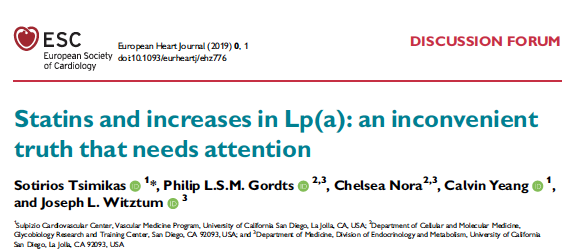
Now that people are checking Lp(a), it is becoming more obvious and accepted. When we published our paper on this, we had a lot of negative reactions because it was not clear if this was clinically relevant or would make people stop taking statins. Bottom line is statins treat LDL-C risk, and their effect on Lp(a) is, on average, a 20% increase, but with interindividual variability. We need to now see of this increase is detrimental or not. If LDL-C is elevated, taking a statin is beneficial overall. One way to mitigate this issue is a combo of PCSK9i and ezetimibe.
Sam Tsimikas, MD tweet media
Lala@shimmer2372

@Lpa_Doc Had a huge LPa increase when I doubled my Crestor to 40mg. Added repatha and lowered my Crestor to 20mg - my LPA dropped 300 points. Now trying 5mg Crestor (with repatha). Could statins affects on LPA be different for everyone? My Dr. has never seen statin affect LPA this much.

English
7
51
207
41.1K
Less-Is-More Cardiologist
Less-Is-More Cardiologist@DavidLBrownMD·
@Lpa_Doc If statins increase Lp(a) but decrease risk, how can it be a direct cause of adverse outcomes?
English
3
1
19
12.5K
Zain Azzo
Zain Azzo@ZainAzzo·
@selectatreks @drjkahn @Lpa_Doc Appreciate the responses. Although a mild rise in lp(a) is expected, it almost doubling made me worry and came across the LMW apo A phenotype higher risk variants.
English
0
0
0
31
Sam Tsimikas, MD
Sam Tsimikas, MD@Lpa_Doc·
Not unusual, her prognosis is improved with overall numbers, but it would be better if the Lp(a) did not rise. I think these types of observations are now more common and being accepted as real. In past few wanted to hear that statins raise Lp(a) in many patients.
Zain Azzo@ZainAzzo

@Lpa_Doc @Lpa_Doc What are your thoughts on a significant rise in Lp(a) from 65 to 119 mg/dl after one year of Atorvastatin 80 mg for a 31 year old female with LDL of 200 mg initially. (lp(a) was 65 at the time of direct LdL of 200). Now LDL is 88 and lpa is 119.

English
4
2
22
5.1K
Zain Azzo
Zain Azzo@ZainAzzo·
@Lpa_Doc @Lpa_Doc What are your thoughts on a significant rise in Lp(a) from 65 to 119 mg/dl after one year of Atorvastatin 80 mg for a 31 year old female with LDL of 200 mg initially. (lp(a) was 65 at the time of direct LdL of 200). Now LDL is 88 and lpa is 119.
English
1
1
2
5.5K
Zain Azzo
Zain Azzo@ZainAzzo·
@weamnamou Interesting book by Dr. Hanoosh. She doesn’t believe modern Chaldeans are linked to ancient Chaldeans though. I wonder what sources Mr. Rassam used to say some of the church of the east followers called themselves Chaldean before Rome bestowed the name on them around the 1500s
English
1
0
3
89
Weam Namou
Weam Namou@weamnamou·
Hormuzd Rassam, a native of Mosul from a Chaldean family that converted to Anglicanism and Layard's assistant-excavator, elaborated the same argument by adding that the title "Chaldean" existed long before the Catholic conversion to Eastern Christians. Yasmeen Hanoosh in her book "The Chaldeans: Politics and Identity in Iraq and the American Diaspora" pg. 31
Weam Namou tweet media
English
11
1
22
1.8K