Cointelegraph@Cointelegraph
6 bullish arguments that $BTC just bottomed at $53K
Despite BTC price volatility and five-month lows, several key indicators suggest that the bulls may still have the upper hand.
Bullish divergence boosts BTC rebound prospects
BTC has faced a turbulent start this month, decreasing by 11.4% over the past seven days. At it's lowest point during that time period, the price touched $53,550.
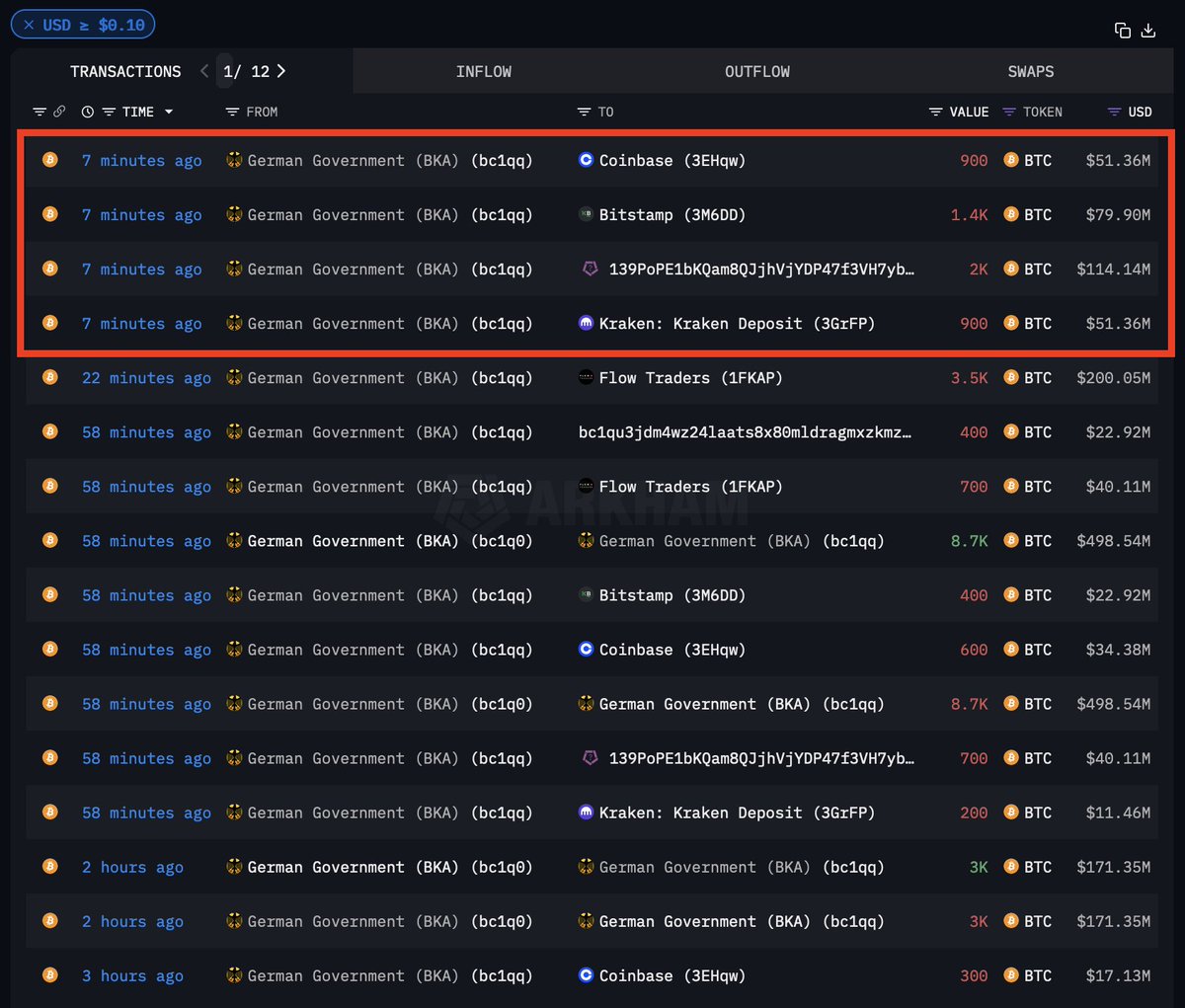
The pullback was led by fears of a market dump due to Mt. Gox's ongoing reimbursement of over 140,000 BTC to its clients and the German government's BTC liquidations.
The price decline was accompanied by a growing divergence between falling prices and the rising relative strength index (RSI). This divergence typically indicates that the selling pressure is weakening, even though the price continues to slump.
In technical analysis, this scenario often suggests a potential reversal or a slowdown in the current downtrend.
Bullish hammer, oversold RSI
Two other classic technical indicators support the bullish reversal scenario. First, BTC formed a bullish hammer candlestick pattern on July 5, characterized by a small body at the upper end of the daily candle, with a long lower shadow and little upper shadow. A similar situation was seen in May.
Secondly, Bitcoin’s daily RSI reading is hovering near its oversold threshold of 30, which often precedes a consolidation or recovery period. Analyst Jacob Canfield predicts that this indicator could signal a rebound, with BTC potentially returning to its "former range high" of over $70K.
Wall Street bets on September rate cut rise
#Bitcoin's ability to resume its bull run in the coming weeks rises further due to rising interest rate probabilities in September.
As of July 7, Wall Street traders saw a 72% possibility of the Fed cutting interest rates by 25 basis points, according to CME data. A month ago, the probability of the same was 46.60%.
Expectations for lower interest rates have risen due to a slowdown in hiring in the United States.
When the job market weakens, the Fed often considers cutting interest rates to stimulate economic activity. Lower interest rates are generally bullish for Bitcoin and other riskier assets because they make traditional safe investments like U.S. Treasury notes less attractive.
Bitcoin ETF investors return after July decline
Another bullish indicator for the BTC market is the resumption of inflows into spot Bitcoin ETFs in the U.S. after two days of consecutive outflows.
On July 5, when the U.S. reported weak unemployment data, these funds collectively attracted $143.10M worth of BTC, according to data from Farside Investors, indicating a rising risk sentiment among Wall Street investors.
U.S. money supply is expanding again
More upside cues for BTC come from a recent rise in the U.S. M2 supply, a measure of the money supply that includes cash, checking deposits, and easily convertible near-money such as saving deposits, money market securities, and other time deposits.
As of May 2024, the M2 money supply increased by approximately 0.82% year over year, reducing its aggregate drop from the peak decline of 4.74% in October 2023 to around 3.50%.
Bitcoin miner capitulation hints at BTC price bottom
Bitcoin miner capitulation metrics are nearing levels seen during the market bottom following the FTX crash in late 2022, indicating a potential bottom for BTC. Miner capitulation occurs when miners reduce operations or sell part of their mined Bitcoin and reserves to stay afloat, earn yield, or hedge against Bitcoin exposure.
Market analysts have highlighted several signs of capitulation over the past month, during which Bitcoin’s price fell from $68,791 to as low as $53,550. One notable sign is a significant decline in Bitcoin’s hashrate — the total computational power securing the Bitcoin network.
The hashrate has dropped by 7.7%, reaching a four-month low of 576 EH/s after hitting a record high on April 27. This decline suggests that some miners are scaling back operations, reflecting the financial stress within the mining community post-halving.
As weaker miners exit the market or scale back operations, the more competitive miners will see bigger profits, potentially stabilizing their operations and reducing the need to sell BTC.