Zeitgeist Explorer⚡

19.3K posts

Zeitgeist Explorer⚡ banner
Zeitgeist Explorer⚡

Zeitgeist Explorer⚡

@ZeitgeistExplo1

Aerospace→Finance →System Dynamics/Game theory Working on: -🇪🇺Project -Fixing the money -Fractal emergence

Rome, Italy, Europe, World Katılım Kasım 2022
1.1K Takip Edilen1.5K Takipçiler
Sabitlenmiş Tweet
Zeitgeist Explorer⚡
Zeitgeist Explorer⚡@ZeitgeistExplo1·
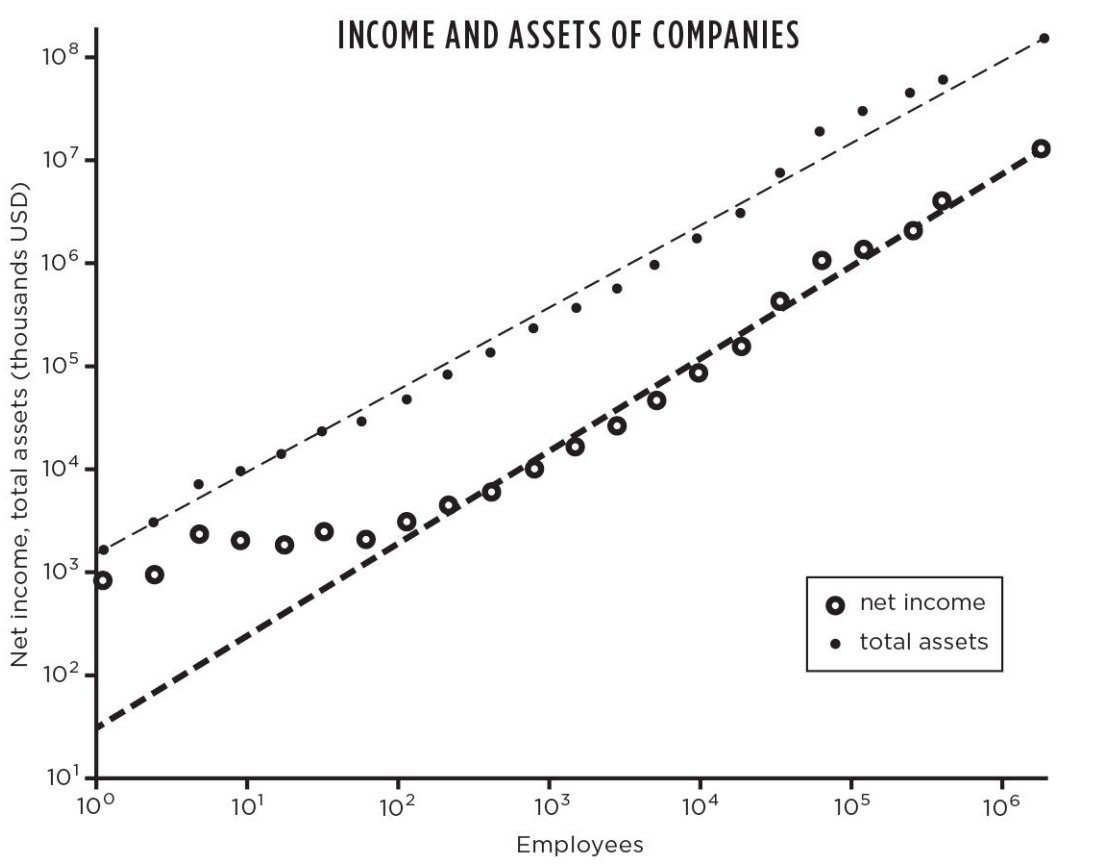
Every evolving natural system follows fractal dynamics, and the most common fit is a power law: A) Ideas Networks; B) Metabolic Networks; C) Economic Networks; D) Bitcoin Network.
Zeitgeist Explorer⚡ tweet mediaZeitgeist Explorer⚡ tweet mediaZeitgeist Explorer⚡ tweet mediaZeitgeist Explorer⚡ tweet media
English
3
5
42
11.3K
Zeitgeist Explorer⚡ retweetledi
Jesús Fernández-Villaverde
Jesús Fernández-Villaverde@JesusFerna7026·
Ten notable facts from India’s new SRS Statistical Report 2024 published two days ago: 1) India’s total fertility rate (TFR) has dropped to 1.88 (rounded up to 1.9 in the figures) in 2024 from 1.92 in 2023. 2) This drop is roughly the historical speed of the last few decades. India’s TFR was 4.3 in 1985 and it has been falling around 0.06 per year since then. 3) For those who think “smartphones are the reason for the fall of TFR,” there is not much change in India’s TFR after their introduction. Of course, this might only apply to India. 4) India’s sex ratio at birth continues moving toward natural levels. It has grown from 907 girls per 1000 boys in 2018-2020 to 918 in 2022-2024. Without sex selection (e.g., selective abortions), it should be around 952. 5) Nonetheless, this bias still means that India’s replacement rate is around 2.15, not 2.1 as in other advanced economies. 6) Hence, India is already 0.27 children below the replacement rate and the gap continues growing. 7) However, this figure hides large regional differences. Kerala is at 1.3, well below the U.S. and approaching Italian and Spanish levels (Delhi is even lower, at 1.2, but it is a peculiar case), while Bihar remains at 2.9. 8) In terms of the rural/urban divide, rural India is at 2.1 and urban India at 1.5. 9) From everything I can see, India’s TFR will continue to fall, and it should reach 1.57 (the current level of the U.S.) around 2031 unless something significant changes. 10) Having said that, India’s data has a non-trivial margin of error, and a new Census might change our reading of the situation. In summary, India is following the same path as everyone else. No Indian fertility Sonderweg!
Jesús Fernández-Villaverde tweet media
English
5
25
143
10.1K
jima
jima@jima00·
@ZeitgeistExplo1 Perhaps one could think of religions and nations as older memes that are crumbling under the weight of the newer ones...
English
1
0
1
6
jima
jima@jima00·
22nd May 26 -------------- Do people think they will find a sense of duty and meaning in pure materialism or consumerism? Do people even long for anything? Today I thanked the taxi driver that helped me get to work cause I was let down by the underground (lol, after Ibiza). I also commended his taste on listening to Radio Clásica, which, he reckoned, is great but not as good as it used to be... we both missed Pérez de Arteaga. Do people like doom-scrolling-maxxing-with-no-end? Do people have a history on how the used to look around and carry it with themselves? My work center is in a zone in which the streets are named after metals... antracita, sodio, hierro... The taxi driver could also recall the other neighborhoods that had other naming schemes, like the provinces of Spain, calle Ávila, Lérida, Salamanca, Huesca... This fact has some kind of power, much so than the crossing of numbered streets in a grid I guess. Do people listen to God in the radio when they go to work? Do people treat each other with respect as if in some kind of kinship? We, the gentle taxi driver and me, shared that it would be good if the politicians raised the level and didn't seek holding on to power by polarizing us. As it could naively just happen. Do people take the time to read and think before rushedly respond with a meme? Do we get a call to build together anymore? Flying over the tracks of the trains by Pedro Bosch... To be honest, I really really don't know. PS. @eurochallenges asked today about what happened to religion and nation... @ZeitgeistExplo1 mentioned the relative strength of the message the catholic church carries ... I honestly don't know much... but to pose these questions... I think it does count...
English
1
0
2
53
Zeitgeist Explorer⚡
Zeitgeist Explorer⚡@ZeitgeistExplo1·
@jima00 Memes are crucial, they are the ground of the global society, lot of functions. I guess a lot of things might work at the same time, like more offer of different kinds of vents.
English
1
0
2
11
jima
jima@jima00·
That was a good one, but the other was better in my opinion. I am no expert but I feel memes kinda fill a gap, are a trick on our consciences, that kinda reach somewhere inside us in a direct way. But, at the same time, the ones floating around today, probably not all of the gazillion of them of any interest.
English
1
0
3
20
Zeitgeist Explorer⚡
Zeitgeist Explorer⚡@ZeitgeistExplo1·
@trenchkench I hold the more radical view that such moment already came long ago, and that a significant share of employment today is based on pseudo-welfare, familistic, patronage, and status dynamics, both in the private and public sectors. I expect this will continue.
English
0
0
1
16
Andy
Andy@trenchkench·
@ZeitgeistExplo1 There was this almost 100 years long study of IQ in the US army. They found out that as the world gets more and more complex and automated we will soon face a problem where 40% of the population will be too “stupid” to work at all. Those people will need religion otherwise chaos
English
1
0
1
13
Zeitgeist Explorer⚡ retweetledi
beeple
beeple@beeple·
MICAHEL SAYLOR BUYING THE LAST BITCOIN IN 2140
beeple tweet media
English
413
626
7.1K
262.1K
Zeitgeist Explorer⚡ retweetledi
Classic Learning Test
The Chinese are reading more Western classics than we are. While American universities shut classics departments and argue over whether the canon is oppressive, China is funding Plato translations, and teaching ancient Greek. Xi’s government seems to understand something the West forgot: Great civilizations study great civilizations.
Classic Learning Test tweet media
English
11
99
377
32.2K
Zeitgeist Explorer⚡ retweetledi
moneyordebt ∞/21M
moneyordebt ∞/21M@moneyordebt·
@PiusSprenger He knows how to grow $5.7 billlion in 1999 to an estimated $6 billion now. His Bitcoin kept up with M2 growth since his 2017 purchase, unlike the rest of his portfolio.
English
1
2
50
1.3K
jima
jima@jima00·
@eurochallenges But, nature abhorring a vacuum... what would be in place of religion and nation now? Any ideas, folks...?
English
3
0
4
77
European Challenges
European Challenges@eurochallenges·
Historically speaking, when you needed to mobilise the masses to do something extremely difficult such as winning a war or rectifying the country’s economy, you would call on two social technologies: religion and nation. Both of these don’t mean much anymore…
Charlie Cole@charliecolecc

Record numbers of people applied for British citizenship in 2025. The Home Office revised up the 2025 figure from 291,971 to 295,531 — officially surpassing the previous all-time high held by 1987 when transitional provisions in the British Nationality Act 1981 expired.

English
2
0
19
546
Zeitgeist Explorer⚡ retweetledi
夏一旦同学
夏一旦同学@Danyixia·
技术不过关少走云贵川!中国重庆市,车主记录下通过一条狭窄隧道全过程。
中文
212
411
14K
844.1K
Giovanni's BTC_POWER_LAW
Giovanni's BTC_POWER_LAW@Giovann35084111·
What Real Science of Economy Looks Like: The Schelling Example The praxeological method claims to derive economic truth by reflection on the nature of action. The actual sciences of social and economic behavior work in a fundamentally different way, and the contrast is illuminating. Let me describe how a real model is built, using a famous example: Thomas Schelling's Dynamic Models of Segregation from 1971. Schelling was trying to understand a striking empirical regularity. American cities exhibited extreme residential segregation by race, far more extreme than survey data on individual preferences would have predicted. People polled about their preferences typically said they were willing to live in mixed-race neighborhoods, often even strongly preferring diversity. And yet the cities they lived in were intensely segregated. The puzzle was the gap. If most people wanted integrated neighborhoods, why did the actual residential patterns look the way they did? Schelling built a model to investigate. The model has agents, abstract simplified persons, placed on a grid. Each agent has a single behavioral rule: if fewer than some fraction of my neighbors are like me, I am uncomfortable and I will move to a randomly chosen empty cell. That's the entire rule. The agents have a purpose, in the most minimal sense, they want to be comfortable, where comfort is defined by the local fraction of similar neighbors. They have a means, they can move. The agents are barely agents at all. They are radically simpler than any real human being. They have no biography, no economic position, no historical context, no introspective capacity, no language. They are pixels with a rule. Schelling ran the model. He varied the tolerance threshold, what fraction of unlike neighbors triggers a move? The result was striking. When agents tolerated being a minority of up to 50%, meaning they only moved if more than half their neighbors were unlike them, the system still produced extreme segregation. Agents who individually preferred mixed neighborhoods, with mild tolerance for being in the minority, collectively produced a residential pattern that was overwhelmingly segregated. The macro-behavior of the system was not present in the micro-rule of any individual agent. Segregation emerged from rules that did not, individually, prefer segregation. This is a profound finding, and it changed how social scientists think about emergence, aggregation, and the relationship between individual preferences and collective outcomes. It has been replicated, extended, refined, and applied to many other domains. It is one of the foundational results of modern complexity-aware social science. Now look carefully at the method. Several features are worth naming explicitly. The agents are simplified deliberately, not because the modeler believes humans are that simple. Schelling did not think real people are grid-bound pixels with a single rule. The simplification is a methodological choice: strip the agent down to the minimum required to produce the phenomenon, so you can see clearly which features of the rule are doing the work. If the simple model reproduces the phenomenon, you have learned something about the causal sufficiency of the simple rule. You have not made any claim about what real humans are like in their full complexity. The agents do have purposes, in a stripped-down sense, but the purposes are not the foundation of the theory. The purpose ("be comfortable, defined as having sufficiently many like neighbors") is a parameter of the model. The theory is not built on the concept of purpose. The theory is built on the relationship between the parameter values and the emergent outcomes. Purpose is an input. The output is the macro-behavior. The science is in the mapping between input and output, not in the input itself. The model's validity comes from its match with empirical observation. Schelling did not stop after describing the model. He compared the model's predictions to actual residential patterns in actual cities. He looked at how the tipping dynamics in the model corresponded to historical segregation processes documented in the urban sociology literature. The model is taken seriously because its outputs resemble the world. If the simulated cities had not looked like the real cities, the model would have been an interesting toy and nothing more. The empirical correspondence is the credential. The model is falsifiable in specific ways. You can vary the rule and see whether you still get segregation. You can change the grid topology, the move dynamics, the tolerance distributions. Each change produces different outputs that can be compared to different empirical patterns. The model lives or dies by these comparisons. There is no question of whether the model is "necessarily true." It is true to the extent that it captures observed dynamics, and false where it doesn't. The model does not claim to derive economic or social laws from the concept of an agent. It does the opposite. It shows that the concept of an agent, even an extremely simple one, combined with rules of interaction can produce macro-patterns that are nowhere visible in the agent's micro-behavior. The interesting science is at the level of emergence, aggregation, and macro-dynamics, not at the level of the agent's purposes. This is how real economic and social science actually works. You start with simplified agents, not because you believe humans are simple, but because simplification lets you see what produces what. You give the agents minimal rules, sometimes including purposes, sometimes not. You run the model. You compare the outputs to empirical observation. You revise the model when it fails. You take its predictions seriously where they hold and discard them where they don't. The credential of the model is empirical correspondence, not conceptual necessity. Now contrast this to praxeology. Mises also starts with an abstract agent, the human actor, who uses means to achieve ends. The agent is simplified, in the same way Schelling's agents are simplified. So far, the methods look similar. But the resemblance ends immediately. Praxeology takes its simplified agent and deduces, purely from the concept, what must follow. No simulation. No empirical check. No comparison to data. The conclusions are presented as necessary truths about real economic behavior, derived by reflection on the meaning of the agent's purposive structure. The validity of the conclusions is not contingent on their match with observation; it is asserted as conceptually guaranteed. This is the inversion. Schelling's method uses a simple agent as a starting hypothesis whose consequences are checked against the world. Praxeology uses a simple agent as a foundational truth whose consequences are asserted regardless of the world. One method treats the simple agent as a tool for discovering what produces what; the other treats the simple agent as a fact about reality from which truths can be derived. The first method has produced an enormous body of useful science. Agent-based modeling, behavioral economics, experimental economics, evolutionary game theory, network economics, the entire field of complex adaptive systems, all of it descends from the methodological example Schelling and others set. These fields produce findings that can be tested, revised, and extended. They have illuminated phenomena from financial crashes to cooperation in social dilemmas to the dynamics of innovation. They work. The second method, praxeology, has produced a closed verbal system whose conclusions are immune to empirical refutation and which has had no measurable impact on the working sciences of social and economic behavior. The reason is not that the world has failed to appreciate Mises. The reason is that you cannot build a science by reflecting on definitions and refusing to test the consequences. Definitions are the beginning of inquiry, not its end. The Schelling model begins with definitions of agents and rules; it does not stop there. It runs the rules, watches what happens, and submits the output to comparison with reality. Praxeology stops at the definitions and announces that the work is done. This is what real economic science looks like, and it is almost exactly the opposite of what Mises recommended. Y es, you can start with simplified agents acting purposively. Yes, you can use simple rules to investigate complex behavior. But the point of this exercise is to discover what produces what, by comparing simulated outputs to observed reality. The simplification is a tool for empirical investigation, not a foundation for deduction. The agents are not axioms. They are hypotheses. The rules are not necessary truths. They are parameter settings whose consequences you check. Mises had it backwards. He wanted to derive the economy from the agent. The actual science derives the agent, what we should believe about its rules and parameters, from the economy. Empirical observation is the input. Models, including agent-based models like Schelling's, are tools for explaining the input. The conclusions are always provisional, always testable, always subject to revision when the data demands it. This is not a failure of the method. This is the method working as intended. The willingness to be wrong is what distinguishes science from verbal architecture. If you want to build a real science of Bitcoin economics, or of any economic phenomenon — this is the path. Start with the empirical regularities you are trying to explain. Build models of varying complexity. Compare model outputs to observed data. Refine the models where they fail. Keep what works, discard what doesn't, and never confuse a simple model with a deep truth about reality. The simple model is a probe into reality, not a substitute for it. Praxeology forgot this distinction. The Schelling tradition never did. That is the difference between a method that produces knowledge and a method that produces only the appearance of it.
Conza@Conza

@Giovann35084111 Didn't define the term, dodged the question. In any case, nope - swing & a miss.

English
9
2
8
3.7K
Zeitgeist Explorer⚡
Zeitgeist Explorer⚡@ZeitgeistExplo1·
@Conza @Giovann35084111 Thank you, I've read the great fiction and short history of man by hoppe. Apart from the paper linked in the thread, do you recommend anything else?
English
2
0
0
14