

ZYAD~
2.8K posts

$INK TGE in SEPTEMBER ?
Here’s the current signal stack:
1. @nadoHQ seasons S1 ran 111 days (Jan 30 → May 21), S2 started May 21, Matching that length points to early-mid September.
2.@buyerofponzi (Ink & Nado advisor) said in early January the airdrop would land in the next 6-8 months so roughly Q3 so sept is the deadline,( proof in the 1st cmnt)
3.Chain upgrade- OP Enterprise Fully Managed cutover is set for August,Final major upgrade in August, TGE the next month is a common and reasonable expectation.
4.on june 18th i asked @inkonchain " TGE in Q3?” and they liked it, not only mine recently Intern showing some soft signal 👀
Final note- All of these currently point toward September

English
Hi Matt.
The Txflow looks cool to me and it's already like a product in its mid development though it just been here for a few months. However with all of the scam DEXs and exploits every day we see saying we are 100 people working on it from different countries...etc is no where near enough! People want to know way more information about the team! Also the product marketing is not that good for now!
English
@matthubuilds Reduce the slop posting with Txflow official account. Seriously it's acting like a random spam account! People can't take you seriously on CT!
English
ZYAD~ retweetledi

Some context on the team behind TxFlow, since people keep asking.
We are close to 100 people and still growing. Engineers and product builders from Stanford, MIT, Tsinghua, spread across 20+ countries.
To be clear: headcount is not a moat. Hyperliquid proved a small team can build something great, and we respect that. Our bet is different. We think the next generation of onchain financial infrastructure (matching, risk, liquidity standards, decentralization roadmap) is a scope problem, and we are staffing for that scope.
What I think actually matters more than team size:
We are building through a bear market, not waiting for one to end. That is a statement about conviction, not timing.
We are committing to a 100% fair launch. Team tokens locked for a minimum of 2 years. No quiet unlocks, no “strategic partners” getting early exits.
And one internal benchmark we hold ourselves to: we do not consider this working until TxFlow volume catches Hyperliquid. Regardless of price, regardless of market.
All of these are verifiable. Hold us to them.
Personal thoughts only, not financial advice. What would make you trust a new perp DEX team: track record, lockups, or shipped product?
English


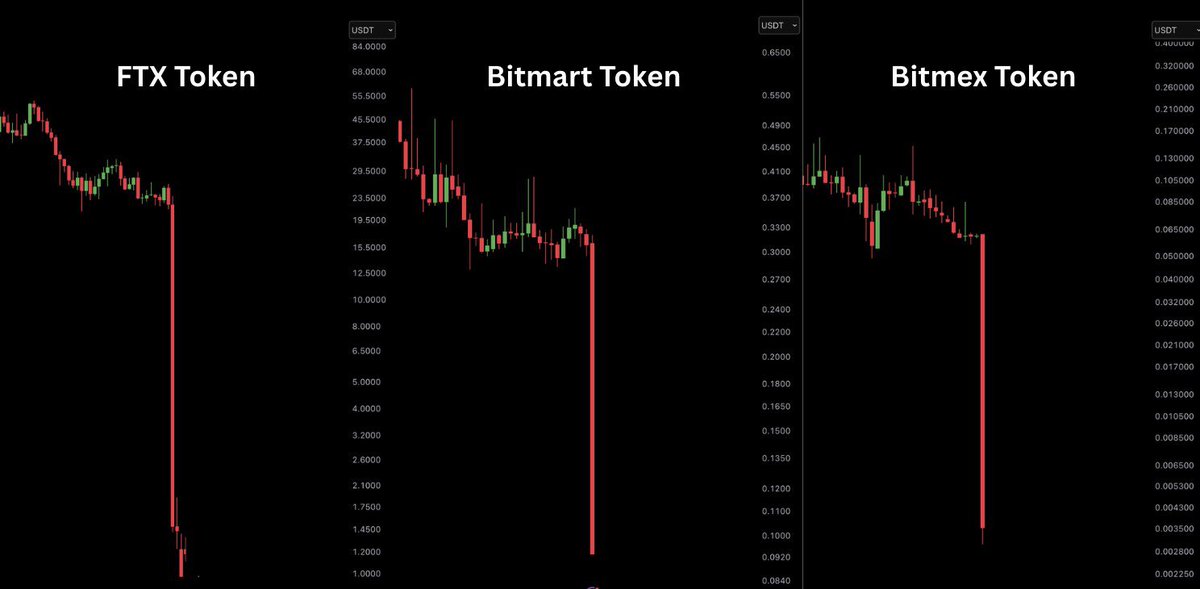
In 2022, FTX exchange shut down.
In 2026, Bitmex and Bitmart shutting down.
Bottom indicators are appearing
English
@miketwinks @risextrade The good thing is tvl and oi went up and are keeping jumping daily and users are increasing
English

epoch week 1 distribution on @risextrade is almost here
after the 1.5m retrodrop for season 0 there is not much time left now
judging by ct, a lot of people were not exactly happy with the retro allocation
which usually means only one thing
> next distribution suddenly matters a lot more

English
Well that's what happen in a bear market. Until suddenly massive airdrop comes and everyone wakes up to catch! Do you remember @jito_sol , @arbitrum , @JupiterExchange , and the legendary @HyperliquidX ? All of those projects were building during bear market and when bull market came those projects gained a huge momentum and reward the people who farm them in the bear market! Now is the best time to farm the projects that survive the bear market and keeps developing.
GE@GuarEmperor
ALL AIRDROP DEAD NO MORE AIRDROP DILLUTED OVERFARMED PROJECT SHUTDOWN WASTING YOUR TIME TO MANY TASK S1/S2/S3 GET AIRDROP BUT YOU NEED STAKE TO X2 ALLOC GET AIRDROP BUT DUST YOU NEED VESTING STOP AND MOVE ON BROOO YOU NEED MORE NEW OPPORTUNITY UPGRADE SKILL AND IMPROVE ADAPT
English
ZYAD~ retweetledi

@Manyonge12 @BitMartExchange Maybe this is what happens when clarity is coming and the manipulation ends
English


ZYAD~ retweetledi

ZYAD~ retweetledi

1st spaces ever with @chameleon_jeff
recorded Jan 6th 2023, when Hyperliquid was in testnet
00:00 Banter
07:35 Jeff introduces himself as HL founder, background in market making
11:08 FTX implosion was the defining moment to build trustless platform
13:40 Why order books over AMMs and hybrid models like GMX
19:13 Key differentiator: entire order book runs on-chain, not centralized servers
22:43 Decision to build Hyperliquid chain on Tendermint after trading comp
33:47 Introducing vaults and pools for community-managed liquidity strategies
49:58 Mainnet timeline: testnet in January, closed alpha in February
English
At this rate if you got excited more we might see $BNB on the list someday!
Binance@binance
Binance will extend the Monitoring Tag to include ACX, LSK & STX on 2026-07-24 Read more 👉 binance.com/en/support/ann…
English
@muarmemuar This is actually a good thing for perp meta the more those scamy DEXs shutdown the better!
English

I'm starting to get scared of my skip list (aka the Perp DEX Death Note).
Less than two months after I published it:
Dango, Ventuals, and Satori announced they're shutting down.
Ostium was exploited for $24M, and Cascade for $1.3M.
Dreamcash shut down its Cash Markets.
Even AFX - which I forgot to add to the list - got hacked for $24M.
At this point I'm seriously considering deleting the skip list because I'm afraid for the other perp DEXs.
Or should I leave it up and keep watching the show? 👀
muar@muarmemuar
At the moment @DefiLlama already shows 200+ perp DEXes. To save you time hunting for the ones without a token (and potential airdrop farming), here's my current focus list. Focusing on: @variational_io, @tradexyz, @nadoHQ, @bulktrade, @risextrade Currently skipping: grvt, gmtrade, standx, pacifica, extended, antarctic, ostium, satori, reya, decibel, ethereal, vest, hibachi, 01, bullbit, phoenix, dreamcash, miracle, dexari, bullpen, ventuals, liquid, rho, carbon, hotstuff, dango, cascade Hope I saved you some time and money
English
ZYAD~ retweetledi

What do you want to trade next?
We're always listening, so tell us.
1. Follow @TxFlow_L1, like + RT this post
2. Reply with the perp token you want listed and why
We'll pick the best suggestion and send $50 in USDC to whoever posted it.
English
That doesn't explain anything nor justify why giving 100% more to the new comers. By giving 100K less for ealry users you simply say you don't care about early traders who handled an immature product and paid more in slippage and spreads! Even if you gave 50K since the first week of the launch in April many of us will end up with X3 more points! . I doubt that you even distributed 1.6M points to the community! What a miserable start for an amazing product! The fair approach was to show how much you allocate to early users since the first week in the points tab for each week ! All you can say is our distribution system is different from other DEXs bla bla and that's easy and simple than communicating with the community and show everything and how much the top 100 got and their statics! Even if you say volume is not everything you're simply lying to yourself because no matter how superior the tech of a dex was you will be judged by the volume in the end!
sam.rx@sam_battenally
Our Season 0 retro points dropped last night. A total of 1.6M points were allocated to the early users of the venue! While some users are stoked with the outcome, others received below their expectations. I suspect our model differs from most venues, so a clarification is warranted. As a product builder I like to ship incrementally, test features, iterate and adapt. You can't do that with a drop like this. A large chunk total allocation goes out in one shot, you get one chance to set the incentive structure for everything that follows. So rather than looking at how others did it, we took a first-principles approach. Retro allocation Our goal was to ensure a smooth transition between the seasons while giving an increased boost to early users given they participated on the venue when it was less mature. We landed on 1.6M points directed to the retro drop followed by a 200k weekly emission for season 1. Given S0 had a $47M daily average, and we’re now tracking for a ~$98M daily average during the first week of S1, meaning S0 traders received a 40% bonus on pts-per-volume relative to S1 so far. Depending on the length of the program, we expect this will be 15-20% of the total points allocation. We checked this number against other programs. Our pre-season was 12 weeks, relative to competitors this was generous. We felt this was a good way to reward the early users. Retro points model So what are the goals of the retro drop? Here’s what we prioritised: - Genuine traders, the kind we want on the venue regardless of points - Reward genuine economic spend - Reward earlier users for trading on a less mature venue - Reward retention and encourage more of it Now I can’t share too many specifics because we intend to continue using a similar model, albeit with tweaks and different weights and boosts, but I’ll share enough to add clarity to our approach. The primary contributors to the model are: - Trading & Liquidation Fees: What the users spent on the venue - Slippage: Rewards high value whale takers who provide good flow to the exchange. - Maker Adverse Selection: Makers who were adversely selected actually got paid back on it - OI Carry: Cost-of-capital to hold market exposure on the venue Additional contributors include a retention boost and user segmentation. Referrals follow the same logic. If you refer someone, you earn 10% of the points they generate, not their raw volume. They keep every point they earn, and you earn an additional 10% alongside them. Retention The retention boost is simple. The more you use the product, and the longer you have used it, the more boost you receive, and the more you will continue to receive as season 1 continues. Slippage Traders who are willing to put large orders directly into the book create opportunity for market makers, but also lead to skew in the book, which in turn attracts more sophisticated traders, like systematic traders and funding-rate arbitragers. This diverse user base is what creates a really healthy venue. Additionally, we found this rewarded the most active click traders, in particular scalpers, swing traders, momentum traders and traders who put large orders directly into the book. This cohort is a priority. Note: Slippage is potentially gameable so we’re quite cautious about it. Per-week distribution We decided against a fixed-weekly allocation. Why? During Season 0 the daily volume ranged from $10M per day to . Given the variance in activity week-to-week, a fixed-weekly distribution would lead to very large outliers, leading to grossly underpaying and overpaying for the same activity. Rather, we boosted the early traders relative to their baseline. Week 1 starting with the largest multiplier, linearly declining to no multiplier for the last week. Why have users received vastly different drops based relative to their volume? Volume is considered, but only through fees and other metrics. Consider two users. Fred, a swing trader who puts larger taker orders in the book, vs an algo market maker, John. Fred’s costs will be fees (3bps taker) and slippage. Depending on how large the order is and how thin the books are, the cost of slippage can vary greatly. This is a real cost Fred has to pay to participate on the venue. John’s costs, however, will be a 1bps maker fee plus any adverse selection they experience by holding limit orders on the book. The best measure of adverse selection is markouts, you essentially look at how bad your execution is relative to the price in a short period of time. Negative maker markouts capture genuine economic contribution to the venue, but they are much smaller than slippage on aggregate. As a result, Fred's cost will often be over 4x John's per unit volume. Concentration The top 100 HL traders generate ~35% of fees, top 1,000 users generate ~70%. That reflects the healthiest market structure among perps DEXs. The fact is, perpetual exchanges are concentrated, and RISEx is no exception. We took measures to reduce the concentration and flatten out the distribution. However, this increases the sybil attack surface, so it’s difficult to do well. Additionally, RISEx has one big benefit here, we have one primary market maker, the XLP vault, which receives no points for trading activity. XLP is almost 50% of the volume on the venue and received zero points for trading. The Genesis Pool The Genesis Pool is a 100k-point pool reserved exclusively for season 0 traders and will be distributed over the first 4 weeks of Season 1 (In addition to the 200k weekly Season 1 drops) Genesis Traders who stay active on the venue will earn from the pool. Distribution is weighted by activity and skewed toward the earliest traders. This is a way for us to reward the early users that continue trading on the venue and reinforcing retention What next? Season 0 laid the scaffolding and rewarded the users who helped us get here. Season 1 is about building a world class exchange, realising the vision of atomic composability and unlocking a new wave of DeFi. We’re optimising for quality traders, deeper books and a healthy venue. Season 1 is live, the genesis pool is running. See you in the books.
English
They already know the community will rseond like this but they simple don't care! Giving 200K for the newcomers is simply telling you that they don't care about their early adopters. I doubt they even distributed 1.6M points to the community! What a miserable start for an amazing product! The fair approach was to show how much they allocate to early users since the first week in the points tab for each week but I doubt they will do that! All they can say is our distribution system is different from other DEXs bla bla and that's easy and simple than communicating with the community and show everything and how much the top 100 got and their statics! Even if they say volume is not everything they're simply lying to themselves because no matter how superior the tech of a dex was you will be judged by the volume in the end!
English

Risex didn't give enough importance to early users; they should have prioritized the people who used the project first. There is still time, Risex—you should fairly distribute another 1–1.5 million points to them. A project cannot move forward if it doesn't value early adopters. You can learn from Lighter and Variational about how to reward early users.
Only Lighter distributed the airdrop fairly; perhaps Variational will do the same in the future. I had high hopes for Risex, but they were the first to disappoint; the fact that the team is holding 70% of the points is a negative aspect. I am frustrated with their actions—they deceived early users like this. Yet, early users serve as the backbone of every project, and successful projects value them; Risex, however, caused losses for early users and betrayed them.
I will suggest to the team that they allocate another 1–1.5 million points to early adopters to boost positivity. Of this, 500k should be distributed as base points to everyone, while the remainder is awarded based on trading activity and open interest; this will highlight the importance of early adopters and help the project regain its former hype.
Let me remind you of something: the staking project EigenLayer faced a lot of backlash during its token allocation phase, but eventually, under pressure, they offered an additional 2.5% token bonus. If you want to regain trust, you should do something similar; community trust is a huge deal, bro.
Variational 1M$ volume user receive 10k$+ who use low volume pair like Doge,Xrp and hold avg 20-30 hours,Variational omni beta volume 60B$ means 30x from Risex, Risex 20-30 hours hold user receive 600-800 point, means variational distribution 12*15 = 180x point, I spoke about what the acquisition of early users should took like.
@sam_battenally @risextrade
English

Our Season 0 retro points dropped last night. A total of 1.6M points were allocated to the early users of the venue!
While some users are stoked with the outcome, others received below their expectations. I suspect our model differs from most venues, so a clarification is warranted.
As a product builder I like to ship incrementally, test features, iterate and adapt. You can't do that with a drop like this. A large chunk total allocation goes out in one shot, you get one chance to set the incentive structure for everything that follows.
So rather than looking at how others did it, we took a first-principles approach.
Retro allocation
Our goal was to ensure a smooth transition between the seasons while giving an increased boost to early users given they participated on the venue when it was less mature.
We landed on 1.6M points directed to the retro drop followed by a 200k weekly emission for season 1. Given S0 had a $47M daily average, and we’re now tracking for a ~$98M daily average during the first week of S1, meaning S0 traders received a 40% bonus on pts-per-volume relative to S1 so far.
Depending on the length of the program, we expect this will be 15-20% of the total points allocation. We checked this number against other programs. Our pre-season was 12 weeks, relative to competitors this was generous. We felt this was a good way to reward the early users.
Retro points model
So what are the goals of the retro drop? Here’s what we prioritised:
- Genuine traders, the kind we want on the venue regardless of points
- Reward genuine economic spend
- Reward earlier users for trading on a less mature venue
- Reward retention and encourage more of it
Now I can’t share too many specifics because we intend to continue using a similar model, albeit with tweaks and different weights and boosts, but I’ll share enough to add clarity to our approach.
The primary contributors to the model are:
- Trading & Liquidation Fees: What the users spent on the venue
- Slippage: Rewards high value whale takers who provide good flow to the exchange.
- Maker Adverse Selection: Makers who were adversely selected actually got paid back on it
- OI Carry: Cost-of-capital to hold market exposure on the venue
Additional contributors include a retention boost and user segmentation. Referrals follow the same logic. If you refer someone, you earn 10% of the points they generate, not their raw volume. They keep every point they earn, and you earn an additional 10% alongside them.
Retention
The retention boost is simple. The more you use the product, and the longer you have used it, the more boost you receive, and the more you will continue to receive as season 1 continues.
Slippage
Traders who are willing to put large orders directly into the book create opportunity for market makers, but also lead to skew in the book, which in turn attracts more sophisticated traders, like systematic traders and funding-rate arbitragers. This diverse user base is what creates a really healthy venue.
Additionally, we found this rewarded the most active click traders, in particular scalpers, swing traders, momentum traders and traders who put large orders directly into the book. This cohort is a priority.
Note: Slippage is potentially gameable so we’re quite cautious about it.
Per-week distribution
We decided against a fixed-weekly allocation. Why?
During Season 0 the daily volume ranged from $10M per day to . Given the variance in activity week-to-week, a fixed-weekly distribution would lead to very large outliers, leading to grossly underpaying and overpaying for the same activity. Rather, we boosted the early traders relative to their baseline. Week 1 starting with the largest multiplier, linearly declining to no multiplier for the last week.
Why have users received vastly different drops based relative to their volume?
Volume is considered, but only through fees and other metrics. Consider two users. Fred, a swing trader who puts larger taker orders in the book, vs an algo market maker, John.
Fred’s costs will be fees (3bps taker) and slippage. Depending on how large the order is and how thin the books are, the cost of slippage can vary greatly. This is a real cost Fred has to pay to participate on the venue.
John’s costs, however, will be a 1bps maker fee plus any adverse selection they experience by holding limit orders on the book. The best measure of adverse selection is markouts, you essentially look at how bad your execution is relative to the price in a short period of time. Negative maker markouts capture genuine economic contribution to the venue, but they are much smaller than slippage on aggregate.
As a result, Fred's cost will often be over 4x John's per unit volume.
Concentration
The top 100 HL traders generate ~35% of fees, top 1,000 users generate ~70%. That reflects the healthiest market structure among perps DEXs. The fact is, perpetual exchanges are concentrated, and RISEx is no exception. We took measures to reduce the concentration and flatten out the distribution. However, this increases the sybil attack surface, so it’s difficult to do well.
Additionally, RISEx has one big benefit here, we have one primary market maker, the XLP vault, which receives no points for trading activity. XLP is almost 50% of the volume on the venue and received zero points for trading.
The Genesis Pool
The Genesis Pool is a 100k-point pool reserved exclusively for season 0 traders and will be distributed over the first 4 weeks of Season 1 (In addition to the 200k weekly Season 1 drops)
Genesis Traders who stay active on the venue will earn from the pool. Distribution is weighted by activity and skewed toward the earliest traders.
This is a way for us to reward the early users that continue trading on the venue and reinforcing retention
What next?
Season 0 laid the scaffolding and rewarded the users who helped us get here. Season 1 is about building a world class exchange, realising the vision of atomic composability and unlocking a new wave of DeFi. We’re optimising for quality traders, deeper books and a healthy venue.
Season 1 is live, the genesis pool is running. See you in the books.
English
The formula is broken so all they can say is our system is different from other DEXs! That simple without any explanation! It seems that no one really received points since the first weeks and they equated early users with the newcomers after the competitions! Even with 50K allocated each week since they start the mainnent would multiple your points easily because back then their were barely 300 active users!
English
ZYAD~ retweetledi

🧑💻 @risextrade retro puan dağıtımı hakkında değerlendirmem:
KAFAMA TAKILAN 1⃣1⃣ SORU & EKİBE ÖNERİLERİM
Bu postun @risextrade ekibi ve topluluk arasında işlevsel bir köprü olması adına yazıyorum.
Ben ekibin yerinde olsam bu postu ciddiye alır ve bir hamle yapmadan önce bu postu ruhuma ve aklıma kazırdım.
Son söyleyeceğimi de ilk söylemiş olayım:
🔼risex eğer günlük hacimlerini koruyabilir ve arttırabilirse yani başarılı olursa kimse bugünleri hatırlamaz ve herkes ekibi alkışlar. Hatta ekibin bugünlerde eleştirilen puan sistemi bile övülmeye başlar.
Bugünlerde sisteme kızıp gidenler geri döner.
⬇️Ama risex günlük hacimlerini arttıramaz ve koruyamazsa o zaman da şu denir: "retropuan dağıtımı günü belli olmuştu ne olacağı ve ben demiştim" sözlerini çok fazla duyarız.
Kısacası her şey bu noktadan sonra ekibin başarısı ile belirlenecek.
Bugünki tartışmalar unutulacak.
Herkes puanların peşine düşecek.
👉Ama bugüne dönersek:
Hadi sorunların kalbine direkt girelim:
Bir risextrade kullanıcısı olarak puanlarımdan memnun değilim.
Her kullanıcı gibi daha çok puan alacağımı düşündüm.
Bu da gayet normal. Kim daha çok erken dönem risex puanı istemez ki?
İstatistiklerime bir bakalım: 6.5M hacim, 68m referans hacmi
Açıkçası başka bir perp dex'de bu verilerle emekli olurdum.
Ama risextrade'in kutsal puan sistemi benim 6.5M hacim, 68m referans verime 37. sıradan 3947 puanı layık gördü.
3.7m bot çalıştırdığım hesapta ise 500 puan bile alamadım.
Puanlarımdan memnun olmamam benim sorunum.
Risextrade ekibi neye puan verdiğinin matematiğini açıklamayacağını ve ben bu işlemleri bu matematiğin risex ekibinde saklı olduğunu bilerek yaptım.
Ömrüm boyunca da çok fazla perp dex'de işlem yaptım.
Onlarda işlem yapma deneyimimi risex'de kopyaladım.
Gerçek işlem de aldım, delta nötr stratejisi de kullandım.
Ama asla wash trade yapmadım.
Hatta bot işlemlerle manuel işlem yaptığım hesaplarımı birbirinden ayırdım.
Demek ki risextrade'in puan matematiğinde benim yaptığım işlemler o kadar da puan getiren ve istenen işlemler değillermiş.
SONUÇ İTİBARİ İLE BEN, RİSEX'DE YAPTIĞIM İŞLEMLERDEN KENDİM SORUMLUYUM VE BUNUN KARŞILIĞINDA BU PUANLARI ALMAMIN NEDENİ BENİM.
Ancak, risextrade bir perp dex ve ben ilk kez perp dex'de işlem yapmıyorum. Ve kafama takılan bazı sorular var:
1⃣ Sevgili risex ekibi lütfen anlamama yardımcı olun:
1.5M puanda dağıtıldı ise 3947 puanla ben nasıl 37. olurum? Heyecanlı ve hırslı bir kullanıcı olduğumu varsayın lütfen.
Dikkat ederseniz 37. sırada olan ben bile memnun değilim bana gelen puanlardan...
Kısacası ben bile gerçek trader değilsem ki yukarıdaki istatistiklere bakarsak değilim, benden önceki 36 kişi nasıl gerçek traderlar ki onlar ne tür işlem yaptılar?
Kaç puan aldılar benden öncekiler?
Ben 1.5m dağıtımda 37. sıradakinin 3947 puanı olmasının tuhaf olduğunu düşünüyorum.
Dışarıdan bakan ve leaderboardu görmeyen herkes bu sıralamayı garip bulacaktır.
AMA BENİM GİBİ MEMNUN OLMAYAN KULLANICILARIN İKNA ETMENİN ÇOK KOLAY BİR YOLU VAR.
👇
[EKİBE ÖNERİM: Elbette risex ekibinin kim kaç puan aldı tartışmalarına pabuç bırakmayacağını düşünüyorum ve kısa sürede leaderboard'ı aktif edecektir. Kısacası sistemde en az ilk 100'ün kaç puan aldığını görmeyi talep ediyorum.
Bu şekilde puanların nasıl ve kime dağıtıldığı tartışmaları da sona erer.]
2⃣Gerçek trade isteyen bir sistemden bahsediyorsunuz ve sizi anlamaya çalışıyorum.
Sizce gerçek trade isteme uğruna hacim unsurunu göz ardı eden bir sistem yaratmış olabilir misiniz? Sonuçta sizin başarınız da hacimle yargılanacak...
Benimkisi basit bir kullanıcı olarak sisteminizden ne kadar emin olduğunuzu sorguladığınızdan emin olmak.
BU KONUDAN NE KADAR EMİNSİNİZ?
3-Puan verme sistematiğinizin farklı olduğunu söylüyorsunuz. Lütfen bu konuda daha açıklayıcı olun.
Çünkü geçmişte bu konuda topluluğunuza bu konuyu yeterince anlatamamış gibi görünüyorsunuz.
Günah çıkarma zamanı: sizce bunu topluluğunuza yeterince anlattığınızı düşünüyor musunuz?
[BENİM EKİPTEN TALEBİM:
Bence bu konuda daha çok konuşmalılar hatta ekipten Türkçe topluluğuna özel x'de bir space yayını ya da bir AMA talep ediyorum.]
4-Retroactive puanlarla ilgili globaldede türkiye'de de kullanıcıların ortak algısı puanların sezon öncesi olmasına rağmen düşük kaldığı yönünde. Bu ortak kanı.
Bir kullanıcı olarak ben de bunu düşünüyorum.
Benim de beklentim: en az 2.4M puandı.
Risex ekibi toplam puanlara oranının %15-20 olduğunu ve bunun 13-14 haftalık retro sezon için oldukça makul olduğunu söylüyor.
Aslında bir bakıma variational örneğine bakarsak onların retrosezonu 11 ay sürdüğü için %30 gibi bir oranı kullanıcılarına dağıtmaları normal.
Süreye bakınca risex'in %7.5 dağıtmasını beklerdik(vari'nin süresine oranlarsak) ve ekip 13-14 hafta süren bir retro sezonunu %15-20 ile ödüllendirdiklerini söylüyorlar. Öyleyse bu oranı kabul edilebilir ve gayet iyi bir oran.
Ancak nasıl dağıtıldığı da önemli bu puanın...
[EKİBE ÖNERİM: Ama ben olsam 1M daha fazla dağıtırdım. Hatta bunu şimdi gündemime alırdım. Retroactive puanlara ek... Hadi 800k olsun. 1. sezonda 200k dağıtılacaksa haftalık, sadece 1 aylık puandan bahsediyorum. (hatta bunu şimdi ekibe danışır ve bu talebi ok'lerdim)
Ve bu puanı en azından eski usul hacim yapanlara dağıtırdım.
Neden mi? Bence bu kadar sert bir geçişi perp dex kullanıcılarının anlaması zor. Ben yaptım oldu yerine bu süreci ekip uzun uzun anlatmalıydı.
Ancak ekip bunu yapmadı.
Eğer bu yolu tercih etmiş olsaydı o zaman sezon 1'de kendi puan sistemine göre puan dağıtmak çok daha kabul edilebilir olurdu.
variational gerçektrade'i ödüllendrme konusunda bugün alkışlanıyorsa da ilk dönem wash traderları ödüllendirdi. Bunu variational bile böyle yapmışken risex ekibinin bu katiyette yapması bence fazlasıyla sert bir hareket. Sonuçta bu topluluk risex ekibinin topluluğu. Onları anlamaya çalışması onları eğitmesi ve kendi sistemine dahil etmesi gerekirken sistemi anlamayanların dışlanma tehlikesi ile karşı karşıya kalmanın kimseye bir yararı olacağını sanmıyorum.]
5- Globalde insanlar puanlar az geldi ama risex yeni bir sistem deniyor, ekip çalışkan ve ürün iyi devam ederim ok ya da puanlar memnun etmedi devam etmem gibi kişisel tercihlerini açıkladılar.
Ama türk topluluğun çok daha sert bir tepki gösterdi.
Aslında bunun nedeni türk topluluğunun ilk günden içeri girmesi ve projesi sahiplenmesiydi.
[Bu konuda EKİBE ÖNERİM: Daha çok iletişim kurulması. Ayrıca herkes projeyi çok önemsedi.
Risex ekibi türk topluluğu için bir şeyler yaptığını göstermeli. Bu konuda çok netim. bu konuda eylem görmek istiyor türk topluluğu. seslerinin duyulduğuna emin olmak istiyorlar!!!! ]
6- Türk topluluğunun eleştirilerinden biri de hafta hafta değerlendirilmenin yapılmadığı yönünde.
@sam_battenally de ekip de bu konuda ağırlıklandırmalı bir yol izlendiğini ve haftalık değerlendirme yapıldığını söylüyor.
[BENİM BU KONUDA EKİBE ÖNERİM: PUAN İTİRAZİ NOKTASINDA BİR BİRİM KURULMASI YÖNÜNDE. SONUÇTA BU PUAN MEKANİZMASININ DA KUSURLARI VAR. SONUÇTA HATA YAPILMIŞ DA OLABİLİR. GERÇEKTEN BAŞVURANLARIN YENİDEN DEĞERLENDİRİLDİĞİNİ VE KONTROL EDİLİĞİNİ BİLMESİ MÜHİM]
7-Ayrıca bu puan sistemi ile ilgili nasıl olacağını bilemiyorum ama çok daha fazla konuşulması gerekiyor.
Ekip madem kimseye benzemeyen bir sistem yarattı bu yeniliğin geçiş evresini bize anlatmak zorunda.
8-Biz bir topluluk değil miyiz? Puan sistemi hakkında konuşamıyor muyuz? Bunu eleştiremiyor muyuz?
Ekip bu puan sisteminin başarısını ne ile ölçüyor? Bunu da biz süreç içinde öğrenebilecek miyiz? Bu konuda bir ekip üyesi beni aydınlatsın. Ekip puan sistemi bizi kutsalımız mı diyecek yoksa onu tartışmaya açık hale mi getirecek cidden bunu görmek isterim.
9- genesis airdrop oranı ne olacak sorusuna cevap da bence topluluğu rahatlatmak adına verilmeli ya da en azından ne zaman cevaplanacağı söylenmeli.
10-Balinalar ve MM'lar her zaman dağıtımlarda sorun olmuşlardır. Bir balina şemsiyesi ya da vesting düşünülüyor mu, bunu da merak ediyorum neden diye soruyorsanız leaderboard'u görünce sanırım hepimiz ilk bunu düşüneceğiz.
11- Hafta hafta puan değerlendirmesi için şunu da eklemeden geçemeyeceğim.
Ben sistem herkese açıldığı hafta da düzgün puan alamamışım,
sistem herkese açılmadan içeride çok az kullanıcı olduğumuz haftada... (bu hafta kimseye puan verilmemiş olabilir bunu anlarım)
Bu haftalarda da mı mükemmel iyi traderlar içerideydi ve ben zavallı işlemlerimle haftalık puana göre de iyi hacimler yapmışken gene puan sistemini geçemedim mi yani?
Benden iyi 36 trader benden önce içeri girip mükemmel işlemleri ile puan toplarken ben mal gibi işlem yapıp gene puanları haketmedim mi yani?
Risex ekibinin puan sistemi trader davranışlarını da okuyabilen üst düzey bir yapay zeka ile destekleniyorsa sanırım ben net olarak artık sistemi geçemeyecek kadar kötü bir traderım ve bunu kabullenmem lazım.
Buraya kadar sorun benim. Ama tam olarak bu noktada risextrade ekibini de alakadar eden bir sorun başlıyor.
👇
Risextrade ekibi bana ve benim gibi traderlarla yola devam etmek istiyor mu? İstemiyor mu?
Bana ve ben gibi traderlara size ihtiyacım yok risex benden daha iyi olanlarla yani gerçek traderlarla yola devam edecek diyorsa bunu anlayışla karşılıyorum.
Ama risextrade topluluğunun gerçek trade etmeye yönelmesini istiyorsa bunun da önce sorumluluğunu alması gerek.
Ve bu konuda somut adımlar atılması gerekiyor.
VE TOPLULUĞUN DA BU ADIMLARIN ATILDIĞINA İKNA OLMASI GEREKİYOR!
-0-
LÜTFEN BU POST ALTINA KENDİ AKLINIZA TAKILAN SORULARI VE BU KONUDAKİ ÇÖZÜM ÖNERİLERİNİZİ YAZIN LÜTFEN!
-0-
👉 @risextrade HAKKINDA POZİTİF ŞEYLER NELER?
PROJE HAKKINDAKİ FİKRİM NE,
ÜRÜN HAKKINDAKİ FİKRİM NE
PROJEDE İŞLEM YAPMAYA DEVAM EDECEK MİYİM
VE 1 PUANIN KAÇ DOLAR EDECEĞİ HAKKINDAKİ FİKRİ
- Ekiple uzun süredir iletişim halindeyim,
bu projenin partneriyim de ayrıca.(profilim de yazıyor bu)
Projeyi, ekibi, ürünü, topluluğunu, projenin yatırımlarını beğeniyorum zaten bunlar sebebiyle projeye dahil oldum.
-projede işlem yapmaya devam edeceğim.
Elbette tüm sorularıma rağmen risex'in en üst sıralar için mücadele edeceğini ve bir puan için ciddi değerlemeler göreceğimizi düşünyorum.
-Beklenen puanlar 3-5x altı geldi kullanıcılara. Ama aslında bir puan beklentimiz 1-2 dolardan, 5-20 dolara yükseldi, aynı zamanda da.
Kimse farkında değil ama 1 puan 1 dolara eşit beklentisi sebebiyle biraz da hararetlendi ortalık.
risex'İn global beklentisi 1 dolardan 5 katına çıktı, biraz x'de tahminleri inceleyin sizler de göreceksiniz ne demek istediğimi.
Puan dağıtımında da sevindirici bir şey söyleyeyim:
Kimse çok acayip astronomik puanlar almadı görünüyor.
Herkesin puanı birbirine çok yakın max 10 kat puan farkı var gibi bu oran diğer perp dex'lerde korkunç boyutlarda.
Bu konuyu biraz incelerseniz ne demek istediğimi anlarsınız.
-Bir puan beklentim şu an için +5$. Bu hacimleri ve oi'leri biraz daha geçersek o zaman 10 ya da 20 dolarları da konuşabiliriz. Ama şu an risex benim gözümde 5-10$ arası bir bantta.
-Devam edip etmemek herkesin kendi tercihi, tıpkı başlamadan önce başlayıp başlamamak olduğu gibi.
Karar sizin, para sizin, yatırım sizin.
-Her zaman sorunlar olur, Sorun çıkar.
Asıl mesele sizin ve karşı tarafın sorun karşısında ne yaptığı...
Düzgün iletişim ve iyi niyetle dünyanın en zor görülen sorunları çözülür.
Sizler anlık duygusal kararlar veren,
aklı olmayan gruhu izleyen,
öyle diyorlarla hareket eden,
öfke nöbetleri geçirme heveslisi,
kanıtsız şahitsiz hareket eden insanlardan olmayın.
Aksi takdirde kripto sizi yer, hayat sizi küçük düşürür.
Saygılar ve selamlar...
(cc: görsel: @criptotemplo)

Türkçe