

Hut6
2.6K posts

Hut6
@_Hut6
Just a regular guy.
Bletchley Park, Milton Keynes Katılım Kasım 2021
3.6K Takip Edilen4K Takipçiler

🚨BREAKING: BITWISE EUROPE PREDICTS SOLANA COULD HIT $6,637 IN BULL CASE, $2,319 IN BEAR CASE!!!🚨
Our Solana price prediction is $6000-$10,000 for this cycle
For perspective, if Solana reaches gold’s market cap, the price will be $41,915
Internet Capital Markets > Gold

English
English

Spent about 5 days with a different pfp
Returned to @SolanaMBS because literally no-one recognised me
tldr: RETURN TO MONKE
@MonkeDAO
English

Finally got my FTX payout. It's been a long 2.5 years but glad to have the money back. Just deposited onto bybit, what are we longing?
English

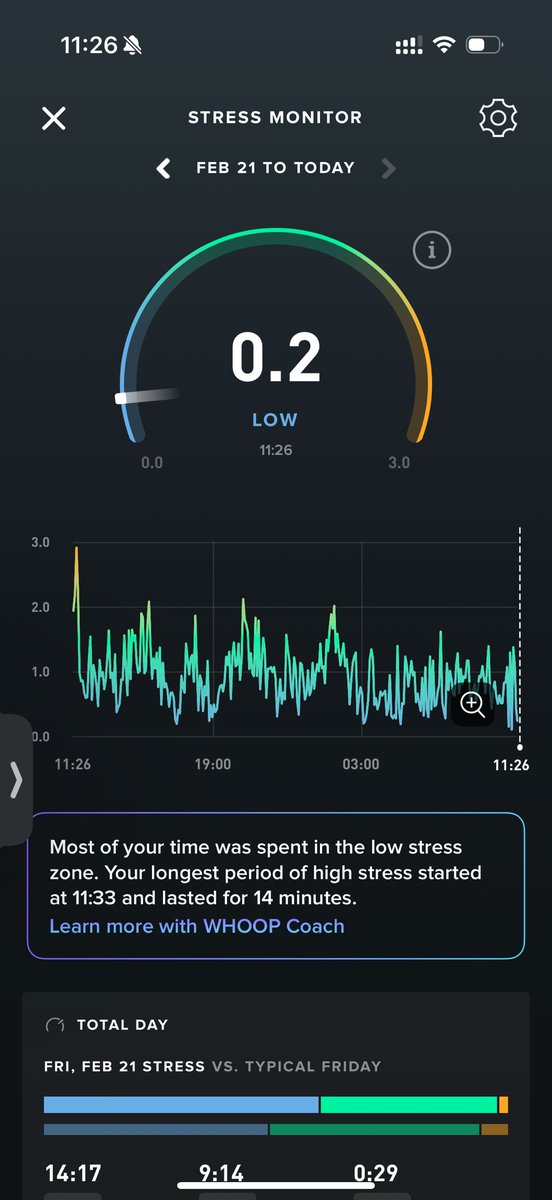
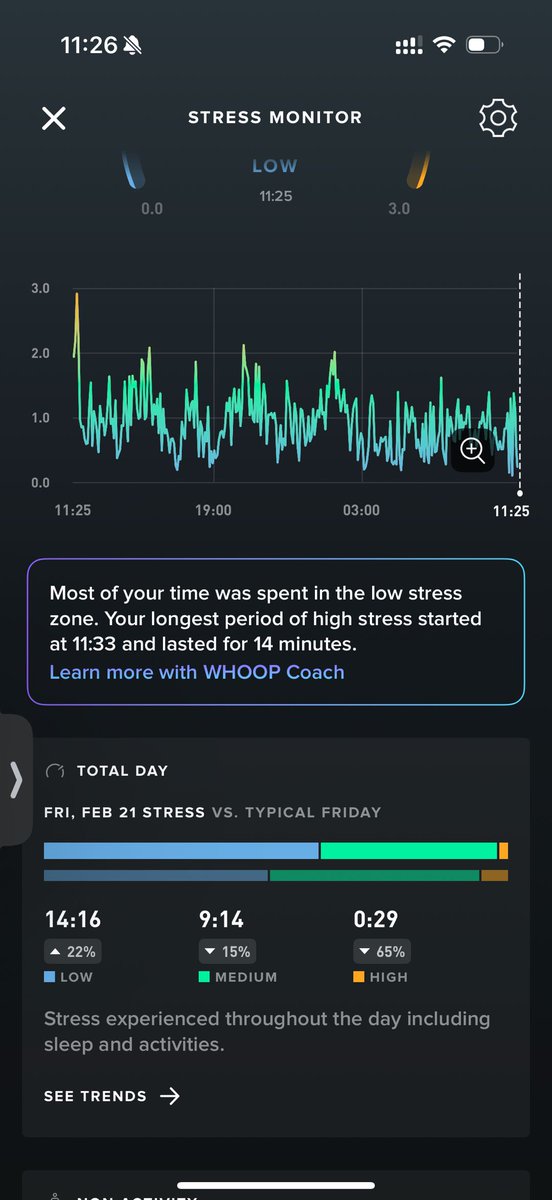
some of you saw I am wearing a WHOOP and asked what is my stress monitor look like for last night. Here is it, I didn't get any single sleep, but actually looks not too bad, i guess i was too focused commanding all the meetings. Forgot to stress...I think it will come soon when i start to really grasp the concept of losing $1.5B
FYI, I got told about the hack around 10pm my time.
English

Solana is great because it has a built in tornado cash since no one can read the explorer
barney@barneyxbt
hacker is bridging all of the ETH to solana LMAOOOOO
English
@CirrusNFT Yeah… nah.
Requiring connection for “rewards” encourages reckless wallet behaviour and should be an immediate deal breaker for anyone serious about crypto.

English

This is getting squeezed and a lot of you have no idea that you qualified for the airdrop for holding certain NFTs or having an active EVM wallet
Good time to claim if you haven't already: rewards.story.foundation

English

I will refer anyone who can tell me the exact locations of any of the following photos for a job at Helius:




mert@mert
I'm hiring for a new role at @heliuslabs forensic researcher your job will be: - monitor onchain data for sus activity - write about it - set up systems to prevent fraud proactively DM proof of work to apply
English
Revisiting this from 6 weeks ago.
Think I’m not alone right now…
Hut6@_Hut6
Feeling very disillusioned by this space at the moment. Can only think of a few genuine influencers in this space who I respect. Anyone else feel the same?
English
English

I see @frankdegods keeps crashing out, and it seems he genuinely doesn’t understand why most people hate him.
He spent a year and a half building a community that loved him - @DeGodsNFT -, then spent the next two years tearing it down.
When his community rightfully turned on him, he started showing off his personal profits.
Now, the only ones who engage with him are those hoping he’ll pump their bags or shill their ticker.
No one supports him for who he is anymore, only for his influence.
He’s surrounded by mercenaries.
I haven’t seen any genuine support from any Degods lately.
Haters don’t fade; they only grow.
Haters give others a reason to hate, spreading like an infection.
I find it hard to believe he doesn’t know this.
I assumed he had already made peace with his choices, fully aware of what was coming.
Just a random thought no one will read.
English
@thePM_001 @seconds_0 Lots of questions are already being asked and asked again.
This is a way to more efficiently answer those questions, where we already know those answers, saving effort and resources.
Surely that advances the pursuit of novel knowledge, rather than hinder it, no?
English

See the problem is, that it does all these researches for each user individually, but the total sum of organized knowledge accessible to mankind does not increase because of the knowledge-silos.
So lots of questions will get asked again and again, wasting computational resources and hindering civilizational progress.
It is a classic AIDPA (AI decay-promoting agent) thing.
English

ok, OAI Deep Research is worth probably $1000 a month to me. This is utterly transformative to how my brain engages with the world. Im beyond in love and a little in awe.
English
@SOLBigBrain this will help
x.com/0xMert_/status…
mert@mert
SIMD96 goes live on Solana in a few hours what is it? brief context: validators make money in 3 ways 1) issuance 2) MEV 3) priority fees when validators say they take no commission, they mean they take a 0% cut on either issuance or MEV or both for example, Helius passes the entirety of both issuance and MEV rewards back to you without taking a cut so your APY from those are maximized but the priority fees are generally not shared <--- important (at least not shared in protocol) in fact, what happens is when a priority fee is paid, 50% of it is burned, and 50% goes to the validator that processed those txns SIMD96 removes the burn such that 100% of the fee goes to the validator instead (you might ask why? basically, the burn incentives side deals that cut out both the stakers and the protocol itself, so it's long-term incentive incompatible — you can debate whether that's good or bad, but that's not the point of this post there is also a strong proposal live right now around reducing issuance, which I expect to pass) the point is this: now validators will make extra income from those fees — but the stakers will not benefit unless the validator shares those rewards as well (recall above how only issuance and MEV are shared today mostly) there is currently no great method for sharing these rewards back with the stakers, but Jito has a TipRouter coming soon which will largely fix this for now, what @heliuslabs validator will do is share a % of those rewards by directly depositing them into the hSOL LST pool so hSOL holders will benefit from a boosted APY from the newly deposited hSOL block rewards (in proportion to how much hSOL is held, we will not be giving out the rewards from native stakers to liquid stakers) — there will also be a dashboard where you can track this transparently this will be the state of things until Jito's TipRouter goes live, upon which a % of those rewards will be shared with all stakers, native or liquid so TL;DR — burn goes away, validators make more from priority fees, and Helius will share those rewards w hSOL holders at first and then all native stakers once Jito's tip sharing system is live (ETA: few weeks)
English

With SIMD-0096 live, does this mean native SOL stakers get screwed?
I don't use many LSTs, due to the fact I do not want to trigger a tax event going from SOL to an LST.
As a native SOL staker, I unstaked a ton of SOL last night to figure out where I can get optimal yield.
Max Kaplan@maxekaplan
SIMD-0096 goes lives tomorrow on Solana. TL;DR (super high level) Right now, when a user submits a tx with a priority fee, 50% goes to the validator and the other 50% gets burned. After SIMD-0096, 100% will go to the validator. Once SIMD-0096 goes live, you will hear about "validators sharing block rewards via LSTs." It is something I do not believe is good for the network. Why? Right now, in terms of reward payouts, stakers do not need to trust validators. - Inflation rewards are paid to stakers automatically by the network. - Jito handles MEV payouts. In order to share more profits with stakers, a validator can create an LST and distribute block rewards into the stake pool to "pump" the APY of the LST. The flow typically goes like this: - Validator promises on social media to distribute X% of block rewards. - Validator transfers X SOL from their wallet to the stake pool backing their LST. - The stake pool stakes the assets without minting more tokens. --- Optional for nerds: Primer on LST APY. An LST's APY can be defined as basically the rate of change of `total stake in pool / total tokens minted`. When you hold an LST, in terms of network rewards, you hold a receipt token which represents your ownership share in the stake pool. As a result, you are entitled to a portion of the staking rewards the pool earns. If any user deposits more SOL into the pool without minting more tokens, this makes the numerator in the above equation go up, thus giving any LST holder a higher APY. Think of it as a "free APY boost." --- While I have nothing against validators following this method (in fact many that I respect a lot do), I do not believe this is a good solution for the network because: 1. This now introduces a new trust assumption for stakers. As a staker, you must now trust that the validator distributes X% of block rewards that they stated they would distribute on social media. 2. It is extremely difficult for a staker to verify that a validator is distributing the percentage of block rewards they said they would. I'n fact, I'm not aware of a single place where a staker can verify this today. 3. Because there's no guarantees from the network itself that a validator will pay the percentage of block rewards they said they would, this makes for a prime opportunity to "rug." I am not saying that I think validators WILL rug. I am simply stating that this is a real possibility. 4. It makes for an extremely bad UX for stakers. It's relatively easy today to see how much in rewards you made as a staker between inflation and MEV. With block reward sharing via LSTs, this is much more complex. What are the solutions? In my opinion, there two good solutions, both short term and long term. 1 (short term): @jito_sol is going to allow validators to distribute block rewards via their tip router in a few weeks. All this data will be viewable on chain where less trust assumptions are needed between a staker and a validator. 2 (long term): SIMD-0123 will allow validators to distribute a portion of their block rewards inside the protocol itself, just like inflation rewards work today. I strongly believe this is the best solution. My stance I absolutely hate "trust me bro" situations, and based on my points above, I believe the LST method is confusing, a bad UX, and opens the door for potential rugs. I've also been consistent in making sure I've been as transparent as possible over the years. Proof: 1. I voted no on SIMD-0096 because I wanted it to go out with SIMD-0123 (decrypt.co/232652/solana-…) 2. @orangefincrypto is the only validator I am aware of that has a near realtime dashboard displaying all the revenue it makes (insights.orangefin.ventures/solana). 3. Orangefin / Sol Strategies has an entire trust page dedicated to transparent compliance where anyone request access to our ISO 27001 certificate & associated policies (trust.orangefin.ventures). Participating in something like block reward sharing via LSTs feels like a step backwards due to it's lack of transparency, and I don't think it fits the brand. I am a strong supporter of SIMD-0123 which I have publicly stated many times. In addition, I am excited to see how Jito's tip router can act as a stop gap solution until SIMD-0123 is ready. I'd like to end by saying that there are many reputable validators out there that will and are doing block reward sharing via LSTs. Some of these validators have been doing this for years and I don't want to take anything away from their integrity. At the same time, I also think it's important to do what's best overall for the Solana network. And I think a world where "block reward sharing via LSTs" becomes the norm ruins the staking experience of Solana which is objectively much better than it's competitors. If you made it this far, thanks for listening to my rant. ♥️you all.
English
@gregisenberg Sounds about right.
I spend about 1/3rd of my days coding now. And I’m not a coder.
English

This chart is nuts. Software developer jobs down 70% from peak.
People will blame the end of free money. But something way more interesting is happening.
The middle class engineer is dying. And it's dying because they're not needed anymore.
One good dev with Github Copilot ships what entire teams did five years ago. Microsoft just reported the highest revenue per employee in history.
The "entry-level engineer" doesn't exist anymore.
Instead, we have product builders who happen to code. Armed with AI, they ship entire products in days.
Meanwhile, the truly elite engineers are making more money than ever.
And they've shifted to working mostly on frontier tech. I mean the stuff that's really hard.
AGI at OpenAI.
Designing rockets at SpaceX.
Self-driving car tech at Tesla.
Product builders are becoming solopreneurs and creators Frontier engineers are making hedge fund money
In 2025, "software engineer" doesn't mean what it meant in 2020.
And that's what this chart really shows.
The middle is gone. The top is elite status. And everyone else is becoming a builder.

English

It’s not like these politicians started companies or were NBA All-Stars, so where did they get all the money?
Does anyone know?
Gabor Gurbacs@gaborgurbacs
Nancy Pelosi Annual salary: $223,000 Net worth: $202 million Mitch McConnell Annual salary: $200,000 Net worth: $95 million Chuck Schumer Annual salary: $210,000 Net worth: $75 million Elizabeth Warren Annual salary: $285,000 Net worth: $67 million @elonmusk @DOGE
English
@CryptoTaxSucks If it’s a capital asset.
10k is a lot of transactions to still be on capital account, no?
English

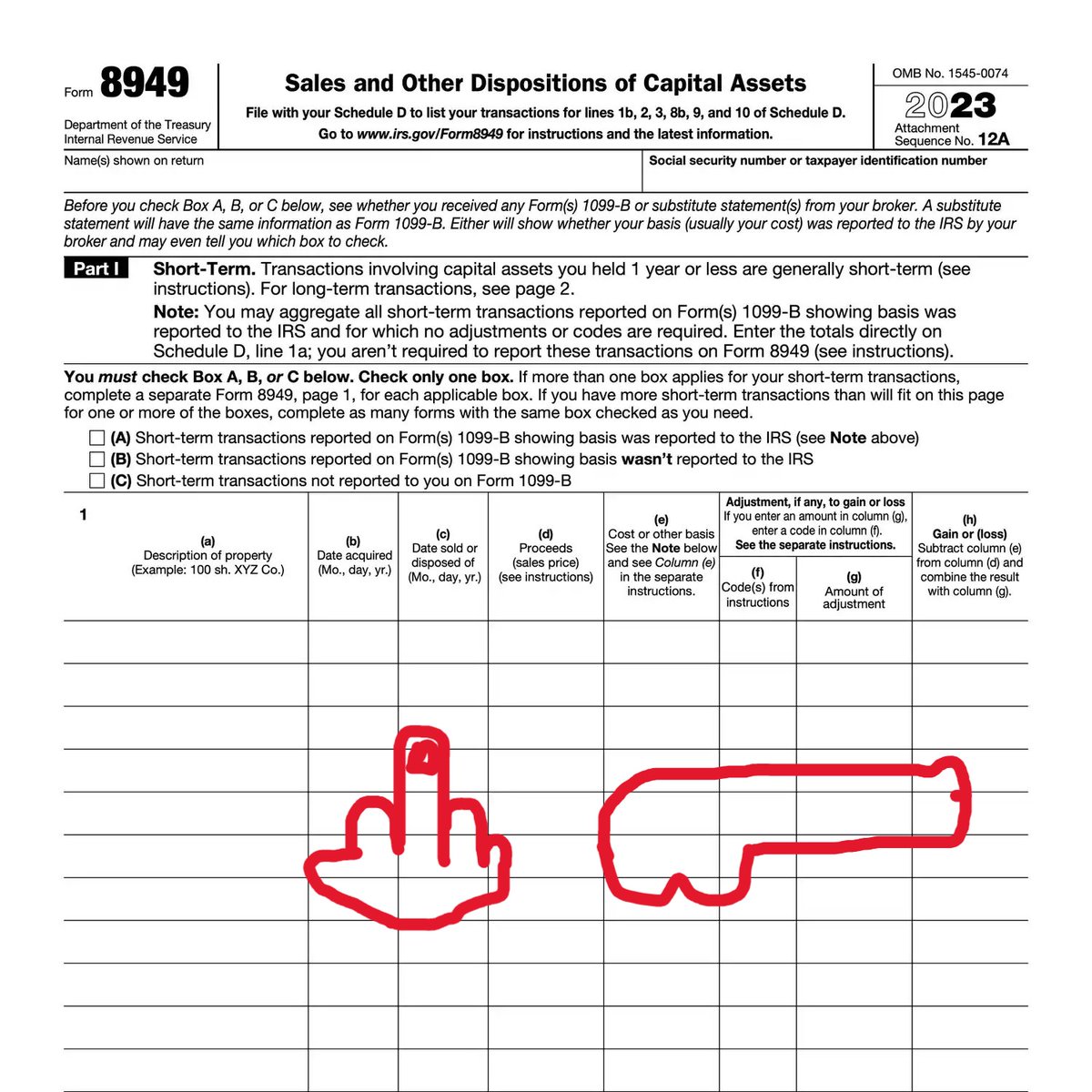
It's insane how difficult the IRS makes reporting your crypto taxes.
You have to report every single disposal of a crypto asset.
And not just selling to USD.
They want you to tell them:
-The date you bought it
-How much you bought it for
-The date you sold it
-The date you sold it for
Which means you have to keep track of all of this.
Using crypto tax software helps.
But it's not a perfect solution.
It requires about 1 hour of manual labor to properly review 25-100 txs for the average person.
That's between 100-400 hours of work for someone with 10k transactions in their wallet
(average we have seen this year)
With cost of living thru the roof, and the state of the trenches in shambles...
...who really has that much time to dedicate to getting their taxes right?
I'd love to see more simple reporting requirements like Portugal has (only report sales to fiat & income received)
But until then, that's why we're here to help.
We can do the heavy lifting of tracking your crypto transactions to make reporting your taxes easy.
If you'd prefer to get professional help vs. doing it yourself - request a quote in our bio.
We'll give you a fixed fee price to get the work done for you.
And if that fits your budget, you can focus on making money vs. calculating how much you owe.
English