Nishad Shah

865 posts

Nishad Shah

Nishad Shah

@_NishadShah

Speck of dust within the galaxy. Cofounder @goinri @gotrade94 (YC W23). Chatrooms & ecomm product head @ShareChatapp. Seeker. Writer. 太极图 Views are my own.

Katılım Ocak 2019
49 Takip Edilen179 Takipçiler
Sabitlenmiş Tweet
Nishad Shah
Nishad Shah@_NishadShah·
Thought of starting a meta-thread of threads on different topics, my left-brain couldn't resist the organisation temptation this has. On a serious note, I think it will make looking back at my own thoughts easier. So here goes...
English
4
0
3
0
Nishad Shah
Nishad Shah@_NishadShah·
Building AI products is like learning to ride a dragon for an aerial war. There's so much potential, but the entire game is about ingesting the right context at the right time for the right output, reliably. I get why there's so much focus on harness over skills now.
English
0
0
0
18
Nishad Shah
Nishad Shah@_NishadShah·
Been noodling a lot with LLM personalities and now when I send messages, I self-diagnose if I'm being warmer or not - especially for strangers, they shouldn't rather talk to an LLM instead 😅
English
0
0
1
31
Nishad Shah
Nishad Shah@_NishadShah·
No one’s going to stop hiring engineers, but the engineering team is going to look very different in 3 key ways. Once you start vibecoding production grade apps, you realise that engineers are not really going away, because there are so many parts to engineering apart from just coding. I covered one aspect of this on long term technical decisions based on product vision in my previous post. But there’s other stuff also on setting up data pipelines, monitoring them, adapting them as scale / usecase evolves and a lot more. But the way I look at an engineering team now has changed fundamentally. 1 - Systems thinking has to be excellent. While this has always been a part of the job, now it becomes doubly crucial as you dont just code, but manage multiple agents who do and you have to design your system to be failure proof with those in it. The entire system and its failure points has to be loaded mentally in your head. 2 - Security moves from hygiene to first principles. Every new surface area AI introduces is a potential vector. Anthropic's own investments here (Glasswing, Mythos) signal where they think the real risk sits. 3 - Product intuition is now a technical skill Similar to how engineering now is (partly) a non-technical skill - engineers should be ramping up on product insights as well. They shouldn’t be doing the product function, but if an engineer has not been directly exposed to user at all, it’ll hamper their own judgement about engineering decisions. Gone are the times where engineers would only be hired as code monkeys. The next class of engineers in the AI era are going to be / are already solid. The hiring bar just went 🚀
English
0
0
0
52
Nishad Shah
Nishad Shah@_NishadShah·
One unexpected discovery from vibecoding: I’ve started to genuinely enjoy long-term technical thinking. It usually starts with a rough implementation plan. But instead of evaluating it in isolation, I bring in a view of where the product could evolve—and we work backwards into architecture that can support that future. It feels a lot like strong PM–EM collaboration, just with far more depth and iteration speed. Another interesting bit is how different LLMs show up like different engineering partners. Gemini tends to be warm and exploratory, so brainstorming is a lot more fun and I understand tradeoffs better. Claude Code feels like a sharp senior dev—opinionated, efficient, less interested in discussion. "You tell me the problem and I'll get it done." In some cases, Claude Code has found out and solved bugs that Gemini couldn't. Choosing an LLM is starting to look a lot like choosing a teammate. Hire for the strengths you want :)
English
0
0
1
28
Nishad Shah
Nishad Shah@_NishadShah·
@swapanseth Hey @swapanseth have been exploring getting these services, wanted to know your experience using the same. Can we do a quick call?
English
0
0
0
5
Nishad Shah
Nishad Shah@_NishadShah·
Wasn't expecting to get 'bhai' back, you get what you put in I guess
Nishad Shah tweet media
English
0
0
0
36
Nishad Shah
Nishad Shah@_NishadShah·
The way to operate in the AI age is by the 80-15-5 rule. 80% through AI systems and quick prompting 15% refinement through taste The last 5% is to make the 15% better - the number of reps you put in to refine your taste. That 5% is going to be the crux of individual moat.
English
0
0
0
22
Nishad Shah
Nishad Shah@_NishadShah·
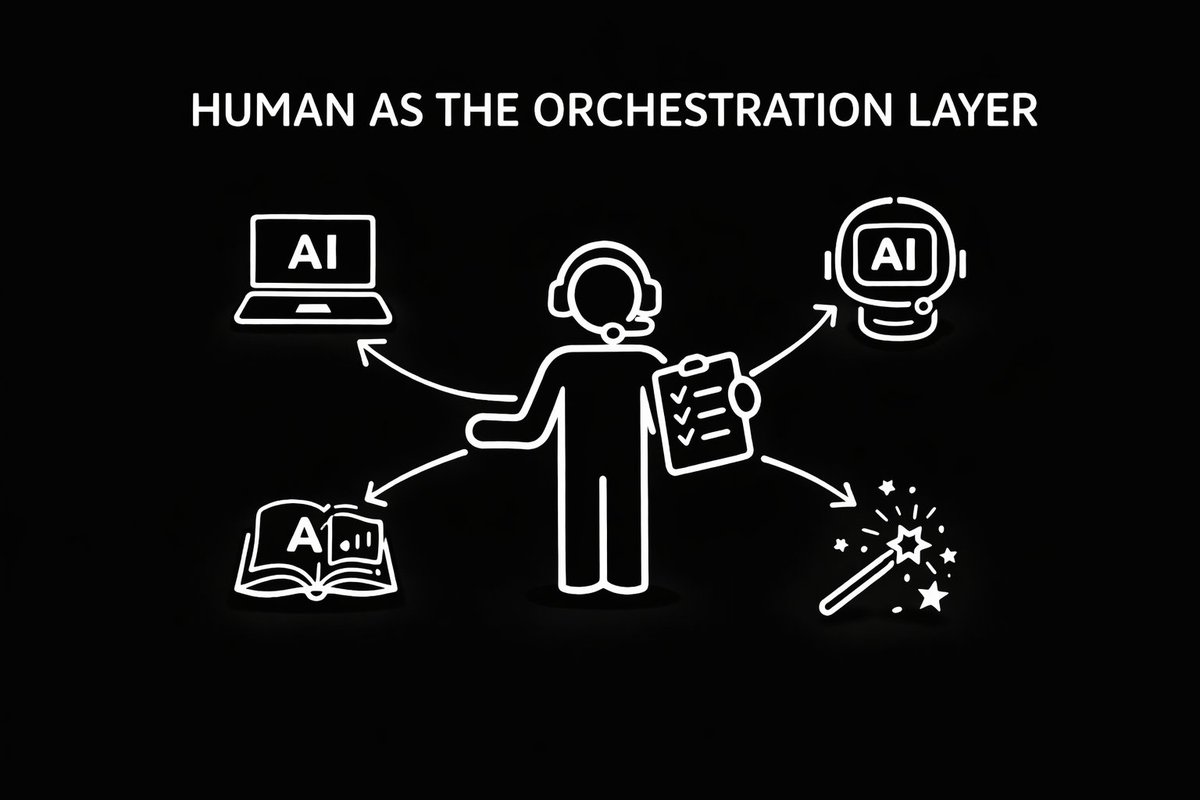
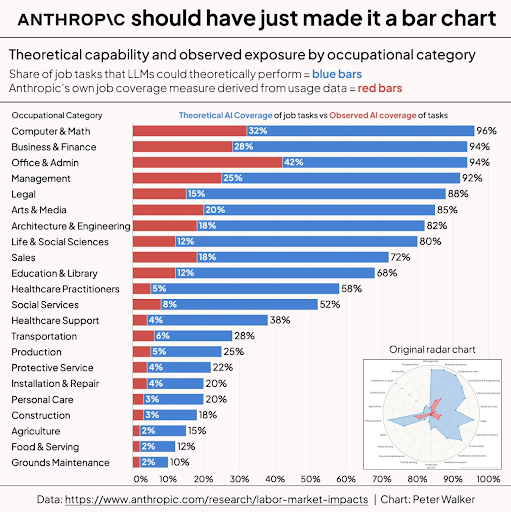
Why is there still a gap between theoretical and actual usage right now? We’re at Stage 2 of AI adoption - Human is the orchestration layer between different AI tools right now. Stage 1 was mostly about getting individual tools superpowered by AI. This has been - Cursor, Claude Code for coding - Replit/ Figma Make for prototyping -Claude / Gemini for general summaries / tactics etc. AI leverage from one tool predominantly. 🎯 Stage 2 is about AI leverage from the entire AI tool ecosystem As these tools started getting more pervasive, what happened practically in organisations was that an existing employee started augmenting their daily workflow with these tools and became 5-10x faster. So at an abstract level, now the workflow looks like - user inputs some instruction in one AI tool, takes the output and tweaks it and feeds into another AI tool and then so on. This looks trivial, but the tweaking part is where a lot of human judgement today resides. “Oh this is not really what I want, there are these parts that are wrong.” “This misses nuance, let me add some more context.” With each such workflow iteration, known edge cases or gaps vs requirement are eliminated, until the workflow is perfected. As external factors change or new uncertainties are introduced, more tweaks are required to the workflow. Today, the orchestration layer of humans essentially includes two skills: 1️⃣ Judgement / taste, especially in uncertain situations 2️⃣ Reliability of required output It’s hard to replace 1 for now (that is a Stage 3 problem), but we can safely say that at the end of stage two, all repeatable workflows will be done by AI agents, which means reliability of output would no longer be a problem. Humans might still be in the loop for 1% edge cases here, but they will be highly specialized to that workflow. Solve for reliability today and see the adoption curve go drastically up.
Nishad Shah tweet mediaNishad Shah tweet media
English
0
0
0
35
Nishad Shah
Nishad Shah@_NishadShah·
What should have started in 2011, but better late than never! Have been saying this since the past 2 years, it's time to be full stack!
Nishad Shah tweet media
English
0
0
0
20
andrew chen
andrew chen@andrewchen·
Today the job of the PM is the define the product, how it works, and how it’ll get built But we won’t need that soon The future job will be simple to define the goals, the constraints, and long term strategy - and letting the AI figure the rest out Goal Architect, not product manager
English
135
37
496
85.1K
andrew chen
andrew chen@andrewchen·
the prototype is the new PRD ⁠If your team needs a 20-page product strategy doc, you’re already behind someone with a weekend prototype The ability to feel how good a product is, from actually using it, beats all the theorizing and market analysis and user research As they say -- sometimes you just know it when you see it. This applies to product experiences too
English
72
37
427
65.8K
Nishad Shah
Nishad Shah@_NishadShah·
But getting there is not easy, next post will cover how you can become a good architect. Follow me @_NishadShah to stay tuned on this series of Building with AI.
English
0
0
0
22
Nishad Shah
Nishad Shah@_NishadShah·
All of this to answer one question: “What should the end product feel like?” Never ever, never ever, ever, outsource that feeling. Shape the feeling, outsource the labor.
English
1
0
0
24
Nishad Shah
Nishad Shah@_NishadShah·
It’s hard to believe this but AI slop and AI resistance is actually coming from the same mindset ➡️
English
1
0
0
47