

Succie PrideyChachex
704 posts
Succie PrideyChachex
@_Pfumandini
I only want Autonomy plus Pridey like that of a lion🦁. M3GA👽
ZimBoe👍🏾 Katılım Temmuz 2024
884 Takip Edilen748 Takipçiler


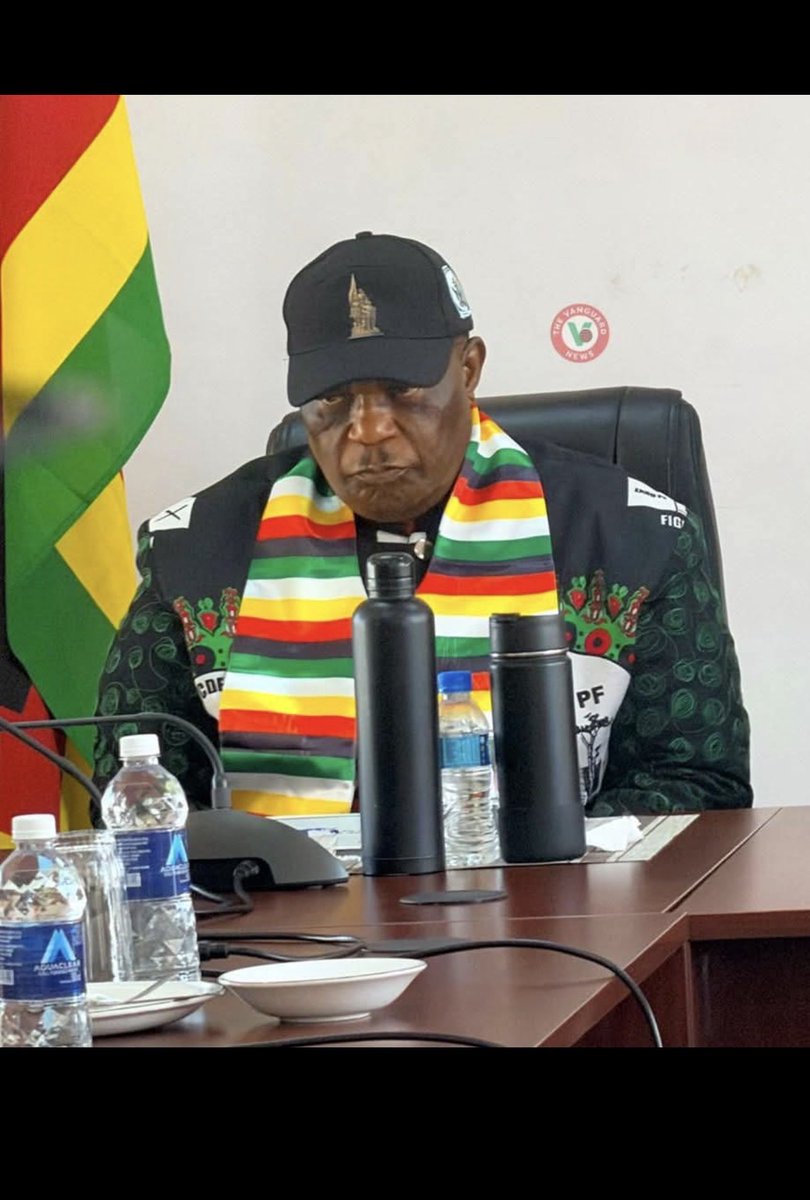


Magafa ngatikwanei ka 😂 350k views in 9 hours mukuda kutopinda meter in 24 hrs kaimi 🔥

Zimbabwe 🇿🇼 Indonesia
Ok let me take off mi jacket for the culture.
Check out the track 2 Nhanho off the Ngoma Dzauya Riddim Compilation
youtube.com/watch?v=yxM6n5…
YouTube
English


“Hello Mai Tino, isai henyu chihuri padoor ndikurara ku One Big Party naBaba vangu kana wawona zvichinetsa endawo kumba kwaBaba vako”
Filipino


Succie PrideyChachex retweetledi


Over the past eight years that I have known Tino Machakaire, one thing my friends and I have always known since our college days is that mukoma has never tolerated substance abuse. Whether it is smoking, alcohol, or any other form of substance intake, he has consistently maintained the same position. It never mattered whether one was family, a close associate, or a strategic acquaintance his stance has always remained unchanged.
That is why, when I witness the ongoing character assassination theatrics that appear to be part of a politically motivated campaign to smear his name, I cannot say I am surprised. Those behind such efforts clearly have objectives of their own, and the lengths they are willing to go to achieve them are both shameful and disturbing.
What concerns me even more, however, is the reaction of the broader public. How have we, as an educated society, become so quick to abandon facts in favour of baseless hearsay? How have we reached a point where serious accusations are accepted and circulated without the slightest demand for proof or verification?
Have we become so consumed by political polarisation that we now embrace any narrative, no matter how implausible, simply because it targets someone we disagree with politically, institutionally, or personally? Surely, as a society that prides itself on education and critical thinking, we can do better. We should be questioning the validity of claims before amplifying them, rather than allowing ourselves to become a manipulated audience serving the interests and agendas of others.
It is troubling how easily outrageous narratives can be presented as fact, only for many to accept them without conducting even the most basic inquiry into their authenticity. We owe ourselves a higher standard than that.
As for those orchestrating and financing these smear campaigns, history has a way of catching up with such conduct. Days of reckoning inevitably arrive. And for those individuals who perform a lap dance for every new customer willing to pay, loyalty is never part of the transaction. The same people who betray one person today will, without hesitation, expose the affairs of their previous clients tomorrow. That is the nature of hired middlemen their allegiance is never to principle, but only to the highest bidder.

English

@winkydonline Gafaa rese take action, Gaffa Prezha Party
English

@brunfocused Woita Entrepreneur asingazive PESTEL hre??
Română
Hanzi stop complaining about the problems of Zimbabwe, start your own thing be an entrepreneur 👍🏾so we did. amount of money I lost yesterday because of Econet 🙌🏾😂 you cannot outwork your environment
English
@cherishchashe Unonzwa ropa richimhanya paside pemusoro 🙌🏾🤦🏾♂️
HT

Rate randiri kufamba naro pakutaura ndega kaa haris bho ndototanga conversation kusvika ndaipedza, kana zvichichemedza ndobva ndatochema.

@TafadzwaMandov2 Zvoshanda here or zvoo shandeii??? ndambokorobhera chimwe changa chinazvo kugomba izvii ,zvakangofanana nejewellery izvi

Pamunonzwa kuti baba varambira ku small house havachade kudzoka kumba ndiyoyi type yevanhu vacho iyi.

Filipino
Take it easy on the AI generated writting Malume
Nothing is worse than ' intellectual thought ' turning out to be an automated arrangement of language that mimics the form of thought
It is an intellectual turn off 🤧
🚮

Prof Jonathan Moyo@ProfJNMoyo
Closing Argument, Part 1/4, No Referendum Is Required – The Constitution, Not Politics, Decides: In this defining moment for Zimbabwe’s developing constitutional democracy, when Parliament begins to engage the Constitution of Zimbabwe (Amendment No. 3) H.B. 1 Bill, 2026 next month, it will be against the backdrop of persistent calls for a referendum which have come from certain church groups, organisations, and individuals that have declared their “opposition” to the Bill. While these voices merit due and careful attention, the political demands propelling them appear motivated by a desire to fill a clear and present vacuum in opposition politics or to revive fading political careers. Notably, some of the voices have taken an uncompromising and even extreme position, insisting that Parliament “must withdraw the entire Bill or take it to a referendum”—a stance that would usurp Parliament’s constitutional duty enshrined in sections 117 and 119 of the Constitution, thereby weakening the legislature as a key national institution in the country’s constitutional democracy. It is particularly noteworthy and concerning that among those advancing this view are the Zimbabwe Heads of Christian Denominations [minbane.wordpress.com/2026/02/27/htt…]; Zimbabwe Council of Churches [zccinzim.org/wp-content/upl…] and Zimbabwe Catholic Bishops’ Conference [facebook.com/JesuitCommunic…]. Yet these political demands, however loudly voiced, cannot override the fundamental and supreme law of the land: The Constitution of Zimbabwe (2013). As the attached infographic clearly demonstrates, in the 104 years from 1922 to 2026, Zimbabwe has held exactly nine referendums. A careful analysis of the table reveals an unmistakable and decisive pattern: eight of the nine referendums concerned major transitions from one constitutional or governmental system to another. These included the push for responsible government versus union with South Africa (1922), the Federation of Rhodesia and Nyasaland (1953), approval of the 1961 Constitution, the 1964 independence referendum on the 1961 framework, the 1969 shift to a republic and new racial-roll constitution, the 1979 Internal Settlement for limited majority rule, and the two post-independence constitution-making exercises in 2000 and 2013. Only one — the 1934 Southern Rhodesian sweepstakes referendum on gambling — had nothing whatsoever to do with constitutional change. Critically, not a single one of these nine referendums was ever held on a mere adjustment or amendment to an existing constitution. This historical record is irrefutable. The Lancaster House Constitution was amended 19 times between 1980 and 2009 without any referendum. Only the 20th change — the transition to the 2013 Constitution — went to the people, and that was a purely political decision negotiated under the Global Political Agreement (GPA) by ZANU-PF and the two MDC formations in the Government of National Unity. The 2000 referendum on the draft constitution was likewise a unilateral government initiative, made possible only by the hurried enactment of the Referendum Act (Chapter 2:10) because the Lancaster Constitution itself imposed no such requirement. Even the 1980 transition from Rhodesia to Zimbabwe occurred without a referendum. Prior to 2013, therefore, the decision whether to hold a referendum when repealing and replacing a constitution was always a matter of political discretion or negotiated settlement. That era ended the moment the people of Zimbabwe adopted the 2013 Constitution. For the first time in the country’s history, the fundamental and supreme law itself resolved the referendum question once and for all. Section 328 sets out a clear, exhaustive, and exclusive framework. Now, the Constitution requires referendum only for amendments to Chapter 4 (the Declaration of Rights), Chapter 16 (Agricultural Land), or Section 328 itself. That is the constitutional text — plain, deliberate, and binding. The people endorsed it in the March 2013 referendum; Cabinet and Parliament enacted it. Full stop. Detractors, including the Honourable Mayor of Bulawayo, Senator David Coltart [x.com/i/status/20578…], anchor their demand on a fundamental misreading of Section 328(7). They treat the phrase “the effect of which is to extend the length of time that a person may hold or occupy any public office” as a free-floating, catch-all test that applies to any constitutional amendment whatsoever. This interpretation is demonstrably wrong — both on the face of the constitutional text and by binding precedent of the Constitutional Court set in the Mupungu case. Section 328(1) defines a “term-limit provision” as “a provision of this Constitution which limits the length of time that a person may hold or occupy a public office.” Section 328(7) then states: “Notwithstanding any other provision of this section, an amendment to a term-limit provision, the effect of which is to extend the length of time that a person may hold or occupy any public office, does not apply in relation to any person who held or occupied that office, or an equivalent office, at any time before the amendment.” The two-pronged test is unmistakable: the provision being amended must first qualify as a term-limit provision before the “effect” test is even engaged. The phrase does not apply to “any” amendment to the Constitution. This was definitively and authoritatively settled by the Constitutional Court in the landmark case of Marx Mupungu v Minister of Justice, Legal and Parliamentary Affairs & 6 Ors (CCZ 7/21, 2021). At paragraphs 50–51 the Court explained that term-limit provisions concern the tenure of specific public offices and gave concrete examples, holding that: “As is self-evident, the tenure of all of the aforementioned public offices is undoubtedly subject to a specific “term-limit provision” within the meaning of s 328(1). Consequently, an amendment to any such provision, the effect of which is to extend the length of time that a person may hold or occupy the public office in question, falls squarely within the ambit of s 328(7). The ConCourt determined that only amendments to such provisions, where the effect extends personal holding of office, engage the protection in subsection (7). The Court’s interpretation is binding and leaves no room for the expansive “effect-based” reading advanced by detractors. This reasoning applies to the Bill. Clause 3 amends section 95(2), which governs the length of the term of office of the President. That provision does not impose any limit on the cumulative time any individual person may serve as President. The two-term personal limit is separately set by section 91(2). Section 95(2) instead establishes the institutional term of the Presidency itself — five years, coterminous with the life of Parliament under section 143 and the electoral timetable under section 158. It is part of Zimbabwe’s democratic electoral cycle, not a personal term-limit cap. Amending the cycle from five to seven years is therefore a reform of the institutional timing of elections, not an extension of any individual’s “term-limit provision.” Exactly the same logic applied when Constitution (Amendment No. 2) Act 2021 extended the retirement age of superior court judges from 70 to 75 years — an adjustment whose effect did not trigger a referendum. A referendum on this Bill is therefore constitutionally impermissible. It cannot be conjured by unilateral government decision as in 2000; by an inter-party political pact as in 2013; or by the demands of any church group, civil-society organisation, or individual today. The 2013 Constitution removed the referendum question from the realm of political convenience or manoeuvre and placed it squarely within the realm of the text of the Constitution. The rule of law is not optional. The text of section 328 is clear. Its meaning has been authoritatively interpreted by the Constitutional Court in the Mupungu case. The historical record — as the attached infographic irrefutably proves — is unambiguous. Any contrary claim is political rhetoric, not a constitutional argument. In the circumstances, the duty of Members of Parliament is now plain: they should proceed with the Bill with textual fidelity in procedural accordance with the Constitution. The sovereign will of the people, expressed in 2013 about when to hold a referendum, demands nothing less. Fidelity to the supreme law of the land is not a matter of choice — it is the foundation of Zimbabwe’s constitutional democracy. Amendment No. 3 Bill can, and should, advance without a referendum!
English
@zvikondima @YourGirlTino Akushanda hre tinzwanane 🤲🏾
Indonesia

@YourGirlTino kkkkkk very addictive that one , izvezvi ndine ma drone andakachenget kumba uko

@thadon_263 Sacrificial lamb 💀, time to retire old madala😂😂
English


Ukaona bhiridha achinwa drink pabasa, ziva kuti bag re cement raenda🏃🤸
Indonesia

Dei mati thank you kuna Shefu kwete varmurikuti vagona
Cadre Shangri-la@CadreShangrila
Wicknell Chivayo has withdrawn charges against ex-wife Sonja Madzikanda and her mother, Tabitha Madzikanda. Surely, where kids are involved dialogue, not incarceration is key.
Filipino
@joeboy_forex SaLearner ndotangira papi chidhiri ichi ,any tutorials??🤲🏾
Filipino

Its been a while man. Hoping to be very back‼️✅. Get free signals here
chat.whatsapp.com/LHBZDOOcAG99to…

English
Succie PrideyChachex retweetledi
Nearly most Zimbabwean surnames are found in prison , many inmates can go for months to years without a visit from a relative which by the way is an antidote to mental disorders. Prisoners pray unceasingly 24/7, many find God inside . Visit them!
English