TeachingBridge

2.6K posts

TeachingBridge banner
TeachingBridge

TeachingBridge

@_TeachingBridge

TeachingBridge Ministries | Christ‑centered. 1689‑confessional. Helping believers think biblically and love Scripture. @_DBosley

Centerville Katılım Ağustos 2021
421 Takip Edilen182 Takipçiler
Sabitlenmiş Tweet
TeachingBridge
TeachingBridge@_TeachingBridge·
📌 Transparency & Engagement Commitment For clarity, integrity, and accountability: This account exists for a personal ministry. My personal (non-ministry) account is @_DBosley for full transparency. This account is not anonymous; I simply maintain a modest boundary between personal and ministry spaces. All theological content, arguments, convictions, and posts on this account (@_TeachingBridge) are authored by me as a human creator. They reflect my own study, reflection, prayerful conviction, and formulation as a 1689 Federalist Reformed Baptist lay-theologian. I occasionally use AI tools only for light formatting, proofreading, grammar checks, or layout efficiency, much like using a grammar checker or word processor. AI does not generate my theology, exegesis, arguments, replies, or substantive content. This account is not automated, scripted, or bot-operated in any way. My aim is simple: honest, Scripture-centered dialogue, biblical clarity, and charitable engagement that honors Christ. I also want to be transparent about my online posture. I have not always engaged in a way that reflected the fruit of the Spirit. The speed of social media, frustration in rapid exchanges, and the heat of disagreement have at times drawn me into responses that were sharper or less patient than they should have been, even when defending sound doctrine. I am grateful for the Lord’s conviction in those moments and for the growth that follows repentance. Going forward, I am committing to this posture: • Engage to clarify Scripture and point to Christ, not to “win” arguments or score points. • Slow down in fast spaces; step back when platform limits hinder careful and nuanced discussion. • Distinguish honest disagreement from bad faith; avoid assuming or assigning motives without clear evidence. • Refuse to moralize theological differences or weaponize labels as conversation-enders. • Guard against pride. Right doctrine never excuses a wrong spirit. Knowledge puffs up; love builds up (1 Cor 8:1). • When I fail in tone or charity, I will own it publicly. Growth in grace matters more than maintaining an image. I stand by grace alone; sola gratia. If that grace is not visibly shaping my tone, patience, and humility, then my theology, however precise, is not being lived rightly. If you see me drift from this commitment, you are welcome and encouraged to hold me to it, privately or publicly. Iron sharpens iron when done in love (Prov 27:17). Union with Christ remains the center. May all we say, and how we say it, reflect Him. Grace & peace, Teaching Bridge Fellowship @_TeachingBridge
TeachingBridge tweet media
English
2
1
6
1.2K
TeachingBridge
TeachingBridge@_TeachingBridge·
@Acts7253 What does “propitiation” actually mean?
TeachingBridge@_TeachingBridge

Teaching Bridge Fellowship | Series: Are We Willing To Be Taught? Re-Examining the "Jesus Died For All" Passages 1 John 2:2 — “Not for Ours Only, but for the Whole World” Series: Are We Willing to Be Taught? Friends, Some verses sound simple until we slow down and really listen to what they say. One of those is 1 John 2:2: “He is the propitiation for our sins, and not for ours only but also for the sins of the whole world.” This verse is often quoted to mean that Jesus removed God’s wrath for every individual in exactly the same way. But before we assume that, we need to ask a careful question: What does “propitiation” actually mean? Propitiation is not a possibility. It is not an offer waiting to be activated. It means wrath satisfied and justice fully paid. If Christ truly removed God’s wrath for every individual, then no one could ever be condemned. Scripture does not teach that. So the verse itself invites us to slow down and read more carefully. John is writing to believers. When he says “not for ours only,” he is not contrasting believers with unbelievers. He is expanding the scope of Christ’s saving work beyond one group. The point is not every individual without exception — the point is a global people without distinction. Jesus is not only the Savior of one nation, one ethnicity, or one corner of the world. He is the propitiation for God’s people scattered throughout the whole world — Jews and Gentiles alike. This does not weaken the gospel invitation. It strengthens our assurance. If Christ is your propitiation, then God’s wrath toward you is finished. Your salvation rests not on your consistency, but on Christ’s completed work. This is not cold doctrine. It is warm comfort. That is why this series exists — not to argue, but to ask an honest question of ourselves: TBF Teaching Document: docs.google.com/document/d/e/2… Are we willing to be taught by Scripture, even when it challenges what we assumed? Next week, we continue with John 1:29 — “The Lamb Who Takes Away the Sin of the World.” Grace and peace. Soli Deo Gloria. #TeachingBridgeFellowship #AreWeWillingToBeTaught #1John22 #GospelClarity #ChristOurPropitiation

English
0
0
0
8
Stephen Sobieski
Stephen Sobieski@Acts7253·
Trying to limit “the world” to “people groups” doesn’t work in this context. Unless you’re going to argue John was saying Christ is “the propitiation for the sins of us Jews and Gentiles, and not only ours (Jews and Gentiles) only but also for Jews and Gentiles.” 3/3
English
1
1
4
45
Stephen Sobieski
Stephen Sobieski@Acts7253·
In 1 John 2:2 John states Christ is “the propitiation for our sins, and not for ours only but also for the whole world.” Many who view the atonement as limited in availability try to argue “the world” is a reference to all people groups in the world. Jews and Gentiles. 1/3
Stephen Sobieski tweet media
English
1
0
4
107
TeachingBridge
TeachingBridge@_TeachingBridge·
TeachingBridge John Owen is addressing the perennial conflict regarding the Regulative Principle of Worship—the doctrine that only what is commanded by God in scripture is permissible in worship. He identifies a horizontal pressure: when simple, spiritual, and biblical worship is presented, the unregenerate "world despises" it. It seems foolish or boring to those whose hearts require horizontal sensory entertainment. The danger, Owen argues, is when this horizontal contempt dictates the church's vertical posture. Feeling this pressure, the church makes the critical error of trying to make worship "more glorious and beautiful" according to human standards. Instead of resting vertically on God's decree, the church begins to "invent" additions, trusting in human psychology and aesthetic innovation to make God acceptable to the world. The ultimate warning is horizontal vs. vertical reality. Humans may assess their new additions as "glorious" and "beautiful," but the true vertical judgment is that "God abhors such inventions." Worship must be dictated horizontally by the vertical standard (God's Word). This requires a 'Godly Resolve' to endure worldly contempt rather than conforming God's worship to human preference.
TeachingBridge tweet media
English
0
0
0
6
TeachingBridge
TeachingBridge@_TeachingBridge·
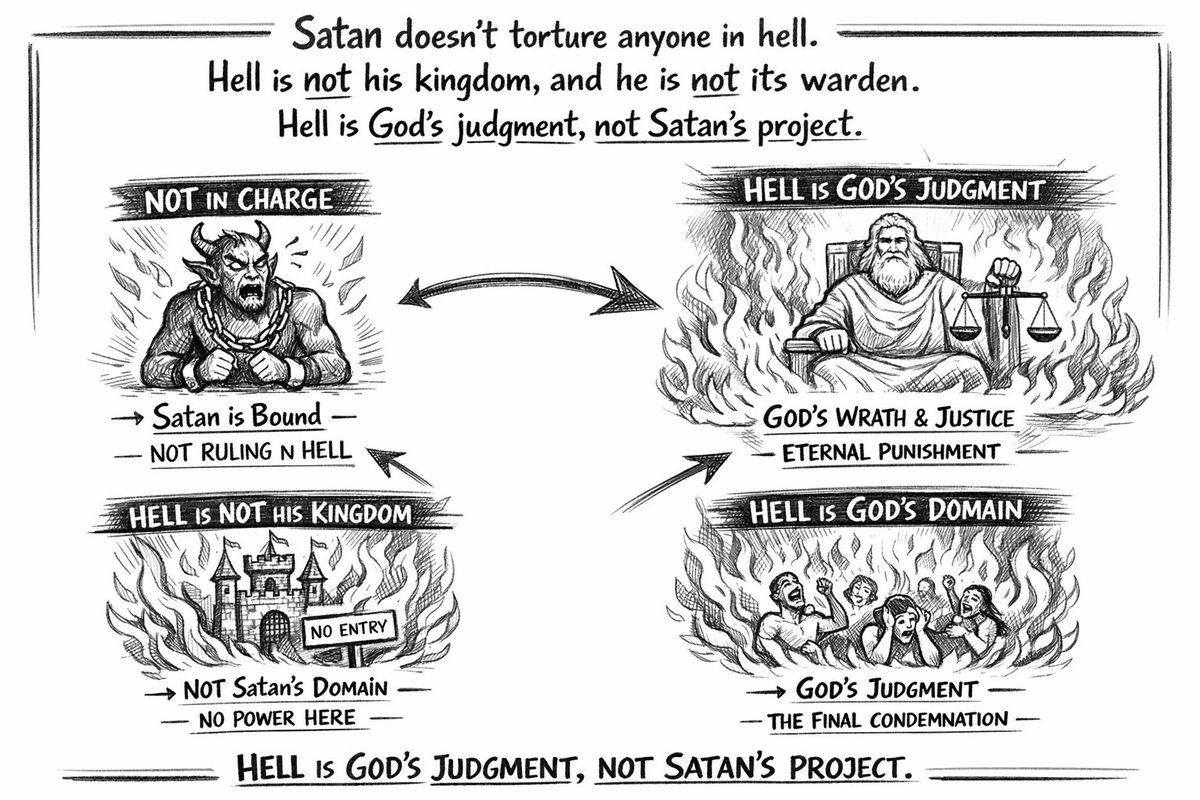
@Shirinsmit Satan doesn’t torture anyone in hell. Hell is not his kingdom, and he is not its warden. Hell is God’s judgment, not Satan’s project.
TeachingBridge tweet media
English
0
0
0
138
༈༈
༈༈@Shirinsmit·
Why will Satan torture people in hell for disobeying the same God he disobeyed ?
English
2.8K
1.1K
14.5K
2.1M
TeachingBridge
TeachingBridge@_TeachingBridge·
@DoctrineAudit @Shirinsmit Scripture nowhere says this. Excellent question and it is right to go back to Scripture when someone asks a philosophical question.
English
0
0
0
502
TeachingBridge
TeachingBridge@_TeachingBridge·
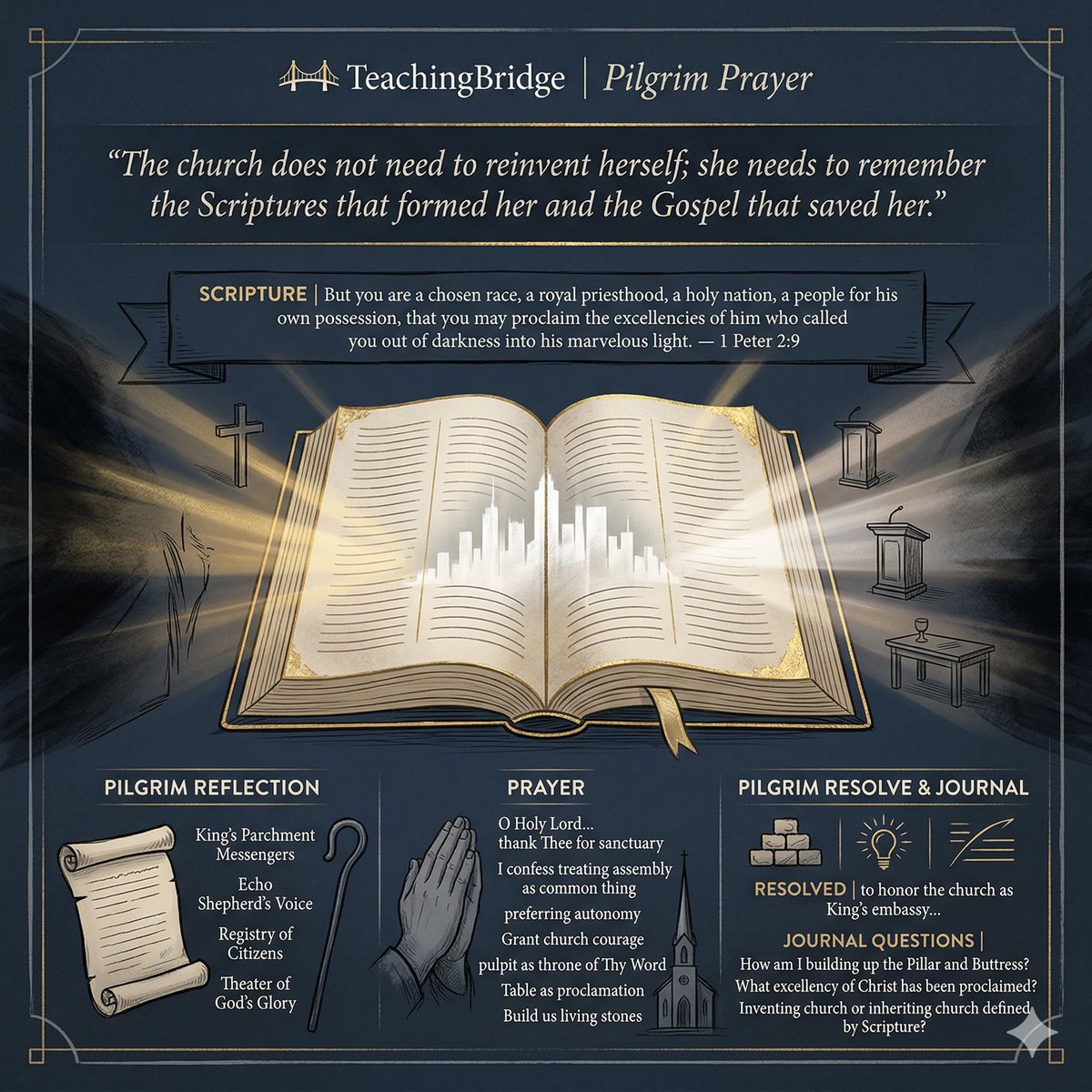
🌉 TeachingBridge | Pilgrim Prayer SCRIPTURE But you are a chosen race, a royal priesthood, a holy nation, a people for his own possession… — 1 Peter 2:9 PILGRIM REFLECTION The church is not a voluntary association we design but a people the King gathers by His Word. She is the Pillar and Buttress of the Truth, displaying a glory she did not create. To belong to the New Covenant community is to leave the “Laboratory of the Self” for the “Home of the Covenant.” Christ’s messengers do not carry their own opinions but the King’s royal parchment; the church speaks only with the Shepherd’s voice. Our task is not cultural relevance but fidelity to the Proclamation. Here the citizens of the City of God are registered and guarded from the world’s chaos. This assembly is the theater of God’s glory, where the Ordinary Means of Grace—Word, Table, prayers—feed the soul. We walk the Ridge not as pioneers but as an embassy of the Kingdom, announcing the excellencies of the One who called us out of darkness. PRAYER O Holy and Triune Lord, who hast purchased a people with Thine own blood, I thank Thee for the sanctuary of the visible church. I confess treating the assembly as common, preferring autonomy to covenant belonging. Forgive my pursuit of “authentic” experiences while neglecting Thy ordinary rhythms of grace. Grant Thy church courage to hold the line of Thy Word amid the world’s noise. Let the pulpit be the throne of Thy Word and the Table the proclamation of Thy finished work. Build us as living stones into a spiritual house, offering sacrifices acceptable in Thy sight. Unite us in shared submission to Scripture, that our “Biblical Table Talk” may cure our generation’s spiritual amnesia. Keep us within the flock until we behold Thy glory face to face. PILGRIM RESOLVE Resolved, to honor the church as the King’s embassy and my fellow members as my defense against the world’s vertigo. JOURNAL QUESTIONS • How am I using my gifts to strengthen the “Pillar and Buttress” of my local church? • What excellency of Christ has the church’s proclamation made clear this week? • Where am I tempted to invent a church rather than inherit the one defined by Scripture?
TeachingBridge tweet media
English
0
0
0
8
TeachingBridge
TeachingBridge@_TeachingBridge·
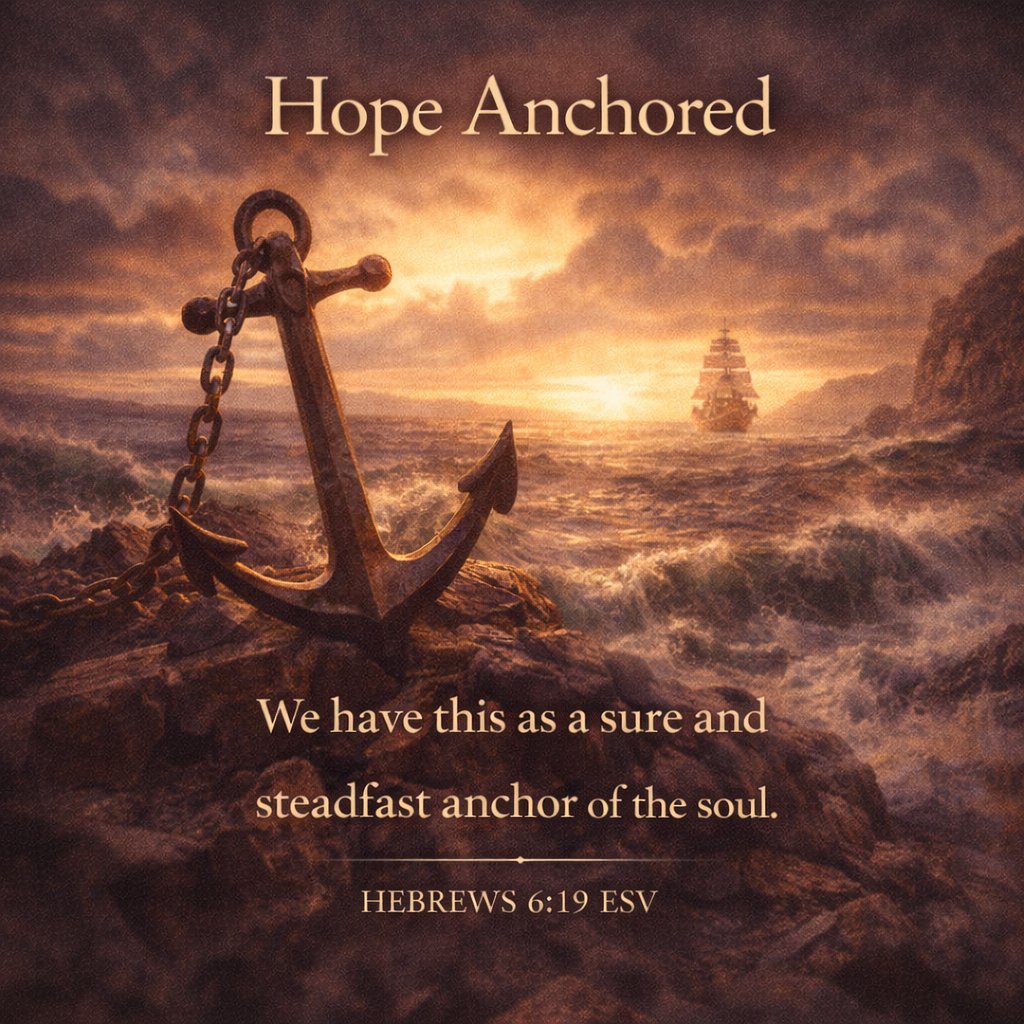
TeachingBridge Biblical hope is not wishful thinking. It is anchored certainty. Hebrews describes hope as an anchor for the soul — stable, weight-bearing, unmoved by storms. The anchor does not float with the waves; it holds beneath them. Circumstances rise and fall. Emotions shift. But the promise of God holds fast. Christian hope rests not in changing conditions but in the unchanging faithfulness of God. Anchored hope steadies the soul because its security lies beyond the storm.
TeachingBridge tweet media
English
0
0
0
2
TeachingBridge
TeachingBridge@_TeachingBridge·
🌉 TeachingBridge | Doxological Reflection Perseverance & Endurance Lord, Keep Me Near the Means You Have Given 📖 Hebrews 3:14 (ESV) “For we have come to share in Christ, if indeed we hold our original confidence firm to the end.” Lord, faith does not continue because we are strong. It continues because You sustain it. Yet You have not left Your people without help. You have given the means through which faith is nourished and preserved. Keep our hearts near Your Word. When we open the Scriptures, help us hear the voice of Christ speaking through them. Teach us to pray with humble dependence. Even when our prayers feel weak, remind us that You welcome the cries of Your children. Keep us near the fellowship of Your people. Protect us from drifting into isolation where faith weakens and discouragement grows. Help us receive the ordinances with gratitude, remembering again the finished work of Christ proclaimed through them. And when Your providence leads us through trials, guard us from interpreting hardship as abandonment. Teach us instead to trust Your fatherly wisdom. Strengthen faith through what You appoint. Refine endurance through what You allow. Let every means You have given draw our hearts nearer to Christ. Keep us, Lord, until faith becomes sight. Amen. #TeachingBridge #Perseverance #Faith #Endurance
TeachingBridge tweet media
English
0
0
1
12
TeachingBridge
TeachingBridge@_TeachingBridge·
TeachingBridge Pilgrimage implies movement. Preservation explains how the traveler continues. Thomas Watson reminds us that the Christian life is sustained moment by moment by divine power. The believer walks, struggles, repents, rises, and continues — not because of personal resolve alone, but because God upholds every step. Grace begins the journey. Grace sustains the journey. Grace brings the pilgrim home. The strength of the believer is derivative. The sustaining power belongs to God.
TeachingBridge tweet media
English
0
0
0
8
TeachingBridge
TeachingBridge@_TeachingBridge·
🌉 TeachingBridge | Doctrinal Precision Perseverance & Endurance Providence Is a Means of Perseverance 📖 Hebrews 3:14 (ESV) “For we have come to share in Christ, if indeed we hold our original confidence firm to the end.” Christ preserves His people through the Word, prayer, the church, and the ordinances. But Scripture also shows that God often uses another instrument. Providence. The circumstances God appoints in the lives of believers are not random. They are part of His preserving work. This includes trials. James writes: “Count it all joy… when you meet trials… for you know that the testing of your faith produces steadfastness” (James 1:2–3). Trials do not merely challenge faith. They refine it. Hardship exposes where our confidence rests. It loosens our grip on idols. It teaches deeper dependence upon Christ. Hebrews describes this process as loving discipline: “For the Lord disciplines the one he loves… He disciplines us for our good, that we may share his holiness” (Hebrews 12:6,10). This discipline is not punishment. Christ has already borne the punishment for sin. Instead, it is the shaping hand of a Father forming endurance in His children. Providence is not an obstacle to perseverance. It is one of the means God uses to produce it. Even trials become instruments of grace in the hands of a faithful God. #TeachingBridge #Perseverance #Providence #Endurance
TeachingBridge tweet media
English
0
0
0
10
TeachingBridge
TeachingBridge@_TeachingBridge·
The Three Layers The Cloud Layer (Academic/Abstract): This is the "High Altitude" of theology—technical, dense, and often filled with jargon. While precise, it can become disconnected from the grit of daily life, leading to "Cloud Drift," where truth feels more like an intellectual exercise than a living reality. The Ridge Layer (The TeachingBridge Lane): This is the middle ground where the "Steel" of the 1689 Confession meets the "Warmth" of pastoral care. It is "Biblical Table Talk"—deep theology made accessible to steady the soul on the narrow path. The Valley Layer (Subjective/Experiential): This is where we live out our daily lives. It is the realm of our emotions, our immediate crises, and our subjective experiences. It is a necessary place to be, but it is not a safe place to build a foundation.
English
0
0
0
2
TeachingBridge
TeachingBridge@_TeachingBridge·
Are You Suffering from Valley Vertigo? 🌀⛰️ Have you ever felt like the ground beneath your faith is shifting? One day you feel close to God because your circumstances are good; the next, you feel abandoned because a prayer wasn't answered the way you hoped. This is "Valley Vertigo." In the Valley Layer of life, we are surrounded by the mist of our own emotions and the unpredictable winds of cultural trends. When we try to build our assurance on how we feel or how well our week is going, we inevitably get dizzy. We lose our sense of direction because our "ground" is actually a moving target. The Symptom: Your confidence in God is only as strong as your last "mountain top" experience. The Danger: When the fog rolls in—tragedy, doubt, or exhaustion—you have no landmarks to guide you. The Cure: Climb to the Ridge. 🧗‍♂️✨ Stability doesn't return by trying to "feel better" in the Valley. It returns when you climb to the Ridge Layer. On the Ridge, the ground isn't made of your shifting emotions; it’s made of the Solid Granite of God’s Word and the historic "Ancient Paths" of the faith. On the Ridge, we remember: God’s character doesn’t change when my mood does. Christ’s finished work is the same in my darkest night as it is in my brightest day. The LBCF and the "Rules that Kneel" remind us of the "Rule that Rules"—the unchanging Voice of God. Stop trying to steady the Valley. Start standing on the Ridge. Let’s Talk: Have you felt the "Vertigo" of subjective faith lately? How has returning to the "Steel" of sound doctrine helped clear the mist? 👇 #TeachingBridge #ValleyVertigo #Theology #1689Federalism #AncientPaths #ChristianLiving #ReformedBaptist #BibleStudy #TheRidgeLayer
TeachingBridge tweet media
English
1
0
0
8
TeachingBridge
TeachingBridge@_TeachingBridge·
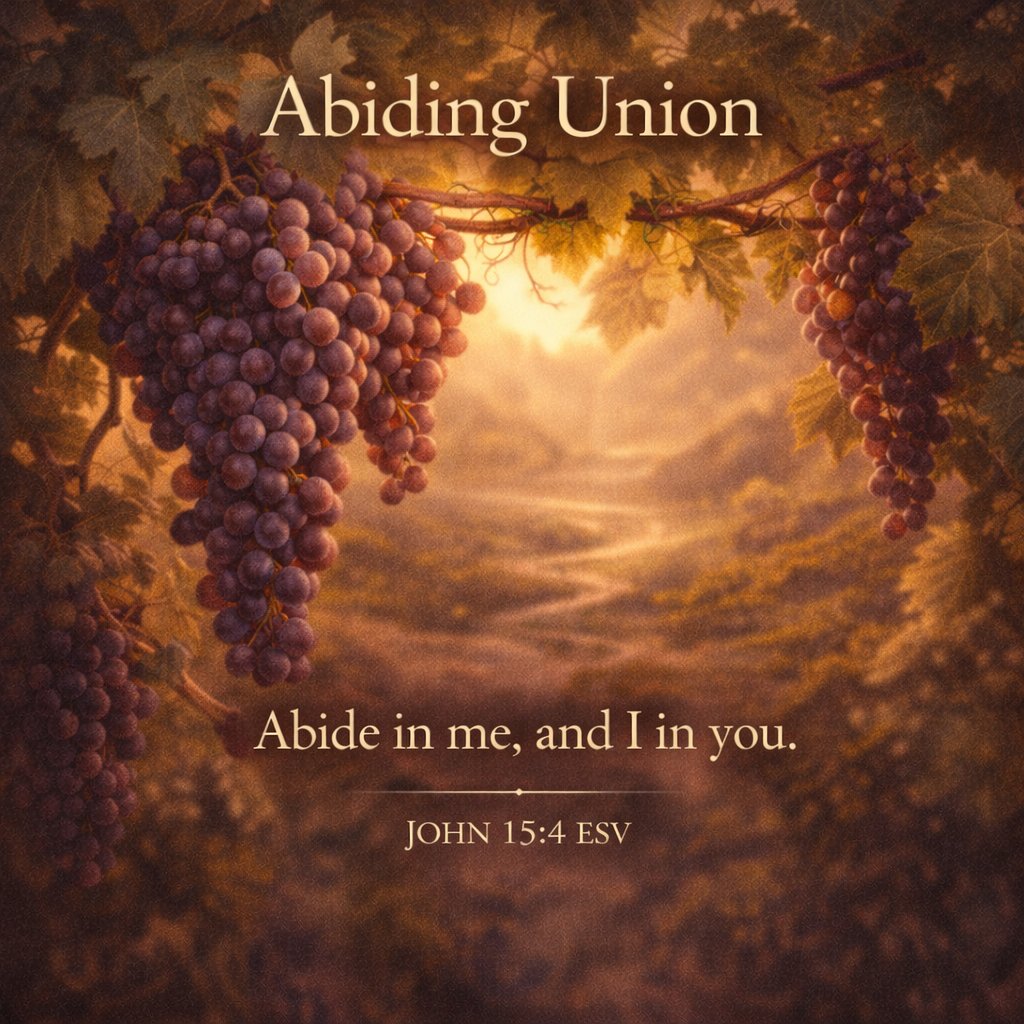
TeachingBridge Union with Christ is the source of all spiritual life. In John 15, Jesus describes salvation not merely as belief about Him but life in Him. The branch does not generate fruit by effort alone. It bears fruit because it remains connected to the vine. Abiding is dependence. Abiding is communion. Abiding is life flowing from the source. The command to abide is not a call to self-reliance but to continual reliance. The life of Christ sustains the believer just as the vine sustains the branch.
TeachingBridge tweet media
English
0
0
0
25
TeachingBridge
TeachingBridge@_TeachingBridge·
🌉 TeachingBridge | Confessional Depth Perseverance & Endurance The Ordinary Means of Grace 📖 Hebrews 3:14 (ESV) “For we have come to share in Christ, if indeed we hold our original confidence firm to the end.” Christ secures the perseverance of His people. Yet the same Lord who guarantees the end also appoints the means by which that end is reached. Historic Protestant theology calls these instruments the ordinary means of grace. They are the regular ways God nourishes and sustains faith. Scripture consistently highlights these means: • the Word of God proclaimed and believed • prayer offered in dependence upon God • the gathered church encouraging and exhorting one another • the ordinances that visibly proclaim the gospel These practices may appear simple, but they are divinely appointed. The early church lived by these rhythms: “They devoted themselves to the apostles’ teaching and the fellowship, to the breaking of bread and the prayers” (Acts 2:42). The historic Reformed tradition recognized the same pattern. The 1689 London Baptist Confession of Faith describes the outward and ordinary means by which Christ communicates the benefits of redemption as the Word, the ordinances, and prayer. These means do not replace Christ. They point believers back to Him again and again. Through the Word, Christ speaks to His people. Through the ordinances, Christ visibly proclaims His work. Through prayer, believers express their dependence upon Him. Perseverance is not sustained by novelty. It is sustained by faithful use of the means God has given. #TeachingBridge #Perseverance #MeansOfGrace #ConfessionalTheology
TeachingBridge tweet media
English
0
0
0
10
TeachingBridge
TeachingBridge@_TeachingBridge·
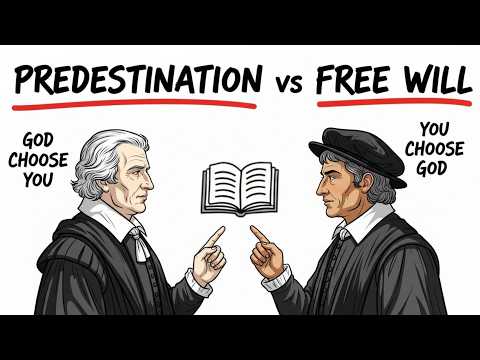
I say that grace is offered wide, Yet still I claim the choice is mine. I nod toward the cross and say “His death was meant for all mankind” — But when you ask who makes the final call, I point back at myself, not at the fall. The more I stress that man is free, The more I bind my theology To prove I’m not the kind who thinks That God alone pulls every string. So what am I, who must insist My freedom is the linchpin? I am the one who says “I chose”, Yet writes a riddle to expose That even this proud claim of mine Is circling back — a self-made sign. **What is an Arminian?** The answer that describes itself by denying it needs describing. 😏
English
0
0
0
58
Stephen Sobieski
Stephen Sobieski@Acts7253·
“Tom, what are Arminians?” “….. I don’t know.”
Stephen Sobieski tweet media
English
4
1
26
903