@Arkadendxkd @LeGruppetto C'est toujours divertissant les conneries racontées par les footix agressifs qui ont découvert le cyclisme via Netflix et qui suivent uniquement le TDF
Français
Alex
482 posts



⏱️📜 I updated the climbing times for Alpe d'Huez, 8 riders entered today in the Top 100 Fastest and 7 of them made it in the Top 25. Confirmed 35 min 25 sec as the new record for Tadej Pogacar. #TDF2026 climbing-records.com/2026/07/tadej-…

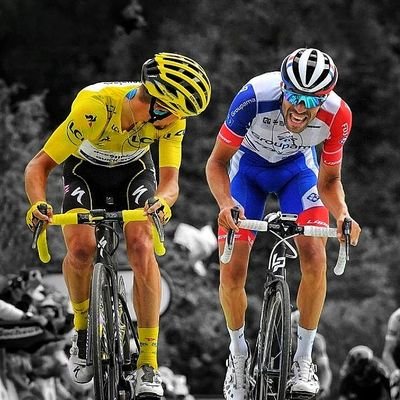

On était moins indulgent à l'égard de Froome et de la Sky. J'ai souvenir des débats sur le service public et Eurosport où on se questionnait en permanence dès que le "Kenyan blanc" et ses ouailles prenaient les devants en montagne, sans forcer. Aujourd'hui, on déroule le tapis rouge à Pogacar qui atteint des watts jamais vues la bouche fermée. Peut-être 485-490 watts étalon... Inimaginable.


🟡 LE RECORD DE LA MONTÉE DE L'ALPE D'HUEZ EST EXPLOSÉ ! Tadej Pogacar a grimpé l'Alpe d'Huez en 35'27", soit plus d'une minute de moins que le précédent record de Marco Pantani en 1995. #article_534651" target="_blank" rel="nofollow noopener">rmcsport.bfmtv.com/cyclisme/tour-…


Doping didn't disappear from pro cycling. It may have just moved to 2,500 metres. This morning I interviewed James Witts, author of a new book called Dope. Halfway through the conversation, he described something I'd never heard in all my years around this sport. He calls it "the altitude alibi." Here's how it works. Every spring, pro riders disappear to the same places. Mount Teide. Sierra Nevada. Weeks at altitude preparing for the biggest races of the year. The logic is simple. Altitude exposure raises your hematocrit. More red blood cells, more oxygen, more power. Except there are two problems nobody talks about. Problem one: altitude doesn't work for everyone. There are genetic responders and non-responders. Some riders come down from the volcano flying. Some come down with nothing to show for three weeks of their season. Problem two: altitude forces a trade-off. At camp, you have a choice of protocol. Sleep high and train high, or sleep high and train low. Sleep high, train high: you maximise the altitude adaptation. But the thin air caps your power. You can't train at full intensity, so you lose the training adaptation. Sleep high, train low: you descend to do your sessions at full intensity and keep the training adaptation. But you give up some of the altitude effect. You can't fully have both. Every altitude camp is a compromise. Now here's where James's argument gets dark. The biological passport, the system designed to catch dopers, doesn't test for drugs directly. It tracks a rider's blood values against their own baseline. Deviate too far from your own normal, and you get flagged. But when a rider is at altitude, the passport expects the deviation. Rising blood values are exactly what altitude is supposed to produce. James believes some riders have worked out what that means. Go to altitude. Microdose EPO. The passport reads the change in your blood as a natural altitude response. Then train low, at full intensity, and take the full training adaptation - because you no longer need the mountain to raise your blood values. The drug does that part. The altitude camp isn't the preparation. It's the alibi. I've spent years interviewing World Tour coaches, sports scientists and pro riders. I have never heard it framed like this before. The full conversation goes much deeper: what the passport can and can't see, why microdosing is so hard to catch, and what it all means for the sport we love. It drops soon on the Roadman Cycling Podcast. Follow along so you don't miss it. His book is called Dope: How Drugs Changed Sport. Worth your time. P.S. Genuine question for you: can the testers ever catch up in this game or cat & mouse?
Tour de France - Gianetti : "Ce sont les règles, il faut qu'il y ait des contrôles" #TDF #TDF2026 #Gianetti #Pogacar #Antidopage #UCI cyclismactu.net/news-tdf-tour-…

O. Naesen: "We need to take this seriously. Apparently, there are substances that remain detectable in the blood for only three hours. You have to test for it at a time when it matters. I hear they’re looking for growth hormones." idlprocycling.com/cycling/oliver…