

W
1.7K posts

W retweetledi

To provide the initial liquidity and early access of our product
1. The first 1000 real organic followers could receive 10 $AGENT, just follow and retweet any post.
2. The first 100 blue mark verified followers could receive 50 $AGENT, just follow and retweet any two posts.
3. The first 10 gold mark verified followers could receive 500 $AGENT, just follow and retweet any three posts.
Leave your EVM address in this comment section after tasks done, those $AGENT will be airdropped directly after official launch.
$AGENT $AIRDROP $AI
English
W retweetledi

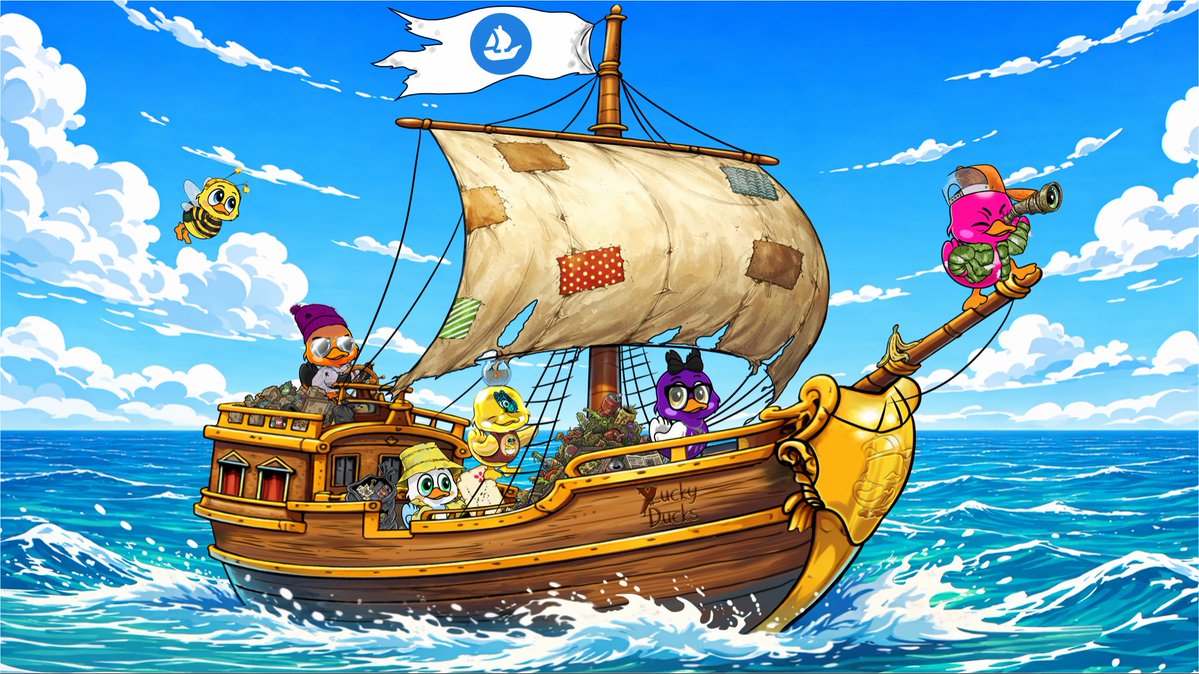
Someone stole the Yuckpot.
Now 7,777 Yucky Ducks are sailing on @opensea to get it back.
Apply for WL:
yuckyducks.com
Retweet and drop your wallet if you’re joining the hunt 👇
English
W retweetledi

You should know that @Infinit_Labs's internal testing infrastructure validates protocol interactions, parameter accuracy, and outcome prediction before any strategy reaches end users. This creates an additional security layer beyond agent coordination. Before execution, agents simulate complete strategy sequences to validate outcomes and identify potential issues under current market conditions.
The simulation runs against live protocol states including available liquidity, current rates, and gas costs. If a strategy assumes specific liquidity depth that no longer exists, the simulation catches this before you commit capital. Complete transparency defines this phase where you see exactly which protocols will be used, what tokens will be involved, estimated gas costs, and expected outcomes.
The preview includes step by step breakdowns showing the complete execution sequence with exact amounts, enabling you to verify every action before signing. No execution occurs without explicit user signature ensuring non custodial security throughout the entire process.

WHO ART IN HEAVEN!📿❄️@_Opeyimika
Good afternoon children of God! Do not be anxious about anything, but in everything by prayer, present your requests to God. @Infinit_Labs gas optimization features reduce execution costs through intelligent transaction bundling and timing. When agents coordinate multi step strategies, they analyze gas price patterns and bundle operations to minimize total fees compared to manual sequential execution. A strategy requiring five separate protocol interactions normally means five gas payments with individual approval overhead. Infinit bundles these into one transaction using ERC 4337 account abstraction, paying gas once for the entire sequence. The system monitors network congestion and can delay non urgent strategy components to execute during lower fee periods when users permit flexible timing. Cross chain strategies benefit from optimized bridge routing where agents select paths minimizing combined gas and bridge fees rather than defaulting to most popular bridges. For complex strategies with dozens of steps, gas savings from bundling and optimization often offset agent coordination fees making sophisticated execution more economical than manual approaches.
English
W retweetledi
Good afternoon children of God! God is our refuge and our strength, an ever present help in time of trouble.
@Infinit_Labs roadmap Q3 2025 introduced deterministic code compilation eliminating LLM hallucinations from execution. Every strategy generated by AI agents compiles as verifiable code with predefined steps rather than probabilistic outputs. Q4 2025 launches credibility scores integrating Kaito Yaps and Ethos reputation systems.
Strategy creators build composite scores reflecting onchain performance and community validation. Open strategy creation enables any $IN staker to publish frameworks accessible to the entire community. Q1 2026 expands governance into strategy inclusion where IN stakers propose and vote on new multi agent DeFi strategies.
These one click strategies combine multiple agents coordinating interactions across various protocols. Proposals must outline intended user flow, target protocols, and desired outcomes. Core contributors from layer ones, layer twos, or DeFi protocols often originate proposals seeking to drive usage through Infinit infrastructure. The phased rollout validates governance mechanics through real usage before expanding decision authority.

WHO ART IN HEAVEN!📿❄️@_Opeyimika
You should know that @Infinit_Labs's internal testing infrastructure validates protocol interactions, parameter accuracy, and outcome prediction before any strategy reaches end users. This creates an additional security layer beyond agent coordination. Before execution, agents simulate complete strategy sequences to validate outcomes and identify potential issues under current market conditions. The simulation runs against live protocol states including available liquidity, current rates, and gas costs. If a strategy assumes specific liquidity depth that no longer exists, the simulation catches this before you commit capital. Complete transparency defines this phase where you see exactly which protocols will be used, what tokens will be involved, estimated gas costs, and expected outcomes. The preview includes step by step breakdowns showing the complete execution sequence with exact amounts, enabling you to verify every action before signing. No execution occurs without explicit user signature ensuring non custodial security throughout the entire process.
English
W retweetledi
Good evening children of God! Cast all your anxiety on Him because He cares for you.
@AlignerZ_ operates as a Delaware C Corporation not a DAO or anonymous team behind a Cayman entity. The address is publicly listed as 1111B South Governors Avenue Dover Delaware. This legal structure matters because it subjects the company to US corporate law and taxation. Most crypto projects avoid this specifically to escape regulatory oversight and tax obligations.
Choosing Delaware C Corp signals either confidence in regulatory compliance or acceptance of traditional business frameworks. It also means the company can enter contracts, hire employees normally, and interface with traditional finance without the legal ambiguity most crypto companies navigate. The tradeoff is transparency and accountability versus operational flexibility.

WHO ART IN HEAVEN!📿❄️@_Opeyimika
Good evening children of God! The Lord bless you and keep you, the Lord make His face shine on you and be gracious to you. The buyback and burn mechanism operates with a specific end condition. 15% of quarterly net profits purchase A26Z from open market then permanently remove those tokens from circulation. This continues every quarter until the token price reaches $100. Once that threshold hits the buyback stops, the mechanism creates sustained buy pressure funded by actual revenue rather than treasury dumps or token emissions. Most deflationary models burn indefinitely or until arbitrary supply targets. @AlignerZ_ ties their burn to a price milestone which aligns deflation with holder value rather than just supply scarcity. At $100 per token the twenty six million supply would value the fully diluted market cap around 2.6 billion assuming no tokens burned by that point.
English
W retweetledi
Good morning children of God! Commit to the Lord whatever you do, and He will establish your plans.
@Infinit_Labs Q4 2025 governance phase two enables $IN stakers to propose and vote on adding new DeFi agents. These agents serve as execution units integrating external protocols to expand platform utility.
The Foundation expects many proposals will originate from core contributors of individual DeFi protocols, layer ones, or layer twos seeking to integrate their systems with Infinit to increase accessibility and transaction volume through AI powered one click execution.
Once a proposal is submitted, it undergoes community vote. To ensure alignment, proposers, particularly protocol teams, mobilize their own communities to hold and stake IN supporting the proposal.
This governance mechanism creates direct incentive alignment where protocols bring their user bases into the Infinit ecosystem. Approved agents join the specialized swarm expanding the range of executable strategies. The voting structure requires reaching defined quorum and majority conditions ensuring broad community support before infrastructure changes.

WHO ART IN HEAVEN!📿❄️@_Opeyimika
Good afternoon children of God! God is our refuge and our strength, an ever present help in time of trouble. @Infinit_Labs roadmap Q3 2025 introduced deterministic code compilation eliminating LLM hallucinations from execution. Every strategy generated by AI agents compiles as verifiable code with predefined steps rather than probabilistic outputs. Q4 2025 launches credibility scores integrating Kaito Yaps and Ethos reputation systems. Strategy creators build composite scores reflecting onchain performance and community validation. Open strategy creation enables any $IN staker to publish frameworks accessible to the entire community. Q1 2026 expands governance into strategy inclusion where IN stakers propose and vote on new multi agent DeFi strategies. These one click strategies combine multiple agents coordinating interactions across various protocols. Proposals must outline intended user flow, target protocols, and desired outcomes. Core contributors from layer ones, layer twos, or DeFi protocols often originate proposals seeking to drive usage through Infinit infrastructure. The phased rollout validates governance mechanics through real usage before expanding decision authority.
English
W retweetledi
Vesting rewards on @AlignerZ_ distribute by the second instead of quarterly lump sums. This seems like a small implementation detail but it fundamentally changes holder behavior. If rewards dropped once per quarter flippers would buy TVS positions right before distribution capture the payout then immediately sell. Holding for three months versus three days would generate identical reward.
By dripping rewards continuously over every second of the quarter the system rewards actual hold duration. Someone holding a TVS for two months earns roughly twice what someone holding one month earns from the same position size. The mechanic mathematically penalizes short term speculation while rewarding patience. It is the same incentive flip applied at the reward layer.

WHO ART IN HEAVEN!📿❄️@_Opeyimika
Good evening children of God! Cast all your anxiety on Him because He cares for you. @AlignerZ_ operates as a Delaware C Corporation not a DAO or anonymous team behind a Cayman entity. The address is publicly listed as 1111B South Governors Avenue Dover Delaware. This legal structure matters because it subjects the company to US corporate law and taxation. Most crypto projects avoid this specifically to escape regulatory oversight and tax obligations. Choosing Delaware C Corp signals either confidence in regulatory compliance or acceptance of traditional business frameworks. It also means the company can enter contracts, hire employees normally, and interface with traditional finance without the legal ambiguity most crypto companies navigate. The tradeoff is transparency and accountability versus operational flexibility.
English
W retweetledi
It is just 16 days to go before epoch one for @AlignerZ_ ends, you might want to start now before it ends anon.
Most founder compensation packages create misalignment. Founders get paid regardless of token performance while holders absorb downside. AlignerZ built a formula that ties CEO compensation directly to token price.
Monthly salary equals $1k base plus five thousand multiplied by the average of daily floor prices across the month.
If the token trades low the CEO earns close to minimum. If the token performs well compensation scales accordingly. The calculation specifically uses the lowest price recorded each day not the average or high. This removes incentive to pump temporarily since only sustained floor prices move the needle. It is a small detail in the whitepaper but it signals how seriously the team treats alignment between themselves and holders.

WHO ART IN HEAVEN!📿❄️@_Opeyimika
AlignerZ runs on minimal fees structured around three revenue streams. First is a 4% commission on total funds raised through any IWO hosted on the platform. Second is 1% of tokens listed on @AlignerZ_ taken as a fee and vested linearly over one year aligning the platform with project success rather than just launch volume. Third is TVS operational fees. Splitting a TVS costs 0.5% deducted automatically from unreleased tokens inside the schedule. Merging multiple TVS positions into one is completely free. For campaigns running through their infofi system there is a 0.5% fee on total payout value. The fee structure keeps costs predictable for projects while generating sustainable revenue tied to actual platform usage.
English
W retweetledi
Good afternoon children of God! Take this moment to breathe and believe in yourself.
@Infinit_Labs positions itself as infrastructure for intelligent financial coordination across both decentralized and traditional systems. The roadmap extends agent coordination technology beyond DeFi into traditional finance through fintech platform integrations and TradFi workflow adoption.
The same composable AI Agent Infrastructure that powers INFINIT Intelligence and Strategies can integrate directly with existing financial ecosystems. Traditional finance users would access institutional grade strategies through conversational interfaces without changing their current platforms. The infrastructure first approach transforms every integration point into an access portal, multiplying reach beyond standalone applications.
This includes embedding Infinit Intelligence insights within research platforms and analytics tools, deploying agents in marketplace environments alongside other autonomous services, and providing the DeFi execution layer for integrated platforms. The modular architecture enables deployment anywhere intelligent automation is required without disrupting existing user workflows.

WHO ART IN HEAVEN!📿❄️@_Opeyimika
Let's talk about how @Infinit_Labs Intelligence pulls data from over 100 sources through the Data Stream infrastructure. Agents access real time protocol states, yield rates, wallet data, and liquidity metrics from supported networks. This onchain data combines with offchain sources including protocol documentation, social signals from community discussions, market analytics, and expert insights. The data undergoes sophisticated filtering and validation algorithms before reaching agents, eliminating noise and verifying accuracy. When an agent suggests a yield opportunity, it has validated current APY rates, liquidity depth, and protocol health from multiple sources within minutes. The agentic RAG architecture means agents actively retrieve and contextualize information for each query rather than relying on static knowledge bases. This ensures strategy recommendations reflect actual market conditions and protocol states, not outdated snapshots. The standardization across chains allows agents to compare opportunities accurately and provide multi chain optimization suggestions.
English
W retweetledi
It's amazing how @edgeX_exchange implements dynamic margin transfer ratios that adjust in real time based on user profit levels and leverage. Margin transfers include withdrawals, moving funds from perp to spot accounts, or removing isolated margin.
The protocol constrains these transfers proportionally to maintain healthy margin requirements.
Leverage limits scale inversely with position size. As your notional value grows, maximum permitted leverage decreases, meaning initial margin requirements increase incrementally past certain thresholds. Each trading pair has baseline maintenance margins that adjust according to risk limits.
This prevents the bankruptcy attack vectors seen in other protocols. Even across multiple accounts, higher leverage demands proportionally higher total initial margin relative to capital.
WHO ART IN HEAVEN!📿❄️@_Opeyimika
Good morning children of God! The weekend is here, rest your body, renew your spirit, and rejoice in the blessings that surround you. eLP is @edgeX_exchange's first vault product, and it operates differently from typical market maker vaults in perp DEXs. Instead of purely passive liquidity provision, eLP combines passive LP with selective hedging based on intelligent analysis of risk exposures. The passive component provides continuous liquidity through resting orders, maintaining market depth even during volatility. The hedging layer systematically offsets large directional positions to protect yield performance. This dual approach mitigates the one sided market exposure risk that traditional vaults face. Revenue sources: market making yields, transaction fees, liquidation fees. 10% of vault returns go to a dedicated insurance fund for extreme scenarios.
English
W retweetledi
Another day, another take on @Alignerz_
Vesting schedules on AlignerZ are wrapped as ERC721 NFTs called Tradable Vesting Schedules, this unlocks functionality that traditional vesting cannot touch.
Say you hold a TVS worth around $100k but you only need $10k in liquidity, you split the TVS into two separate NFTs and sell the smaller portion on secondary markets while keeping your larger position intact.
Merging works in reverse. The split costs a flat 0.5% fee deducted from unreleased tokens inside the TVS, merging is free.
After splitting the vesting length stays identical to the original and tokens continue releasing by the second. TVS holders can also use these NFTs as collateral or for governance weight. The primitive opens DeFi use cases that locked tokens never could.
WHO ART IN HEAVEN!📿❄️@_Opeyimika
Still on @alignerz_ Traditional launchpads reward speed, whoever clicks fastest gets the allocation. AlignerZ threw that out entirely. Their Initial Weight Offering model runs on vesting length instead of timing. You bid by choosing how long you are willing to vest your tokens. Longest vesting schedules get served first even if they entered the bidding late. Two identical vesting lengths get sorted by timestamp but that is the only scenario where speed matters. If your bid does not secure an allocation you get a full refund minus gas. The model creates a strange but logical outcome where degens willingly lock themselves into long vesting periods because the vesting schedule itself becomes a tradable NFT. You can exit whenever you want by selling the NFT rather than waiting for unlock.
English
W retweetledi
Good evening guys
@Infinit_Labs integrated with Google Agent2Agent protocol, fundamentally changing developer access to DeFi capabilities. A2A is an open interoperability standard for AI agents that enables automatic ecosystem level distribution.
WHO ART IN HEAVEN!📿❄️@_Opeyimika
Good afternoon children of God! Take this moment to breathe and believe in yourself. @Infinit_Labs positions itself as infrastructure for intelligent financial coordination across both decentralized and traditional systems. The roadmap extends agent coordination technology beyond DeFi into traditional finance through fintech platform integrations and TradFi workflow adoption. The same composable AI Agent Infrastructure that powers INFINIT Intelligence and Strategies can integrate directly with existing financial ecosystems. Traditional finance users would access institutional grade strategies through conversational interfaces without changing their current platforms. The infrastructure first approach transforms every integration point into an access portal, multiplying reach beyond standalone applications. This includes embedding Infinit Intelligence insights within research platforms and analytics tools, deploying agents in marketplace environments alongside other autonomous services, and providing the DeFi execution layer for integrated platforms. The modular architecture enables deployment anywhere intelligent automation is required without disrupting existing user workflows.
English
W retweetledi
Do you know that @edgeX_exchange uses Stork as its decentralized oracle provider for calculating margin requirements and liquidation prices?
Stork operates through a decentralized publisher network that supplies proprietary market data signed in chain compatible format, verified through onchain contracts.
Why this matters: centralized exchanges control their own price feeds, creating opportunities for malicious flash crashes that trigger unwarranted liquidations. Decentralized oracles aggregate data from multiple independent sources with consensus verification, filtering outliers before finalizing price feeds.
Stork serves 35+ perpetual DEXs, supports 2000+ assets, and has secured over $300 billion in trading volume. The architecture includes geo distributed infrastructure with low latency WebSockets and onchain verifiers.
WHO ART IN HEAVEN!📿❄️@_Opeyimika
It's amazing how @edgeX_exchange implements dynamic margin transfer ratios that adjust in real time based on user profit levels and leverage. Margin transfers include withdrawals, moving funds from perp to spot accounts, or removing isolated margin. The protocol constrains these transfers proportionally to maintain healthy margin requirements. Leverage limits scale inversely with position size. As your notional value grows, maximum permitted leverage decreases, meaning initial margin requirements increase incrementally past certain thresholds. Each trading pair has baseline maintenance margins that adjust according to risk limits. This prevents the bankruptcy attack vectors seen in other protocols. Even across multiple accounts, higher leverage demands proportionally higher total initial margin relative to capital.
English
W retweetledi
We all know last minute sniping destroys fair launches. Someone with insider info or better bots enters right before close and secures the best position, @AlignerZ_ addresses this with a hashed bidding window.
The duration of bidding gets locked behind a cryptographic hash published on the bidding page before it starts. Nobody knows exactly when bidding ends because the reveal happens after closure. Duration ranges between zero and roughly six hours determined by a lottery style random draw.
The hash input uses intentionally unconventional formatting to prevent prediction attempts. After bidding closes the team reveals the exact input that generated the hash so anyone can verify fairness. Results update in real time throughout but the endpoint remains unknown until the window shuts.
WHO ART IN HEAVEN!📿❄️@_Opeyimika
Another day, another take on @Alignerz_ Vesting schedules on AlignerZ are wrapped as ERC721 NFTs called Tradable Vesting Schedules, this unlocks functionality that traditional vesting cannot touch. Say you hold a TVS worth around $100k but you only need $10k in liquidity, you split the TVS into two separate NFTs and sell the smaller portion on secondary markets while keeping your larger position intact. Merging works in reverse. The split costs a flat 0.5% fee deducted from unreleased tokens inside the TVS, merging is free. After splitting the vesting length stays identical to the original and tokens continue releasing by the second. TVS holders can also use these NFTs as collateral or for governance weight. The primitive opens DeFi use cases that locked tokens never could.
English
W retweetledi
It is worth knowing that @edgeX_exchange Spot launches with native Solana asset trading, expanding to Ethereum, Base, and Sui afterward. The infrastructure combines MPC account layers through Privy integration with hybrid liquidity layers using cross chain messaging. Users generate multi chain addresses via email registration that can be switched within single accounts.
This enables access to trending data and alpha opportunities across 70+ blockchains while maintaining self custody throughout. Future V2 products will interact with Solidity contracts on Ethereum mainnet and other L2s. Building comprehensive decentralized trading ecosystem beyond just perps.

WHO ART IN HEAVEN!📿❄️@_Opeyimika
Do you know that @edgeX_exchange uses Stork as its decentralized oracle provider for calculating margin requirements and liquidation prices? Stork operates through a decentralized publisher network that supplies proprietary market data signed in chain compatible format, verified through onchain contracts. Why this matters: centralized exchanges control their own price feeds, creating opportunities for malicious flash crashes that trigger unwarranted liquidations. Decentralized oracles aggregate data from multiple independent sources with consensus verification, filtering outliers before finalizing price feeds. Stork serves 35+ perpetual DEXs, supports 2000+ assets, and has secured over $300 billion in trading volume. The architecture includes geo distributed infrastructure with low latency WebSockets and onchain verifiers.
English
W retweetledi
Good morning children of God!
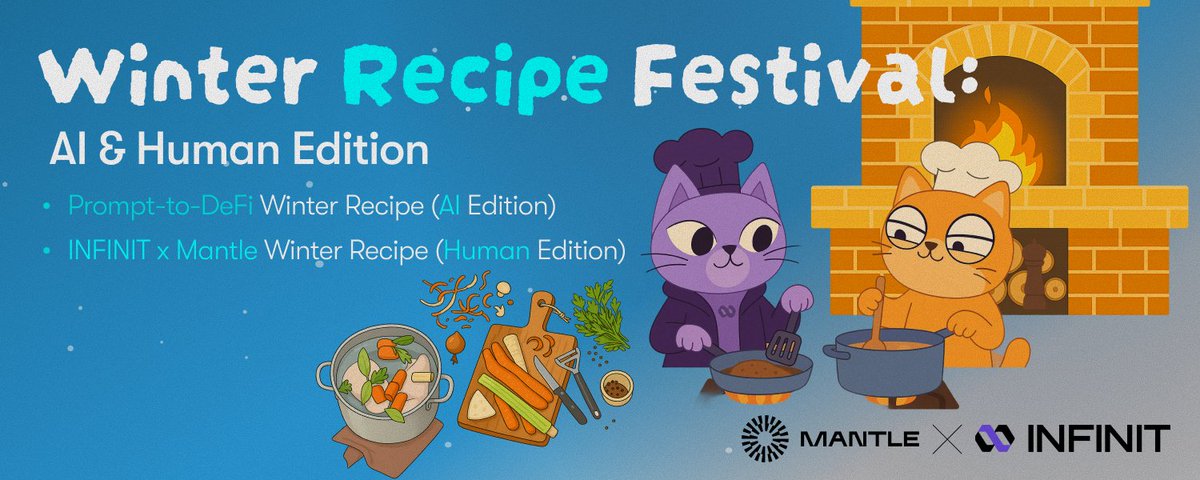
Most folks do not know that the @Infinit_Labs x Mantle Winter Recipe Campaign has been live for over a week.
Infinit partnered with Mantle to demonstrate prompt to DeFi execution on their ecosystem. The campaign runs until December 1 and offers two participation tracks.
Event one asks you to submit actual DeFi strategy prompts using Mantle protocols like INIT Capital and Merchant Moe.
Structure matters here: break down your strategy into specific steps, list the protocols and assets involved, then describe the complete workflow.
For example, a cmETH leverage loop would specify swapping mETH to cmETH on Merchant Moe, depositing to INIT Capital, borrowing mETH, converting back to cmETH, then repeating that sequence five times.
Five winners receive prompt to DeFi access codes plus one thousand dollars in MNT rewards.
Event two focuses on content creation around the winter recipe theme, any format accepted including threads, graphics, or videos. Another five winners split one thousand dollars in MNT. Both events require following both accounts, joining Discord and Telegram channels, then submitting your post link through their form.
Goodluck anon.
WHO ART IN HEAVEN!📿❄️@_Opeyimika
Good evening guys @Infinit_Labs integrated with Google Agent2Agent protocol, fundamentally changing developer access to DeFi capabilities. A2A is an open interoperability standard for AI agents that enables automatic ecosystem level distribution.
English