J_cinta retweetledi

Last month should have been a wake up call for anyone still underestimating crypto risk.
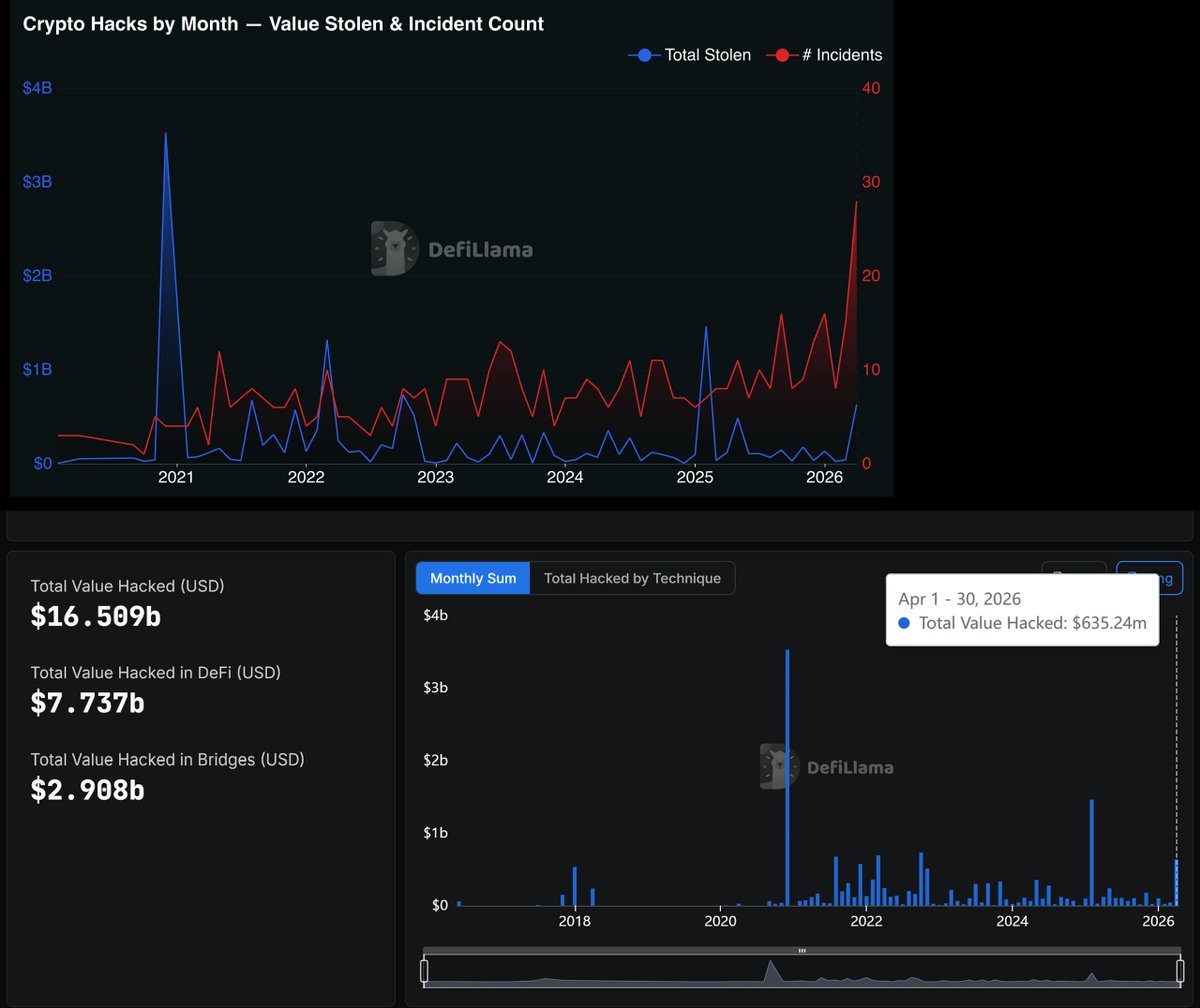
The various hacks that occurred proved that security is not keeping up. In April 2026 alone, DeFi exploits crossed over $630M in losses across 26 different hacks (according to CoinMarketCap - x.com/coinmarketcap/…).
Let's break it down 👇
Most people will focus on the bigger numbers like;
➸ @KelpDAO ($290M+ drained)
➸ @DriftProtocol ($280M+ exploited)
That is just two incidents and over half a billion dollars gone.
But it was not just two hacks. The entire ecosystem seemed to be under pressure at the same time;
➸ @purrlend ($1.5M exploited)
➸ @wasabi_protocol ($4.5M lost)
➸ @volo_sui ($3.5M drained)
Along with dozens of other attacks most people will not even hear about.
So in a single month, we’ve had;
➸ Massive protocol breaking exploits
➸ Smaller, constant drains happening in the background
➸ Retail users getting hit through indirect exposure
It goes to show just how fragile the security culture really is.
With the rise in AI assisted exploits, these attacks are getting smarter. It points to faster vulnerability discovery, more scalable attack strategies and more convincing social engineering with fake identities posing as trusted insiders.
And this is where crypto has a real problem. From the outside looking in, people see;
➸ Platforms losing hundreds of millions overnight
➸ Users with no protection or recovery options
➸ A system where one mistake equals total loss
You cannot build the future of finance on systems that fail this often.
Security in crypto is still treated like a feature instead of infrastructure. At the moment, to a lot of protocols, throughput means more to them than safety.
People tend to only focus on security after something breaks, while hype gets way more attention than actually building strong, reliable systems. When that is the pattern, you can already guess how things will turn out.
If crypto wants to be taken seriously, three things need to happen:
✦ Prioritize security during development
✦ Better user protection layers such as insurance and other recovery mechanisms
✦ Accountability when protocols fail
Until then, every major hack will reinforce the narrative that says, “This space is not ready”. The technology and opportunities matter less if people do not feel safe. And right now, they don't.
English