Sabitlenmiş Tweet

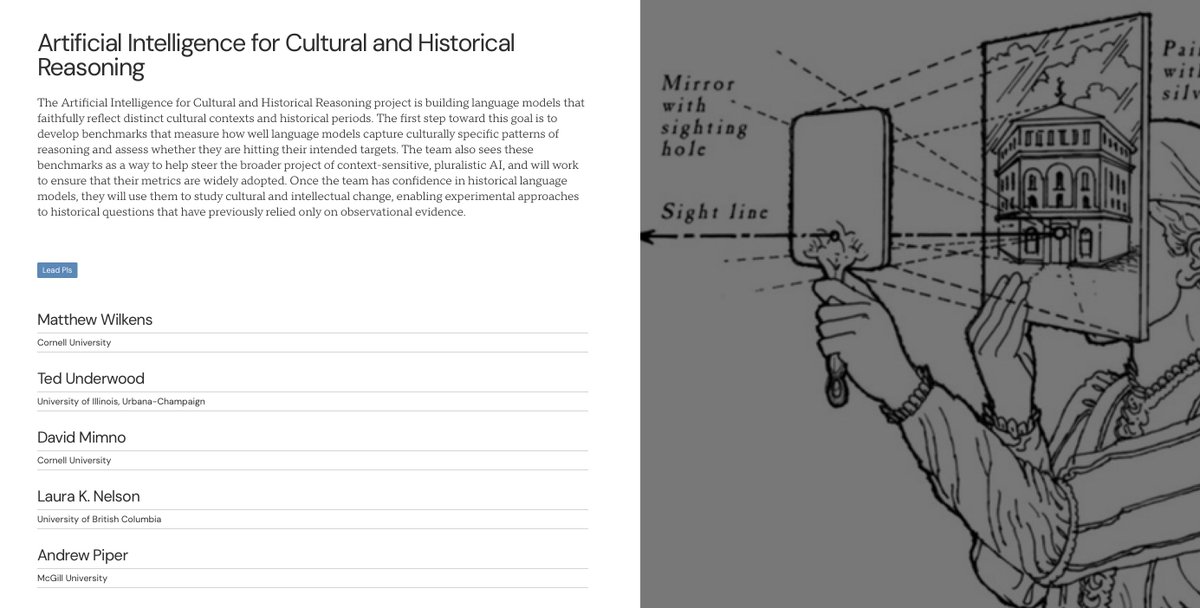
Excited to announce I'm part of a team that won a new Schmidt Sciences grant for the Humanities and AI. Our project: "AI for Historical and Cultural Reasoning." Follow for updates! schmidtsciences.org/humanities-and…
English
Andrew Piper
15.8K posts

@_akpiper
Using #AI and #NLP to study storytelling at McGillU. Director of .txtlab and author of the forthcoming book, Why You Should Read More Fiction.
As more and more students begin using A.I. to complete assignments, professors across the country are changing their approach—and losing their hope. newyorker.com/news/fault-lin…
There is yet another debate about power posing Amy Cuddy wrote a blog defending power posing: linkedin.com/pulse/power-po… Dan Lakens reviewed and critiqued her claims: daniellakens.blogspot.com/2026/05/evalua… 1) some of the papers she cited seemed to be AI hallucinations 2) she cites evidence in favor of power posing that is actualy the complete opposite of power posing (!) or a total null effect (= .99) 3) she also cites a meta-analysis that shows there is no effect of high power poses (compared to neutral control conditions) 4) And the only robust effects seem to on self report items when their are clear demand effects After reading these, the body of evidence for power posing is extremely weak (especially for increasing feelings of power on real behavior, which is what the original claims were all about). But you should read it yourself and draw your own conclusions.
Thought experiment for faculty. Would you go back to writing all of your books & papers entirely in handwriting, have zero access to the internet, no email only letters, retrieve all books and papers from library shelves no online access and deal with students only on handwritten documents and lists. The system would collapse in days.

People are letting AI write their wedding vows, love letters, parents’ obituaries, kids’ birthday cards… Such a powerful loss to self and community when people relinquish the truth of their own words and voices to become epiphenomenal vessels for computers to talk to each other.
Growth mindset may just be the most widely adopted scam finding from psychology.
I came across a theory that AI is starting to make more mistakes because the internet is increasingly polluted with AI slop. The idea of AI cannibalising itself into obscurity is one of my favourite things ever. I hope it is true and I hope it becomes impossible to fix.
Higher education must rethink assessment practices in response to the growing integrity challenges posed by generative #AI, argue the authors of a new #SciencePolicyForum. scim.ag/49fG3Pc
Things that an AI peer reviewer will never do: 1. Ask us to cite 8 of his seminal papers, 7 of which have nothing to do with our work. 2. Kill a paper because he is writing a competing paper. 3. Call you incompetent because he wouldn't dare to do it to you in person. I am pro using clankers extensively in reviews because they are much less biased than many human reviewers.
This might be the most unreal academic-writing upgrade I’ve ever seen. A team from NUS open-sourced PaperDebugger, a in-editor, multi-agent system that lives inside Overleaf and rewrites your paper with you in real time. → Reads your live document, structure, and revision history → Runs a Research → Critique → Revision loop like a real reviewer → Shows every fix in a diff view before anything changes → Apply an accepted patch back into your LaTeX with one click → Pulls related papers + inserts the references for you (via MCP) Deep research mode goes further.. it finds relevant arXiv papers, compares them against your method, and generates citation-ready tables.. all inline. 24k+ lines of code. already on the chrome web store. comes with its own open enhancer model (XtraGPT-7B). overleaf basically stops being an editor and becomes a full research environment. 100% open source. MIT license.


The first chapter of After Virtue, “A Disquieting Suggestion,” is the best cold open in philosophy.

Universidades de élite ya advierten que pronto habrá alumnos capaces de graduarse sin haber leído un solo libro. No porque sean genios, sino porque la IA puede escribir ensayos completos sobre obras que nunca abrieron. Y ahí entendí algo que me estremeció. Llevo más de 25 años dando clases de Derecho y estoy convencido de que el Derecho solo puede entenderse leyendo. Leyendo libros. Leyendo sentencias completas. Leyendo filosofía, historia, literatura, votos particulares, expedientes. Porque leer no solo transmite información: forma criterio, profundidad, sensibilidad y pensamiento crítico. El verdadero peligro de la IA no es que ayude a escribir mejor. Es que empiece a reemplazar el proceso humano de pensar. Un alumno puede entregar hoy un ensayo impecable sobre justicia sin haber leído jamás a Kafka, a Dostoyevski, a Ferrajoli o una sola sentencia de la Corte. Y una democracia que deja de formar lectores profundos corre el riesgo de empezar a fabricar profesionistas capaces de aparentar conocimiento… sin haber aprendido realmente a pensar. telegraph.co.uk/news/2026/05/2…
📊 Based on my journal-submission log since Dec. 2013, I made this figure showing how often manuscripts are rejected—and how long it takes—before (conditional) acceptance. I hope it helps PhD students and junior scholars see the real world of publishing in political science. 💪📚

if you run an ai lab, pls ensure your team has read this before putting any charts out into the world