Lasers "shoot" at a nebula.
This isn't a still from Star Wars, but a photograph of laser beams from the adaptive optics system of the VLT (Very Large Telescope).
Several individual VLT telescopes (four main and four auxiliary) can act as one massive instrument. Since the telescopes are located in Earth's atmosphere, they are hampered by its fluctuations. To combat these, the adaptive optics system exists.
In November 2025, as part of a major upgrade called GRAVITY+, new lasers were installed on the 8-meter telescopes that make up the VLT. Each laser in this image comes from a separate telescope, all of which are pointed at the same target. The lasers excite sodium atoms high in Earth's atmosphere, creating artificial stars, which can be seen here at the ends of the laser beams. These stars are then used to measure atmospheric turbulence in real time, and the telescope mirrors are intentionally slightly deformed to compensate for these distortions.
In this photo, laser beams are aimed at the Tarantula Nebula. MLP
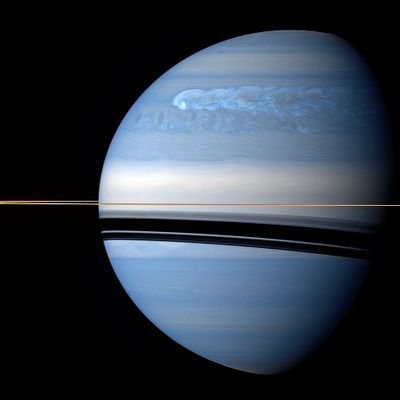
Only 2 hours from Rome, you’ll find this hidden gem in Tuscany, in the town of Saturnia✨
The famous Terme di Saturnia offer natural thermal waterfalls with warm, crystal-clear water all year round 🩵
BREAKTHROUGH🚨: Scientists at the University of Tokyo have developed a device that operates without generating heat- making computer processing speed 1000 times faster
Processing of data that took 1 hour will take only 1 second with this device.
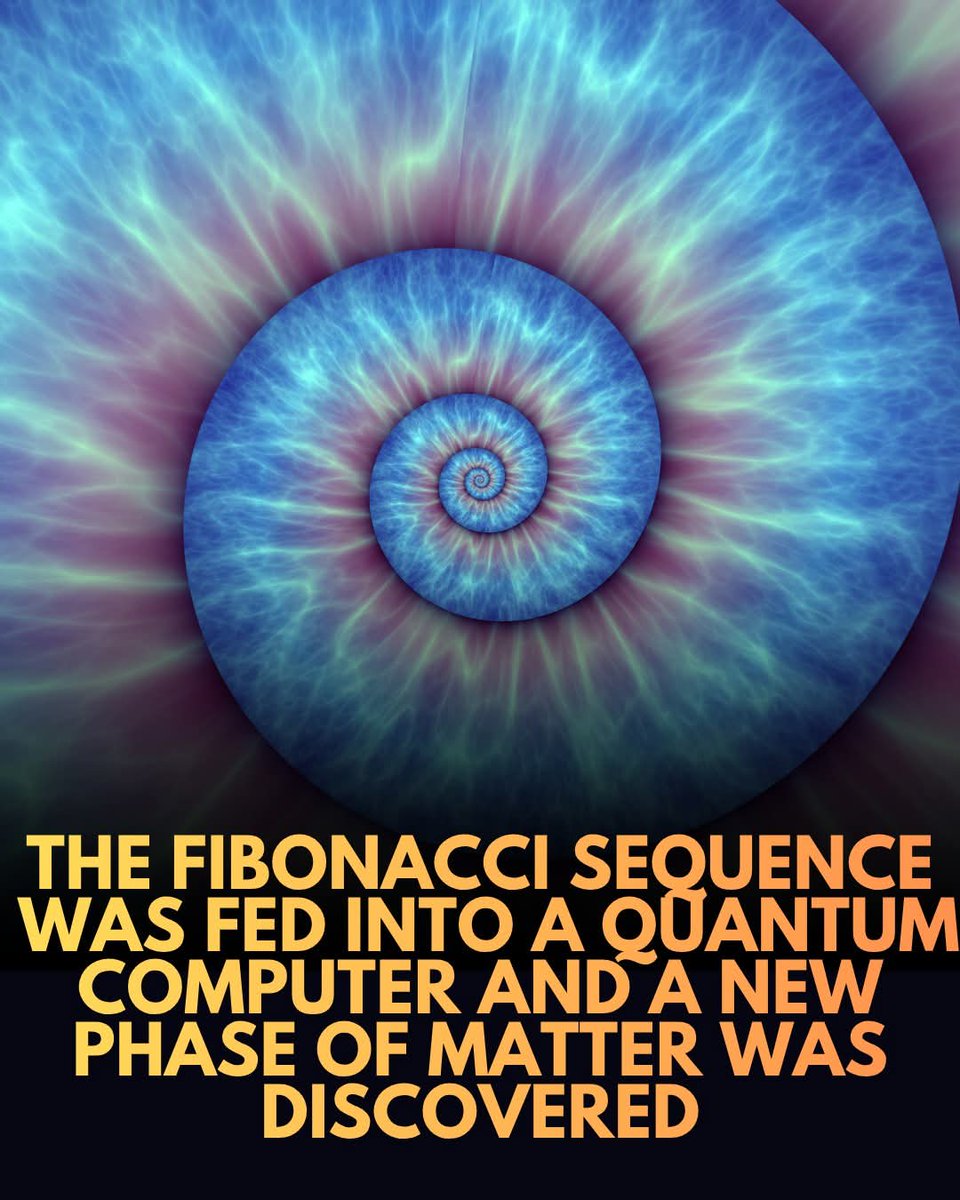
Physicists have unlocked a new phase of matter that uses Fibonacci-coded laser pulses to triple the lifespan of quantum data.
Scientists from the Flatiron Institute and Quantinuum have achieved a significant breakthrough in quantum computing by creating a "time quasicrystal." By bombarding 10 ytterbium ion qubits with laser pulses organized in a non-repeating Fibonacci sequence, the team forced the system into a highly stable state.
This unique mathematical rhythm effectively creates a "two-dimensional" time property, allowing the qubits to resist the environmental noise that typically destroys quantum information.
The results are transformative for the field: quantum data remained intact for 5.5 seconds, more than triple the 1.5-second lifespan of standard setups. Unlike traditional crystals that repeat in space or time, this quasi-periodic phase provides a robust shield against decoherence. This advancement suggests a new way of thinking about the phases of matter and brings us one step closer to building the reliable, error-resistant quantum computers needed for future technology.
source: Dumitrescu, P. T., Bohnet, J. G., Gaebler, J. P., Hankin, K. M., Hayes, D., & Vasseur, R. Dynamical topological phase realized in a trapped-ion quantum simulator. Nature.