
Sabitlenmiş Tweet
🔻Mriem
69.2K posts


🔻Mriem
@_iMeriem
I live in the wires
Internets 👩💻 Katılım Aralık 2010
1.9K Takip Edilen4.3K Takipçiler

🔻Mriem retweetledi



ناشط مع راسك في تويتر حتى تلقى تصويرة كاتفكرك في أيام عمرها ماترجع
Kamal muqalad🇪🇬🇪🇬🇪🇬@Kmal39867356
البعض يراها صورة عادية ولكن هناك من تذكر شيئاً ما 🙂
العربية
🔻Mriem retweetledi

AI B Darija 🇲🇦 Ep#2
Today I explain the basics of Machine Learning in a simple way: how computers learn from data and start making predictions ;)
فهاد الفيديو شرحت تعلم الآلة ML بطريقة مبسطة
كيفاش الكمبيوتر كيتعلم من data، كيقلب على patterns، ومع الوقت كيولي قادر يعطي prediction على معلومات جديدة.
و خطوة بخطوة غادي نبنيو الفهم ديالنا لــعالم الذكاء الإصطناعي😀


Horner once said …
ESPN F1@ESPNF1
F1 boss hits back at Verstappen and Hamilton over rule criticism
English
🔻Mriem retweetledi


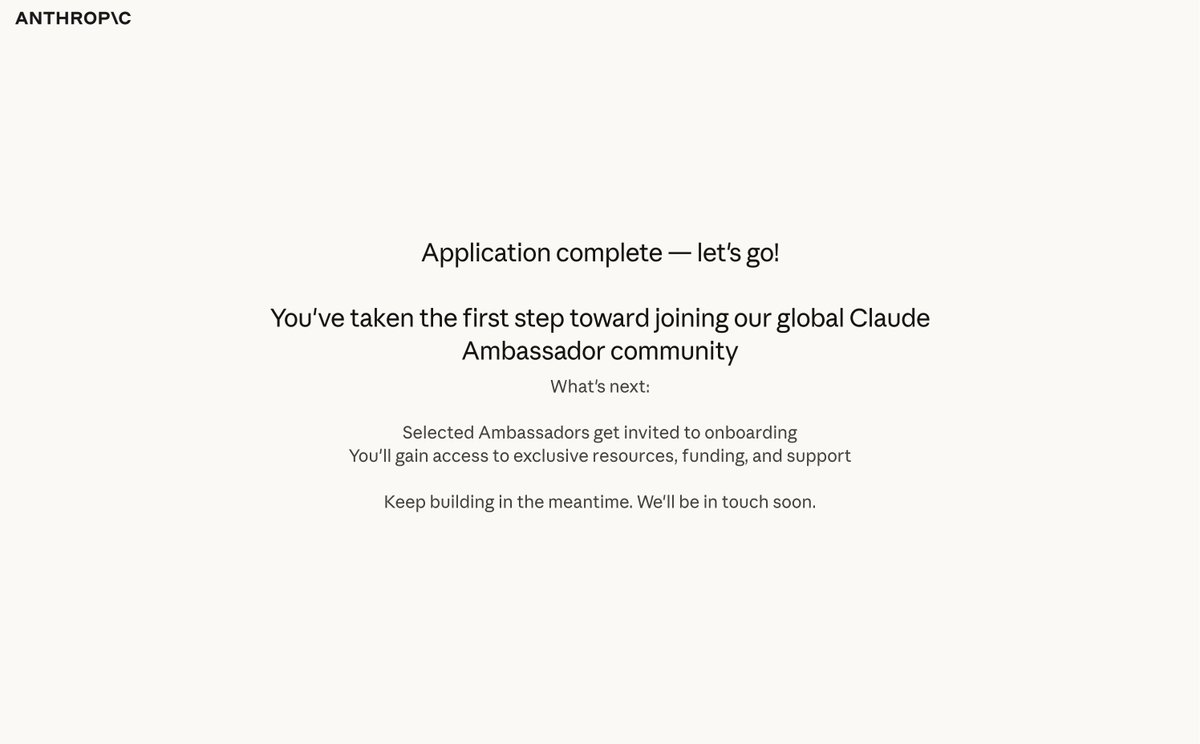
We're launching Claude Community Ambassadors. Lead local meetups, bring builders together, and partner with our team.
Open to any background, anywhere in the world.
Apply: claude.com/community/amba…

English
🔻Mriem retweetledi

some markets get "priority." others get the waiting list.
@oumayma_es_ has been building shebuilds morocco for 8 months — women in tech, consistent events, real community showing up. she's asking for sponsorship: venue, food, and credits for a build day.
this is exactly the kind of bet that moves ecosystems before they show up on anyone's “growth” dashboard. the work happens in the gap between "not a priority market yet" and "we should've invested earlier."
i've built in that gap. i know what it looks like when someone closes it; and what it looks like when they don't.
@replit @amasad: this is your territory.
who else steps up when a market gets written off?
Oumayma Essarhi@oumayma_es_
Another day of me asking @Lovable to host Shebuilds in Morocco 🥹 I really want to host a female only events where women can meet I've been hosting events for the last 8months and I see how much women in tech in my country need to show up @ElenaVerna @imwhitneyim please help 🥹
English
🔻Mriem retweetledi
🔻Mriem retweetledi

"Ben Guerir. 48 hours. Healthcare."
a no-brainer pitch that got us sold on our first sponsored hackathon, not the last one for sure ✅
djelal e5z@enlamp
✍️blog: thoughts on what happens in a hackathon for healthcare, how 100+ people from @1337FIL/@UM6P_officiel played founders, and where we can go from there🚀 djal.al/posts/2026-02-…
English


@casakhasra Hhhhh je sais de qui tu parles, le duo daro 3la Casa kamla (le bancaire surtout) formawha f l'IA b tekhraj l3inin 😂😂😂
Français

Formation AI à 200k et le formateur t’explique que ajouter please et thank you améliore la performance …
GIF
Français

Jamal bakkali est mort par une crise cardiaque hier
Jamal est mon frere
Français
🔻Mriem retweetledi

GIVEAWAY🚨In the spirit of Ramadhan (elevating souls instead of charging stomachs) and in support of a continuous improving platform, I want to give another LIFETIME access to Iximiuz Labs. if you are a server-side enthusiast, and want to elevate your game:
->follow&repost🎁🤞

Ivan Velichko@iximiuz
How to become a better server-side/Cloud/DevOps engineer using iximiuz Labs? Based on my own experience and hearing back from hundreds of engineers who actually achieved their learning goals, a sequence that has traditionally led to the most solid understanding and the most transferable knowledge is: Linux → Networking → Containers → {Kubernetes, Cloud} Jumping straight into learning the higher-level components, such as AWS VPC, Security Groups, Internet Gateways, or even Kubernetes, is not uncommon, but in my experience, it often results in longer mastering time and the need to "re-learn" from scratch after switching from AWS to Azure or from Kubernetes to Nomad or AWS ECS. In contrast, when you first learn about LANs (L2 broadcast domains, typical switch topologies, etc.), then L3 routing, iptables, and NAT, understanding what VPC and Security Group actually are becomes much easier. One more great thing about this approach is that focusing on fundamentals makes the knowledge transferable sideways, too. For instance, container networking (Docker's typical bridge network) and Kubernetes' Node and Pod networking rely on the same L2 broadcast domains, L3 routing, and iptables concepts from above, even if some of the primitives will be virtualized (e.g., a Linux bridge is a virtual switch and a network namespace is an analog of an isolated network node). This is why at iximiuz Labs, we focus on the fundamentals of the server-side tech and avoid covering topics like "5 ways to configure AWS NAT Gateway in 2026" 🤦♂️ Where to start with iximiuz Labs as a Linux/DevOps beginner? At the moment, for a Linux/DevOps beginner, the best place to start is the hands-on Docker roadmap labs.iximiuz.com/roadmaps/docker. I recommend trying to solve challenges there, starting from the top, and always following the links to the theoretical materials that most challenges include. And of course, don't forget to check the Solution tab if you get stuck or even if you've solved the challenge - there might be an alternative or simpler way, and the editorial solution may shed some extra light on what’s going on under the hood. Another beginner-friendly piece is the L2 Networking Fundamentals course, augmented by these L3 challenges: - [course] Computer Networking Fundamentals For Developers, DevOps, and Platform Engineers labs.iximiuz.com/courses/comput… - [challenge] Configure Routes to Connect Two Private Networks labs.iximiuz.com/challenges/net… - [challenge] Enable Internet Access for a Private Network with a NAT Gateway labs.iximiuz.com/challenges/net… The above networking materials can be taken before, after, or in parallel with the Docker roadmap. After getting through a couple of dozen Docker challenges and studying the networking fundamentals materials, it's a great time to take the Container Networking from Scratch tutorial labs.iximiuz.com/tutorials/cont…. The applicability of the knowledge you'll get from it is much broader than just Docker bridge networks - it's the foundation everyone needs before approaching the more complex Kubernetes networking model, and it'll also come in handy while learning other virtualization tech (e.g., Firecracker, QEMU, VirtualBox VMs, Lima, Kata Containers, etc.). While going through the above materials, you'll get to solve many practical Linux problems. Some in the form of complementary challenges, some as subtasks of Docker or networking challenges. In any case, you'll become much more fluent and confident in using the terminal and operating servers. Finally, I want to emphasise that iximiuz Labs is not a single course but a holistic learning and experimentation platform. One of the key features of iximiuz Labs is its Playgrounds labs.iximiuz.com/playgrounds. In essence, they are remote, preconfigured Linux VMs that are ideal for practicing Linux, networking, Docker, or Kubernetes in a safe, controlled environment. Most of the platform's learning materials embed a playground on the side to help you practice what you've just read, but you can (and should) use standalone playgrounds for your learning tasks, too. A typical example: while studying system design, you may want to explore the traditional 3-tier architecture of web applications, and the best way to do it is to actually deploy an API server, a database, and a client app with your own hands using your own or some well-known examples like github.com/dockersamples/…
English
🔻Mriem retweetledi

We’ve identified industrial-scale distillation attacks on our models by DeepSeek, Moonshot AI, and MiniMax.
These labs created over 24,000 fraudulent accounts and generated over 16 million exchanges with Claude, extracting its capabilities to train and improve their own models.
English

يا ربي نكون غير كنحلم
Holiness@F1BigData
The fastest of the entire preseason, done by Charles Leclerc
العربية
🔻Mriem retweetledi

@geeksblabla are live here, we'll discuss about everything and nothing:
x.com/i/spaces/1jGXg…
English
🔻Mriem retweetledi

A small side project I started over the weekend is trending on Linkedin 👀 flit.design
A tool that helps animate you icon SVG files.
If you are a designer or someone who wants to add a bit of sparkle to their UI, I would love to get your thoughts on it.
English