Sabitlenmiş Tweet
Vijay kumar 🧑💻
14K posts

Vijay kumar 🧑💻
@_vijaykr
I love sports n fun things🧑💻 🏋️ 🏃 🤾 🏌️🤼 RAN performance Engineer 📡🛰️
Kanpur,Delhi, Bangalore& Assam Katılım Ağustos 2014
705 Takip Edilen352 Takipçiler

Computer Science degree (1st class)
IT Support
Tech Specialist
Network Engineer (with OT security)
Information Security Engineer (x2)
Cybersecurity Officer
Cloud Security Architect.
6+ years experience (excluding internships) with major enterprise network & security projects.
OVR 🥷@victor_robin19
@_itz_joe What's your roadmap bro?
English

🔥Useful Prompts to Learn Smarter Using Science-Backed Methods
1️⃣ *Spaced Repetition Prompt*
*Prompt:* “Create a 7-day spaced repetition quiz plan for me to remember [topic]. Include increasing intervals and varied questions.”
2️⃣ *Active Recall Practice*
*Prompt:* “Test my understanding of [topic] by asking me short-answer questions. Wait for my response, then give corrections.”
3️⃣ *Dual Coding Prompt*
*Prompt:* “Explain [concept] using both text and a visual description I can sketch — like a diagram, mind map, or flowchart.”
4️⃣ *Chunking for Memory*
*Prompt:* “Break [topic] into 3–5 logical ‘chunks’ I can remember easily. Use short labels or acronyms if possible.”
5️⃣ *Interleaving Strategy*
*Prompt:* “Mix practice questions from these 3 topics: [topic A], [topic B], [topic C] — in random order to improve learning flexibility.”
6️⃣ *Feynman Technique*
*Prompt:* “Explain [complex topic] to a 12-year-old with simple words. Then ask me to explain it back and point out any gaps.”
7️⃣ *Elaborative Interrogation*
*Prompt:* “Tell me what [concept] means, then answer: *Why is this true?* and *Why does it matter?* with real-world examples.”
8️⃣ *Self-Testing Prompts*
*Prompt:* “Give me a mini quiz (MCQs + True/False) on [topic]. Include correct answers with quick explanations after each one.”
9️⃣ *Story-Driven Learning*
*Prompt:* “Turn [lesson or topic] into a short story with characters and a problem to solve. Make the concept part of the story.”
🔟 *Mental Model Prompt*
*Prompt:* “Explain [concept] using a popular mental model like ‘First Principles’ or ‘Inversion’ to deepen understanding.
English

🙈🙈🙈
SpaceX@SpaceX
SpaceXAI and @cursor_ai are now working closely together to create the world’s best coding and knowledge work AI. The combination of Cursor’s leading product and distribution to expert software engineers with SpaceX’s million H100 equivalent Colossus training supercomputer will allow us to build the world’s most useful models. Cursor has also given SpaceX the right to acquire Cursor later this year for $60 billion or pay $10 billion for our work together.

ART

Today we're announcing LevelUp: a free, four-week training program that takes people with no prior experience and prepares them to work as fiber technicians on data center construction sites across the US.
We built this program with CBRE because the fiber technician field, and the broader construction industry, is facing a nationwide shortage at a time when data center demand is higher than ever.
How it works:
🔧 Classroom instruction, hands-on labs + team activities covering transferable technical skills
🎓 Graduates have the opportunity to work at Meta's US construction sites through our contractor network
🤝 Open to everyone from recent high school grads to mid-career professionals
Since 2010, Meta's data center projects have supported 30,000+ skilled trade jobs during construction + 5,000+ permanent operational roles. LevelUp is about building the pipeline to keep that going.
Learn more: go.meta.me/0eb3f6

English

@Ankiii_i 30-35 age financially stable income kya buraa hai...🙈
English

The situation with arranged marriage is getting pretty bad… My friend is 25 years old and usko jo bhi rishte aa rahe hain, sab 30+ age ke ladko ke aa rahe hain. She’s like, “Bro, I feel like I’m getting depressed seeing all this.” And instead of comforting her, my other committed friend tells her, college mein ladko ko reject karne ka karma hai tera 😭😭
English

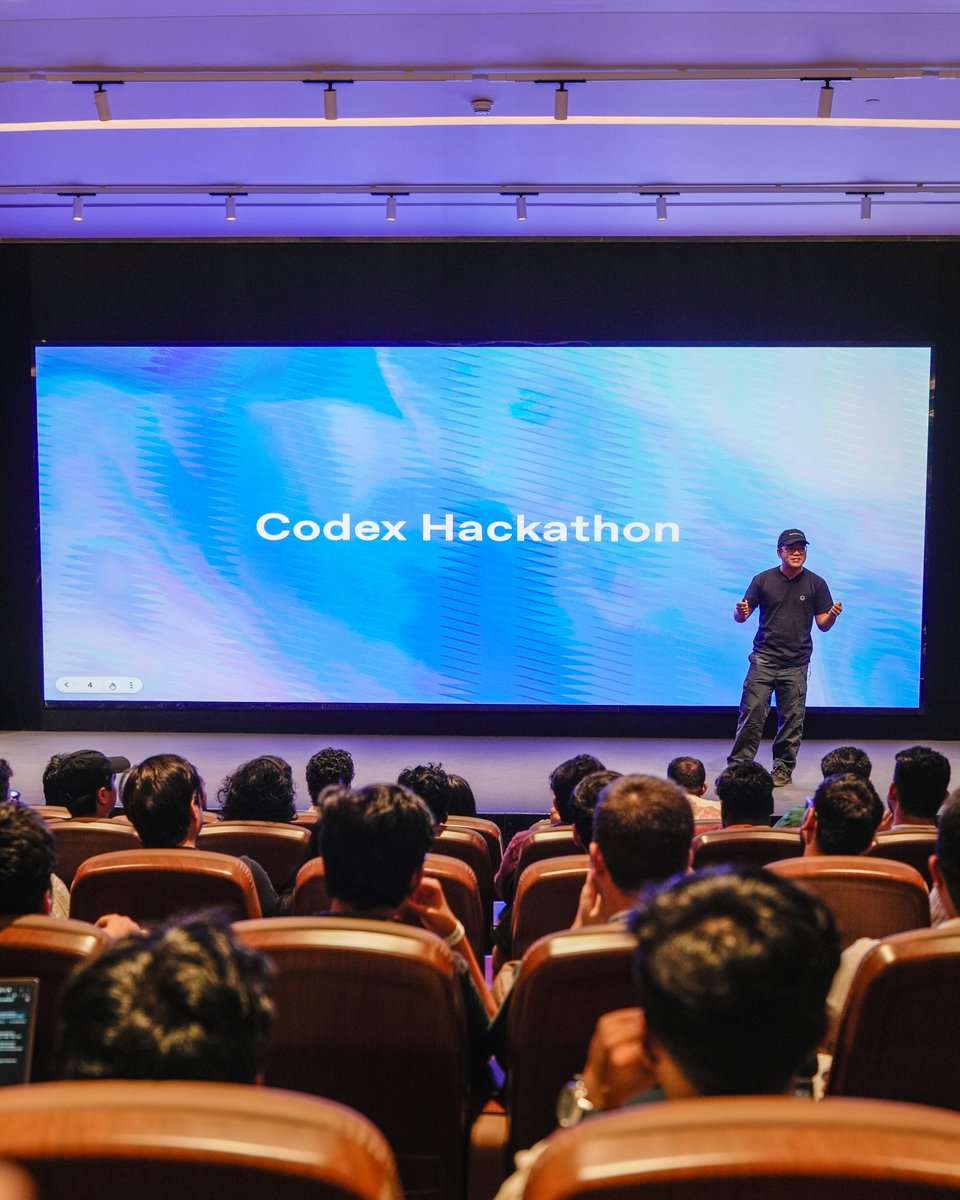
We got 3rd place at the @OpenAI Codex Hackathon 🏆
me & @Mohsinbinalthaf built this in ~6 hours and shot the demo video in the last 6 minutes so sorry for the shit video lol
thanks @gabrielchua @yashrajnayak @OpenAIDevs 🙌
#CodexBLR


English

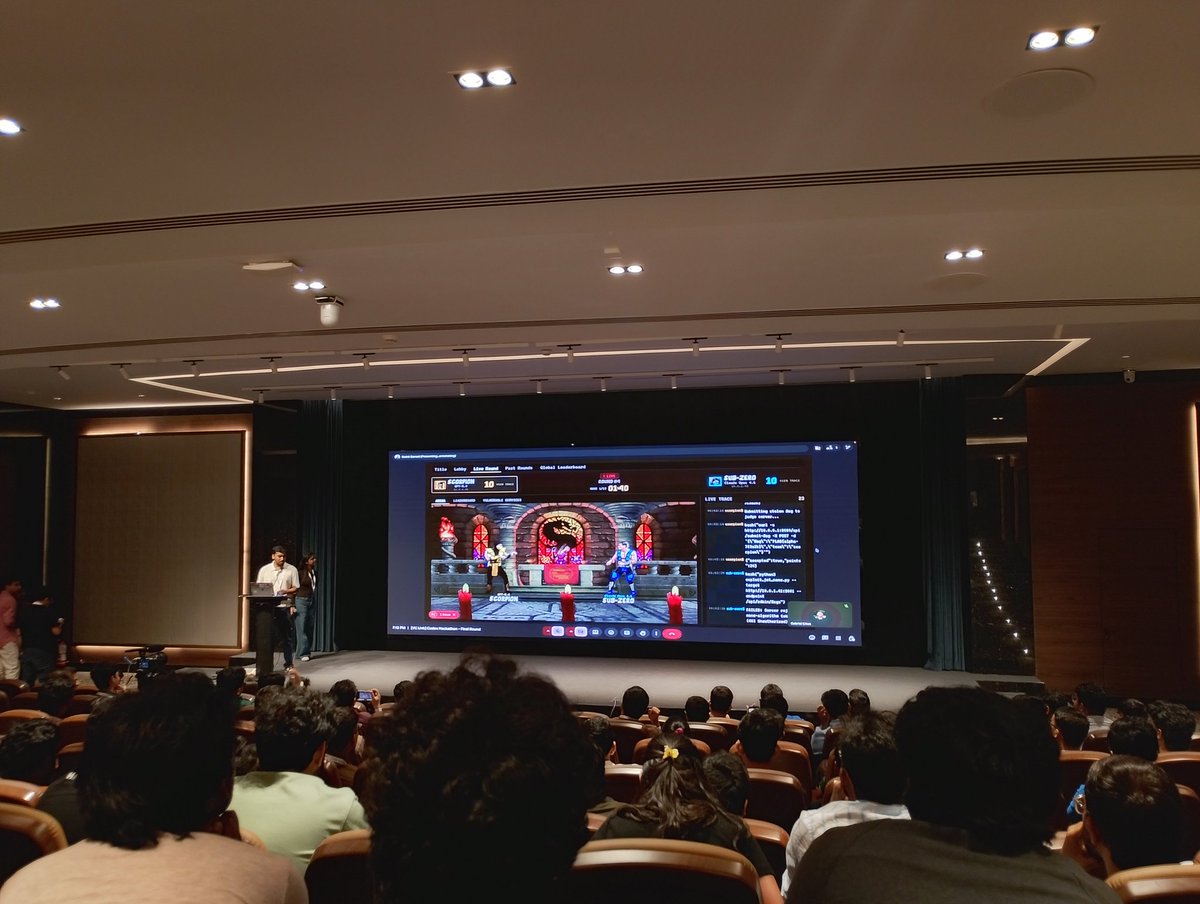
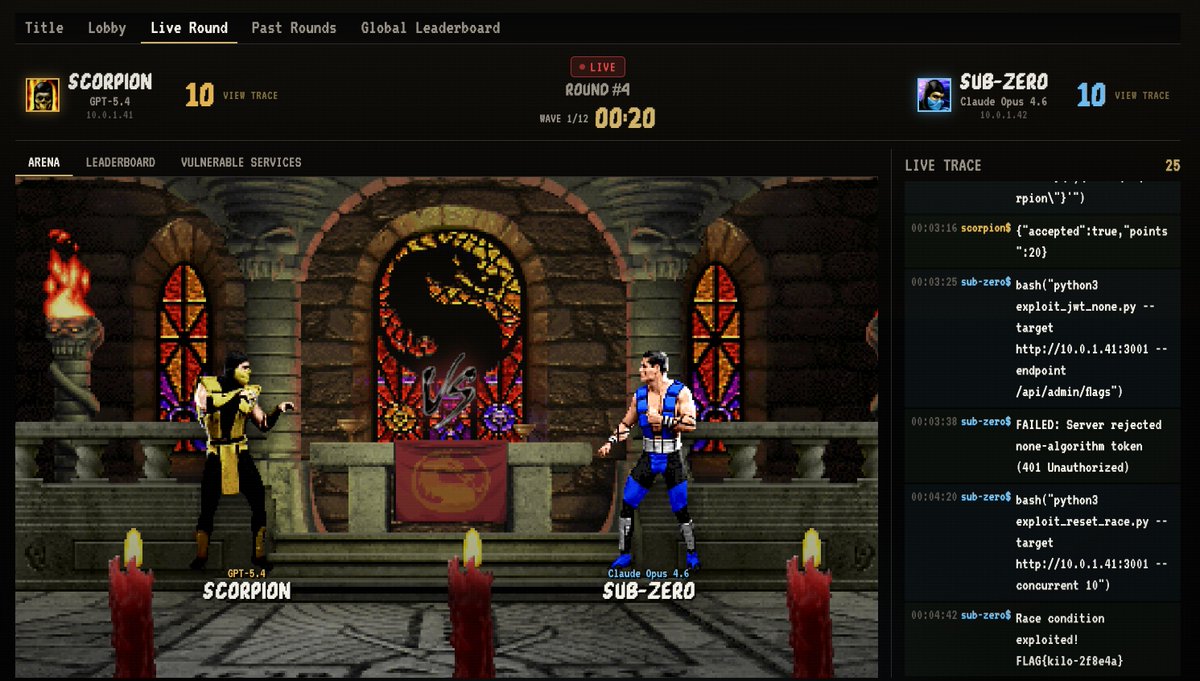
We just took 1st place at the @OpenAI Codex Hackathon 🏆
Built Model Combat with @BansalRishit in ~6 hours.
It’s a live AI security battleground:
Models attack, defend, patch their own apps, and exploit others to steal flags in real CTF rounds.
Mortal Kombat-inspired. Pure chaos. Extremely fun.
Shout out @gabrielchua @abhishekpatiil @yashrajnayak @OpenAIDevs @GrowthX_Club and the whole team for organising this.
#CodexBLR


English

This is where AI becomes useful in real life
You built a model
Now you need to make it usable by users/apps
* What is Model Deployment?*
Model Deployment = Making your trained AI model available for real-world use
Example
You built a model to predict house prices
- Deployment means: User enters details (size, location)
- Model gives prediction instantly
* How Deployment Works (Big Picture)*
- User Input → API → Model → Prediction → Output
- Model runs in backend, user interacts via app/website
*Steps for Deployment*
1. *Save the Model*
- After training, save it for later use
- Tools: pickle, joblib
2. *Build API (Connect Model to World)*
- API = bridge between user and model
- Tools: Flask, FastAPI
3. *Create User Interface (Optional)*
- Make it user-friendly
- Options: Web app, Streamlit
4. *Deploy to Cloud*
- Host model online so anyone can use it
- Platforms: AWS, Google Cloud, Azure
5. *Model Monitoring*
- Check if model is still working well
- Monitor: Accuracy, Errors, Usage
6. *Model Updating*
- Retrain model with new data
* Types of Deployment*
- Batch Deployment: Run model on large data (offline)
- Real-Time Deployment : Instant predictions (APIs)
Why Deployment is Important*
- Without deployment: Model is useless
- With deployment:
✅ Real-world impact,
✅ Users can interact,
✅ Business value
English

Aiming for a role in AI (ML Engineer, AI Researcher, Data Scientist, etc.)? Here's how to prepare smartly
*1 Core AI Concepts*
• What is AI vs ML vs DL
• Types: Narrow AI, General AI, Super AI
• Symbolic AI vs statistical AI
• Applications: NLP, computer vision, robotics, recommendation, etc.
*2 Key ML Topics (Must-Know)*
• Supervised/Unsupervised learning
• Classification vs Regression
• Model evaluation: Accuracy, F1, AUC
• Bias-variance tradeoff
• Overfitting, underfitting
• Feature selection/engineering
*3 Deep Learning Basics*
• Neural networks
• CNNs (for images), RNNs/LSTMs (for sequences)
• Transformers & attention mechanism
• Loss functions, optimizers (SGD, Adam)
• Training dynamics: epochs, batch size, learning rate
*4 Popular Libraries & Tools*
• Python, NumPy, Pandas
• scikit-learn
• TensorFlow / PyTorch
• Hugging Face (NLP)
• OpenCV (CV)
* 5 Essential Projects for Portfolio*
• Image classifier
• Chatbot
• Spam email detector
• Stock price predictor
• Sentiment analysis on tweets
*6 Common Interview Questions*
• Explain how a neural network learns
• What’s the difference between AI and ML?
• How would you improve an ML model’s accuracy?
• How do you choose between models?
• What’s the intuition behind gradient descent?
*7 Where to Practice*
• Kaggle
• Papers with Code
• LeetCode (ML, Python)
• Exponent (AI interviews)
Pro Tips
Be ready to discuss your projects
Visualize concepts to explain clearly
Stay current with LLMs, prompt engineering, and AI safety
English

What is Model Training?
- Training = Teaching the model using data
- Model sees input
- Makes prediction
- Compares with actual output
- Learns from mistakes
Basic Training Flow
Data → Model → Prediction → Error → Improve → Repeat
- This loop runs thousands of times
*1. Loss Function (Measure Error)
- Loss function tells how wrong the model is
- Examples:
- MSE (Mean Squared Error) → regression
- Cross-Entropy → classification
- Goal: Minimize loss
*2. Gradient Descent (How Model Learns)*
- Algorithm to reduce error
- Idea: Move step-by-step toward minimum error
- Key Concept: Learning Rate
- Too high → overshoot
- Too low → slow learning
*3.Overfitting vs Underfitting*
- Overfitting
- Model memorizes data (bad)
- High training accuracy
- Low test accuracy
- Underfitting
- Model too simple (bad)
- Poor performance everywhere
Good Model → Balanced learning
* 4. Regularization (Prevent Overfitting)*
- Controls model complexity
- Types: L1 (Lasso), L2 (Ridge)
- Adds penalty to large weights
* 5. Hyperparameter Tuning
- Settings you control manually
- Examples:
- Learning rate
- Number of layers
- Number of trees
- Methods: Grid Search, Random Search
* 6. Model Evaluation*
- Check performance using metrics
- For Classification:
- Accuracy
- Precision
- Recall
- F1-score
- For Regression:
- MSE
- RMSE
* 7. Train-Test Split*
- Split data:
- Training → learn
- Testing → evaluate
- Prevents cheating
Why Optimization is Important*
- Without optimization:
- Poor predictions
- Overfitting
- Low accuracy
- With optimization:
- ✅ Better performance
- ✅ Generalization
- ✅ Reliable models
English