The stable marriage problem
TL,DR //
Carpe diem. Everyone knows the phrase. Almost nobody knows that “carpe” literally means to pluck, as in fruit from a tree. Horace wasn’t saying be bold. He was saying it’s right there, just reach.
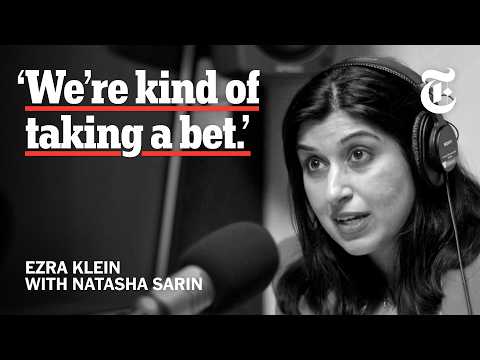
There’s a problem in mathematics called the Stable Marriage Problem that tries to find stable marriages for a group of people. Sounds like a party trick, it isn’t.
Every person who asked got the best outcome possible. Every person who waited got the worst. Not on average. Every single one, simultaneously.
The author worked out the proof at 3am in a Berkeley classroom when she was nineteen, then went and lived it. Cold-emailed her way into her career, initiated every relationship, asked near-strangers to move in with her family.
Better an “ask”er than a “wait”er be! What do you really have to lose?
PS: Don’t skip the sidebar wiki link to Shamir’s Secret Sharing
open.substack.com/pub/acotra/p/t…
The eye of the mathematician
TL,DR // Mathematicians have a quiet belief. Paul Erdős called it “The Book,” a divine collection of perfect proofs. God already wrote them. Our job is to discover them.
What makes The Book valuable isn’t who wrote it. It’s that it’s finite. Curated. Every proof in it earns its place not just by being correct, but by being beautiful. Elegant enough to teach, to remember, to build on. Hardy believed beauty is the first test of good mathematics. Math is closer to poetry than prose. In poetry, ambiguity is praised. In math, it is disgraced. But in both, elegance separates the memorable from the forgettable.
AI can now generate correct proofs. It may eventually generate beautiful ones too. That’s not the problem. The problem is everything else it generates alongside them. When correct output is infinite, you get the Library of Babel. Every true statement exists, none of it navigable. Beauty is how humans find their way through. Not because machines can’t produce it, but because someone still has to recognize it.
Correctness is no longer scarce. Judgment is. The ability to look at an ocean of functional output and know which proof belongs in The Book and which is just another volume in Babel.
aeon.co/essays/how-sho…
ps: Kailash Nadh’s essay on code and slop draws the same parallel, equally worth your time: nadh.in/blog/code-is-c…
Reflections on Norway - Will Manidis
TL,DR // A mountain tunnel closed for overnight maintenance. The phrase used: the mountain needed the night to itself.
Norway sits on a $2 trillion sovereign wealth fund, roughly $400k per citizen. The national cultural code, Janteloven, the Law of Jante, says: you are not to think you are special. The wealth is there. They just refuse to perform it.
The Oslo Opera House slopes into the fjord like a glacier. Glass walls, glass ceiling. You see mountains and water from every angle. The buildings aren't trying to impress the landscape. They're trying to apologize to it.
Will Manidis spent a month driving Norway north to south and wrote something that haunts you. Part travel writing, part history, part something closer to prayer. It refuses to resolve, and that's the point. A country that refuses to perform, written about by someone who refuses to package.
Read this one the way it's written, lived, unhurried, no pretence.
minutes.substack.com/p/reflections-…
End Game Play
TL,DR // The essay's claim: you don't get to play the endgame unless you've survived the middle. The middle is the price of admission.
Kasparov once burned the clock in smoky hotel rooms, searching by hand for the right early move. Today, elite chess looks like memorised lines until only the endgame remains "real." The piece argues we're doing the same everywhere else. In tech, the temptation is to reason backward from the terminal state - Mars colonies, AGI, whatever.
The warning: simulation makes us fluent in endings without bringing us closer to them. You can't waltz through complexity just because the destination feels clear. The middle still has no shortcut.
Burn the clock.
x.com/willmanidis/st…
TLDR // If you’re in the mood for a great read: an essay on feedback loops and why “things” become stable over time. We talk about the world as if "things" are simply there: stars, pebbles, bodies, habits.
This essay argues that what makes a thing feel real is not essence, but stability - and stability is often a product of feedback. When a process can affect its own next step, it starts selecting for certain outcomes. Over time, the improbable becomes routine.
The author calls these outcomes "Water Lilies": states a system reliably settles into once the right loops exist. Some are intentional (a thermostat, a goal). Most are not. They're the universe discovering grooves that hold.
It's idea-rich, and it leaves you with a useful question that applies far beyond astrophysics. What in your life is being shaped by a loop you haven't named yet?
planktonvalhalla.com/20241030-recur…
The dawn of the post-literate society
TL,DR // We built the modern world on long attention. The institutions that run it were designed for print culture.
Universities assume students can track an argument across 300 pages. Science depends on researchers who can hold competing hypotheses in tension long enough to test them. Democracy was built for citizens who could read a policy proposal, sit with the discomfort of nuance, and form considered judgments.
All of that requires the ability to think in paragraphs.
The screen age isn’t banning books. It’s doing something more effective: making sustained attention feel optional. A book forces you to follow an argument, while a feed trains you to follow a feeling. And when that becomes the dominant medium, it’s not just personal habits that change. Institutions do too.
The question isn’t whether people still read. It’s whether our institutions can hold when fewer people can think in long chains.
jmarriott.substack.com/p/the-dawn-of-…
Rethinking the everyday is where fintech moves forward. Today, @Setu_API brings India’s first agentic bill payments to ChatGPT and Claude: fetch, verify, and pay a bill in one trusted conversation. A glimpse of how payments will work as AI shifts from helping to doing.
blog.setu.co/articles/Agent…
Why you are probably an NPC
Gurwinder’s essay names a modern discomfort. We live in an age of infinite input, yet much of what passes through our minds is not really ours. It is recycled takes, borrowed outrage, and neatly packaged views that feel intelligent but ask nothing of us. That is how people drift into NPC mode, the non-player characters in video games who repeat their lines and follow their loops. Not out of laziness, but through a slow erosion of attention.
The sharpest part is his frame of primary, secondary, and tertiary information.
Primary is what you sense and observe directly.
Secondary is what others have seen and reported.
Tertiary is what gets compressed into easy opinions and ready-made narratives.
Most of us end up spending our days in that tertiary pool. It removes the need to think, which is why it spreads so quickly. You scroll past a headline, absorb the framing, and feel informed. The world becomes a set of positions to hold instead of phenomena to examine.
The invitation is simple. Move a little closer to the primary layer. Look at the world before you look at the commentary about the world. Tune your senses before you tune your feeds. When you change the source, the shape of your thoughts changes too.
It is not self-improvement. It is self-restoration. A quiet return to being the one holding the controller.
open.substack.com/pub/gurwinder/…
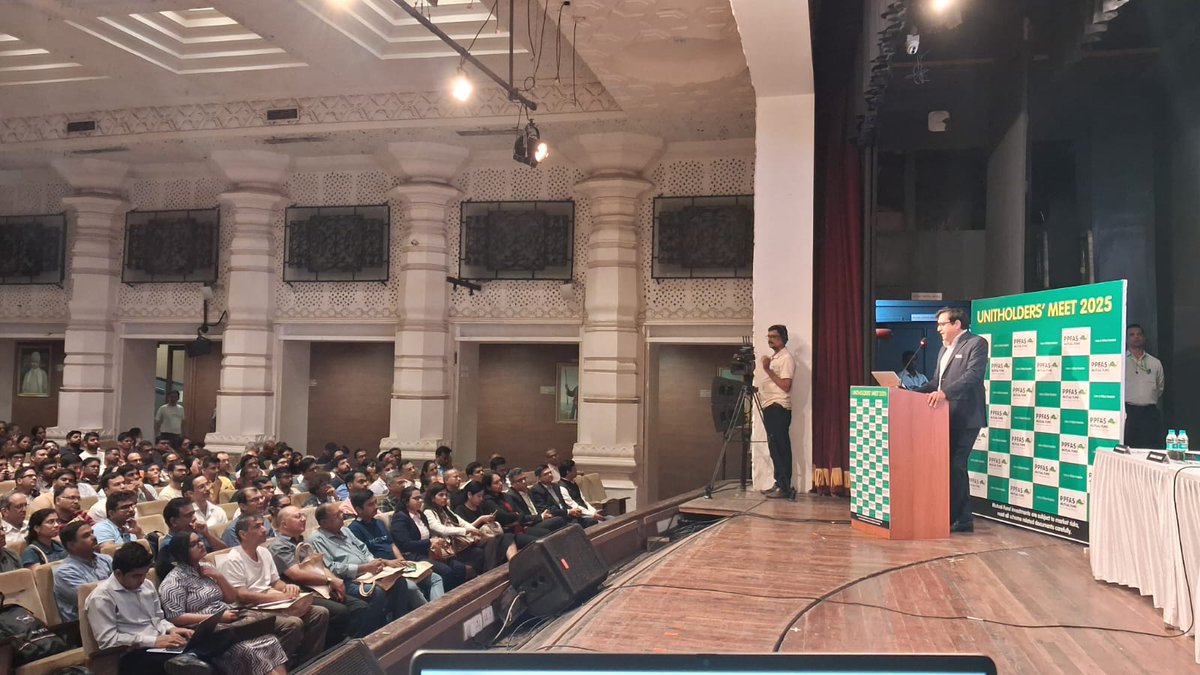
I just came back from moderating the PPFAS Annual Unit Holders' Meet. My 4th time doing it and my 5th yr of being an investor. When I asked the assembled audience, how many had been invested for 5 years, almost every hand went up. It was quite amazing to watch - patient long term retail investing at work!
Now, some key announcements.
1) PPFAS Large Cap Fund
Idea is to create an entirely new category, think of it as 'passive plus.' They will replicate the Nifty 100 but do some things to enhance returns. Like buying futures when futures are trading at a discount or taking advantage of a special situation (eg: a corporate merger/swap) or buying stocks before an index rebalance. ETFs and Index Funds forcibly buy on the date of rebalance, essentially providing an arbitrage opportunity to those who do it first. Idea is to launch it at an expense ratio of a passive fund (0.1-0.3%).
My thoughts: PPFAS sees it as an add-on for those who do Flexicap + Passive. The idea is indeed innovative and possibly can disrupt the passive space.
If it works. That is the key question. We must let them build track record and prove that it works. Till then, I'm quite happy to stick to the Flexicap.
2) GIFT City: Nothing in a hurry. The PMS is live, the 2 outbound passive funds have received approvals. The inbound feeder and esp the outbound active will take a lot more time. They'll do a separate webinar on GIFT.
3) Questions about size: Market has also grown. Large caps now start at 1 lakh crore mcap. Even small caps start at 10k cr mcap. So AUM of 1 lakh crore on flexicap is not a big challenge.
4) IPO: Neil Parikh said they're planning for a 2030 listing. Rajeev added that regulations may not allow a unitholder quota in the IPO.
5) Final thoughts: There is something incredible about this event. A pilgrimage for many - India's Berkshire Hathaway and it is a privilege to moderate it year after year. I've stayed put as an investor for 5 years and reaped the rewards of it.
I'll do a separate post on Rajeev's comments on valuations, cash holding and going overboard on equities.
For more in-depth discussions on PPFAS and other mutual funds, please join our personal finance community. Reply personal finance and I'll send you the link.
Reality has a surprising amount of detail
TL,DR // Reality looks simple from a distance. Then you try to build a set of stairs and discover that wood bends, angles deceive, screws wander, and every "straightforward" job hides a small universe of ways to go wrong.
Salvatier's point lands hard. Everything is fiddlier than it seems. The details that matter are invisible until you get close, and by the time you see them, you have already learned the wrong lesson about how the world works.
Most people stay stuck not because the work is impossible, but because they never learn how to see the hidden details that actually run the show.
lesswrong.com/posts/hBPkwBZo…
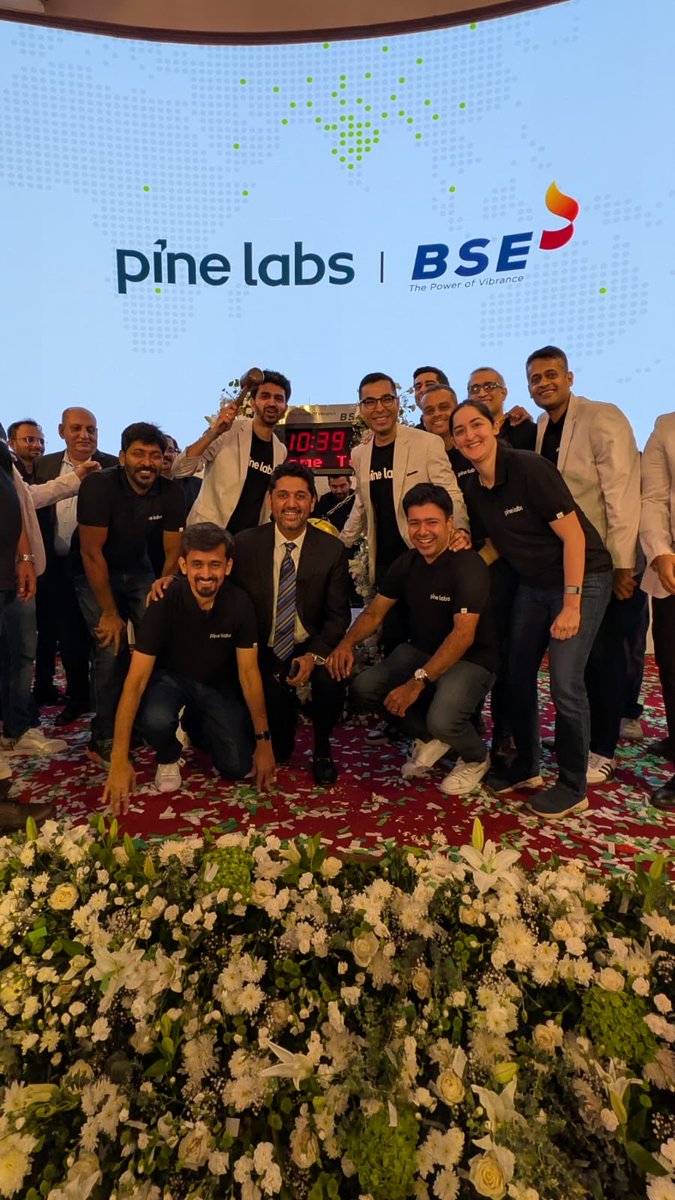
Pinelabs listed yesterday.
Years of work by brilliant people solving hard problems - engineers building for scale, partnerships forged through trust, decisions that compounded into something significant.
Proud to be part of this team and this moment. And excited for what we’re building next.
When is it better to think without words?
By Henrik Karlsson
TL;DR // When Words Run Out
Henrik Karlsson asks: can you think without words?
Turns out elite mathematicians do it all the time, holding problems in their heads for hours through sensations, blurry shapes, vibrations. Not daydreaming. Something stranger. They’ve trained themselves to do subconscious shower-thinking while fully awake, staring at walls for eight-hour stretches.
Here’s the paradox: words are “too heavy” for complex problems. They force you to compress a web of associations into a single line. But writing is also what builds the mental models that make wordless thought possible. It creates “relay results,” stepping stones you can stand on while reaching for the next thought.
The danger? False precision. Your brain autocompletes sentences with credible nonsense, and suddenly you’ve locked in guesses as facts.
Feynman probably wouldn’t have approved. He believed thinking was writing. But maybe that’s the charm. Wordless thought is a small rebellion against needing everything explained.
Sometimes, the best way to understand something is to stop trying to explain it.
henrikkarlsson.xyz/p/wordless-tho…
TL;DR // The Loneliest Neuron
Somewhere in your brain lives a neuron that will never see, touch, or taste anything, yet somehow knows a little about everything. Mark Humphries calls it the loneliest neuron: the one farthest from your senses and muscles, sitting deep inside the brain, piecing together distant echoes of the world.
If every neuron connects to every other, why doesn't every neuron know everything?
Turns out, they mostly do. Your visual cortex fires when you walk. Motor neurons light up at the sound of reward. You even "see" through your ears in a way. Your brain stitches sound, sight, and touch into one seamless story, filling in blanks so you never notice the gaps (like your actual blind spot, which you can't see because your brain makes something up to put there).
Begs the question on what consciousness really is? Though it's interesting that our brain is basically building this whole picture from fragments and we just believe it. Like you trust that what you're experiencing is real when it's really just your neurons' best guess.
The loneliest neuron isn't actually alone. It's connected to everything else, getting signals from all over. That's kind of the point. Makes you realize how much your brain is doing that you're completely unaware of.
medium.com/the-spike/the-…
The Most Valuable Commodity in the World is Friction
TL;DR // Your flight app promises on-time arrival while the pilot announces delays due to “technical issues.” Digital world: smooth as ever. Physical world: falling apart in real time. That’s the economy today. Friction hasn’t disappeared, it has just moved.
Three worlds, three rules:
Digital world: frictionless. AI writes your papers, apps curate your friends, and platforms sell you back to yourself.
Physical world: drowning in friction. Airport systems fail weekly, traffic controllers work overtime, and no one invests in resilience.
Curated world: friction stylized. Premium neighborhoods, exclusive clubs, and gated communities where life still “works” because the chaos is kept out.
Warren Buffett, stepping down at 94, sees the same imbalance: decades of kicking costs down the road, running an economy on frictionless finance while real systems decay.
Friction isn’t the enemy, it is information. It tells us where things strain, where care is needed, where the system is breaking. The more we optimize for seamless digital life, the more friction piles up elsewhere. And understanding who gets to escape it, and who gets crushed by it, tells you everything about how the economy really works.
kyla.substack.com/p/the-most-val…
The Big Bang’s big gaps - The current theory for the origin of the Universe is remarkably successful yet full of explanatory holes. Expect surprises
TL;DR // The Big Bang Has Big Questions
The Big Bang is still our best story of how the universe began, a “hot dense state” that gave us space, time, matter, and light. But the story keeps picking up plot holes.
Einstein pictured a tidy, static universe with triangles behaving and space staying flat. The cosmos had other plans. It only makes sense if you add anisotropy, those tiny wrinkles in the early plasma that became seeds for galaxies and stars. Two concepts that sound made-up but secretly run the show.
To cover the rest, we brought in cosmic inflation, dark matter, and dark energy. Each patches a gap, yet each remains mysterious. And now the James Webb telescope is spotting galaxies that look too grown-up too soon, while the “Hubble tension” hints our math might be off.
So yes, a wildly successful theory. And also wildly incomplete. Classic science.
aeon.co/essays/why-mig…
TL,DR // Masters of Simple Things
What wisdom flows through from two men with a life dedicated to their craft? What do a 70-year-old book guy in Yorkshire and an 85-year-old sushi chef have in common? They both do the same thing every day and keep getting better at it.
Richard Axe spent his life chasing books. He drove 25,000 miles a year buying whole libraries, filling 25 rooms with 150,000 volumes in an old youth hostel. Only a handful of people visited each week, yet he still sold £1,000 of books. No ads, no gimmicks. Just love of the craft.
Jiro Ono has made sushi for seven decades. Shrimp boiled only when you order. Rice kept at body temperature under heavy lids. Apprentices can't touch eggs for ten years. "Do the same thing over and over," he says. "Make it a little better each time."
Both men cared more about the work than the applause. If they can't get the best fish or the perfect book, they'd rather have nothing, trusting the inner scorecard.
Their lesson is simple: greatness is not about novelty. It is about ordinary things, done thousands of times with care. A mile of shelves, a piece of sushi. Small choices, repeated daily.
worldofinteriors.com/story/richard-…joincolossus.com/episode/397-ji…
The bit bomb by Rob Goodman
TL,DR // Claude Shannon took the fuzziest idea in language and made it count. Information is surprise. A message matters because it rules out everything it is not.
Shannon plays detective. Flip a coin and you get a bit. Bias the coin and the surprise shrinks. Riffle a book to grow fake English and you see letters tug letters, words tug words. Trim what everyone can guess and you get compression. Add just enough smart repetition and you beat noise without shouting.
Payoff: anything can be turned into bits and sent across the dark. A photo from deep space. A song in your pocket. This note on your screen. Elegant math, joyful experiments, and a reveal that clicks like a puzzle solved.
aeon.co/essays/how-a-p…
TL;DR // Bet, Build, Breakthrough
The bet: Big Tech is all in on AI while a handful of stocks carry the market, so the tech is real, the hype is bigger, and the landing may be messy.
thealgorithmicbridge.com/p/im-an-ai-ent…
The build: India commits ₹5,000 crore to AI infrastructure, plus ₹1,000 crore annually. Not a brake but scaffolding. Shared data, sandboxes, sector-specific models, and graded supervision so early failures don’t kill innovation.
naavi.org/uploads_wp/202…
The breakthrough: Smart teams are already shipping boring, reliable AI into core workflows. If a recession writes the user manual, they will be the ones it cites.
youtube.com/watch?v=PI6RmJ…
Net: America brings heat. India lays rails. Winners ship practical AI before the macro forces the issue.
Stumbling can be lovely - Devin Kelly
TL,DR // Devin Kelly writes about learning to ride a bike and drive a car at 32 and about falling, constantly. On asphalt, grass, in front of tourists, alone in parking lots. Each fall a small humiliation, each attempt a reminder of how adulthood calcifies us into people who are supposed to “have it together.”
But what if the point isn’t having it together at all?
“We pretend at certainty all of the time, even in the stumbling that life almost always is.”
The essay lingers on the shame of being a beginner as an adult, but also on the grace of admitting you don’t know, of failing publicly, of trying again. In a culture that rewards polish and expertise, there’s something quietly radical in embracing the mess of learning late, awkwardly, visibly.
And then this line, plain but poignant: “The hardest part is the launch.”
Because that’s true of bikes. And cars. And maybe everything worth doing. The trick is to keep pushing off - muddy, shaky, and embarrassed. Until one day, almost without noticing, you’re moving forward.
longreads.com/2024/03/07/stu…