Alexis | The Weekend Investor

8.6K posts

Alexis | The Weekend Investor banner
Alexis | The Weekend Investor

Alexis | The Weekend Investor

@a_vroenne

Helping young professionals build calm, future-ready portfolios - by showing exactly how I invest in strong ETFs and undervalued European companies

join 10000+ weekly readers Katılım Mayıs 2023
138 Takip Edilen7.6K Takipçiler
Alexis | The Weekend Investor
➡️Since 1928: S&P returns: 8% per year If you missed the 10 best days each year: -3% return ➡️Since 2015: S&P returns: 12% per year If you missed the 10 best days: -10% return For example: 2023: S&P up 24%, but only +4% if you missed 10 best days 2024: S&P up 23%, but only +4% if you missed 10 best days This is basically a reminder to not try to time the market. Missing just 10 days out of 220 trading days destroys returns.
English
2
1
4
775
Alexis | The Weekend Investor
The biggest mistake investors make is confusing risk with uncertainty. Risk is the permanent loss of capital. Uncertainty is not knowing exactly what will happen in the short term.
English
1
1
2
739
Alexis | The Weekend Investor
The market survived 6 black swan events in 5 years (COVID, supply chain chaos, inflation spike, fastest rate hikes ever, tariff crisis, Iraq bombing). Any one should've caused a recession. Yet the S&P PE is LOWER now than before these events.
English
0
0
3
400
Alexis | The Weekend Investor
How to spot the slowdown before everyone else does By the time the headlines say “recession,” the market’s already moved. Prepared investors will know what to watch before it becomes obvious. Here’s how to read the real signals 👇:
Alexis | The Weekend Investor tweet media
English
1
2
0
1.3K
Alexis | The Weekend Investor
🇨🇳 China is investable now. And the numbers back it up. → Stocks still trade at half the valuation of the U.S. -despite a major rally. → Over 250 Chinese companies have $1B+ market caps and 10%+ free cash flow yields. → Only ~20 of those are tech-opportunity is broad: industrials, consumers, more. → Trump’s softer stance + Xi’s “get rich first” pivot are lifting business confidence fast. → DeepSeek proves China’s AI isn’t just catching up, it’s competing. The “uninvestable” label was a sentiment error. This market’s mispricing is your window.
English
4
1
2
835
Alexis | The Weekend Investor
Global fund managers just hit one of their most bearish positions in 25 years. Massive underweights in: -U.S. equities -Tech -China But when everyone’s hiding in cash… That’s usually when the real opportunities begin. Markets bottom before economies do. Always.
English
1
1
3
1.5K
Alexis | The Weekend Investor
The thing about the economy is this: It doesn’t flip like a switch. It leaks. Labor, retail, and credit markets all flash early warnings before the official data turns. Pay attention to the edges not just the averages. That’s how you stay ahead.
English
0
1
1
514
Alexis | The Weekend Investor
4️⃣ Company Earnings They tend to tell the truth first. Forget economic forecasts for a second. If Walmart, Target, Visa, or Delta say consumers are pulling back -> believe them. Look for: -Lower forward guidance -Margin compression -Inventory buildup -Cutbacks on capex or hiring
English
1
1
0
506
Alexis | The Weekend Investor
U.S. inflation just came in lower than expected. That sounds like good news. Markets are happy But the full picture is more complicated. And what happens next really matters for investors. Here’s what you need to know 👇 The headline is this: Inflation in May rose to 2.4% - so slightly less than experts expected. That means prices are still rising, just a bit more slowly than feared. Markets took this as a positive sign: ✅ Stocks went up ✅ Bond yields dropped ✅ The dollar slipped But here are a few things to think about: 1️⃣ Why this is happening Trump’s new tariffs (taxes on imports) only started in April. And it usually takes a few months before those costs show up in prices at the store. So this “mild” inflation number? It may not last. 2️⃣ What comes next If tariffs keep rolling in, prices will likely rise more over the summer. That could keep pressure on shoppers and investors. The Fed (America’s central bank) meets next week. They’re expected to hold interest rates steady but may honestly cut later this year if inflation stays low or the economy cools. 3️⃣ Why this matters for you Whether you’re actively investing or just trying to stay ahead of the curve: 📌 Inflation seems under control but that could change fast 📌 Markets are betting on interest rate cuts later this year 📌 Trade tensions are quietly reshaping the global economy I’m personally watching August and September. That’s when the real impact of these tariffs could start to show. This might be a moment of calm. But I don’t think it lasts. If you're holding a lot of U.S. exposure, it’s worth thinking about where you’d pivot if inflation spikes or rate cuts stall.
English
0
1
0
491
Alexis | The Weekend Investor
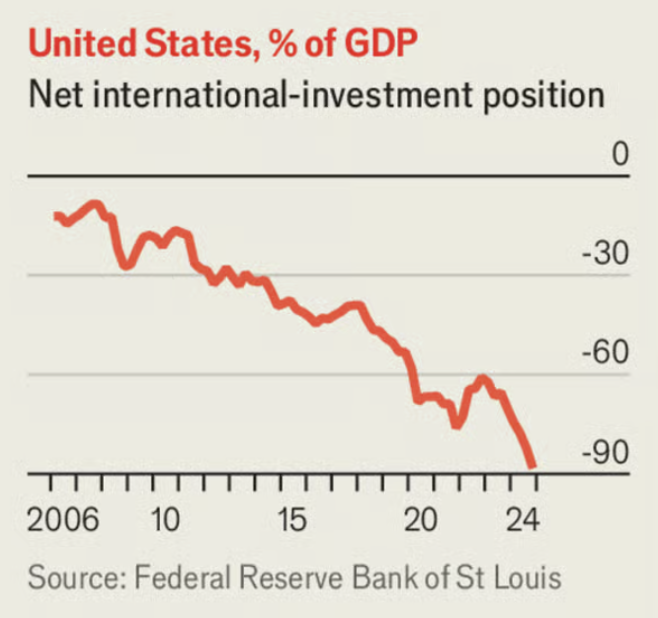
International investors could soon face a 30% tax on U.S. assets. And most people haven’t even heard of it. It’s called Section 899. And it could change where global capital flows next. Here’s what you need to know: 📌 What is Section 899? So it's essentially a proposed clause in Trump’s latest tax bill that would impose a tax of up to 30% on foreign investors who hold U.S. assets. Think stocks, bonds, real estate, and more. 1️⃣ The question is: who does this really affect? → European retail and institutional investors → Asian sovereign wealth funds → Foreign pension funds Basically: anyone OUTSIDE the U.S. investing in U.S. markets Ok and why was it proposed? Section 899 is about control. The U.S. wants to bring capital back home, especially in strategic sectors like tech and defense. It’s also a political move: it's easier to tax outsiders than voters. And there’s growing discomfort with foreign passive ownership of major U.S. companies. 2️⃣ The thing is, this really does matter for a couple of reasons. This could erase key tax advantages for international investors. It might not pass, but even the proposal is a message: the U.S. is rethinking its openness to foreign capital. If it gains traction, expect pullbacks from U.S. markets, more volatility, and a global rethink of asset allocation. 3️⃣ And how has the market been reacting? Well big funds aren’t rushing for the exit. But they’re not ignoring it either. You’re seeing: -Quiet rotations into Europe and Asia -Reduced U.S. exposure -And the dollar softening as capital looks elsewhere 4️⃣ Final point: should we, international investors, be doing anything about it? Step 1 is to stay sharp. If you’re exposed to U.S. assets, now’s the time to reassess. Diversify smartly: digital infrastructure, India, or quality European plays are worth a look at. And expect policy-driven volatility to become a bigger part of the game. Even if Section 899 fades, the signal won’t. The U.S. is putting up walls. Investors everywhere should take note.
Alexis | The Weekend Investor tweet media
English
5
5
10
2.7K
Investor Rod 🇨🇦🇦🇷🇮🇹
Section 899 primarily targets U.S.-source income paid to foreign investors, specifically focusing on dividends, interest, and royalties—collectively known as FDAP (Fixed, Determinable, Annual, or Periodical) income[2][3][4]. The tax does not generally apply to capital gains from the sale of U.S. stocks or other securities, except in cases involving U.S. real property or if the gains are effectively connected with a U.S. trade or business In summary: - **Dividends, interest, and royalties:** Subject to the new Section 899 tax (up to an additional 20% on top of current rates)[2][3][4]. - **Capital gains:** Generally *not* subject to Section 899, except for gains on U.S. real estate or if otherwise effectively connected with a U.S. business So, the 30% (or higher) tax under Section 899 is mainly on dividends and other FDAP income, not on most capital gains
English
1
0
3
156
Alexis | The Weekend Investor
Could this be an opportunity to invest in European cybersecurity? Europe just got a wake-up call on cybersecurity. And it's turning into an opportunity. In April, a temporary U.S. funding scare nearly disrupted a vital global cybersecurity database - one that Europe depends on heavily. It exposed just how reliant the EU still is on American digital infrastructure. Now? Europe is stepping up. 1. The EU has launched its own vulnerability database 2. It’s expanding its cybersecurity agency (ENISA) 3. And it’s pushing new rules to harden critical sectors like healthcare, utilities, and public administration And all of this signals one thing: Europe wants to build cyber resilience and fast. This could drive a new wave of investment into European cybersecurity, infrastructure upgrades, and localized threat intelligence capabilities. And with state-sponsored attacks rising (including from China), and U.S. support becoming more uncertain, expect EU governments and businesses to double down on cyber independence.
Alexis | The Weekend Investor tweet media
English
1
1
0
563
J S Balicki
J S Balicki@JBalicki84·
@a_vroenne This is really interesting, Alexis. I hadn't heard of section 899 so this is definitely something that is now on my radar.
English
1
0
1
88