Aaron Bell
648 posts

Aaron Bell
@aaaron
ancestor in training. climate, weather and ai soufflé @GoogleAI. founder, former authority-ish figure @adroll. words are my own.


Google Earth AI, our collection of geospatial AI models and datasets, is expanding globally and adding new capabilities. That includes Geospatial Reasoning, powered by Gemini, which automatically connects different Earth AI models - like weather forecasts, population maps + satellite imagery - to answer complex questions. We’re also bringing new Earth AI models to Gemini capabilities in Google Earth, which make it easy to instantly find objects and discover patterns from satellite imagery. For example, analysts could spot harmful algae blooms that could impact drinking water supply, and issue warnings.



We’re using AI to improve cyclone prediction. 🌀 Introducing Weather Lab: a new interactive platform developed with @GoogleResearch, hosting our experimental AI weather model which can predict a cyclone’s track, intensity, size and structure. Here’s how it works. 🧵
Excited to announce our new experimental cyclone model and a partnership with @NHC_Atlantic! Traditionally, it's been hard for a model to predict tracks & intensities: one requires a global view, the other very high resolution. Our AI model achieves strong performance on both.
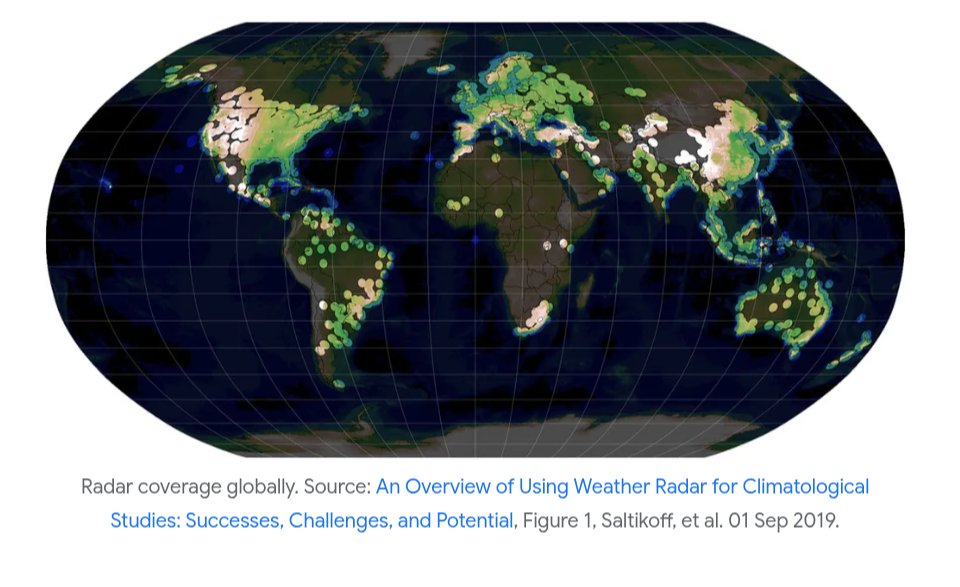
Great to see AI-based weather prediction being rolled out across Africa. This is important because traditional weather forecasts rely much more on ground-based radar, and in Africa, there simply aren't enough to give high quality traditional forecasts. blog.google/intl/en-africa…


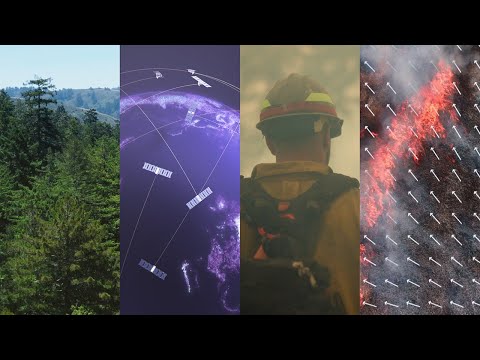
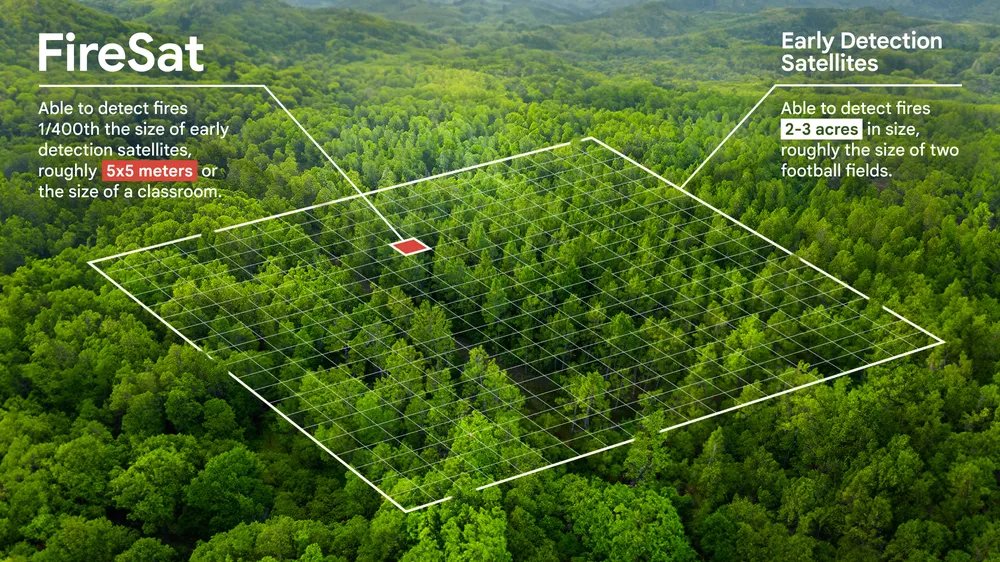
We partnered with @MuonSpace, @EarthFireAll and @Moorefound to develop FireSat — a new, global satellite constellation designed to manage & track wildfires 1/400th smaller than current early detection satellites. Learn more at → goo.gle/3B7rYoK

Trained on four decades of historical data, #GraphCast from @GoogleDeepMind is an #AI model that predicts global weather with greater speed and accuracy compared with traditional approaches. Learn more in Science's last issue of 2023: scim.ag/5hf