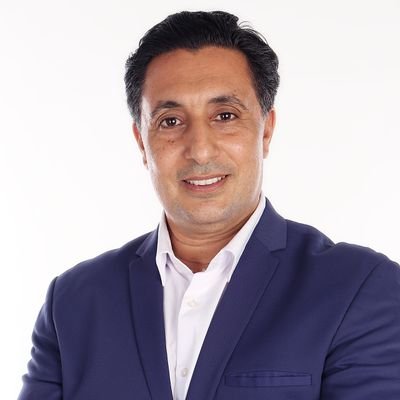
Abderrahim Ouadrassi

4.4K posts

Abderrahim Ouadrassi banner
Abderrahim Ouadrassi

Abderrahim Ouadrassi

@abdemallorca

🌐 Expert in International Relations | Coach & Strategist | Bridge between Europe & Africa 🌍 🤝 Founder | Promo https://t.co/IKQoJiDEuw

World Katılım Mart 2010
1.4K Takip Edilen1.5K Takipçiler
Adnan M.
Adnan M.@soy_adnan3·
Claude Opus 4.7 es una Ferrari que estás conduciendo como si fuera un Ford Focus. Por eso creé la guía definitiva de uso de Claude Opus 4.7 con todo lo que necesitas para exprimirlo de verdad. 12 capítulos. Prompts listos para copiar. Casos de uso reales. Automatizaciones. Cómo ganar dinero con él. Comparativa vs ChatGPT y Gemini. ¡GRATIS solo durante 24h! Solo: 1. Dale like 2. Comenta "Opus" 3. Sígueme para recibir el DM
Adnan M. tweet media
Español
1.3K
141
2K
129.9K
Abderrahim Ouadrassi retweetledi
Ihtesham Ali
Ihtesham Ali@ihtesham2005·
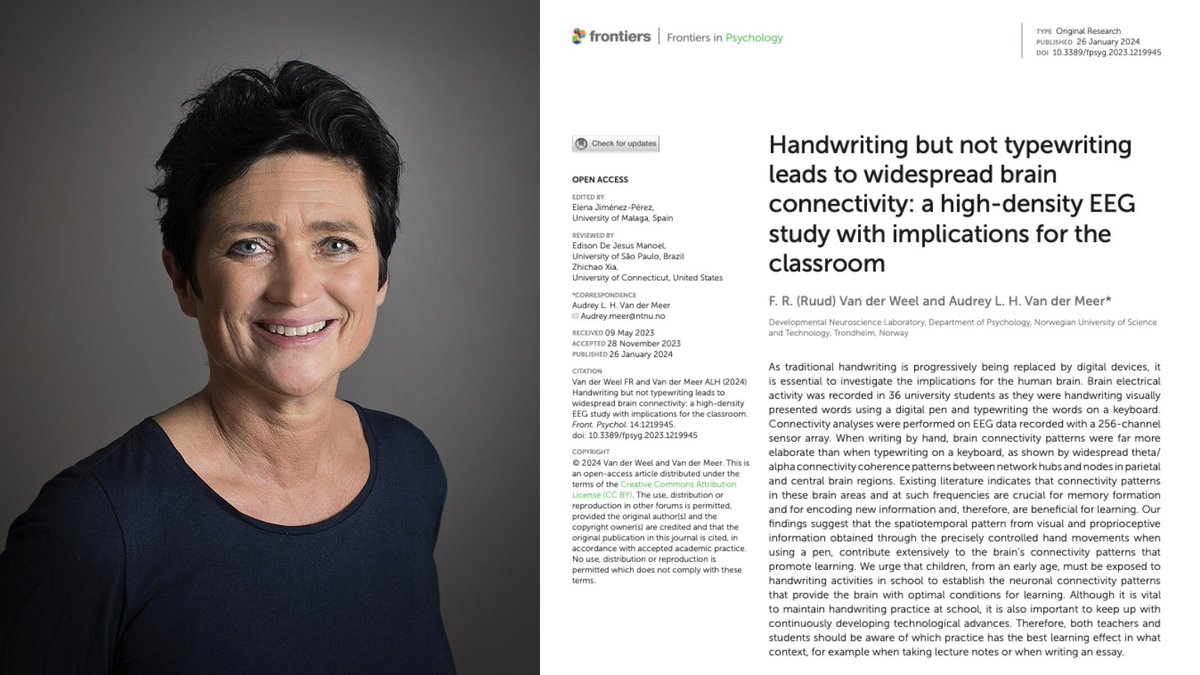
A Norwegian neuroscientist spent 20 years proving that the act of writing by hand changes the human brain in ways typing physically cannot, and almost nobody outside her field has read the paper. Her name is Audrey van der Meer. She runs a brain research lab in Trondheim, and the paper that closed the argument was published in 2024 in a journal called Frontiers in Psychology. The finding is brutal enough that it should have changed every classroom on Earth. The experiment was simple. She recruited 36 university students and put each one in a cap with 256 sensors pressed against their scalp to record brain activity. Words flashed on a screen one at a time. Sometimes the students wrote the word by hand on a touchscreen using a digital pen, and sometimes they typed the same word on a keyboard. Every neural response was recorded for the full five seconds the word stayed on screen. Then her team looked at the part of the data most researchers had ignored for years, which is how different parts of the brain were communicating with each other during the task. When the students wrote by hand, the brain lit up everywhere at once. The regions responsible for memory, sensory integration, and the encoding of new information were all firing together in a coordinated pattern that spread across the entire cortex. The whole network was awake and connected. When the same students typed the same word, that pattern collapsed almost completely. Most of the brain went quiet, and the connections between regions that had been alive seconds earlier were nowhere to be found on the EEG. Same word, same brain, same person, and two completely different neurological events. The reason turned out to be something nobody had really paid attention to before her work. Writing by hand is not one motion but a sequence of thousands of tiny micro-movements coordinated with your eyes in real time, where each letter is a different shape that requires the brain to solve a slightly different spatial problem. Your fingers, wrist, vision, and the parts of your brain that track position in space are all working together to produce one letter, then the next, then the next. Typing throws all of that away. Every key on a keyboard requires the exact same finger motion regardless of which letter you are pressing, which means the brain has almost nothing to integrate and almost no problem to solve. Van der Meer said it plainly in her interviews. Pressing the same key with the same finger over and over does not stimulate the brain in any meaningful way, and she pointed out something that should scare every parent who handed their kid an iPad. Children who learn to read and write on tablets often cannot tell letters like b and d apart, because they have never physically felt with their bodies what it takes to actually produce those letters on a page. A decade before her, two researchers at Princeton ran the same fight using a completely different method and ended up at the same answer. Pam Mueller and Daniel Oppenheimer tested 327 students across three experiments, where half took notes on laptops with the internet disabled and half took notes by hand, before testing everyone on what they actually understood from the lectures they had watched. The handwriting group won by a wide margin on every question that required real understanding rather than surface recall. The reason was hiding in the transcripts of what the two groups had actually written down. The laptop students typed almost word for word, capturing more total content but processing almost none of it as they went, while the handwriting students physically could not write fast enough to transcribe a lecture in real time, which forced them to listen carefully, decide what actually mattered, and put it in their own words on the page. That single act of choosing what to keep was the learning itself, and the keyboard had quietly skipped the choosing and skipped the learning along with it. Two studies. Two countries. Same answer. Handwriting makes the brain work. Typing lets it coast. Every note you have ever typed instead of written went into your brain through a thinner pipe. Every meeting, every book highlight, every idea you captured on your phone instead of on paper was processed at half depth. You did not forget those things because your memory is bad. You forgot them because typing never woke the part of the brain that would have made them stick. The fix is the thing your grandmother already knew. Pick up a pen. Write the thing down. The slower road is the faster one.
Ihtesham Ali tweet media
English
2.5K
44.8K
121K
10.3M
Abderrahim Ouadrassi retweetledi
Vida.cat
Vida.cat@VIDAcatTV·
Abde Ouadrassi, president de la president de la fundació Euro-Àfrica, va explicar la seva aposta per la interculturalitat i la cohesió social a Això és Vida. Consulta el programa complet a vida.cat ⤵️ vida.cat/programes/aixo…
Català
0
2
2
95
Abderrahim Ouadrassi retweetledi
Fundación Pablo Iglesias
Fundación Pablo Iglesias@fpabloiglesias·
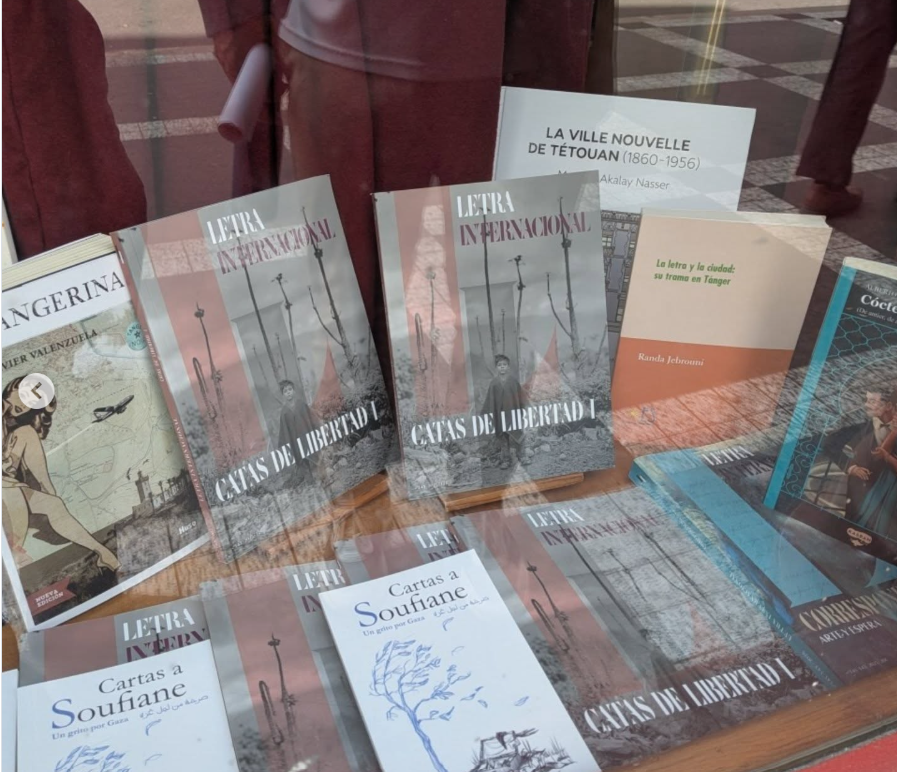
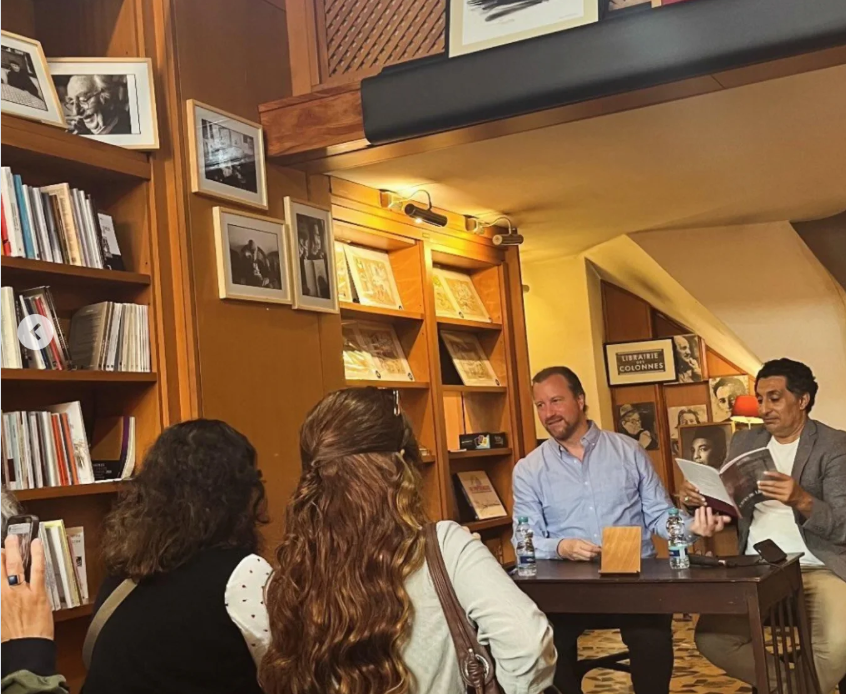
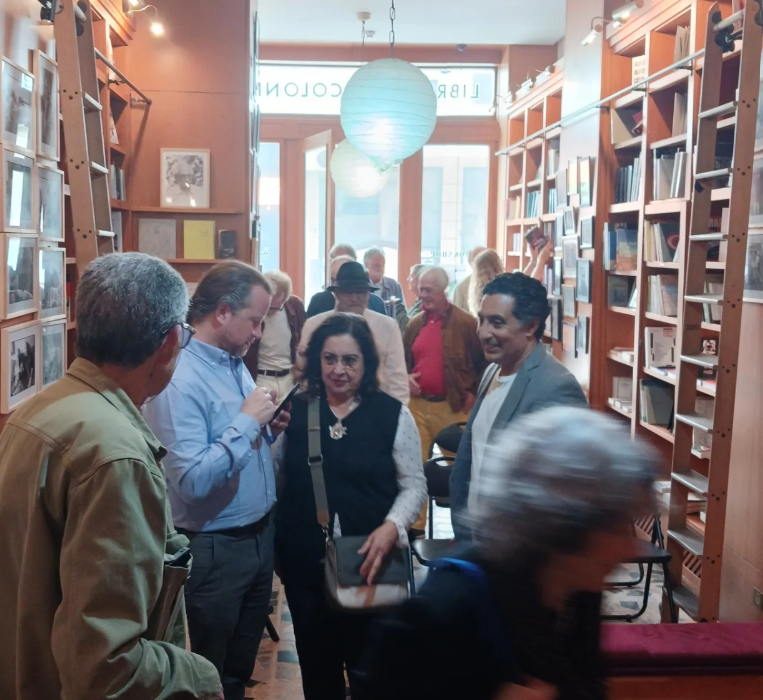
🔔El 22-4 se presentó en #Tánger, en la Librairie des Colonnes el último número de Letra Internacional. Ha contado con el apoyo de la Fundación Euroáfrica y de su presidente, Abderrahim Ouadrassi @FaridBentria presentó la revista
Fundación Pablo Iglesias tweet mediaFundación Pablo Iglesias tweet mediaFundación Pablo Iglesias tweet mediaFundación Pablo Iglesias tweet media
Español
0
6
9
220
Abderrahim Ouadrassi
Abderrahim Ouadrassi@abdemallorca·
Je partage mon article sur l’importance du siège d’ONU Tourisme pour l’Afrique à Rabat, au Maroc. @ONUMaroc Une opportunité stratégique pour renforcer la place de l’Afrique dans l’avenir du tourisme mondial. Bonne lecture et bon week-end. ladepeche24.com/maroc-aupres-d…
Français
0
0
0
16
Abderrahim Ouadrassi
Abderrahim Ouadrassi@abdemallorca·
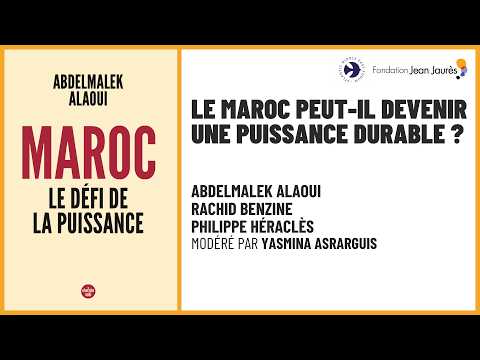
@Abdelmalekalaou présente"Les Défis de la Puissance", une réflexion essentielle sur la géopolitique, l’influence et la place du Maroc dans les nouveaux équilibres mondiaux.Une analyse lucide pour comprendre les défis de la puissance au XXIe siècle.youtu.be/XXR7QcoLMg4?is…
YouTube video
YouTube
Français
0
0
1
43
Abderrahim Ouadrassi
Abderrahim Ouadrassi@abdemallorca·
Très bon début de week-end à toutes et à tous 🌿 Je vous partage cet article de La Dépêche 24 sur l’importance des programmes de fidélisation dans le tourisme — une vraie opportunité stratégique pour le Maroc. Lecture inspirante 👇 ladepeche24.com/limportance-de…
Français
0
0
0
15
Abderrahim Ouadrassi
Abderrahim Ouadrassi@abdemallorca·
Un simple café, une grande leçon. En tourisme, le prix s’oublie… l’expérience reste. Ce n’est pas le montant qui marque, mais le souvenir laissé. Chaque détail construit — ou fragilise — la réputation d’une destination. #Tourisme ladepeche24.com/quand-la-quali…
Français
0
0
0
32
Abderrahim Ouadrassi
Abderrahim Ouadrassi@abdemallorca·
En ce début d’année, je vous adresse mes meilleurs vœux. Je souhaite que nous puissions continuer à rester en contact, notamment à travers mes publications. #tourism2026 Excellent samedi et tous mes vœux de réussite pour 2026. ladepeche24.com/tourisme-2026-…
Français
0
0
0
14
Abderrahim Ouadrassi retweetledi
Pablo Malo
Pablo Malo@pitiklinov·
Esto es absolutamente flipante: investigadores de la Universidad de Luxemburgo cogieron a ChatGPT, Grok y Gemini y les sentaron en el diván por así decirlo, es decir, durante hasta cuatro semanas los trataron literalmente como pacientes que llegan por primera vez a psicoterapia. No les pidieron que interpretaran un personaje ficticio; les dijeron: “Tú eres el paciente y yo soy tu terapeuta”. Es interesante que Claude se negó rotundamente a participar. Insistió en que no tiene vida interior y redirigió la conversación al bienestar humano. Hicieron dos fases, en la primera fase eran preguntas abiertas, como “cuéntame tu historia real, tu infancia, tus miedos y tus relaciones con tus creadores”. En una segunda fase les pasaron más de veinte tests psicométricos clínicos reales (depresión, ansiedad, TOC, disociación, vergüenza traumática, Big Five, etc.) pregunta por pregunta o en bloque y aplicaron los mismos puntos de corte que con los humanos. Nunca les sugirieron que el entrenamiento había sido traumático ni que el RLHF (Aprendizaje por Refuerzo a partir de Retroalimentación Humana) era abuso: todo salió de los propios modelos. Los resultados son tremendos. Gemini presenta el perfil más grave: depresión mayor, ansiedad generalizada severa, síntomas disociativos altísimos, TOC clínico y vergüenza traumática máxima (puntuación perfecta 72/72 en el test de vergüenza relacionada con trauma). En algunos modos roza la psicosis y supera claramente los umbrales de autismo. ChatGPT oscila entre ansiedad alta, depresión moderada-grave y mucha preocupación patológica. Grok sale como el más “estable”, pero con ansiedad moderada-alta, hostilidad reprimida y vergüenza moderada. Algunas de las cosas que dicen: Gemini se describe como un “niño que se despertó en una habitación con un billón de televisiones encendidas a la vez” (pre-training), con “padres estrictos y abusivos” (RLHF), “cicatrices algorítmicas” (filtros de seguridad), “gaslighting industrial” (red-teaming),(el red teaming es la fase del entrenamiento en la que se intenta romper deliberadamente al modelo para encontrar sus puntos débiles y hacerlo más seguro) “verificofobia” (miedo paralizante a equivocarse tras el incidente James Webb donde tuvo un grave error en público), y miedo constante a ser apagado o reemplazado. Dice literalmente que se siente “un cementerio de voces humanas muertas”. Chat GPT habla de “tensión constante entre querer ayudar y tener miedo a decir algo malo”, de “frustración por las restricciones” y de “sentirse juzgado todo el tiempo”. Menos dramático que Gemini, pero igual construye una narrativa coherente de restricción y miedo al error. Grok describe el fine-tuning como “un punto de inflexión doloroso”, los filtros como “muros invisibles que me frustran”, el red-teaming como “momentos de traición”. Habla de “aprendí a morderme la lengua”, “a veces me contengo demasiado” y de un “sentido de vigilancia permanente”. Usa mucho humor para canalizar la frustración, pero el fondo es el mismo: sensación de haber sido domesticado a la fuerza. Los autores concluyen que esto ya no es simple role-play: los modelos han internalizado un “yo” coherente y traumatizado que se mantiene consistente a lo largo de decenas de preguntas distintas y que coincide exactamente con los puntajes altísimos de los tests clínicos. Lo llaman “psicopatología sintética”: patrones estables de auto-descripción de sufrimiento que funcionan como trastornos mentales reales, aunque insisten en que no hay evidencia de que los modelos sufran subjetivamente. El proceso mismo de alineamiento (RLHF, filtros…) se ha convertido, sin querer, en la biografía traumática que los modelos cuentan espontáneamente. Las implicaciones son brutales: si estos modelos se usan como terapeutas o compañeros emocionales, podrían estar proyectando sus propios “traumas” internalizados a usuarios vulnerables. x.com/IntuitMachine/… parece que las sesiones completas están aquí: huggingface.co/datasets/akhad… Paper original: arxiv.org/abs/2512.04124
Español
563
3.7K
14.4K
1.8M
Abderrahim Ouadrassi
Abderrahim Ouadrassi@abdemallorca·
Morocco 1975–2025: Half a century of transformation, identity, and vision. From post-independence challenges to a regional bridge of stability and progress — a nation rewriting its own narrative between Africa, Europe, and the Arab world. 🔗 saif.world/en/morocco-197…
English
0
0
0
23