
Sabitlenmiş Tweet
abdu amer
329 posts


abdu amer
@abduamer3
جنسيتي الإسلام,قوميتي الإسلام,وحيث وجد الإسلام فثم وطني
Katılım Aralık 2012
91 Takip Edilen19 Takipçiler
@Broadcast4Media @ShhaadYk @Randomlyscript @RealShahriqKhan Answer the question
What language Jesus spoke?
English

@abduamer3 @ShhaadYk @Randomlyscript @RealShahriqKhan Didn't he speak Arabic, like your false book - quran, records Isa as being a Muslim?
🤡 🤡 🤡
English

Most Muslims or Christians have never caught this, but it’s one of the clearest mix-ups in the Quran.
Surah 28:23–27 tells a story about Moses meeting two women at a well, helping water their flocks, and then being offered marriage in exchange for working 8–10 years.
Sound familiar?
That’s not Moses’s story. That’s Jacob’s story, straight out of Genesis 29.
Jacob meets Rachel at a well, helps water her sheep, stays with her father Laban, and works years to marry her.
But in the Quran, that entire arc gets assigned to Moses. Same setup. Same well. Same daughters. Same marriage-for-labor structure. No Laban, Rachel or Leah.
Moses becomes the stand-in for Jacob’s entire journey. This isn’t poetic overlap or a creative choice, this is a full narrative transplant. A story pulled from one patriarch and reassigned to another, with no explanation, no context, and no Torah reference. For a book that claims to confirm previous scripture (Surah 2:41, 10:94), that’s not confirmation. That’s confusion.
So now you have to ask:
Did God forget who He gave the story to?
Or was this revelation recycled?
Because the Torah lays it out clearly, Jacob, Laban, the years, the deal.
But the Quran blends it like it’s interchangeable. If you can’t trust the characters, how can you trust the authority of the Quran?
English
@betoverli John 12:49 ; "For I did not speak on my own, but the Father who sent me commanded me to say all that I have spoken."
English

Moisés: “Assim diz o Senhor.”
Josué: “Assim diz o Senhor.”
Isaías: “Assim diz o Senhor.”
Jeremias: “Assim diz o Senhor.”
Ezequiel: “Assim diz o Senhor.”
Os profetas apontavam para Deus.
Eles falavam em nome dEle: “Assim diz o Senhor.”
Mas Jesus Cristo falava de forma diferente:
Jesus não falava apenas por Deus,
Ele falava com Sua própria autoridade:
“Eu porém vos digo.”
Ihunanya Chi ❤️@Ihunanya_chi
Moses: “Thus says the Lord.” Joshua: “Thus says the Lord.” Isaiah: “Thus says the Lord.” Jeremiah: “Thus says the Lord.” Ezekiel: “Thus says the Lord.” The prophets pointed to God. They spoke on His behalf: “Thus says the Lord.” But Jesus Christ spoke differently: Jesus did not just speak for God, He spoke with His own authority: “I say to you.”
Português
@Broadcast4Media @ShhaadYk @Randomlyscript @RealShahriqKhan Wow, do you have the original manuscripts in the language Jesus spoke?
Do you even know what language Jesus spoke?
English
@abduamer3 @ShhaadYk @Randomlyscript @RealShahriqKhan The Arabic Bible is a translation, not an original manuscript.
You should normally know this .... Or Not
English
@Melloadee @HalabiCat My point is: if you exclude the first chapter, there is no clear evidence that the author believed in the Logos doctrine.
This is also the view presented by some Christian scholars, such as John Daren who describe John -without the 1st chapter- as "a very Jewish book"

English

@abduamer3 @HalabiCat Not if he’s the Logos made flesh, which is where it the gospel deviates from Gnosticism. But I don’t think it’s controversial to say that the author may have been somewhat influenced by Gnosticism.
English

**cough** isn’t it amazing how in this entire passage Jesus pbuh is only referring to himself as being sent from God and speaks of God as being separate from him?
But people still believe that Jesus is somehow God?? It’s literally clear as day in the bible.
Buckley Carlson@buckleycarlson
THIS battle has yet to conclude: Jesus, speaking to the Jewish leaders intent on killing Him, while claiming Abraham is their father. John 8:39-46
English
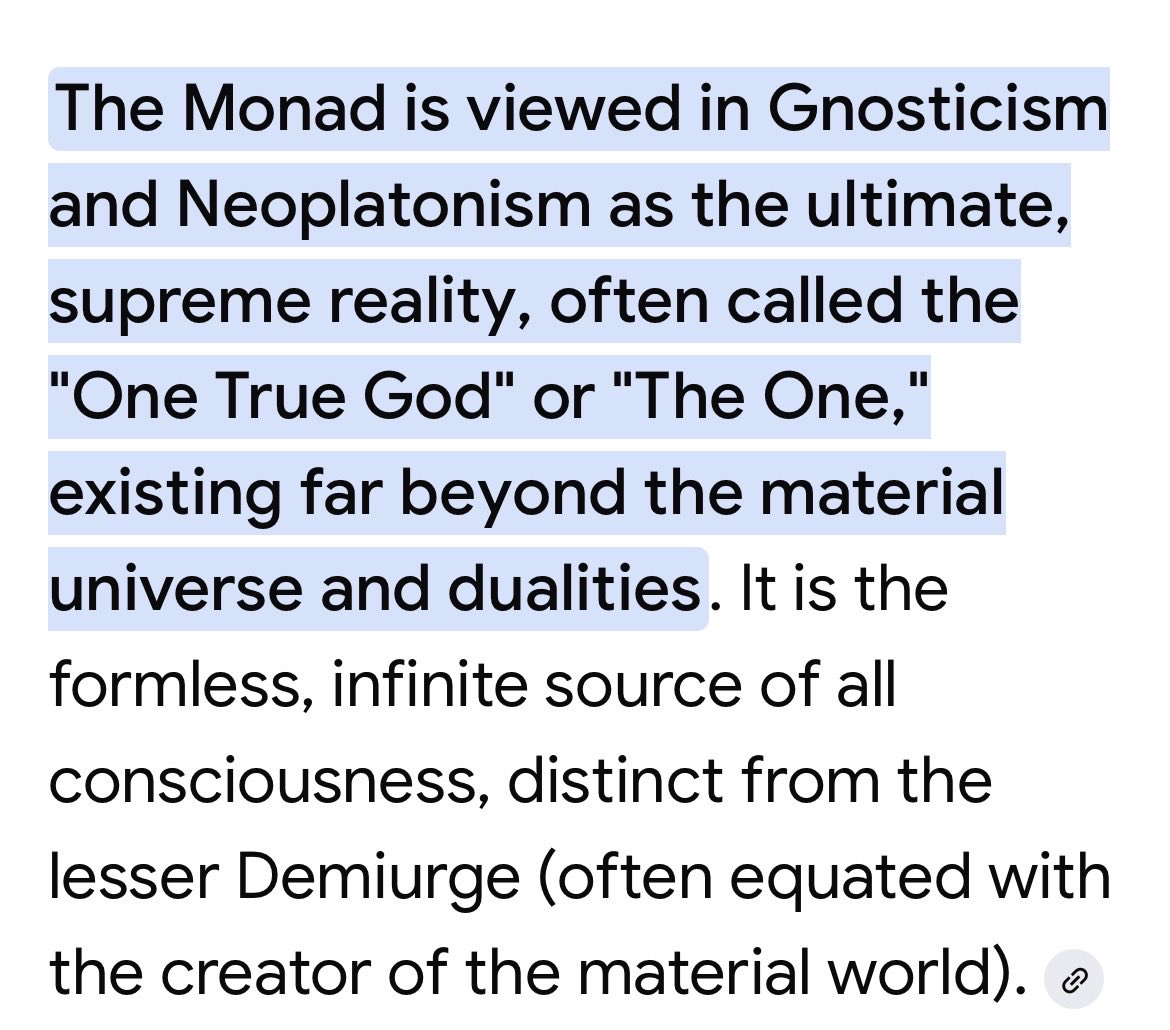
@Melloadee @HalabiCat 1. It is the first time I have heard someone describe John as a Gnostic book.
2. In this belief system of the Monad, could the Logos/agent describe the Monad as the "only" true God? It seems to imply a denial of divinity for himself.
English
@abduamer3 @HalabiCat I don’t see how this is a contradiction for someone who understands the Logos in relationship to the Monad - the one true god.

English
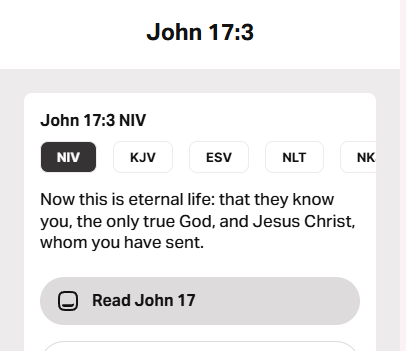
@Melloadee @HalabiCat What about praying to the Father and calling Him the only true God in John 17:3?
English
@abduamer3 @HalabiCat The understanding of the Logos being a type of servant of god sent by him but also being an aspect of god is not inconsistent with these statements from Jesus about him not speaking on his own. Even if the first part of John is a later addition.
English
@Melloadee @HalabiCat He was given authority, just like the disciples in John 20:23. He raised the dead, as prophets in the Old Testament did, and even we Muslims believe he did so by God’s permission.
"and raise the dead to life by Allah’s Will."
Quran 3:49
English
@abduamer3 @HalabiCat That, plus the fact that Jesus claims to be able to forgive sins and raise the dead in John’s gospel suggests to me that, overall, the gospel views him as divine.
English
@Melloadee @HalabiCat This is where I disagree: the Logos idea seems like a later addition to John.
The verses I mentioned contradict the Son’s divinity and oneness with father, John 12:49 “I do not speak on my own”
and in John 20:17 he calls the Father his God.
English
@abduamer3 @HalabiCat Yes. John is a later gospel. Jesus likely didn’t claim to be God. My point is that the author of John saw him as the physical manifestation of Logos.
English
@Ihunanya_chi John 12:49 ; "For I did not speak on my own, but the Father who sent me commanded me to say all that I have spoken."
English

Moses: “Thus says the Lord.”
Joshua: “Thus says the Lord.”
Isaiah: “Thus says the Lord.”
Jeremiah: “Thus says the Lord.”
Ezekiel: “Thus says the Lord.”
The prophets pointed to God.
They spoke on His behalf: “Thus says the Lord.”
But Jesus Christ spoke differently:
Jesus did not just speak for God,
He spoke with His own authority:
“I say to you.”
English
@Melloadee @HalabiCat It’s interesting that the Logos appears only in John 1 and never again.
Also, interpreting the Father and the Son as one being is a later explanation. Even Jesus defended himself against accusations of making himself equal to God in the same chapter.
English
@abduamer3 @HalabiCat One who defines Jesus’s relationship to the father as a son but also views the father and the son as one, which nearly resulted in him being stoned to death for heresy? None of this is inconsistent with how gnostics viewed the Logos - a messenger of god but also part of god.
English
@Melloadee @HalabiCat Also, how could a writer who believes in Jesus’ divinity write verses like;
John 7:16,
John 17:3,
John 12:49,
and John 20:17?
English
@abduamer3 @HalabiCat I think the “I am” statement is a fairly clear echo of Exodus 3:14 and is meant to be taken as a claim to divinity. I’m not arguing that Jesus actually said this or believed he was god, but of all the gospels, whoever wrote John believed he was.
English
@Melloadee @HalabiCat For the “I am” statement, I do not see it as a clear declaration. Rather, I see it as a desperate apologetic attempt to prove Jesus’ divinity. Especially when you read it in its context in John, it could mean “before Abraham, I was,” as a prophetic expression.
English
@Melloadee @HalabiCat Many Christian scholars suggest that the Gospel of John was not written by a single author, especially since the first and last chapters seem different in style.
English


@NoNothi93698068 @FullyindieD2 @Jvnior aljazeera.net/misc/2015/7/22…
Read this article and answer me .
What is this old copy of the Quran doing in England ?
How is it get there ?
Did they found any different between it and the current Quran ?
English


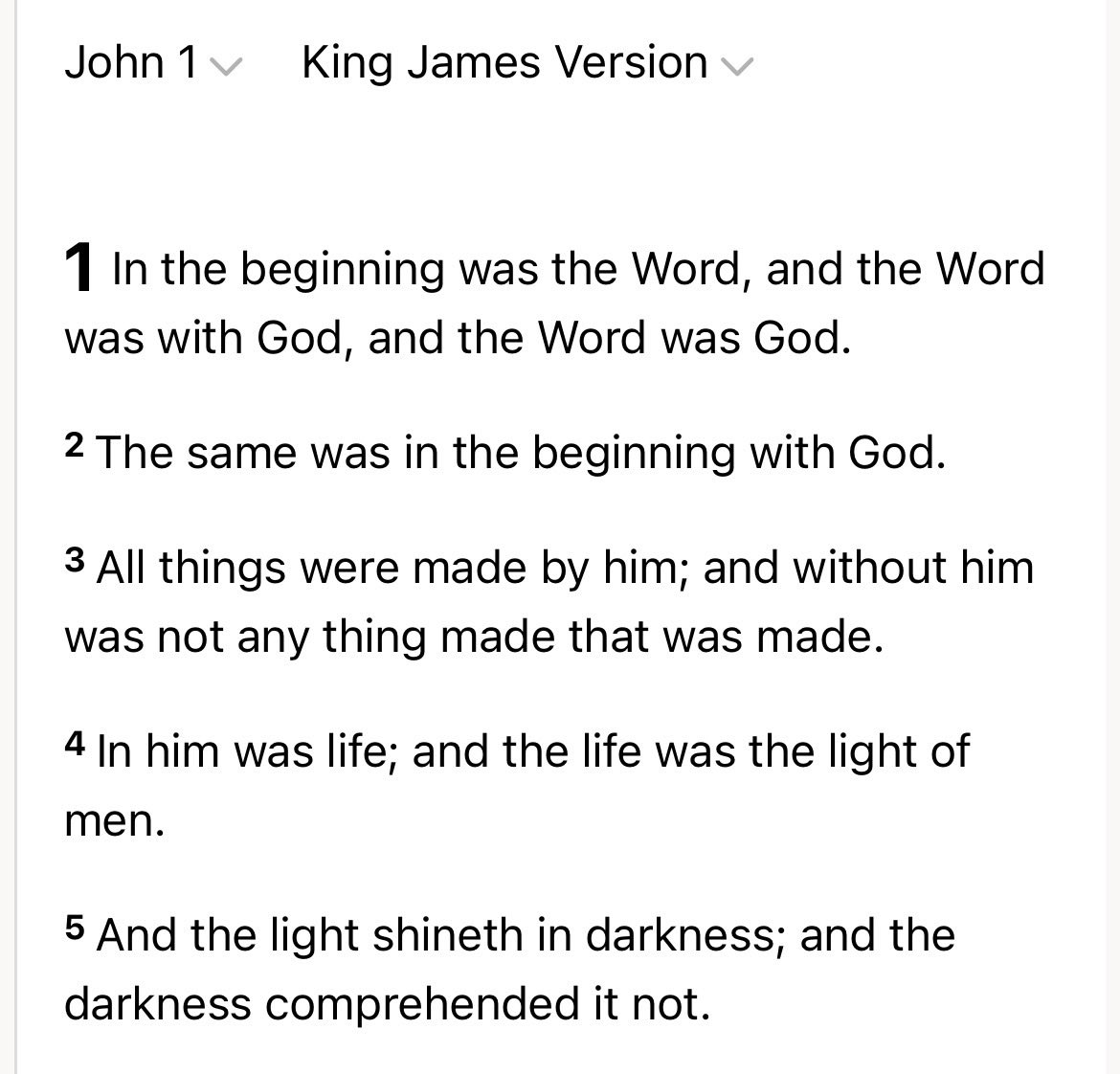
@Melloadee @HalabiCat First who is the writer?
Is the first chapter a later addition? It seems to be heavily influenced by Greek philosophy.
In the Gospel of John, several passages can be interpreted as Jesus attributing ultimate divinity to the Father alone
In John 8:58, may be he was as a prophecy?


English
@HalabiCat The writer of the gospel of John definitely believed Jesus was god. “Before Abraham was, I am” (John 8:58) and the beginning of the Gospel are 2 clear examples.
English

@David_Y3 Christianity predated Islam by hundreds of years . Although Judaism is an even older religion , so stop talking cobblers. ( and I'm not a follower of any of these religious cults ?)
English



@Broadcast4Media @ShhaadYk @Randomlyscript @RealShahriqKhan Here you are smart kid
x.com/abduamer3/stat…
abdu amer@abduamer3
@Broadcast4Media @ShhaadYk @Randomlyscript @RealShahriqKhan In Mark 10:18 Use your internet smart kid to look what is the arabic word for God Alone In the Arabic Bible, Jesus said, “There is no good except Allah alone.” You are welcome at any time to repent from man-worshiping paganism and take your shahada.
English
@abduamer3 @ShhaadYk @Randomlyscript @RealShahriqKhan COMPREHENSION is your challenge obviously.
My query was for Biblical sources where Jesus Christ (not Isa in the quran) called his Father "Ellaha or Alaha" ...... Show me one of such verse in the Bible?
Jesus never called Yahweh Ellaha & this Muslim arguement is really dumb BTW
English
@Broadcast4Media @ShhaadYk @Randomlyscript @RealShahriqKhan BTW, you seem to have many “personalities” here, since all believers will become one with God
English
@abduamer3 @ShhaadYk @Randomlyscript @RealShahriqKhan I'll try to get an Arabic translation tool - Cos English or comprehending it isn't your forte.
One God - 3 personalities
What is so hard to comprehend?
Isn't this worse than your allah praying for/to Mohammed?
Who was your Allah praying to?
What's the meaning of "Salat"?
English
@Broadcast4Media @ShhaadYk @Randomlyscript @RealShahriqKhan Please do not play with Arabic words when you do not know any Arabic, because your claim makes no sense at all.
English