Abida Massi

8.2K posts

Abida Massi banner
Abida Massi

Abida Massi

@abidamassi

A probabilistic gambler.

Monte Carlo Katılım Ocak 2016
969 Takip Edilen2.2K Takipçiler
Abida Massi retweetledi
سيّن
سيّن@imsommez·
Forget an age gap. Y’all ever experienced an intelligence gap?
English
799
7.5K
42.1K
1.7M
Life Dough
Life Dough@lifedoughhh·
@abidamassi Sepertinya harus ganti jadi Abida Messi karena GOAT juga bang
Indonesia
1
0
0
107
Giovanni
Giovanni@dimejarapat·
@abidamassi Lho, OLT Korea punya. 😅 Fee transaksi karyawan lebih rendah.
Indonesia
1
0
0
181
Abida Massi
Abida Massi@abidamassi·
Switching my $HYPE to long!
English
0
0
1
180
Abida Massi retweetledi
Ricky Ho
Ricky Ho@rickyho_1989·
One of Indonesia's biggest long-term economic challenges is not simply generating more growth, but improving the quality of that growth. The World Bank's analysis highlights a structural problem that is often overlooked: Indonesia has become an upper middle-income country while retaining one of the region's most informal labor markets. Fewer than one in five workers are employed in the formal sector according to internationally comparable measures, far below what is typical for countries at Indonesia's income level. This matters because informal jobs tend to be less productive, pay lower wages, offer limited opportunities for skills development and innovation, and provide little or no access to unemployment insurance, paid leave or retirement benefits. A labor force dominated by informal employment inevitably limits productivity growth, and the numbers already reflect this. Output per worker has reportedly fallen from US$7,530 in 2015 to US$5,336 in 2023, an alarming reversal for an economy aspiring to become a high-income nation by 2045. The problem extends well beyond the labor market. A highly informal economy naturally produces a narrow tax base because businesses and workers operating outside the formal system contribute less to government revenue. Indonesia's tax-to-GDP ratio has declined from around 17% in 1980 to just above 10% today, one of the lowest among major emerging economies despite decades of economic growth. This leaves the government with fewer resources to invest in infrastructure, education, healthcare and social protection, while simultaneously making it more difficult to provide the very benefits that encourage workers and firms to formalize in the first place. It becomes a self-reinforcing cycle where weak social protection discourages participation, which in turn weakens fiscal capacity even further. This also helps explain why Indonesia can simultaneously attract robust foreign direct investment while domestic consumption, wage growth and household purchasing power remain under pressure. Investment builds factories, smelters and data centers, but unless those projects generate large numbers of productive formal jobs, the benefits remain concentrated and do not fully translate into stronger household incomes or a broader expansion of the middle class. The government's Golden Indonesia 2045 vision ultimately depends less on attracting additional capital and more on dramatically improving labor productivity and formal job creation. Indonesia's working-age population is expected to expand by more than 15 million people over the coming years. If current trends persist, only around one in five of those new workers is expected to obtain a formal job, and for women the figure could be as low as one in ten. That would make achieving high-income status substantially more difficult. The policy implication is clear. Indonesia does not simply need faster GDP growth, it needs growth that creates productive formal employment. Improving regulatory certainty, lowering the cost of formalization for SMEs, reforming labor regulations, broadening the tax base, strengthening vocational education and increasing the value of social protection are likely to be far more important than pursuing headline investment figures alone. The next stage of Indonesia's development will ultimately be determined not by how much capital enters the country, but by how many workers transition from low-productivity informal employment into higher-productivity formal jobs.
Ricky Ho tweet mediaRicky Ho tweet media
English
5
65
227
18.5K
Abida Massi retweetledi
juju🌴
juju🌴@jujubazofc·
quero passar todo o domingo assim
Português
336
9.9K
85.3K
3M
Abida Massi
Abida Massi@abidamassi·
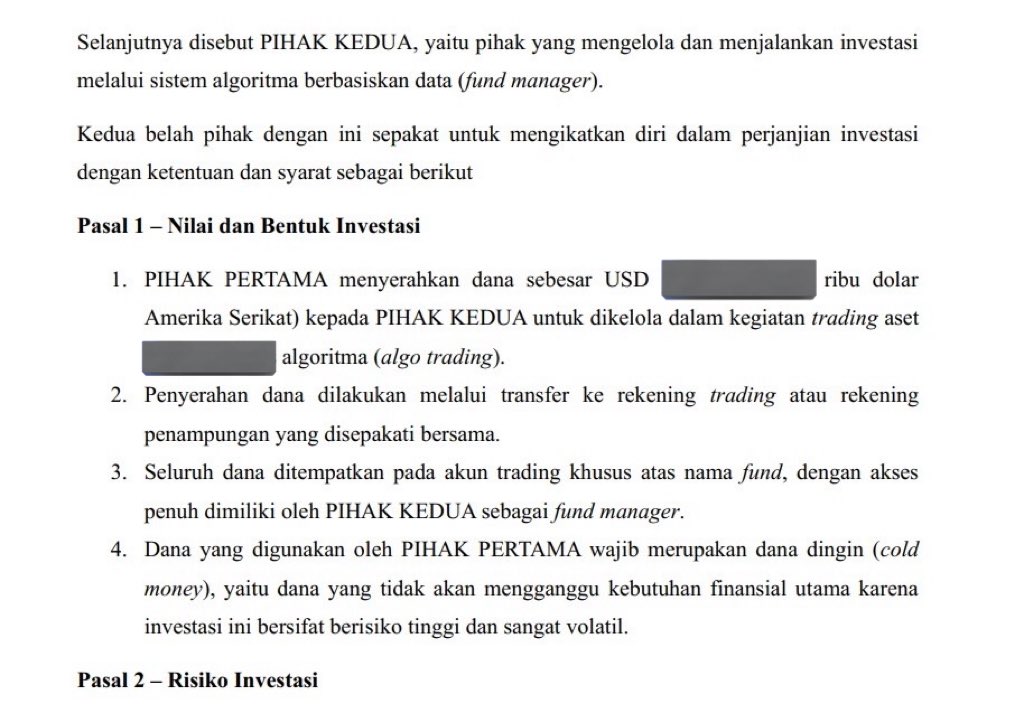
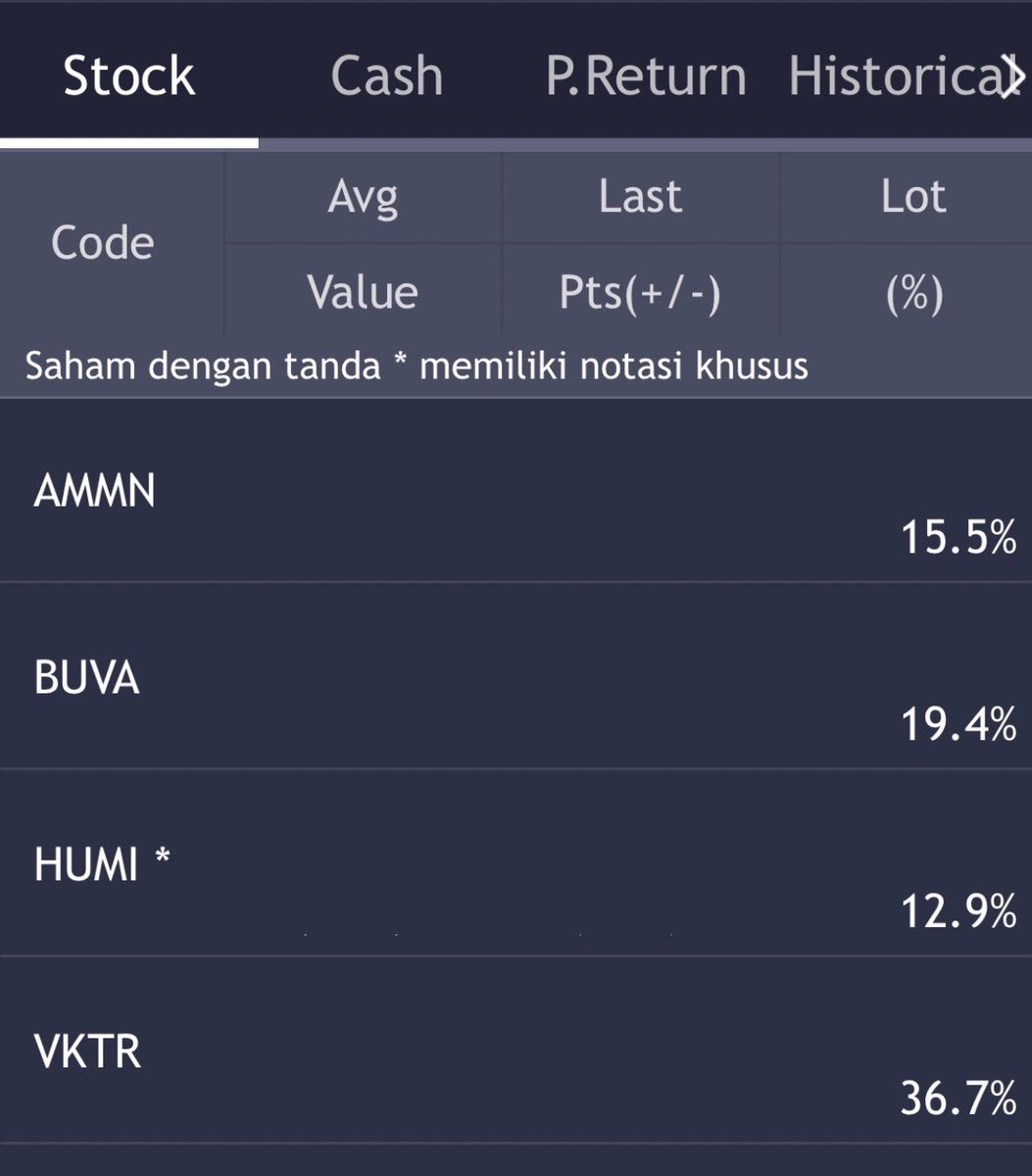
Ane bikin “investasi alternatif” buat internal kantor. InsyaAllah liquid ga ada margin bandar. 🤲
Abida Massi tweet mediaAbida Massi tweet media
Indonesia
13
6
123
17.9K
Abida Massi
Abida Massi@abidamassi·
@midmacy123600 Semakin inefisien market, maka edge semakin tinggi. Dalam konteks twit ini, maka YTTA. 🤭
Filipino
1
1
6
1K
midmacy
midmacy@midmacy123600·
@abidamassi Duh apa pindah ya dari polymarket, wkwkwk
Indonesia
1
0
0
1.3K
Gopal
Gopal@MYasfika·
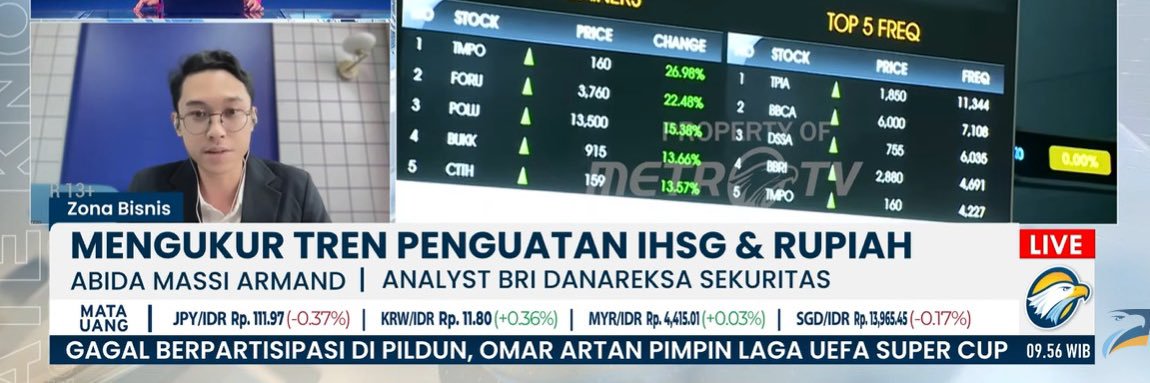
@abidamassi Kelass emang top analisnya BRIDS ini, pasti rajin menjawab pertanyaan wartawan.
Indonesia
1
0
0
276
Gopal
Gopal@MYasfika·
EMITEN BATUBARA KEMBALI MEMBARA $AADI $PTBA $ADRO $BUMI
Gopal tweet media
Indonesia
4
1
41
3.5K