Coach's Diary retweetledi
Coach's Diary
4.7K posts

Coach's Diary
@ACoachsDiary
A youth, high school, and college teacher and coach who helps coaches, teachers, and parents leverage relationships to drive performance and resolve conflict.
Texas, USA Katılım Ocak 2018
485 Takip Edilen4.8K Takipçiler
Coach's Diary retweetledi

Azzi Fudd spent years fighting through injuries, doubt, and setbacks. But she kept showing up, kept working, and never stopped believing in what she could become.
This week, that journey led her to becoming the No. 1 pick in the 2026 WNBA Draft.
Your setbacks do not have to define you. If you keep showing up, your story is still being written.
#AzziFudd
#WNBA
#DallasWings

English
Coach's Diary retweetledi


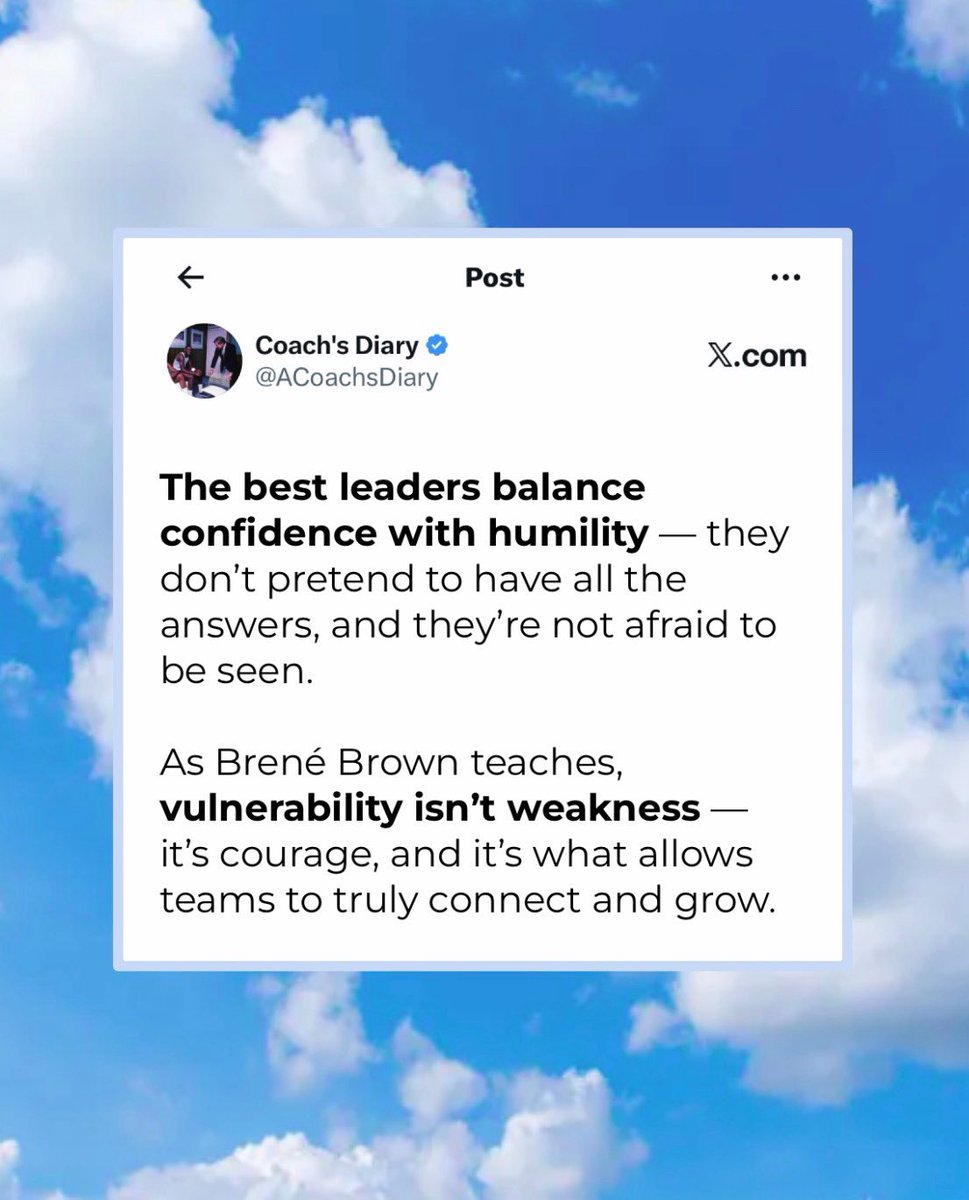
The best leaders I’ve been around have a healthy mix of confidence and humility. They are smart, skilled, and capable — but they also know they aren’t perfect. And they have an effective way of communicating that balance.
They are vulnerable.
Brené Brown is a research professor, author, and speaker best known for her work on vulnerability, courage, shame, and leadership. She studies what gets in the way of people showing up fully — and teaches how to push through it so we can lead, connect, and perform better.
She defines vulnerability not as weakness, but as the “birthplace of innovation, creativity, and change.” Her work highlights that being vulnerable requires the courage to show up and be seen, even when you can’t control the outcome.
And the truth is — very rarely can we control the outcome.
Being vulnerable helps us connect with the people we work with, be honest about who we are, and find the best path forward. It’s our ability to share our thoughts, feelings, and experiences with people who have earned the right to hear them.
Brown puts it this way:
“Vulnerability is not weakness; it’s our greatest measure of courage.”
“Vulnerability is not winning or losing; it’s having the courage to show up and be seen when we have no control over the outcome.”
“Vulnerability is hard and it’s scary and it feels dangerous. But it’s not as hard, or scary, or dangerous as getting to the end of our lives and having to ask ourselves: What if I would’ve shown up?”
So don’t feel like you need to know everything or have all the answers.
Find people you trust — people who share your vision and energy. Be honest about who you are, what you know, and what you don’t. Then work together to fill each other’s gaps while highlighting each other’s strengths.
Something to Think About
How can you create an environment where people feel safe to be honest about what they know, what they don’t know, and where they need help — and how would that change the way your team works together?
#Mindset
#Motivation

English

How do you respond to losing or getting less than you expected?
A lot of times, the human reaction to that is to give less than your best because of frustration.
But if your response to losing is to give less — how can you ever become a winner?
Instead, learn, grow, and give more.
- via Kara Lawson and @DukeWBB
✅ youtu.be/Gt8jmzK2hP8?si… via @YouTube

YouTube
English

@ACoachsDiary @umichbball I use this line all the time with my teams “decisions are made by those who show up.” Night in, night out. Every day. Period.
English

“The game rewards the guys who show up and have a great attitude when it’s not about them.”
- Dusty May
Everybody’s role is important.
(via: @umichbball)
#Michigan
#NCAA
English

“Never give up on your dreams. Never, ever give up on your dream.
Keep coming back, keep working hard, and if you put your mind to it, you can do it.”
- Rory McIlroy
#rorymcilroy
#TheMasters

English

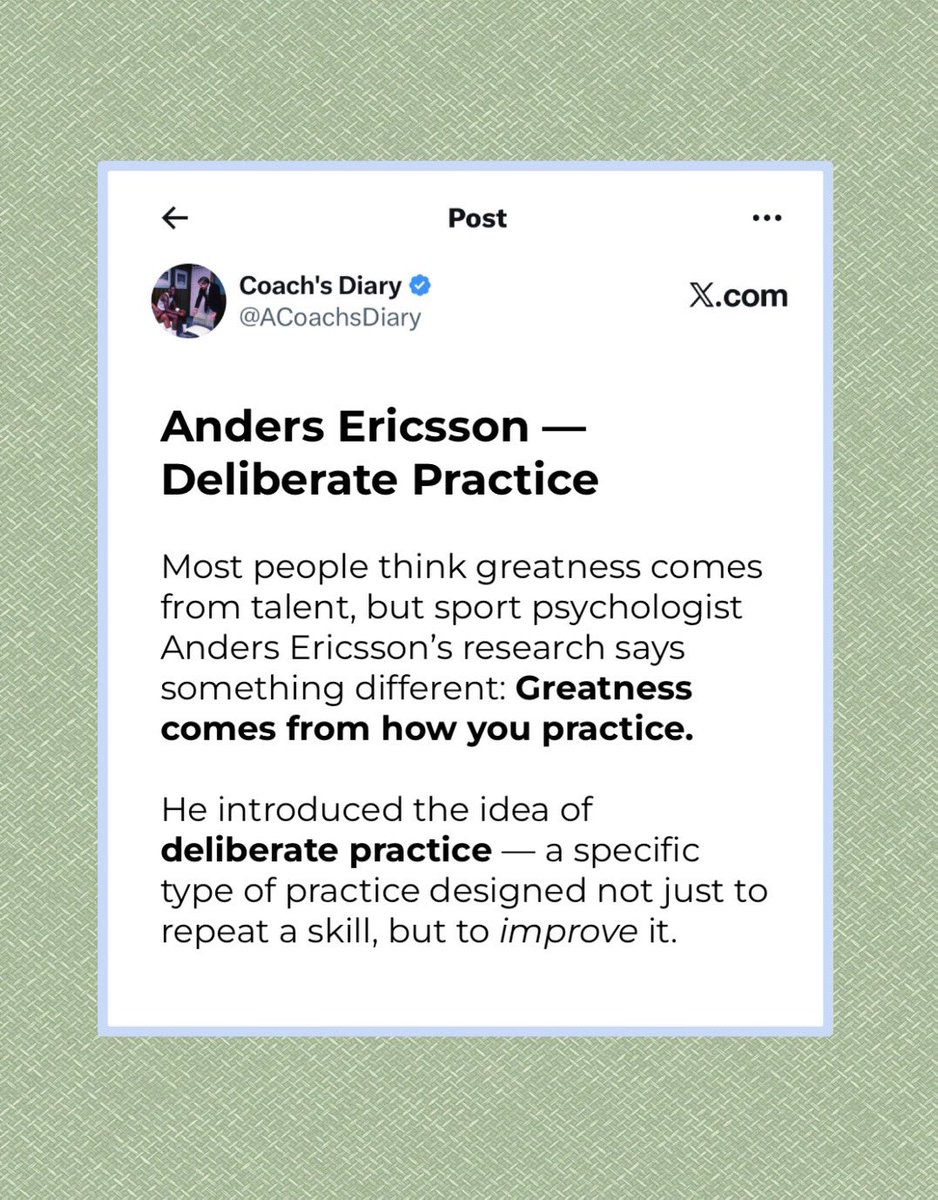
Most people think greatness comes from talent, but sport psychologist Anders Ericsson’s research says something different: Greatness comes from how you practice.
He introduced the idea of deliberate practice — a specific type of practice designed not just to repeat a skill, but to improve it.
Ericsson once said, “The right sort of practice carried out over a sufficient period of time leads to improvement. Nothing else.”
That’s important — because not all practice is equal.
A lot of athletes practice, but they stay the same. Why? Because they’re going through the motions instead of pushing their limits.
Deliberate practice has a few key characteristics:
- It’s specific — you’re working on a specific part of your game
- It’s challenging — just beyond your current ability
- It includes feedback — from a coach, teammate, or even yourself
- It requires focus — full attention, not mindless reps
Think about the difference:
Shooting 100 jump shots = regular practice
Focusing on your footwork or follow-through with feedback = deliberate practice
One keeps you busy. The other makes you better. Here’s the real takeaway for athletes and teams:
Improvement doesn’t come from doing more. It comes from doing better on purpose.
#inspiration
#motivation
#explore

English

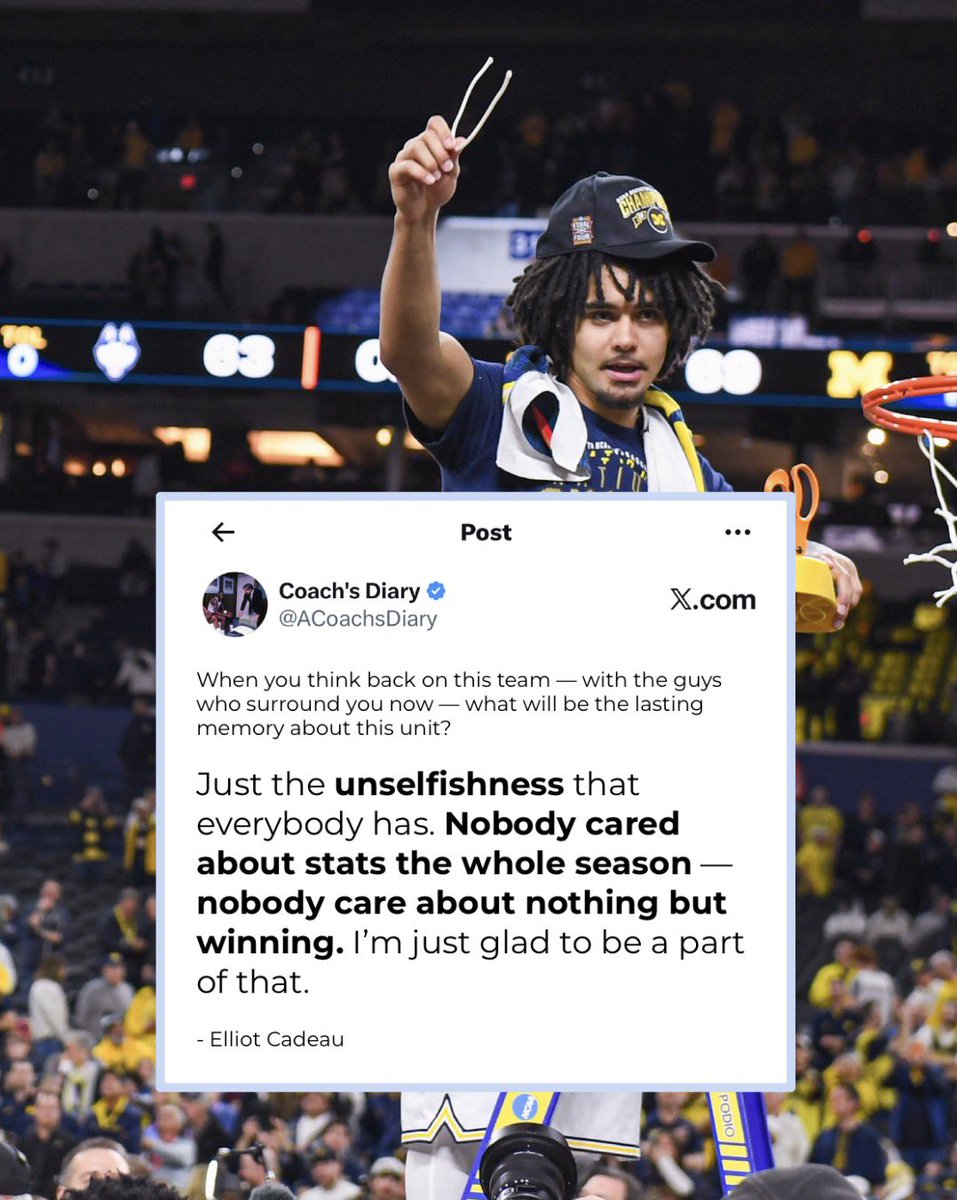
After leading Michigan to the National Championship, Elliot Cadeau was asked, “When you think back on this team — with the guys who surround you now — what will be the lasting memory about this unit?”
He said, “Just the unselfishness that everybody has. Nobody cared about stats the whole season — nobody care about nothing but winning. I’m just glad to be a part of that.”
#Michigan
#ElliotCadeau
#NCAA
#MarchMadness

English