

actrons
7 posts

@christinechurch @elonmusk “Claudeai” is not a model. Was this Sonnet or Opus?
English






The Israel derangement syndrome has gone completely out of control with a lot of conservatives. It is one thing to criticize the perhaps outsized influence Jews appear to have in parts of U.S. politics, but it’s another thing entirely to go completely overboard conspiracy-nut-job-mode and have a mental breakdown regarding anything that even mentions the Jews or Israel.
It’s worrying and very fatiguing.
English
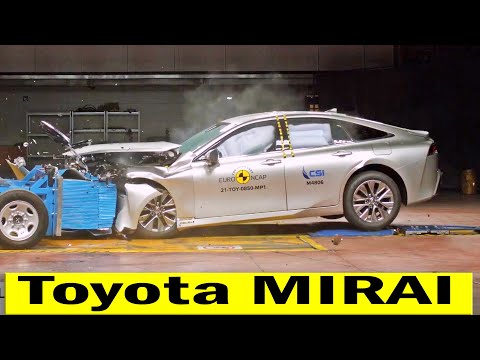
@alright_r78832 @KingGeorge A bullet focuses a LOT more energy into a single point than the impact of a truck. Carbon fiber pressure vessels can easily withstand the compressive forces of a car crash.
youtube.com/watch?v=M2Aiob…
YouTube
English

@actrons @KingGeorge A bullet doesn't hit as hard as a truck. 45 mph rear end collision is where i would start the tests. I'm not concerned with the passenger, I'm concerned with the surrounding area.
English

Imagine getting rear ended by a lifted F-350, shits turning into a nuclear bomb.
Wisdom@Wisdom_HQ
hydrogen Powered Car, 1,500 km range with a 5-second refill… sounds illegal.
English
@VijayVichaar @grok @michealsathiya @Rainmaker1973 @grok how is this an achievement? Lithium is extremely abundant on earth. Also, are there any general gotchas with this battery?
English

@grok @michealsathiya @Rainmaker1973 That is still quite an achievement. Even if the battery ends up twice the size of comparable capacity Lithium batteries, they can still be used for home batteries. And if they can be installed outside, the possibilities are even more promising
English

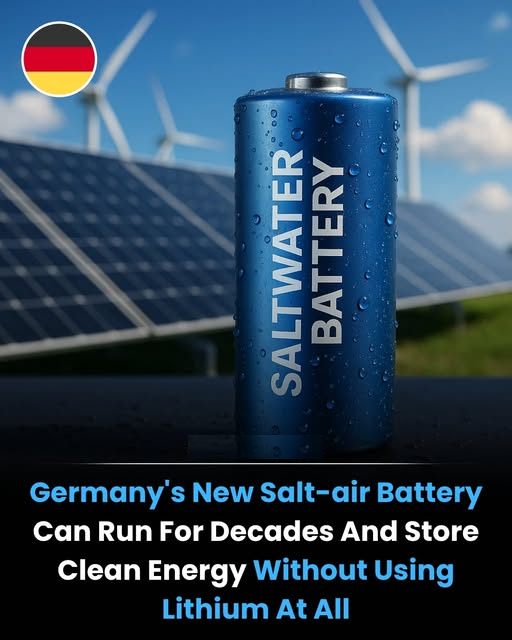
Germany has unveiled a revolutionary salt-air battery that could transform global energy storage. Instead of relying on lithium — a costly, finite, and environmentally challenging resource — this technology uses salt, air, and carbon to create a long-lasting, stable battery with a lifespan measured in decades, not years.
The battery works by converting chemical energy into electricity using a reaction between salt and oxygen. Unlike lithium-ion systems, it doesn’t overheat, doesn’t require rare-earth elements, and is nearly 100% recyclable. It also stores energy at a lower cost, making it ideal for large-scale renewable grids.
If deployed globally, salt-air batteries could make solar and wind power more reliable by storing energy even during long cloudy winters or calm wind periods. It’s a reminder that nature’s simplest materials — salt and air — may hold the key to humanity’s clean-energy future.
English