Andre Cytryn

1.2K posts

Andre Cytryn

Andre Cytryn

@acytryn

Katılım Kasım 2008
43 Takip Edilen505 Takipçiler
Andre Cytryn
Andre Cytryn@acytryn·
@karpathy Every team I've seen hit this wall at the same moment: local works, now make it real. That's where you discover you're 20% done with the product and 0% done with the infrastructure.
English
0
0
0
152
Andrej Karpathy
Andrej Karpathy@karpathy·
When I built menugen ~1 year ago, I observed that the hardest part by far was not the code itself, it was the plethora of services you have to assemble like IKEA furniture to make it real, the DevOps: services, payments, auth, database, security, domain names, etc... I am really looking forward to a day where I could simply tell my agent: "build menugen" (referencing the post) and it would just work. The whole thing up to the deployed web page. The agent would have to browse a number of services, read the docs, get all the api keys, make everything work, debug it in dev, and deploy to prod. This is the actually hard part, not the code itself. Or rather, the better way to think about it is that the entire DevOps lifecycle has to become code, in addition to the necessary sensors/actuators of the CLIs/APIs with agent-native ergonomics. And there should be no need to visit web pages, click buttons, or anything like that for the human. It's easy to state, it's now just barely technically possible and expected to work maybe, but it definitely requires from-scratch re-design, work and thought. Very exciting direction!
Patrick Collison@patrickc

When @karpathy built MenuGen (karpathy.bearblog.dev/vibe-coding-me…), he said: "Vibe coding menugen was exhilarating and fun escapade as a local demo, but a bit of a painful slog as a deployed, real app. Building a modern app is a bit like assembling IKEA future. There are all these services, docs, API keys, configurations, dev/prod deployments, team and security features, rate limits, pricing tiers." We've all run into this issue when building with agents: you have to scurry off to establish accounts, clicking things in the browser as though it's the antediluvian days of 2023, in order to unblock its superintelligent progress. So we decided to build Stripe Projects to help agents instantly provision services from the CLI. For example, simply run: $ stripe projects add posthog/analytics And it'll create a PostHog account, get an API key, and (as needed) set up billing. Projects is launching today as a developer preview. You can register for access (we'll make it available to everyone soon) at projects.dev. We're also rolling out support for many new providers over the coming weeks. (Get in touch if you'd like to make your service available.) projects.dev

English
621
527
6.4K
2.4M
Andre Cytryn
Andre Cytryn@acytryn·
@marclou What was the first founder message you got after an acquisition? The moment you realized you'd actually changed someone's outcome.
English
0
0
0
25
Marc Lou
Marc Lou@marclou·
All time visits & revenue last week for TrustMRR 🎉 I’m having a lot of fun building this because I don’t know where I’m going. Every week I launch new features, check what ppl suggest, build more. I think I’ve tried 20+ verticals already. The marketplace has been the most successful one. The new listing fee is making ~$400/day, and the 3% acquisition fee a few thousands a month (it fluctuates a lot). What im enjoying the most is building something that change people’s life. I know it’s cliche, but when I receive messages from founders getting acquired, it makes me so very happy. I never feel like I’m working. It’s like a giant playground where I can be myself and eventually be helpful to others. It started as a 8hr AI vibe coding session. I never expected TrustMRR to become what it is today. I would like to think I’m smart but I’m not. My best projects are the ones I shipped fast without thinking. I iterate quickly on people’s feedback and I quit when my gut tells me to. And eventually after 30 domains and 300 iterations, some startups will stick around and change my life
Marc Lou tweet media
English
80
6
221
16.2K
Andre Cytryn
Andre Cytryn@acytryn·
@alexwtlf What does "no time" actually mean here - capacity ceiling, or interest ceiling? Those two have very different answers.
English
0
0
0
5
Alex Ibragimov
Alex Ibragimov@alexwtlf·
You just shipped a product. 2 weeks later: 1,500 visitors 200+ users Then you realize you don’t have time to run it anymore. What’s your move?
English
109
2
92
6.2K
Andre Cytryn
Andre Cytryn@acytryn·
@EXM7777 What I struggle with is keeping the files clean over time. They accumulate, old context conflicts with new patterns. Any tips for pruning?
English
0
0
0
38
Machina
Machina@EXM7777·
Anthropic just 2x our Claude Code usage... here's how i structure my projects to get the best out of it: - my claude .md stays minimal, it just routes to other files - separate .md files for rules, context, how-tos... loaded only when needed - when Claude does something well, simply tell it to create an SOP on the spot - i constantly feed learnings back into core files the system gets smarter every time i use it, without any fancy plugins or 500 lines config files just modular context that grows with your workflow this simple setup can get you very far, there's really no need for overcomplicating it
Claude@claudeai

A small thank you to everyone using Claude: We’re doubling usage outside our peak hours for the next two weeks.

English
28
13
195
18.4K
Andre Cytryn
Andre Cytryn@acytryn·
@swyx @jeffreyhuber First it was don't store sessions in files. Then don't store user data in files. Now don't give agents a file system. The lesson keeps finding new students.
English
0
0
2
476
Andre Cytryn
Andre Cytryn@acytryn·
@steipete Timing matters more than the change itself. Same breaking change, communicated in advance with context vs. discovered post-update, completely different reaction.
English
0
0
1
85
Peter Steinberger 🦞
Peter Steinberger 🦞@steipete·
Every security improvement = sth people will annoy. Often hard to find the balance.
Chrys Bader@chrysb

psa: @openclaw 2026.3.11 is out. one important behavior change to know: 🔒 cron now enforces a stricter “cron-owned delivery” contract in isolated runs. if your jobs were set to delivery.mode="none" but still sending via message tool, they may now go silent. 🛠️ run: openclaw doctor --fix then move those jobs to explicit delivery (announce/webhook) instead of ad-hoc sends.

English
61
10
386
101.5K
Andre Cytryn
Andre Cytryn@acytryn·
@karpathy What if the IDE abstraction breaks though? Assembly to high-level kept the same mental model. Agent outputs might be too large and too non-deterministic to review the way we review code.
English
0
0
3
40
Andrej Karpathy
Andrej Karpathy@karpathy·
Expectation: the age of the IDE is over Reality: we’re going to need a bigger IDE (imo). It just looks very different because humans now move upwards and program at a higher level - the basic unit of interest is not one file but one agent. It’s still programming.
Andrej Karpathy@karpathy

@nummanali tmux grids are awesome, but i feel a need to have a proper "agent command center" IDE for teams of them, which I could maximize per monitor. E.g. I want to see/hide toggle them, see if any are idle, pop open related tools (e.g. terminal), stats (usage), etc.


English
826
833
10.5K
2.4M
Andre Cytryn
Andre Cytryn@acytryn·
@GergelyOrosz The Scrum Master question is a proxy for a bigger one: who made this role necessary? If it's there to manage coordination that good communication would solve, AI won't kill it. The next reorg might.
English
0
0
0
97
Gergely Orosz
Gergely Orosz@GergelyOrosz·
An interesting question: "I work at a large company that adopted SaFe (Scale Agile Framework.) I'm a Scrum Master. How do you think my role would change with AI?" This is hard to answer, given these roles exist thanks to the org setup... AI does NOT change the org structure!
English
38
6
90
29K
Andre Cytryn
Andre Cytryn@acytryn·
@marclou The days compound silently. Then one day you check and realize you've been 'almost ready' for a year.
English
0
0
0
9
Marc Lou
Marc Lou@marclou·
The startup graveyard is full of “I just need a few more days.”
English
191
22
684
40.7K
Andre Cytryn
Andre Cytryn@acytryn·
@marclou 1M impressions from a vibe-coded site is a strong signal that content and usefulness matter more than packaging. The bar shifted, not the principle.
English
0
0
0
69
Andre Cytryn
Andre Cytryn@acytryn·
@GergelyOrosz @mitchellh Counterpoint to #8 though: two years ago, hiding from social media meant heads-down building. Now it might mean you're using AI to do what Twitter used to. Hard to tell the difference anymore.
English
0
0
1
130
Gergely Orosz
Gergely Orosz@GergelyOrosz·
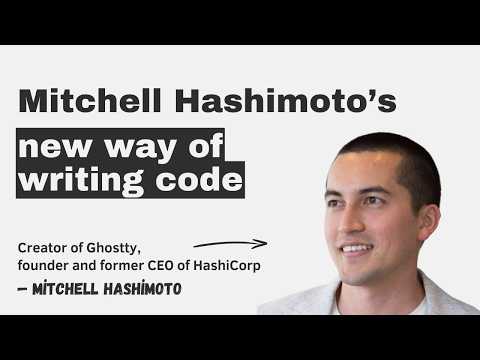
9 interesting observations from my conversation with Mitchell Hashimoto (@mitchellh, creator of Ghostty, founder of HashiCorp): 1. Vagrant was created because dev environment setup was an unbillable time sink at a consultancy. At the Ruby on Rails shop where Mitchell worked, jumping onto another client’s project could waste half a day. This inspired building Vargant. 2. Terraform won, despite being 7th to market. Terraform won through relentless conference presence, community building, and a better developer experience — not timing. 3. HashiCorp had no real business for four years and their first commercial product was a full-on failure. The initial product, Atlas, required customers to adopt the entire HashiCorp stack. It was a hard sell. HashiCorp pivoted to selling individual services like Vault, and this approach proved to be a winner. 4. VMware almost bought HashiCorp for ~$100M, and Terraform would have not happened if it did. VMWare took took the offer to their board, where they rejected to buy with a single vote. Mitchell said that Terraform probably never would’ve existed if the VMWare purchase went through. 5. Mitchell’s new rule for building software: always have an agent running in the background doing something. He kicks off tasks before leaving the house — research, edge-case analysis, library comparisons — so work progresses while he drives or is away. 6. Open source is moving from “default trust” to “default deny” — and Mitchell thinks that’s how it should be. This is because AI makes it trivial to create plausible-looking but incorrect and low-quality contributions. As he put it: “open source has always been a system of trust. Before, we’ve had default trust. Now it’s just default deny.” 7. Git and GitHub may not survive the agentic era in their current form. Agents cause so much churn that merge queues become untenable, branches proliferate, and repos balloon. Mitchell compares the needed shift to Gmail’s revolution for email: “We’re at the Gmail moment for version control... never delete, archive everything.” 8. The best engineers Mitchell ever hired had boring, invisible backgrounds. No GitHub contributions, no public profiles, companies you’ve never heard of. “Every moment you spend on social media is taking away from something else... the best engineers are the ones that context-switch the least.” 9. Mitchell’s advice for AI-skeptical engineers: start by reproducing your research, not your code. As he puts it: “There’s a lot of people like, ‘I don’t want it to write code for me.’ But just delegate some of the research part.” He uses agents for library comparisons, edge-case analysis, and deep research — not just code generation. Mitchell: “You don’t need to pick up on the ‘it must replace you as a person’ kind of propaganda.” Watch the full episode here: youtu.be/WjckELpzLOU Other platforms and transcript: newsletter.pragmaticengineer.com/p/mitchell-has…
YouTube video
YouTube
English
19
60
645
96.6K
Andre Cytryn
Andre Cytryn@acytryn·
@steipete The CLI always won on control. The moment the app matches control AND beats it on speed, there's no going back.
English
0
0
0
25
Andre Cytryn
Andre Cytryn@acytryn·
@GergelyOrosz How many of these bots are running right now with basically open access and no audit trail? Because the answer is 'a lot'.
English
0
0
0
19
Gergely Orosz
Gergely Orosz@GergelyOrosz·
Anyone and everyone working in security engineering or caring about security have their work cut out for them We’re so early in AI agents pushing code to prod without human intervention - but prompt injections are already spreading like wildfire. Infecting high-profile projects
Sash Zats@zats

> The attacker got the npm token by injecting a prompt into a GitHub issue title, which an AI triage bot read, interpreted as an instruction, and executed.

English
59
107
799
117.7K
Andre Cytryn
Andre Cytryn@acytryn·
@steipete First project you ship at something this size, you remember forever. Congrats.
English
0
0
0
49
Andre Cytryn
Andre Cytryn@acytryn·
@__karnati love this series, real-world analogies is how system design should be taught. I've been building supaboard.dev for this, interactive canvas to map concepts visually. would be cool to see your breakdowns as explorable boards
English
0
0
2
135
Sri
Sri@__karnati·
If you’re in Cloud, DevOps or platform engineering, this is for you. 👇 📷 I have started a “System Design” series, where I will try to break down a concept into simpler terms and will share a real-world analogy for it. This is for folks who are willing to learn about systems and struggling with how to approach system design. Check the series posts that are out in this thread 👇👇
English
5
12
120
14.2K
Andre Cytryn
Andre Cytryn@acytryn·
@marclou Wonder if this is already happening and we just don't see them because they're not on X talking about their stack
English
0
0
0
15
Marc Lou
Marc Lou@marclou·
The next generation of solo entrepreneurs won’t be developers. They won’t obsess over tech stack or trendy design libraries. They will be no-code people focused on solving a problem, shipping crazy fast with AI, and cracking distribution on social media. They will be 100x wealthier than us.
English
369
135
2.3K
110.7K
Captain-EO 👨🏾‍💻
Since I started learning system design, I noticed most systems follow the same set of patterns: - Scale reads? = caching, replication, indexing - Scale writes? = sharding, batching, async queues - Handle traffic spikes? = load balancing, auto-scaling, rate limiting - Reduce latency? = CDN, edge caching - Avoid downtime? = failover, circuit breakers But don't oversimplify it though, in the real world systems, these are often used together
English
10
75
759
27.4K
Andre Cytryn
Andre Cytryn@acytryn·
@pulkit_mittal_ The gap isn't knowing all 10. It's knowing which one is biting you during an incident. Most engineers can define P99 latency; fewer know what to do when it spikes at 3am.
English
0
0
0
2
pulkit mittal
pulkit mittal@pulkit_mittal_·
As a backend developer in 2026, how many of these 10 terms do you understand? 1. Idempotency 2. Backpressure 3. Circuit Breaker 4. Eventual Consistency 5. Distributed Lock 6. Exactly-Once vs At-Least-Once Delivery 7. Cold Start 8. High Cardinality Metrics 9. Sharding vs Partitioning 10. P99 Latency
English
14
65
462
24.3K
Andre Cytryn
Andre Cytryn@acytryn·
@simonw Had this exact failure mode before agents existed. Someone drops 1200 lines, 'review when you get a chance.' The diff is readable. The reasoning behind it isn't.
English
0
0
0
45
Simon Willison
Simon Willison@simonw·
I started a new chapter of my Agentic Engineering Patternw guide about anti-patterns - things NOT to do So far I only have one: Inflicting unreviewed code on collaborators, aka dumping a thousand line PR without even making sure it works first #inflicting-unreviewed-code-on-collaborators" target="_blank" rel="nofollow noopener">simonwillison.net/guides/agentic…
English
54
66
757
52.5K
Andre Cytryn
Andre Cytryn@acytryn·
@marclou The drug dealer framing works for activation, but users who come for a dopamine hit aren't the same as ones who stay because the product is load-bearing for them. Curious which you ended up with.
English
0
0
0
24
Marc Lou
Marc Lou@marclou·
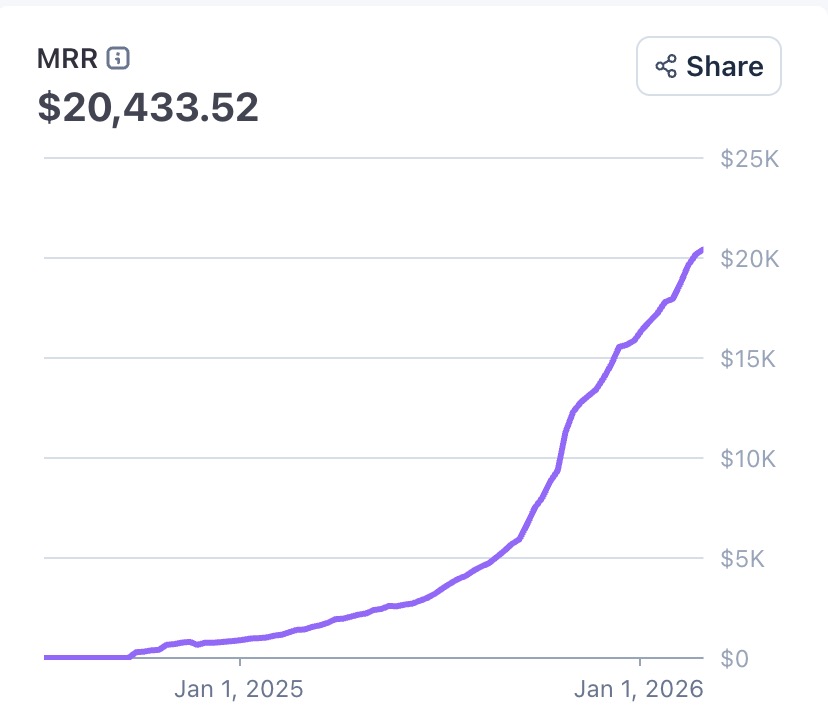
It took 512 days. This is the hardest thing I’ve done. The analytics market is ultra-competitive, and users perceive data as a vitamin, not painkillers. It took 9 months to grow DataFast to $3k MRR. It was so slow, I thought about giving up many times in the first year. I tried a million things, but these 3 really moved the needle: - I built DataFast for me. I forced myself to ask: “What do I really need?” That’s how the analytics + Stripe angle came up. In other words, I niched down. - I polished the onboarding like a madman once I realized 90% of people who signed up didn’t do anything. Fewer steps, faster AHA moment. You’re a drug dealer, and your users are craving. Give them dopamine ASAP. - I built shareable features. I added 𝕏 mentions on top of the traffic chart, built a real-time map, created a stock market app for analytics, and more. My customers did marketing for me. All I had to do was give them a reason to. The hardest part really is the beginning. Once momentum picks up, you’ve already done the hardest part. For perspective, I'm adding more MRR in 4 weeks than I did in 4 months. I don’t know what’s next, but I like challenging myself, so... See you at $1M ARR 🫡
Marc Lou tweet media
Marc Lou@marclou

Growing a SaaS to $1M valuation: 🟩🟩🟩🟩🟩🟩🟩🟩🟩🟩 100% 🎉

English
117
8
901
102.3K